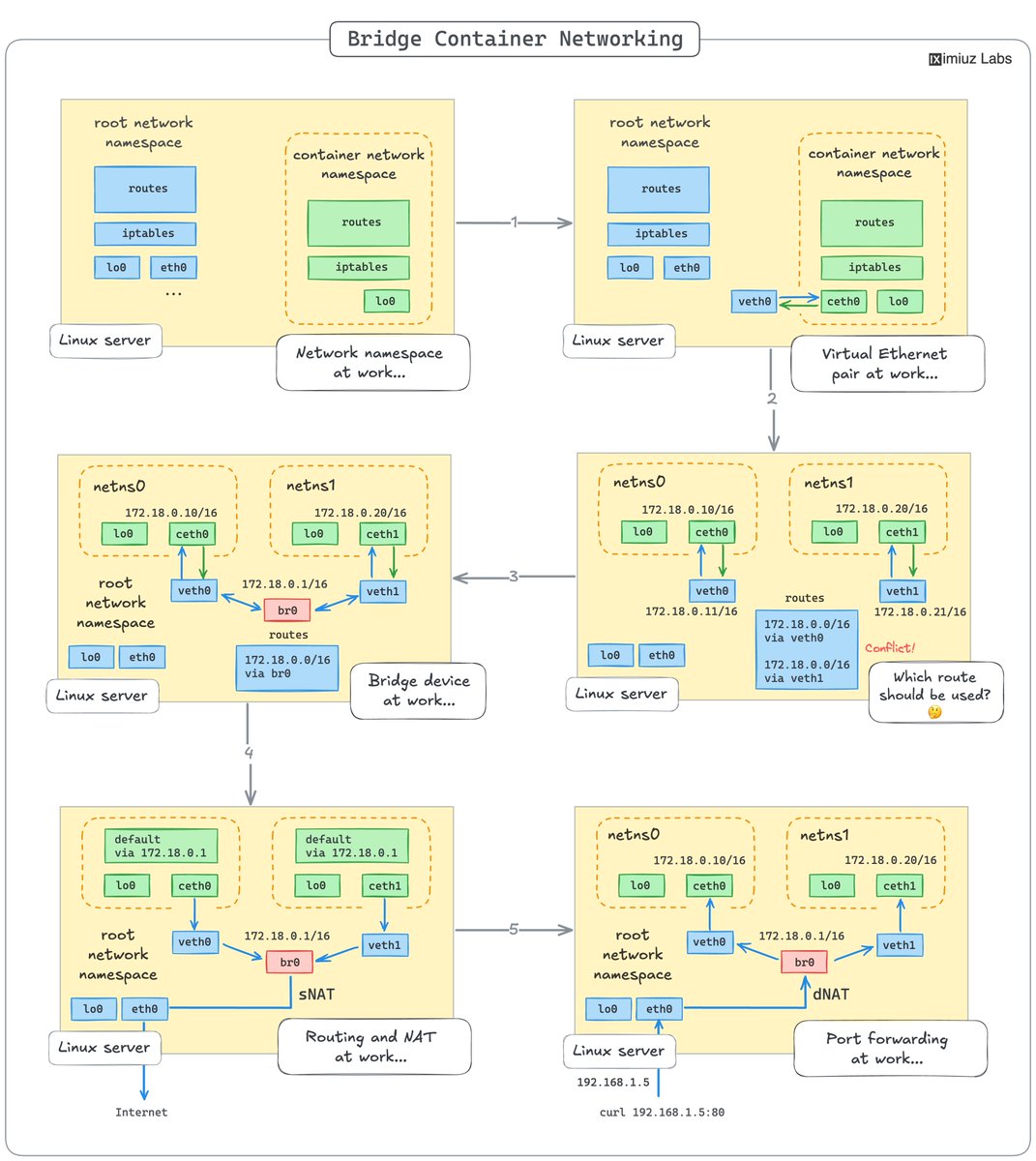
How Container Networking Works 🧐
Most Docker installations and Kubernetes clusters have the same bridge container network setup. The best way to understand how it works? Try reproducing one from scratch using nothing but the standard Linux commands: https://t.co/qlWCNPkfg1
Software Design Principles
Great software isn't just about making things work,
it's about creating systems that are maintainable, scalable, and resilient.
These fundamental design principles guide developers toward writing better code.
1./ 𝐊𝐈𝐒𝐒 (𝐊𝐞𝐞𝐩 𝐈𝐭 𝐒𝐢𝐦𝐩𝐥𝐞, 𝐒𝐭𝐮𝐩𝐢𝐝)
➟ The most elegant solutions are often the simplest.
➟ Avoid unnecessary complexity, keep code clear and concise, and focus on essential features.
Remember that code is read far more often than it's written.
2./ 𝐃𝐑𝐘 (𝐃𝐨𝐧'𝐭 𝐑𝐞𝐩𝐞𝐚𝐭 𝐘𝐨𝐮𝐫𝐬𝐞𝐥𝐟)
➟ Every piece of knowledge in a system should have a single, unambiguous representation.
3./ 𝐘𝐀𝐆𝐍𝐈 (𝐘𝐨𝐮 𝐀𝐢𝐧'𝐭 𝐆𝐨𝐧𝐧𝐚 𝐍𝐞𝐞𝐝 𝐈𝐭)
➟ Resist implementing features "just in case."
➟ Build what's needed today.
4./ 𝐒𝐎𝐋𝐈𝐃 𝐏𝐫𝐢𝐧𝐜𝐢𝐩𝐥𝐞𝐬
the backbone of object-oriented design:
➟ Single Responsibility - Classes should do one thing well
➟ Open/Closed - Open for extension, closed for modification
➟ Liskov Substitution - Subtypes must be substitutable for their base types
➟ Interface Segregation - Many specific interfaces beat one general interface
➟ Dependency Inversion - Depend on abstractions, not concrete implementations
5./ 𝐏𝐫𝐢𝐧𝐜𝐢𝐩𝐥𝐞 𝐨𝐟 𝐋𝐞𝐚𝐬𝐭 𝐀𝐬𝐭𝐨𝐧𝐢𝐬𝐡𝐦𝐞𝐧𝐭
➟ Software should behave as users expect.
➟ Consistency in terminology, conventions, and error messages creates intuitive experiences.
6./ 𝐏𝐫𝐢𝐧𝐜𝐢𝐩𝐥𝐞 𝐨𝐟 𝐌𝐨𝐝𝐮𝐥𝐚𝐫𝐢𝐭𝐲
➟ Well-defined, independent modules make systems easier to understand, maintain, and test.
7./ 𝐏𝐫𝐢𝐧𝐜𝐢𝐩𝐥𝐞 𝐨𝐟 𝐀𝐛𝐬𝐭𝐫𝐚𝐜𝐭𝐢𝐨𝐧
➟ Hide implementation details to reduce cognitive load.
➟ Users of your code shouldn't need to know how it works internally, just how to use it.
8./ 𝐏𝐫𝐢𝐧𝐜𝐢𝐩𝐥𝐞 𝐨𝐟 𝐄𝐧𝐜𝐚𝐩𝐬𝐮𝐥𝐚𝐭𝐢𝐨𝐧
➟ Protect the internal state of objects from external manipulation.
➟ This creates more robust systems by preventing unexpected side effects.
9./ 𝐏𝐫𝐢��𝐜𝐢𝐩𝐥𝐞 𝐨𝐟 𝐋𝐞𝐚𝐬𝐭 𝐊𝐧𝐨𝐰𝐥𝐞𝐝𝐠𝐞 (𝐋𝐚𝐰 𝐨𝐟 𝐃𝐞𝐦𝐞𝐭𝐞𝐫)
➟ Components should have limited knowledge of other components.
➟ This "need-to-know basis" approach creates more modular, flexible systems.
10./ 𝐋𝐨𝐰 𝐂𝐨𝐮𝐩𝐥𝐢𝐧𝐠 & 𝐇𝐢𝐠𝐡 𝐂𝐨𝐡𝐞𝐬𝐢𝐨𝐧
➟ Minimize dependencies between modules while ensuring each module has a clear, unified purpose.
➟ This balance makes systems more maintainable and adaptable.
You’d probably agree,
It's easy to nod along with design principles when reading them, but much harder to catch when drifting away from them in real code.
That's where tools like @coderabbitai can be valuable.
During pull requests, it identifies potential issues that developers might overlook, such as unnecessary complexity or signs of tight coupling, without being intrusive or slowing down the development process.
Understand,
these tools don't replace human judgment but provide an additional layer of verification that can help maintain code quality over time.👊
https://t.co/QPwNoVpJqW
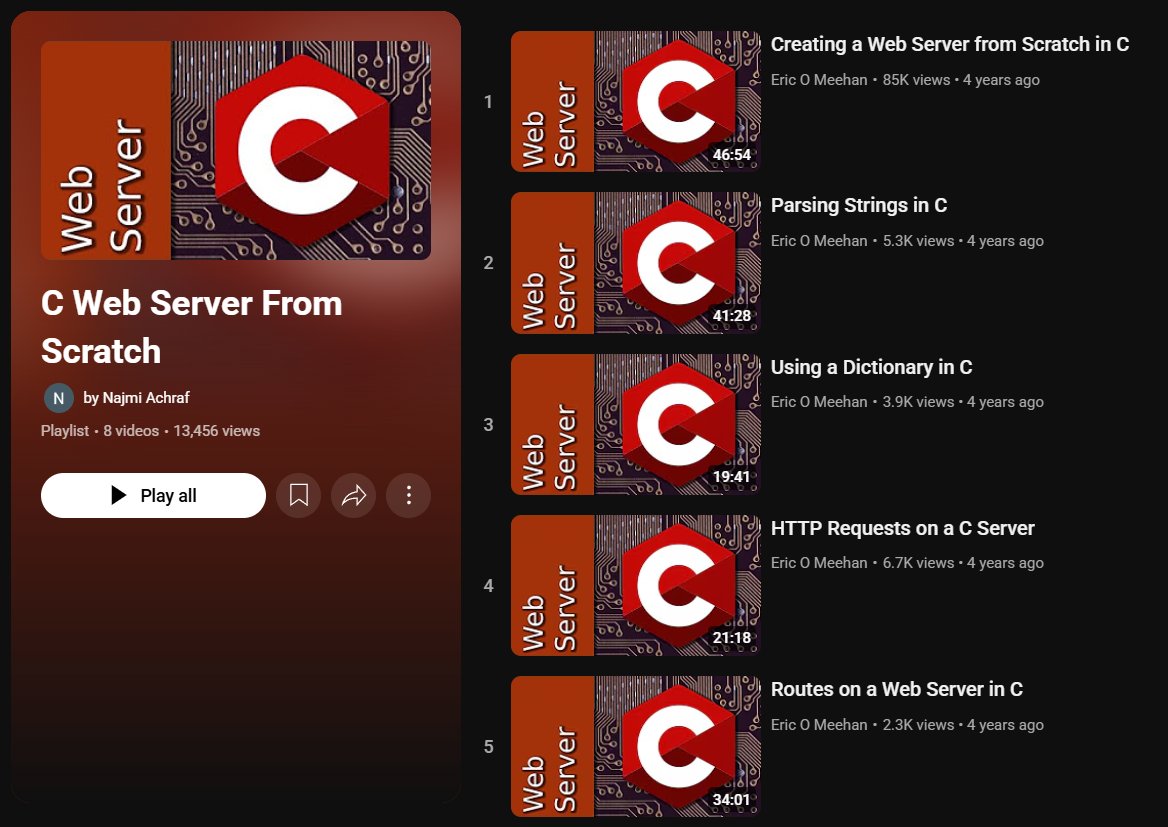
Here's C Web Server From Scratch! This playlist shows you how to build a web server from the ground up. While C isn't usually the choice for this, you can learn a lot about how a server works from watching these. Have fun!
🔍 New Blog Alert! 🔍
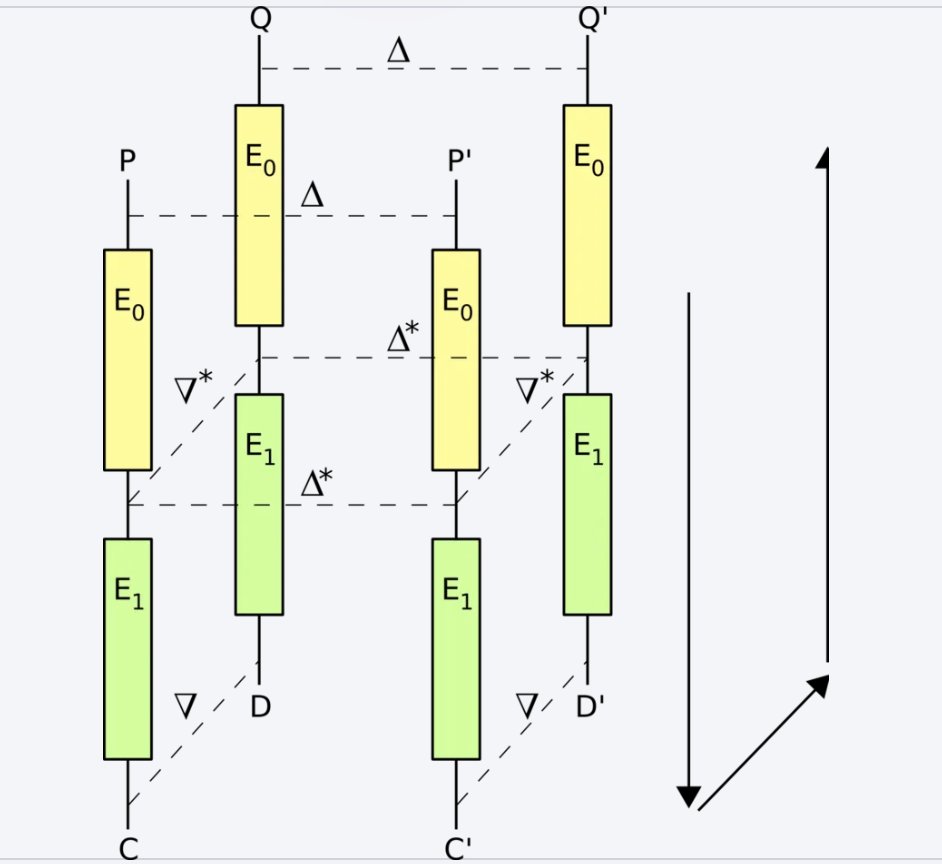
Dive into the world of Differential Cryptanalysis, a reliable technique in breaking block ciphers ! Let’s unravel how it works and why it’s crucial for modern security. 🛡️🔓 #Cryptography
Docker 101: What happens when you run a container? 🧐
I've gotten a visual explanation of the "docker run" command and a very simple hands-on challenge.
Give it a try if you've always wanted to get started with Docker: https://t.co/zPjex0dvzS
What Are the Most Important AWS Services To Learn?
Since its inception in 2006, AWS has rapidly evolved from simple offerings like S3 and EC2 to an expansive, versatile cloud ecosystem.
Today, AWS provides a highly reliable, scalable infrastructure platform with over 200 services in the cloud, powering hundreds of thousands of businesses in 190 countries around the world.
For both newcomers and seasoned professionals, navigating the broad set of AWS services is no small feat.
From computing power, storage options, and networking capabilities to database management, analytics, and machine learning, AWS provides a wide array of tools that can be daunting to understand and master.
Each service is tailored to specific needs and use cases, requiring a deep understanding of not just the services themselves, but also how they interact and integrate within an IT ecosystem.
This attached illustration can serve as both a starting point and a quick reference for anyone looking to demystify AWS and focus their efforts on the services that matter most.
It provides a visual roadmap, outlining the foundational services that underpin cloud computing essentials, as well as advanced services catering to specific needs like serverless architectures, DevOps, and machine learning.
Over to you: What has your journey been like with AWS so far?
--
Subscribe to our weekly newsletter to get a Free System Design PDF (158 pages): https://t.co/eVEdOFSYPY
🚨 Did you hear? The resource control policy (RCP) repository is live! Get access to a collection of sample RCPs to optimize & secure your AWS environment. https://t.co/IdvkohKhMW
Foundations of LLMs!
This amazing new 200+ pages LLM book just dropped on arXiv.
It covers everything from pre-training, generative models, prompting techniques and alignment methods for LLMs