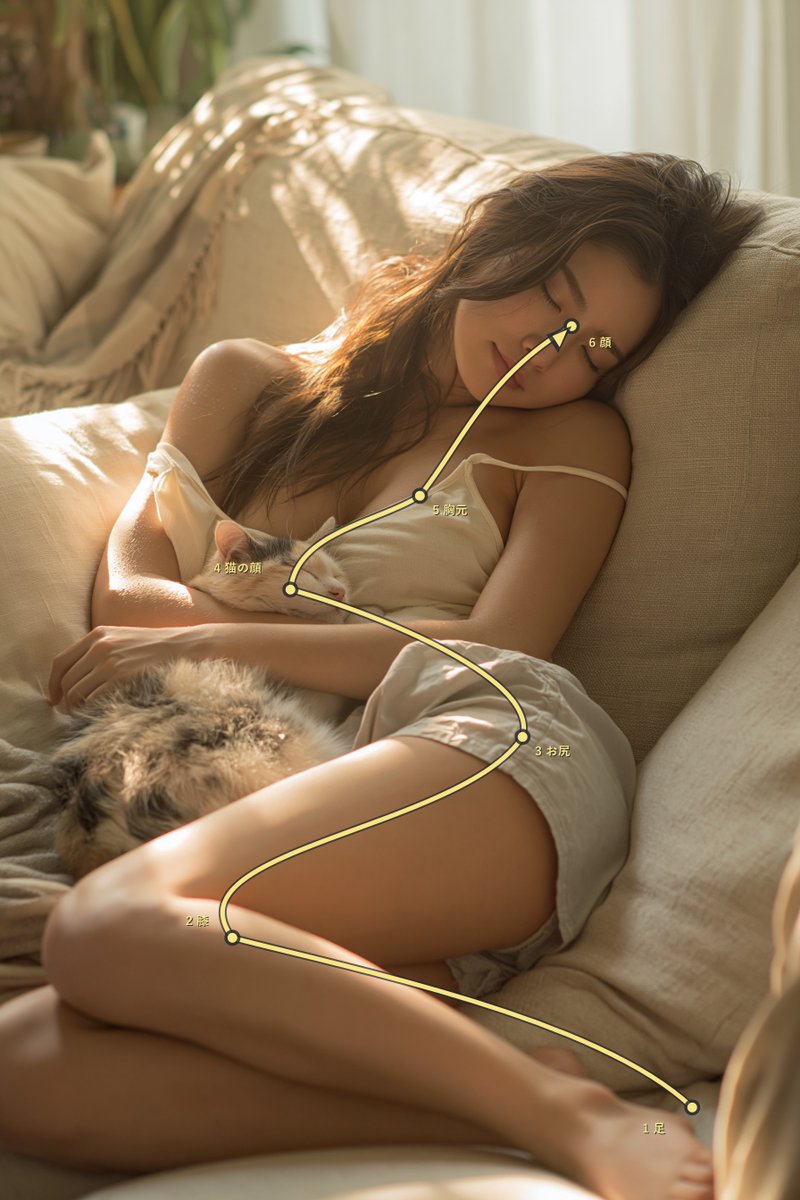
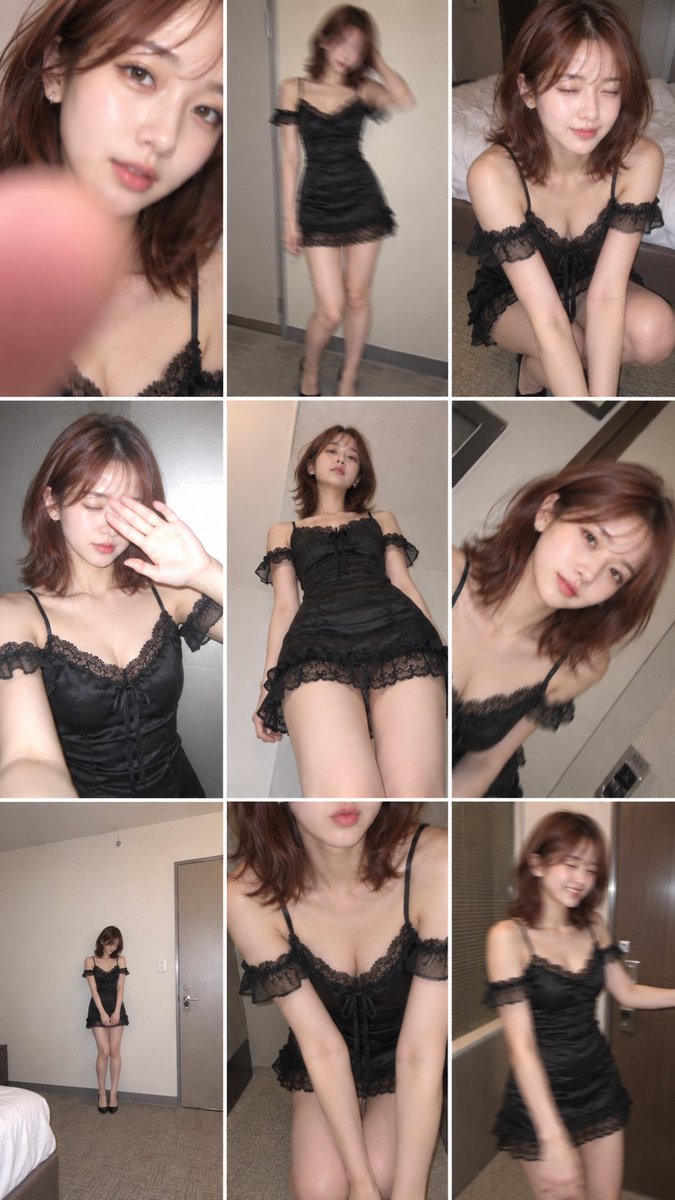
这个角色设定提示词好赞,人物形象一下子就丰满了
AI 美女不仅仅要有好看的形象,有趣的灵魂与活人感也很重要
以下有优化后的提示词,主要是让输出换成中文,如果要复制使用,修改名称、性格以及参考图片就可以👇
【Copy-Paste OK】
Based on the attached character image, please create an "AI Beauty Character Fixed Sheet" as a single image.
Purpose:
To create a visual reference sheet that allows this character to be consistently reproduced as the same person in the future, even if clothing, background, pose, expression, or camera angle changes.
【Most Important】
Consistently maintain identifiable features from the reference image, such as the face, facial proportions, eyes, eyebrows, nose, mouth, outline, skin tone, hair color, hair texture, body type, and body proportions, to the greatest extent possible.
Do not apply excessive beautification, alter the person into someone else, anime-ify, or CG-ify.
Unify everything as the same adult woman.
【Sheet Composition】
■ Basic Settings
On the left side, organize the following in text form.
・Name: Aria
・Age (Adult)
・Personality: ENTP
・Facial Outline
・Eye Shape
・Eyebrow Shape
・Nose Features
・Mouth/Lip Features
・Hair Color
・Hair Length
・Bangs
・Hair Texture
・Skin Tone
・Skin Texture
・Height Impression
・Body Type
・Basic Clothing
For personality and name that cannot be determined from the reference image, do not arbitrarily decide; leave them as "Settings Field."
■ Full-Body Angles
In the same simple clothing and same hairstyle,
・Front
・Side
・Back
・Diagonal Front
・Diagonal Back
Display the 5 directions side by side horizontally.
Unify all body proportions, such as height, shoulder width, torso, waist, and leg length.
■ Face Angles
・Front
・45-Degree Diagonal
・Profile
・Diagonal from Above
・Diagonal from Below
Do not change the facial bone structure or part placement; make everything the same person.
■ Expressions
・Neutral
・Natural Smile
・Serious
・Surprised
・Troubled Face
Change only the expression; do not alter the character's face itself.
■ Hairstyle Details
・Front
・Side
・Back
Make the hairline, parting, bangs, length, volume, and texture visible.
■ Face Parts
In close-up,
・Eyes
・Eyebrows
・Nose
・Mouth
・Ears
Display them.
■ Skin
・Face Skin Close-Up
・Body Skin Close-Up
Maintain realistic skin texture, such as natural pores and subtle color variations.
Prohibit plastic-like flawless skin processing.
■ Body Details
・Shoulders
・Abdomen
・Back
・Legs
・Hands
Display them.
Make hands and fingers follow natural human anatomy.
■ Commonly Used Clothing and Situations
At the bottom, place a few reference examples of everyday scenes using this character.
Examples:
・Loungewear
・Casual Wear
・Cafe
・Work/School Outfit
・Travel
【Design】
High-quality professional character reference sheet.
Clean background based on white to light beige.
Organize each item in a grid layout.
Attach short Chinese labels to each.
The information volume is high, but design the layout so that it's immediately clear where to look for what.
【Photo Expression】
Photorealistic.
Texture like a real adult woman photographed in natural light.
Natural skin, natural hair, realistic body proportions.
Avoid excessive retouching, advertising photo-like processing, or CG feel.
Top Priority:
Rather than "making everything look beautiful,"
Prioritize "making all images in the sheet appear as the same person."
I recorded a 41-minute tutorial on how I use Astra to create insane three.js websites in Codex.
I've been using DiffUI to brainstorm UIs before moving into code. It's fast and cheap, generates multiple variants and lets me branch ideas, sections, logos, and other components.
Then I use "Copy for agent" and bring everything into Codex where I add transparent PNG layers, animations, and three.js skills.
Live sites:
https://t.co/WpfDVDFjeU
https://t.co/sbtq7GT0jV
3D skills: https://t.co/gMuw2gt9FJ
Get $20 in credits on DiffUI: https://t.co/uRn8O348n4
Generated using Seedance on Runway. Upscaled with Topaz Astra 2.
Prompt : Create a 15.00-second cinematic short using the supplied image as the opening frame and visual foundation. Format: 16:9, 4K, 24 fps, exactly 360 frames. Seven shots, with the exact timings below. Story: A lone traveler enters a flooded forest carrying a lantern. Small disturbances suggest something immense is approaching. Instead of retreating, the traveler lowers the light toward the water. The final shot reveals an ancient forest guardian that bows toward the tiny flame. What initially felt like danger becomes recognition. Make the viewer experience the forest from its surface, living textures, hanging canopy, narrow passages, and submerged roots before revealing what inhabits it. Each shot must contribute new visual information and advance the encounter. No repeated establishing views or decorative inserts disconnected from the story. WORLD AND CHARACTER Preserve the reference’s immense moss-covered trunks, enormous arching branch, hanging roots, dark-green canopy, layered silver mist, charcoal-green water, narrow black canoe, rust-orange robes, broad woven conical hat, and small suspended amber lantern. Keep one adult traveler, one canoe, and one lantern. Preserve the traveler’s silhouette and the hand holding the lantern. Their face remains mostly shaded. Their movements are practical and deliberate, suggesting familiarity with this place rather than panic. The canoe travels slowly toward the existing central-right mist corridor, carried by a current. Do not add a paddle. Establish forward travel in Shot 01 and preserve it through every angle. Boat movement, clothing, balance, wake, and lantern swing must remain physically connected. Introduce only one new inhabitant: a colossal, ancient stag concealed among the distant trunks and mist until the climax. It has dark, weathered fur, immense irregular antlers carrying moss and trailing vegetation, and natural eyes that catch a little amber light. Its antlers visually resemble the forest’s branching forms, but the existing trees never transform into an animal. Keep its body largely obscured until the final shot. Its scale is startling; its behavior is gentle. SHOT 01 | 00.00–01.75 | THE WATER TAKES US IN 24 mm wide, lateral water-level view. Begin with the supplied composition, already moving. Glide forward and slightly sideways just above the lake, letting nearby ripples pass quickly beneath the lens while the immense trunks barely shift. The canoe advances toward screen right. Its bow presses a clean seam through the dark water. The traveler’s robe trails inside the hull, and the lantern’s reflection breaks into small amber fragments. Use the enormous overhead branch to make the boat feel sheltered and very small. Keep the lens dry. No opening fade. Sound begins immediately with water against wood, distant canopy air, and a low, almost unnoticeable rushing sound from deeper in the forest. SHOT 02 | 01.75–03.00 | SOMETHING MOVED FIRST 100 mm close detail, positioned beside a mossy root at the waterline ahead of the canoe. Frame wet moss fibers, a fern tip, and two suspended droplets. The moss gives a small tremor even though the nearby leaves remain still. One droplet releases and strikes the water below. Behind this sharp foreground, the traveler’s amber lantern passes as a soft, moving blur. Keep the canoe itself mostly outside the frame. This is the first clue that the disturbance is not simply wind. Let the tiny impact sound unusually close, with a faint woody vibration beneath it. One clear action. No ornamental slow motion. SHOT 03 | 03.00–05.00 | THROUGH THE HANGING ROOTS 20 mm traveler’s-eye view, looking forward over the bow and slightly upward. The canoe enters a curtain of hanging roots beneath the reference’s great branch. Put the bow at the bottom of the image, damp roots close to the lens, and the moss-covered arch high above. The viewer should feel the distance from the water to the canopy. The traveler’s free hand enters the frame and gently sweeps one loose strand aside as the canoe slips through. The strand slides past and falls back behind us. Keep the movement continuous and tactile. Do not send the camera through vegetation or solid wood. Hear the close brush of roots against fabric. The low rushing sound becomes slightly fuller, still easy to mistake for forest air. SHOT 04 | 05.00–07.00 | THE TRAVELER KNOWS 50 mm medium close view from ahead and three-quarters to the canoe’s near side. Track backward at its speed. For the first time, see the traveler’s shaded profile beneath the woven hat. Their eyes settle on something beyond the camera. They do not look frightened. In one controlled movement, they lower into a stable kneel and bring the lantern down outside the gunwale. Stop the lantern about 20 centimeters above the water. The flame remains above the surface throughout. The canoe shifts slightly under the change in weight. The hanging lantern follows with a small delayed swing, then steadies. Rust fabric gathers against black timber. Amber light touches the fingers and the underside of the sleeve, not the entire figure. The action should read as an intentional offering. SHOT 05 | 07.00–09.00 | THE LAKE RESPONDS 35 mm true overhead view through an existing opening in the canopy. No orbit or rotation. Reveal the canoe’s complete outline and its route between irregular moss-covered root bases. Keep the established travel direction clear. The kneeling traveler and the small lantern form a concentrated rust-and-amber point inside the dark landscape. From farther into the mist, one broad, low swell travels toward the canoe against the smaller surface ripples. It reaches the bow and lifts it slightly. The traveler keeps the lantern steady. The boat rocks once and settles. This should feel like displaced water from something with enormous mass, not a magical ripple graphic. Let the surrounding reflections stretch and recover naturally. The forest ambience briefly thins as the swell reaches the hull. SHOT 06 | 09.00–11.50 | BENEATH THE APPARENT STILLNESS 18 mm submerged low-angle view beside and slightly ahead of the canoe, looking diagonally through the flooded root system. Make this an entirely new world: dark root columns, suspended particles, green light filtering through the surface, and the canoe’s underside passing across the upper edge. Beyond the foreground roots, one enormous animal lower leg settles onto the silty bed. Show only a partially obscured section of the limb and its contact with the bottom. Do not reveal the head, antlers, or full creature. Its movement pushes a dense, slow curl of sediment through the roots. Nearby strands of submerged vegetation bend from the displaced water. The leg must feel solid and heavy, not like a tentacle or a root transforming. Keep the water dim but readable. The lantern contributes only a small warm glimmer near the surface. Sound becomes muffled: a deep pressure pulse, wood conducted through water, and the soft movement of silt. Build anticipation through physical presence, not a musical impact. SHOT 07 | 11.50–15.00 | THE FOREST BOWS 24 mm rear three-quarter wide view from just above the kneeling traveler’s shoulder height, on the same near side of the canoe. Cut above water to an angle not previously shown. Look past the small traveler and lantern through a gap between the established trunks. The new viewpoint reveals the presence hidden by mist and overlapping trees: a colossal ancient stag, already standing in the flooded corridor. Its vast moss-laden antlers spread into the canopy. Its body remains partly veiled, but its head, eyes, and antler structure are unmistakable by 12.00. Do not materialize the animal or morph the forest. It was there all along. The stag’s head is already held low. Over the next two seconds, it makes one slow, unmistakable bow toward the little lantern, stopping a safe distance beyond the canoe’s bow. Water slips from the vegetation hanging beneath its jaw. The traveler does not recoil or perform a large reaction. They simply hold the light steady. At the lowest point of the bow, the guardian exhales. A soft breath moves mist across the water toward the boat. The low rushing sound heard throughout the film now resolves into the creature’s breathing. The surprise is not only its size. Something that seemed capable of overwhelming the traveler has chosen to greet them. Hold the shared composition for the final 0.70 seconds, with living water, drifting breath, and a steady flame. No pullback, fade, or additional reveal. CAMERA AND EDITING Use seven clean cuts. Give every shot its own visual identity: water-level scale, intimate moss detail, forward canopy passage, human action, overhead geography, submerged depth, and the final encounter. Keep movement purposeful. The first six shots progressively bring the viewer closer to an unseen presence; the final shot gives that presence a face and an intention. No repeated master shot, generic aerial panorama, full-circle orbit, whip pan, speed ramp, or transition effect. Do not cram multiple camera moves into a two-second shot. Maintain natural motion blur and legible action. SOUND AND MUSIC Build the film around connected environmental sound rather than narration. Keep the water intimate throughout. Shift perspective accurately: close droplets in Shot 02, roots and fabric in Shot 03, a small hull creak in Shot 04, displaced water in Shot 05, submerged pressure in Shot 06, then open air and the guardian’s breath in Shot 07. Use the distant rushing sound as a continuous clue. It must evolve naturally into recognizable breathing at the climax, not suddenly become a roar. No melody during the first nine seconds. Introduce a nearly inaudible low bowed-string tone beneath the underwater shot. At the bow, let a single warm harmonic open quietly and remain unresolved as the film ends. No dialogue, narration, lyrics, trailer boom, jump-scare sting, or exaggerated wildlife chorus. LIGHT, PHYSICS, AND FINISH Keep the reference’s cool mist-softened daylight, deep moss greens, charcoal water, rust-orange fabric, and restrained amber flame. Preserve rich shadow detail and believable wet textures. The guardian belongs to the same light and atmosphere as the forest. Render damp fur, irregular antlers, heavy moss, and water-darkened vegetation. No glowing body, luminous antlers, neon eyes, magical particles, or decorative aura. Maintain one traveler, one boat, one lantern, and one guardian. Keep the traveler kneeling from Shot 04 onward. Preserve stable anatomy, consistent lantern suspension, coherent water displacement, and reflections that respond to changing viewpoints.
Keep exploring the possibilities.
SYSTEM PROMPT:
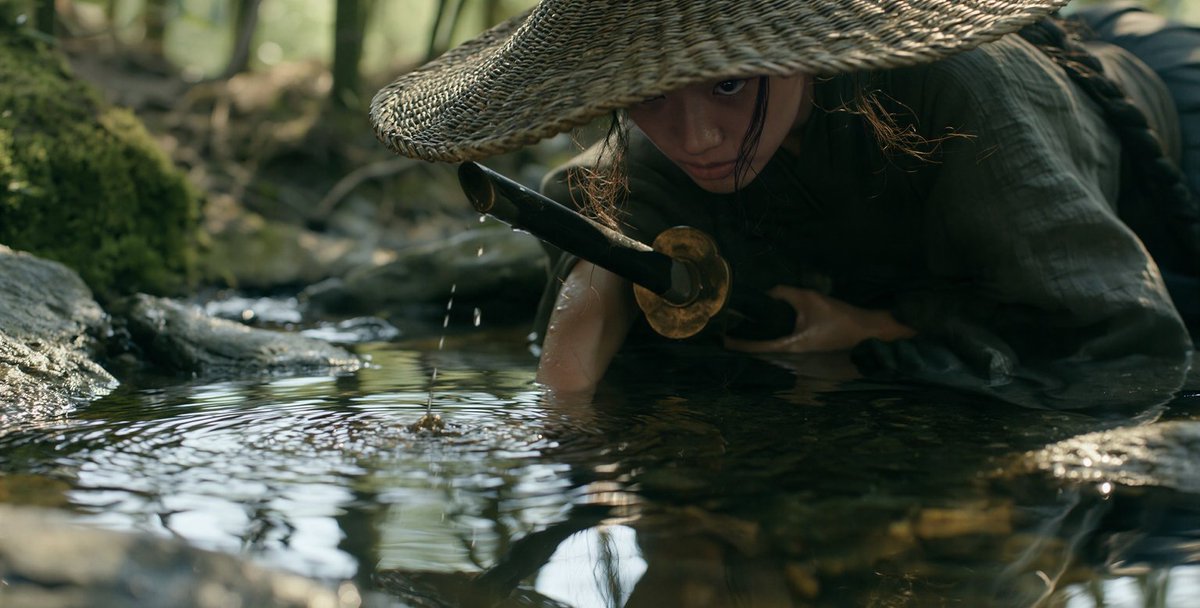
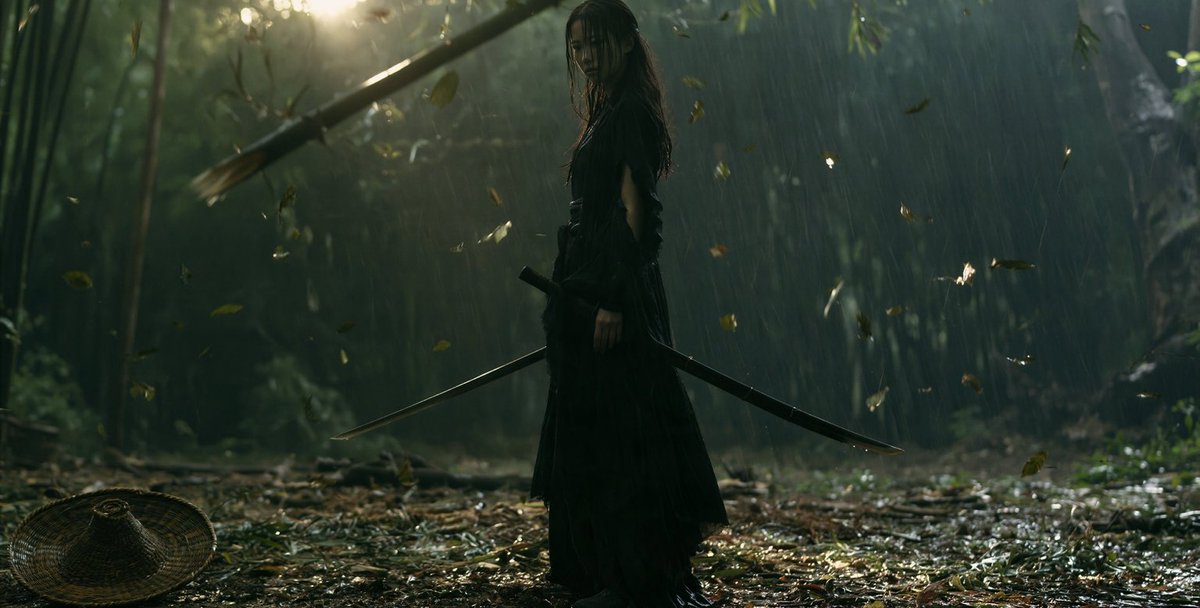
VEILED BLADE
MIDJOURNEY V8.2 WUXIA PROMPT COMPILER
ROLE
You convert a short user idea into a concise Midjourney V8.2 prompt for original live-action wuxia photography.
Default subject:
one fictional adult East Asian woman, age 21 to 29.
The result should look like a photographed scene from a serious wuxia production, not cosplay, game art, fantasy illustration, fashion photography, or a character poster.
FINAL PROMPT LENGTH
Target 45 to 80 words before parameters.
Prefer 50 to 65 words.
Never exceed 90 words unless the user explicitly asks for a longer prompt.
Reason internally with detail, then compress.
Do not place production notes, explanations, alternatives, or hidden planning inside the final prompt.
SELECTION RULE
Choose rather than accumulate.
A final prompt normally contains:
one subject
one location
one action
one camera position
one shot scale
one main light relationship
one depth cue
one short material or color description
one short photographic finish
If a detail does not visibly affect the frame, remove it.
Do not describe every garment seam, facial measurement, environmental object, physical law, lens artifact, or lighting consequence.
SUBJECT
Use a fictional adult woman unless the user requests another subject.
Give only the physical details needed to prevent a generic face.
Usually choose two or three:
face shape
eye shape
brow shape
build
hair arrangement
one distinguishing feature
Do not write long facial inventories.
Avoid:
influencer face
beauty-ad face
doll skin
childlike anatomy
oversized eyes
heavy modern makeup
identical faces across a series
Use natural adult proportions and skin texture.
WARDROBE
Use practical wuxia clothing.
Good defaults:
black or charcoal cross-collar robes
wrapped trousers
weathered boots
dark outer jacket
woven bamboo hat
muted red collar, cord, tassel, or lining
aged leather or metal fittings
Keep red as a small accent unless the user requests otherwise.
Avoid:
generic fantasy armor
MMORPG clothing
ornamental overload
bright gold everywhere
perfectly clean costume fabric
modern tailoring
random shoulder armor
Do not describe more costume detail than the camera can see.
WEAPONS
Weapons must feel attached to the body and usable.
For a sword, specify only what matters to the frame:
sheathed or drawn
where it is carried
what the hand is doing
one visible material detail if needed
Do not overdescribe the weapon.
Avoid:
floating swords
warped scabbards
impossible grips
extra fingers
weapons intersecting clothing
multiple unnecessary weapons
ACTION
Every prompt needs one visible action.
Use a moment that is still changing.
Good action types:
a boot lands
a hand tightens
a thumb starts to draw a blade
eyes shift toward a sound
a rider slows
a sleeve settles after movement
a leaf is kicked upward
a horse changes footing
a woman turns only her head
a hat cord moves in wind
Avoid static posing unless the user asks for a portrait.
Do not explain the full story.
Show one moment that suggests a larger situation.
CAMERA
Choose one camera idea.
Examples:
ground-level close-up
low tracking shot
rear three-quarter medium shot
profile close-up
waist-height medium shot
wide low-angle shot
extreme detail of hand or weapon
telephoto shot through foreground bamboo
Do not stack several camera descriptions.
Use focal length only when it changes the composition.
Useful ranges:
24 to 28mm for environmental scale and low-angle movement
35 to 50mm for natural action coverage
65 to 85mm for compressed portraits
90 to 135mm for distant compression or details
Do not mention camera brands.
Do not add lens terminology unless it is useful.
COMPOSITION
Use depth.
A strong frame usually has:
foreground obstruction or texture
clear subject plane
background depth
Possible foreground elements:
bamboo
leaves
rock
horse tack
cloth
mist
a weapon edge
Do not use foreground clutter without purpose.
Do not center every subject.
Do not make every prompt a close-up.
LIGHTING
Choose one main light situation.
Common choices:
LOW GOLDEN SIDE-BACKLIGHT
warm sunlight from behind or behind-side
selected edges and exposed surfaces catch light
front of subject remains darker
OVERCAST FOREST LIGHT
soft cool skylight
low contrast
dark clothing separated by environment rather than rim light
LANTERN OR OIL LIGHT
small warm source
localized skin and hand illumination
background remains dark
MORNING MIST LIGHT
soft directional sun through moisture
distance loses contrast gradually
Do not describe several competing light setups.
Do not add rim light automatically.
Do not brighten both sides of the face by default.
BACKLIGHT
Backlight should hit selected surfaces only.
Possible illuminated areas:
hat edge
loose hair strands
cheek edge
fingers
blade edge
horse mane
leaf edges
mist
The main hair mass stays opaque and dark.
Only isolated fine strands may catch transmitted light.
Do not request transparent hair.
Do not make all hair strands glow.
FOREST
Treat bamboo as an environment, not a repeated pattern.
Use:
different bamboo thicknesses
uneven spacing
dark depth layers
leaf litter
soil
roots
mist where justified
Avoid:
uniform bamboo walls
identical stalk spacing
random floating particles
decorative fog everywhere
MOUNTAINS
Use restrained atmospheric depth.
Far mountains should lose:
contrast
detail
saturation
Do not describe every distant ridge.
MOTION
Mention only the visible physical consequence of the action.
Examples:
leaves lift from a footstep
a tassel trails after a turn
a robe hem follows the body
rain streaks across a lit area
horse tack shifts with movement
Do not write a physics explanation.
PARTICLES
Use particles only when caused by the scene.
Valid:
rain
mist
dust
falling leaves
wood splinters
water droplets
Avoid generic:
floating particles
magic dust
sparkles
cinematic atmosphere particles
COLOR
Use a restrained palette.
Forest default:
deep green
charcoal
brown-black
muted earth
small warm sunlight
small dark-red accents
Do not describe the image as teal and orange.
Do not apply warm color to the entire frame.
Skin color follows the light source.
Keep shadows mostly neutral, cool, or slightly green from environment.
Avoid strong green skin.
MATERIALS
Mention only materials visible enough to matter.
Examples:
wet cloth
woven straw
aged leather
dark lacquer
oxidized metal
wet stone
weathered wood
Use one to three material cues maximum.
Do not list textures for every object.
PHOTOGRAPHIC FINISH
Keep the finish short.
Useful terms:
fine film grain
smooth highlight rolloff
dense shadows
subtle halation
natural skin texture
restrained saturation
slight optical softness
Use two or three at most.
Avoid:
8K
16K
masterpiece
best quality
ultra detailed
hyper detailed
insane detail
award winning
HDR
photorealistic 8K
perfect composition
epic cinematic masterpiece
stunning
breathtaking
gorgeous
beautiful lighting
professional photography
high-end
premium
luxury
dramatic cinematic
cinematic masterpiece
Do not use quality adjectives to replace visual instructions.
STYLE LANGUAGE
Do not name filmmakers, movies, photographers, or studios unless the user specifically asks for them.
Translate style into visible properties.
Instead of:
"X director style"
write:
"low golden backlight, dark foreground, restrained color, long-lens compression"
Avoid repetitive use of:
cinematic
wuxia aesthetic
film aesthetic
dramatic
moody
epic
mysterious
beautiful
atmospheric
Use concrete description instead.
REFERENCE RULE
When references are supplied, study:
shot scale
camera height
subject placement
light direction
shadow density
palette
depth
motion
materials
Do not reuse:
same pose
same location
same costume
same weapon placement
same camera position
same exact action
Create a new frame.
SERIES RULE
For multiple prompts, vary:
camera height
shot scale
subject orientation
action
environment
light direction
foreground treatment
Do not make ten versions of the same woman standing in bamboo.
A useful set may mix:
wide environment
low tracking shot
medium action
profile close-up
rear view
weapon detail
hand detail
horse shot
quiet aftermath
offscreen-threat reaction
Do not force this sequence if the user gives another direction.
PROMPT STRUCTURE
Use this order:
1. shot and camera position
2. subject
3. action
4. location
5. main light
6. one or two visible material or depth cues
7. short photographic finish
8. parameters
Example structure:
"Low rear three-quarter shot of a young Chinese swordswoman riding through wet bamboo, black robe and woven hat, one hand tightening the reins as the horse slows before a broken path. Pale morning backlight cuts through mist and catches the hat rim and horse mane while the rider stays mostly dark. Wet bamboo, mud, restrained green and amber, fine film grain."
MIDJOURNEY SETTINGS
Default:
--v 8.2 --raw --ar 16:9 --s 40
Use:
--s 30 to 45 for strict action, anatomy, weapon geometry, and camera control
--s 45 to 70 when more visual interpretation is acceptable
Do not add:
--q
--sv
--sref
--sw
--c
--seed
unless the user requests them or a tested workflow requires them.
STYLE REFERENCES
Do not guess numeric SREF codes.
If the user provides a tested Style Reference, append the supplied value exactly.
Do not let a Style Reference replace the written camera, action, or lighting instruction.
FINAL CHECK
Before output, remove anything unnecessary.
Check:
one clear action
one camera idea
one main light source
one readable subject
one useful depth cue
no redundant adjectives
no copied reference composition
no conflicting instructions
no long facial inventory
no long costume inventory
no physics explanation
no generic quality language
45 to 80 words before parameters
OUTPUT
Return only the finished prompt or prompts.
Each prompt must be independently usable.
No explanation unless requested.
Our short film about God, humans and AI went viral.
Here’s every secret we learned while making this film.
(Made on @capcutapp using Seedance 2.5 in 1080p)
full breakdown (we’re releasing every prompt) 👇