USCGC Eagle. She is one of only two active commissioned sailing vessels in the United States military today, along with USS Constitution.
Facts and Figures
Length of EAGLE: 295 ft. (roughly equivalent to a football field)
Number of sails: 23
Sail area: 22,227 square feet
Tallest mast: 150 feet (roughly equivalent to a 15-story building)
Length of rigging: 6 miles
Working crew: 55
Maximum people capacity: 239
Weight: 1,655 tons (EAGLE’s hull and decks are made of steel)
Speed under sail: 17 knots (20 mph)
Speed under power: 10 knots (11 mph)
Gallons of fuel oil: 24,215
Weight of anchors: 3,860 lbs.
History of EAGLE
She is the seventh Coast Guard cutter to bear the name in a line dating back to 1792, including the Revenue Cutter Eagle
Built at the Blohm+Voss Shipyard in Hamburg, Germany in 1936, and commissioned as Horst Wessel, EAGLE was one of three sail-training ships operated by the pre-World War II German navy.
Named after a Nazi martyr, Horst Wessel, the barque was used to train cadets and members of the Hitler Youth before and during WWII.
After the war, Horst Wessel was given to the United States as reparation. She was given to the United States Coast Guard, which commissioned her into service as USCGC Eagle (WIX-327). She sailed from Bremerhaven to Orangeburg, New York, United States in Jun 1946 with both her new American crew as well as most of her former German crew, including Captain Schnibbe.
The German crew was disembarked at Camp Shanks before Eagle proceeded to New London, Connecticut, United States. She visited Kiel, West Germany in 1972 at the invitation of the West German government; Kiel was Horst Wessel's home port for some time during the ship's tenure as a German Navy ship.
Just a couple of former No. 1 Overall picks chatting it up 🤝
Kentucky LEGENDS @JohnWall & @AntDavis23 were seen together at the NBA Summer League in Las Vegas 😼
(📸: @WashWizards)
We keep blaming teachers for declining literacy.
But we're raising a generation that consumes information through 15-second videos, endless scrolling, and constant notifications. Then we assess them as though they've spent years building the reading stamina to sit with a complex text for 30 or 60 minutes.
Scrolling is a sprint.
Reading is a marathon.
Today's students interact with language differently than any generation before them. They skim. They swipe. They jump from one idea to the next. Yet our literacy assessments still require sustained attention, deep comprehension, inference, vocabulary, and the ability to remain engaged with complex texts.
Those are essential skills. They always will be.
But if children spend far less time reading books outside of school than previous generations, why are we surprised when reading stamina declines?
This isn't about blaming parents or lowering expectations. It's about recognizing a profound cultural shift. Schools are increasingly being asked to develop skills that many children have fewer opportunities to practice beyond the classroom.
Teachers matter.
Instruction matters.
But literacy has never begun with a standardized test.
It begins with hearing stories, seeing adults read, turning pages, asking questions, imagining new worlds, and discovering that some things are worth staying with long after the first page.
If we want stronger readers, we can't place the entire burden on teachers. Building literacy has always been, and will always be, a shared responsibility between schools, families, and the culture our children grow up in.
You don't see a ship like this every day.
The USCGC Eagle, roughly the size of a football field, is set to lead the America 250 Parade of Sail, with her massive square sails and three towering masts turning heads before the celebration even begins.
Built in Germany in 1936 and brought to the United States after World War II, the Eagle has spent decades training future Coast Guard officers and remains America's only active square-rigger in government service.
“I work the front desk at a small doctor’s office, and I wish people could see what happens on the other side of the phone.
Every day, older patients call us confused.
They are told to use the patient portal, upload documents, check lab results online, fill out forms before the visit, and confirm everything through a link.
Some of them do not know what a portal is.
Some do not have a smartphone.
Some have one, but they are afraid to click the wrong thing.
Last week, a man in his late 80s called about his test results.
He said, “Ma’am, I don’t mean to bother you, but the computer says I have a message and I don’t know how to open it.”
He sounded ashamed.
That broke my heart.
He should not have to feel ashamed for needing a human being.
Technology can be helpful. I understand that.
But when people who built this country are made to feel helpless because everything became a login and a password, we have gone too far.
Not everything needs to be an app.
Not every answer should be hidden behind a screen.
Sometimes people need a voice.
A patient person.
A real human who says, “Don’t worry, I can help you.”
Progress should not leave seniors behind.
Because one day, the world will move faster than us too.
And I hope someone is kind enough to slow down.
~Unknown
“Take Five” by Dave Brubeck Quartet was recorded 67 years ago today.
Two years later it became a surprise hit and the biggest-selling jazz single ever.
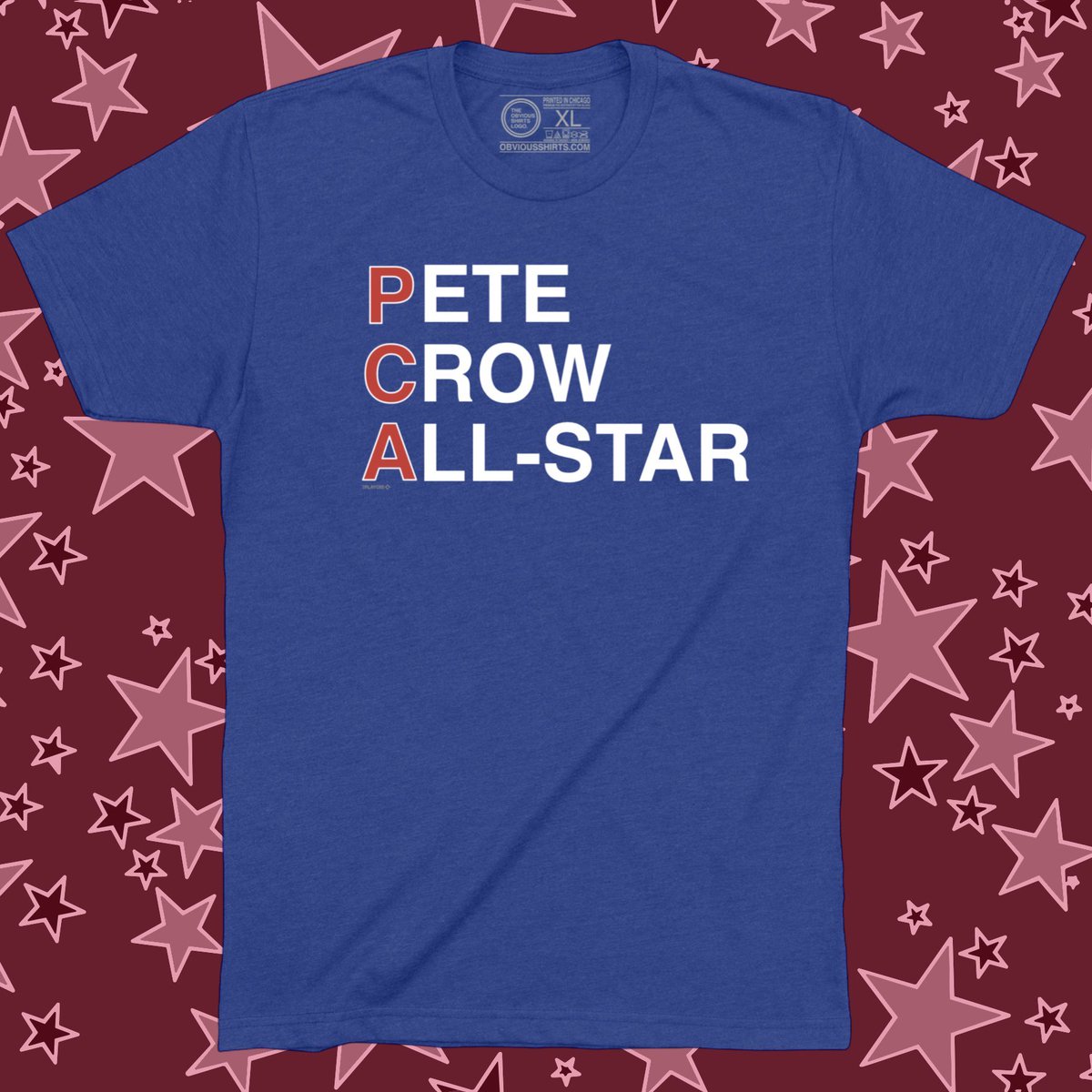
🚨Pete Crow-Armstrong , Babe Ruth and Lou Gehrig are the only players in MLB history to put up these numbers in a single month:
375+ batting average
.775+ SLG
80+ total bases
15 walks
10+ home runs
5+ stolen bases
PCA also lead all of MLB with a 236 WRC+ in June
#cubs