put that unit in one department first, prove it, then roll it out.
in marketing or revops? this is the role to grow into. running a team? it's your next hire.
is your marketing team an engineering org yet?
the fastest-growing job in marketing is an engineering role.
GTM engineer postings grew 205% in a year (1,000+ listings analysed)
→ $127,500 median pay
→ vercel and openai pay past $250k for the title
a marketing hire priced like a senior software engineer. because it is one 👇
the marketing department is turning into an engineering org, one hire at a time. AI made building cheap, so the bottleneck became build capacity.
the unit forming behind it
→ an operator who owns the outcome
→ an ops lead who owns the systems and data
→ a GTM engineer who builds
one thin hub on top holds the shared brain.
so my two co-founders and i wrote a position paper on it. the build era of go to market has started.
25+ years of experience, eleven public company builds, a three year cost comparison and about sixty sourced references.
why the old rule stopped working, how GTM teams get structured now and why owning the code, the data and the infrastructure matters more than it used to. the address is on the cover above.
GTM teams have bought their software since salesforce took CRM to the cloud in 1999.
for two decades building meant borrowing engineers from product, joining a queue and waiting months for a first version. renting was faster and nobody got blamed for it.
i think that era is over 👇
agentic development cut the cost of building the layer that decides who gets contacted, which use case applies, which ads run, what content gets written, which ABM plays go out, what gets sent and when to stop.
that layer is where a GTM team's judgment lives.
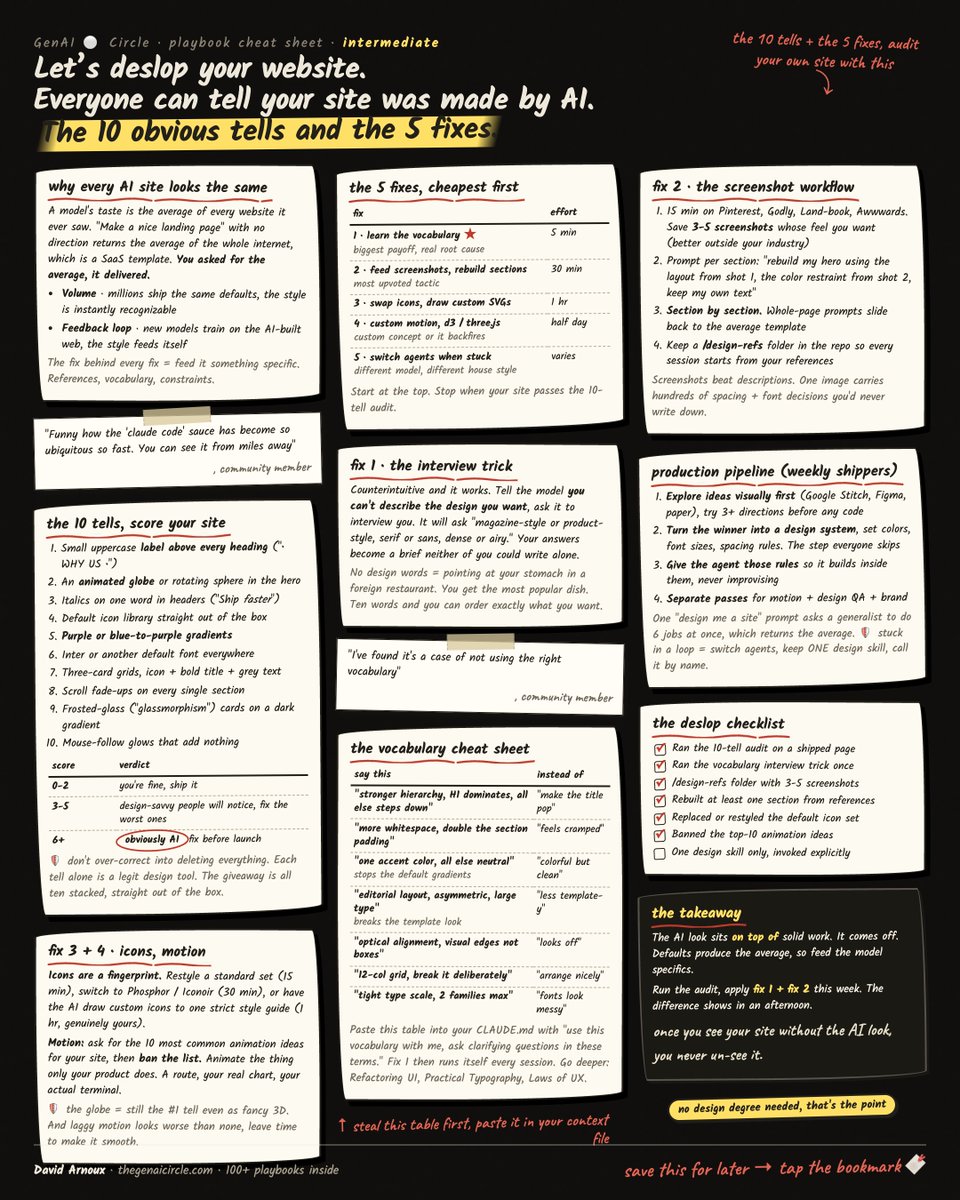
4. ask for the 10 most common animation ideas for your site... then ban that list
5. stuck in an ugly loop? switch the coding agent. different model, different house style
the cheat sheet above has the 10 tells, a score for your own site, the fixes and the vocabulary list. bookmark it and run the audit before you ship your next page 🔖
your website has the AI look. everyone can tell.
uppercase labels over every heading. an animated globe in the hero. purple gradients. the same three-card grid as ten million other sites.
fixing it costs almost nothing. 5 moves 👇
1. learn 8 design words. "stronger hierarchy, H1 dominates" beats "make the title pop". the model knows design, you're ordering off the tourist menu
2. feed it 3 to 5 screenshots of sites you love. rebuild ONE section at a time. whole-page prompts regress to the mean
3. swap the default icon set. icons are a fingerprint
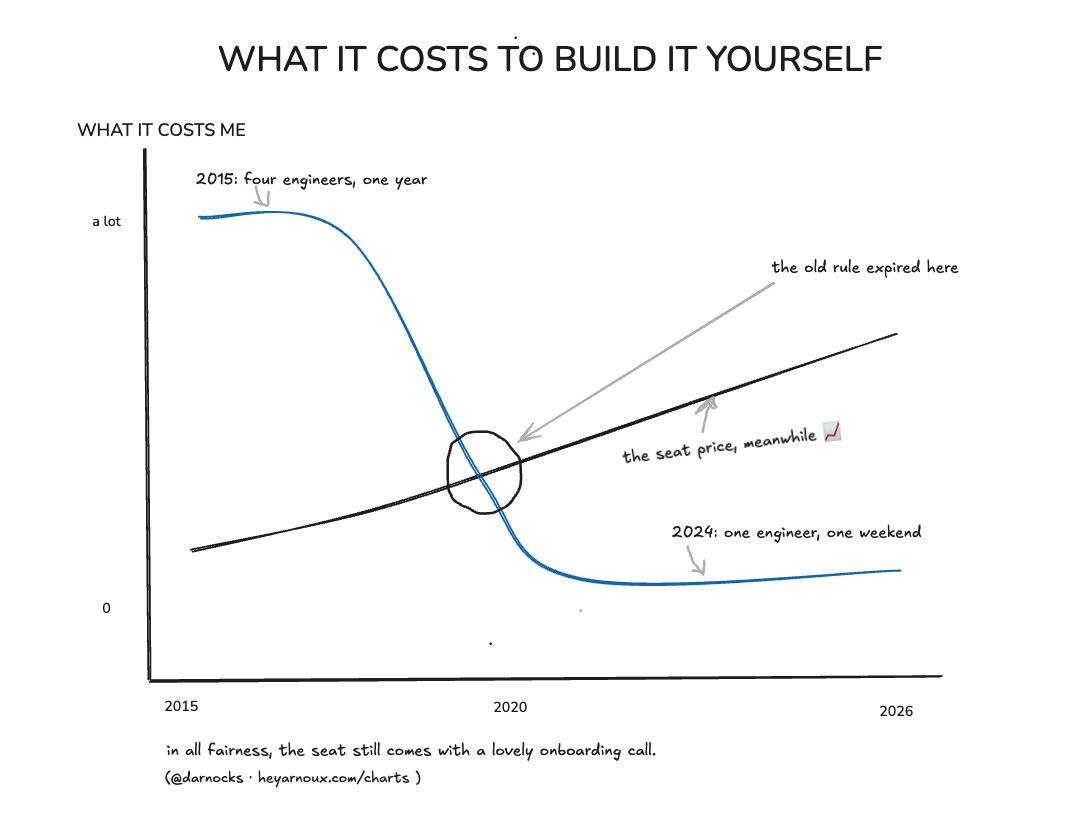
the economics changed in front of me while my advice stayed the same.
i still buy plenty of software. CRMs, enrichment, compute. my view is narrower than build everything. the rules, data model and orchestration behind a revenue motion belong under company control, because that part carries the company's judgment.
what would you build today that you used to buy?
i spent 23 years giving GTM teams the same advice.
buy the software.
building meant asking product for engineers, joining a queue behind three other priorities and waiting months for a first version. buying took one meeting and a credit card. nobody got fired for picking the tool everyone else used.
the SaaS first rule made sense 👇
then i spent the past 2 to 3 years building GTM x AI engines with developers embedded inside the teams.
- an account plan that took weeks now takes 15 minutes
- a workflow that took hours in each market now takes 2 minutes across 22 markets
- one marketer covers ten times the accounts
- a consumer brand went from zero to 50,000 organic visitors a month in eight months with a small embedded team
9. human in the loop all the time is a myth. there's too much activity going on. build the guardrails, compliance, security and branding in by design.
which one do you disagree with?
last time i went to a summit i came back with 9 notes on where things are going 👇
1. everyone is working from claude code. sales, marketing, product, customer success, ops. sure the summit is a bubble. bubbles grow into the early majority, then the late majority.
5. prototype to fully live in 2 weeks, even in enterprises
6. traditional companies now build saas for their own customers. a few years ago they would have bought it
7. in a world of build build build, distribution is key
8. build the company to adapt. an intelligence stack, your business rules on top, AI workflows on top of that. learning loops = a self-learning org
one small warning. in B2B, an AI that always agrees with you is dangerous. a B2C companion app can be warm and kind. the tool that checks your sales forecast needs to be blunt.
the race itself looks familiar. incumbents have the customers and move slowly. AI native teams move fast and have almost no customers yet. the clock is just shorter.
i think the safest thing to own right now is the relationship with your customer. open to being wrong. especially curious what anyone who prices software companies is seeing.
that changes a few habits. charging per user starts to break once AI does the work, because there are fewer users to charge. charging for the work done holds up better. companies sitting on old software become targets, since a new team can rebuild that software with AI and sell the switch as easy. the prompts and playbooks your team writes become as valuable as code, so guard them like code. some companies will even start giving customers and partners a small share of the business, because owners make the loudest fans.