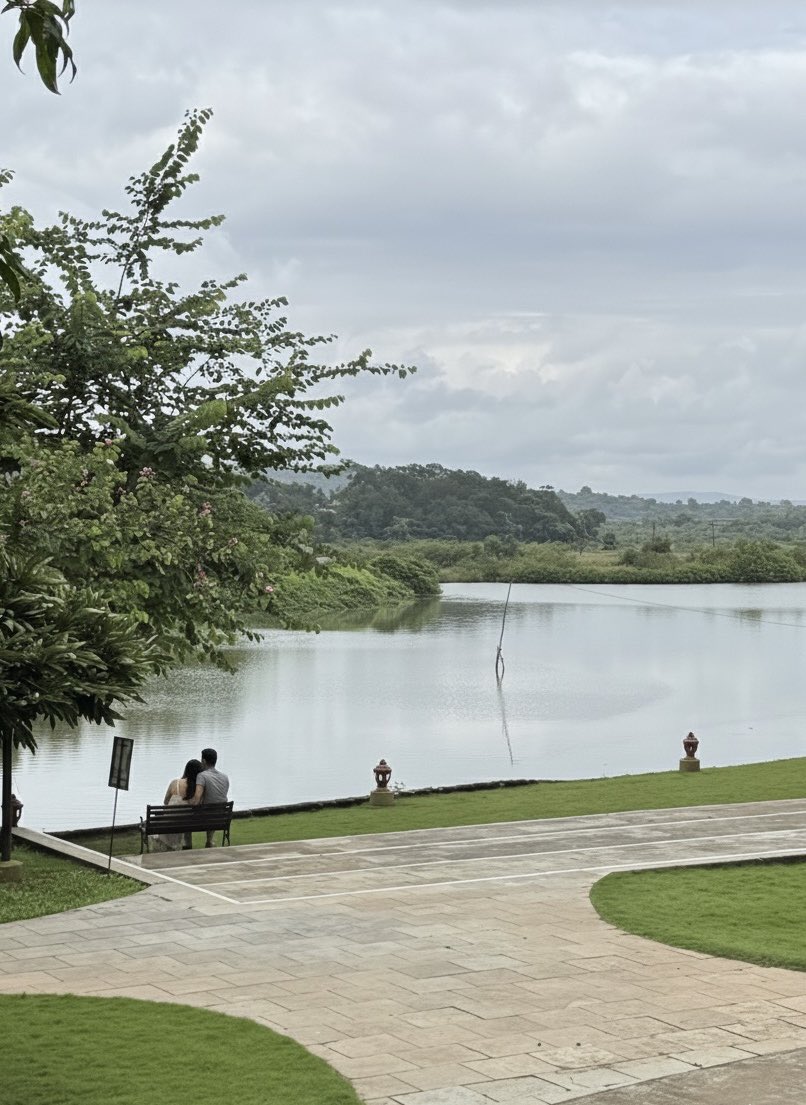
Everyone under 30 is prematurely old (worried about savings, career, FIRE).
Everyone over 50 is desperately young (Burning Man, psychedelics).
My theory: Information abundance aged the young by showing them all future problems all at once.
Information abundance also made the old young by showing them all missed experiences all at once.
So now Gen Z talks like retirement planners and boomers act like teenagers.
It's so over.
Equity rewards patience, eventually. But when valuations stretch, it can test that patience for years.
Debt feels safer, until defaults catch you off guard or inflation steals your gains.
And gold? Shines in crisis, sleeps for decades.
Nothing works all the time.
So what’s the solution? Stay diversified. Quiet, unsexy, but effective.
One of life’s quiet joys is watching someone do their work well; a sportsperson in flow, an artist lost in creation, an orator holding an audience spellbound...
There is a silent beauty in focus and mastery.
But a deeper joy lies in doing your own work well.
A man who trades the quality of his craft for a little more money loses more than he gains. That is simply poor judgment.
What works in T20? Short game. Done in 4 hours.
What works in tests? Five days of ebbs and flows.
This "Test Twenty" format basically removes the strengths of the individual formats, and combines the weaknesses.
Too long for a snack, too light for a meal.
I have a thing for the “almost-theres” the ones who nearly made it, who saw the end of the rainbow but could never touch that pot of gold.
Pankaj Dheer was one. Most noted for playing Karna in Mahabharata, the B R Chopra one, and for roles in Chandrakanta and for the legendary opening episode of Zee Horror Show, India’s version of the Twilight Zone, his movie career, despite multiple attempts, remained stillborn.
Bit appearances in Badshah, Qaid Mein Hai Bulbul, Aashiq Awara and Mr. Bond never led to the launch pad he needed to get into the big league.
And so we remember him from old Sunday mornings in front of faded Teleramas, painted sun on forehead, playing another hero who never could get there, memories of times and people and places, no longer there, like the rays of light from a star that has long ceased to be.
Good night, Pankaj Dheer.
Pankaj Dhir is no more. Unlike most members of the principal cast, he was a consummate deracinated urban-educated Mumbai boy whose knowledge of sanskrit/tantsam hindi as well as the epic itself was practically non-existant, and had to learn it on the go as shooting began. But not a single dialogue or frame shows either the linguistic handicap or lack of understanding of character.
Karna wasn't a pleasant man, but Dhir's portrayal was indeed pleasing to the eyes. So much so that when the episode of Karna's killing was aired, a tribal town in Bastar, Chhattisgarh (then undivided Madhya Pradesh), which apparently worships Karna, erupted into riots. Dheer had to be flown in from Bombay by government helicopter and then was accompanied by government escorts to the site of protest to quell it.
Many tv actors have been awarded the epithet "TV ka Amitabh", Ronit Roy and Mukesh Khanna most notable of them, but Dhir's Karna is the only one I've seen worthy of it by any stretch of imagination. The silent, sullen demeanor of Vijay, brooding, tall silhouette, smouldering look in the eyes, the perpetual justification of inexcusable criminal behavior by undeniable emotional trauma and snubs to ego in childhood and adolescence, and willingness to die fighting and leave both friends and foes miserable behind rather than let go of ego-investment in memories of suffering and live and let live a happy life- all were mirrored in Karna. Interestingly, Karna's bow was also named Vijaya.
Radheya wanted to be remembered gloriously in history more than anything else. Dhir made sure no one would ever forget him. #Stolen
Om Shanti 💐
It’s worth revisiting John and Nero from Nassim Taleb’s world.
Nero, the skeptic, thoughtful, introspective, quietly aware of the limits of his knowledge. Where others seek prediction, he seeks preparation. He knows that uncertainty isn’t a flaw in the system, it is the system. He doesn’t boast of foresight, he builds for resilience. He is the kind of man who can stand unshaken when the ground shifts, because he never believed it was firm to begin with.
John, by contrast, is confident, articulate, and well-rewarded. His world is cleanly mapped; charts, models, forecasts, elegant theories of cause and effect. His certainty is his strength, and also his blindness. When luck favours him, he calls it skill; when it deserts him, he calls it misfortune. He sees randomness only in hindsight, and never in himself.
John represents those who think they know. Nero, those who understand they never truly can.
The world celebrates John. It calls him brilliant.
Nero, meanwhile, remains in the background, often dismissed, occasionally ridiculed, but ultimately, when time passes and randomness unfolds, proven right in spirit if not in gain.
Most of us start as John, eager to believe in patterns and control. But life, if we pay attention, slowly nudges us toward Nero, toward doubt, humility, and respect for the unknown.
Aspire to be Nero. Not because the world will reward you for it, it probably won’t, but because reality will.
If babies understood embarrassment, most of them would never learn to walk or speak because of the amount of failure required to improve.
This was one of our first lessons in life but somehow, we forgot
Gave 12 years to entrepreneurship. 3 startups and went all in. Almost broke by end of it. But gained a lot of muscle to appreciate what it takes to build something from scratch when no one believes in it. After all this, ended up being an investor to support other founders.
This was not part of the career wishlist.
I never planned to be here. But life has its own way of re-routing you. Looking back, none of it was wasted. Every failed startup was a tuition and training for a role I didn’t know I will do later.
Starting over is the ultimate form of optionality. The biggest upgrade in life is switching tracks when the old one stops compounding.
My middle-class ass spent four days at an island resort doing absolutely nothing.
No sightseeing. No packed itineraries. No rushing from place to place with a powerbank on my phone. Just... existing. Reading by the pool. Napping. Staring at the water.
For years, my vacations followed the same frantic pattern: new city every day, new bed every night, cramming fifteen days of experiences into seven because "I'm spending so much on flights, I need to maximize every rupee!"
The math seemed obvious: more activities = more value = better vacation.
But somewhere along the way—maybe it was watching how differently people approach leisure in other cultures (White Lotus?), maybe it's just getting older—I realized I had the equation backwards.
The most expensive thing isn't the hotel room. It's the decades you spend thinking you need to justify every moment of rest with productivity or activity.
There's something profound about paying money to do nothing. Not because you're lazy, but because you finally understand that your time and mental space have value too.
The Western tourists I've observed over the years taught me something: they don't see leisure as wasteful. They see it as essential. They're not paying for activities—they're paying for the absence of obligation.
Here's what's wild: India went from ration cards to bitcoin in twenty years. The top 5% of us have compressed decades of consumption evolution into a single generation.
We learned to spend on things, then experiences, then global status systems—all while our parents were still figuring how to shove every penny into FDs and real estate loans.
But maybe the final frontier isn't buying more or doing more.
Maybe it's buying permission to do less to feel more.
isn’t it high time we had a reminder
on-screen whenever a hero rides without a helmet?
Cinema has the power to influence millions. If a simple line—“Wearing a helmet saves lives”—flashes on the screen, it might nudge even a few people to take safety seriously.
@AshwiniVaishnaw@prasoonjoshi_
We’ve grown up watching our movie heroes zoom past on motorcycles—hair flying, sunglasses on, no helmet in sight. It may look stylish on screen, but in real life it’s deadly. Just like movies carry a “smoking is injurious to health” warning,