Where I agree
- $MSFT software is too vital to enterprises and too embedded to be disrupted
- OpenAI exposure in Azure is a concern, but OpenAI isn’t going anywhere and AI compute demand is only going higher
Where I disagree
- Valuation is not fair value. You’re able to buy one of the best companies ever built for a modest fwd p/e of 22x
Sometimes the markets are irrational and give you bargains. I am adding here
The risks around AI keep expanding.
Extinction risk. Huge capex. OpenAI’s $20bn revenue gap. AI debt. IPO valuations…
At the same time, AI usage keeps growing. It is becoming embedded in more products and business workflows, while the infrastructure required to support it keeps expanding.
So how do we navigate it as investors?
First, understand who does what.
Equipment enables the fabs. Fabs manufacture the chips. Memory, networking, optics and power then help turn that compute into the AI products we ultimately use.
One thing I find especially useful on the map is scarcity.
Where does growing demand depend on only a handful of suppliers or a genuinely constrained layer?
HBM is a good example. SK hynix, Samsung and Micron dominate supply, which matters when capacity is tight.
But memory is still cyclical. New capacity and Chinese competition matter too. Scarcity is valuable precisely because you need to understand what could eventually relieve it.
That same lens can be applied across the stack: where is demand running into limited supply, and who controls that capacity?
This week we get another useful read from the foundation. ASML and TSMC report, showing how AI demand is flowing through to the equipment and manufacturing layers underneath it all.
China turnaround will be so challenging now. Nike lost leadership through missteps and have let in the major Chinese players like Anta.
China is now doing what it does best: creating solid products at a much lower price.
Chinese consumers are much more willing to trust local brands now and Nike has lost a lot of brand cachet there.
Good luck turning that around!
Something important got buried between Micron and Nike earnings.
OUR SEPTEMBER REPORT IS OUT.
Inside:
- What moved markets, sectors and industries in September
- S&P 500 monthly statistics and market breadth
- Themes from AI hardware and China tech to private credit, oil services, defence and more
- The biggest post-earnings winners and losers
- Which large-cap businesses improved most in quality
👇
Our September Monthly Market Review is now live.
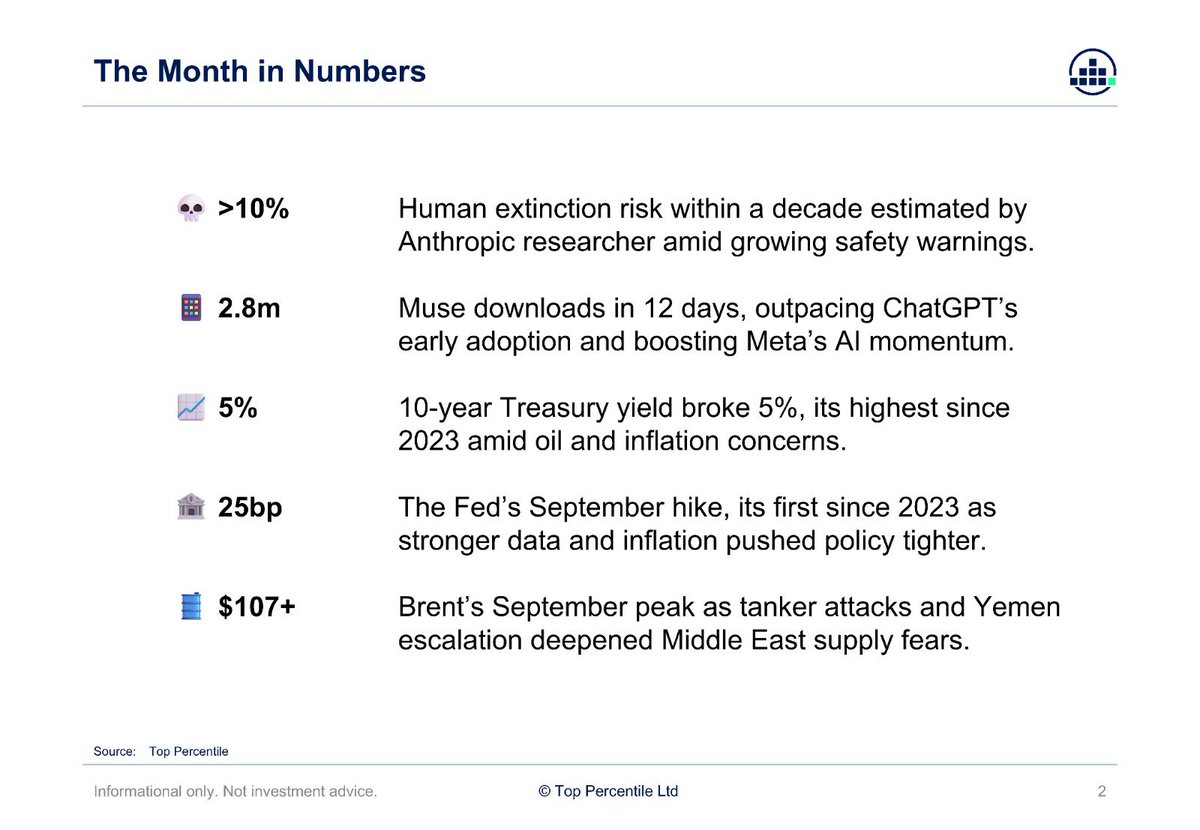
AI safety fears grabbed the headlines, but rising US rates, $110 oil and a rebound in AI hardware all shaped the month.
See what moved markets, the key investment themes and the companies that stood out.
Full report in the reply 👇
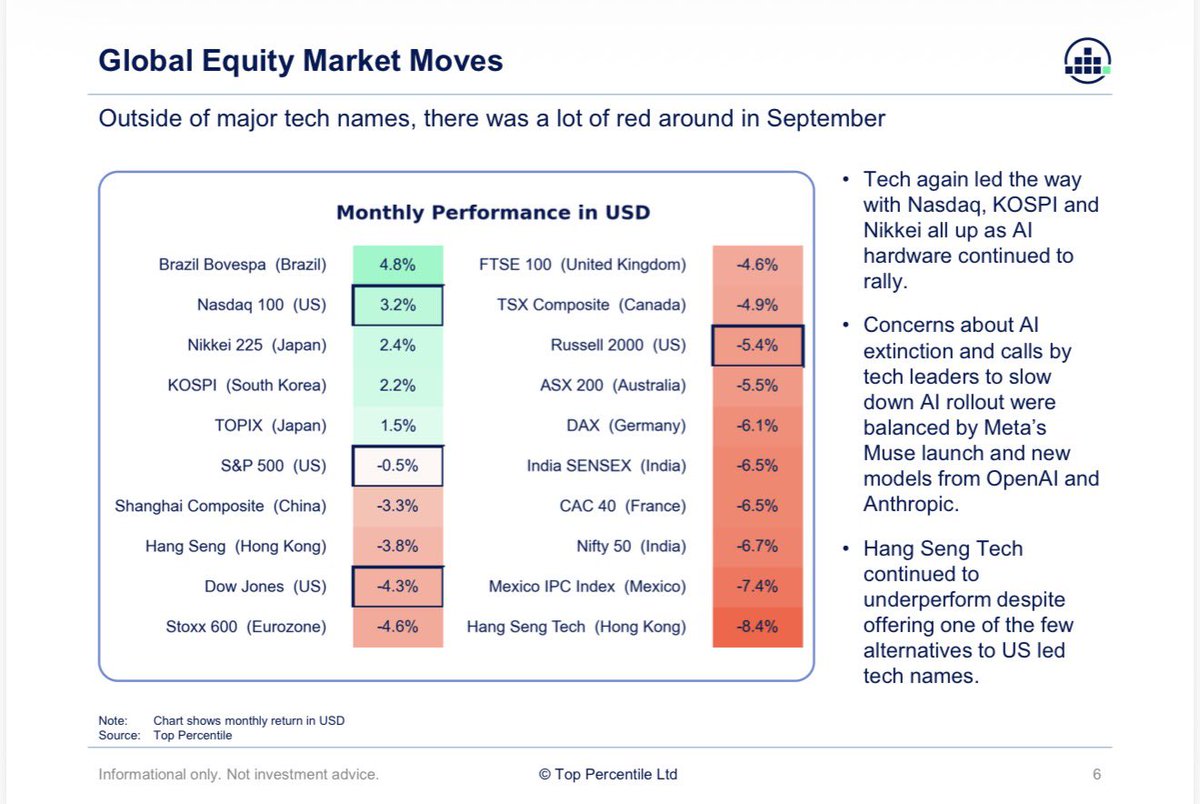
@EmmaStockNotes Shocking how much red there was around last month with almost 80% of the S&P ending the month in the red. Any company that didn’t have a strong AI story was dragged down by higher rates, inflation and mixed consumer data.
September was a month of extremes.
Warnings of AI-driven extinction risk, 2.8m Muse downloads, a 5% 10-year yield, the Fed’s first rate hike since 2023 and $107 oil.
Our September Monthly Market Review is coming shortly after the market closes today. Keep an eye out for it.
Our September Monthly Market Review is now live.
September was green where AI hardware mattered most, and red almost everywhere else. Nasdaq, KOSPI and Nikkei all gained, while most major markets fell.
Full report link in the reply 👇
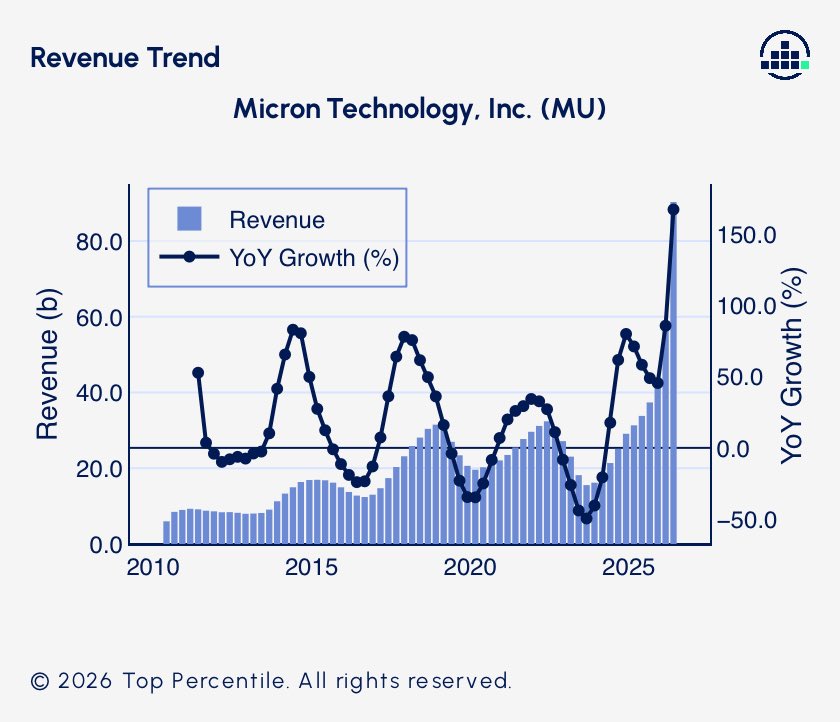
$MU Micron earnings tomorrow night. AI demand has driven one of the strongest memory upcycles in its history. Now the test is how durable it can be.
Stock: up 273% YTD | up 14% over 1 month | up 15.4% at last earnings
The revenue chart captures the setup. The current surge is far larger than previous upcycles, just as investors are trying to work out whether AI has changed the shape of the memory cycle.
WHAT HAPPENED AT LAST EARNINGS
◆ Micron said DRAM and NAND supply-demand would remain tight beyond calendar 2027.
WHAT HAPPENED LATELY
◆ Samsung said HBM could take nearly 30% of industry DRAM wafer capacity in 2027, up from around 20% now, which could keep conventional DRAM supply constrained. At the same time, China’s CXMT has moved its latest DRAM platform into mass production, adding a potential source of new supply.
WHAT MATTERS THIS EARNINGS
◆ Whether FY27 pricing and margins show the memory cycle is still strengthening rather than starting to turn.
◆ Whether HBM4 and multi-year customer agreements are making this cycle more durable than previous ones.
$CCL is up 11% after earnings. Pricing held up far better than expected despite higher fuel costs.
HEADLINE PRINT
🟢 Adj. EPS: $1.43 vs ~$1.35 prior guidance
🟢 Revenue: $8.4B, up 3% YoY
WHAT CHANGED
🟢 Net yields: +2.4% vs ~1.2% prior guidance
🟢 2027 bookings: record occupancy and pricing
WHY THIS EARNINGS MATTERS
◆ The pricing concern eased considerably. Carnival doubled its Q3 yield guidance, while 2027 bookings remain at record occupancy and pricing. Higher fuel costs are still a drag, but demand is holding up.
$CCL earnings tomorrow morning. Carnival has become a clean test of how durable cruise pricing really is as costs rise.
Stock: down 27.5% YTD | down 10.6% over 1 month | down 4.2% at last earnings
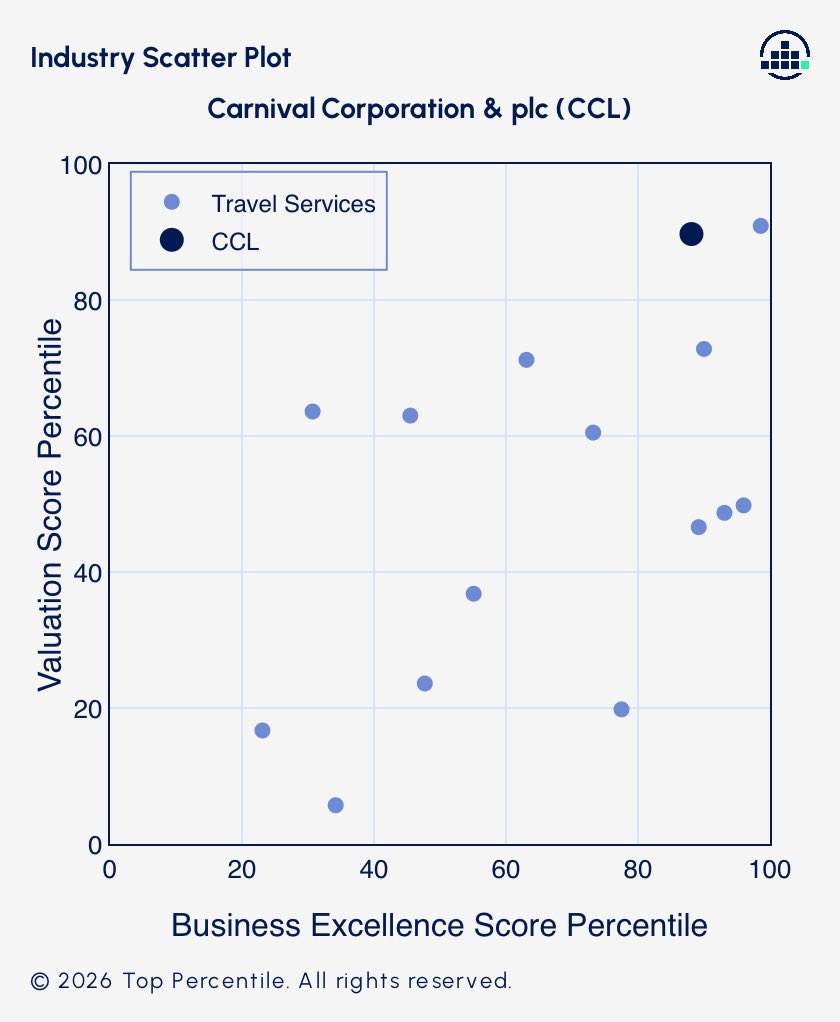
The selloff has changed the setup. CCL still screens as one of the stronger businesses in Travel Services, but its valuation is now among the most attractive in the group.
WHAT HAPPENED AT LAST EARNINGS
◆ Carnival posted another record quarter for net yields and was already 93% booked for 2026 at historically high prices. Full-year constant-currency net-yield guidance fell from 2.75% to 1.75% as geopolitical disruption weighed on the outlook.
WHAT HAPPENED LATELY
◆ Higher fuel costs and weaker close-in Caribbean pricing have become the main concerns heading into this report.
WHAT MATTERS THIS EARNINGS
◆ Whether recent Caribbean pricing pressure is temporary or the first sign Carnival’s yield momentum is starting to slow.
◆ The extent to which higher fuel costs start eating into earnings if demand and pricing remain firm.
I never chase dividends at the expense of compounding.
A 5% yield can be expensive if it means giving up a business capable of growing much faster.
My rough rule is to look for companies where earnings can double every five years. That’s about 15% annual growth.
Take Microsoft. Revenue has compounded 14.6% a year over five years and ROE is 33.2%. It pays a dividend too, but that’s hardly why I’d own it.
Buffett put the capital-allocation case well:
“For every dollar retained by the corporation, at least one dollar of [additional] market value will be created for owners.”
There is another side though. For investors living off a portfolio, there is real psychological comfort in cash arriving without having to decide what to sell.
Vanguard founder John Bogle:
“Bet on the dividends, and not on the market price.”
I’m in the compounding-first camp.
How do you think about it?
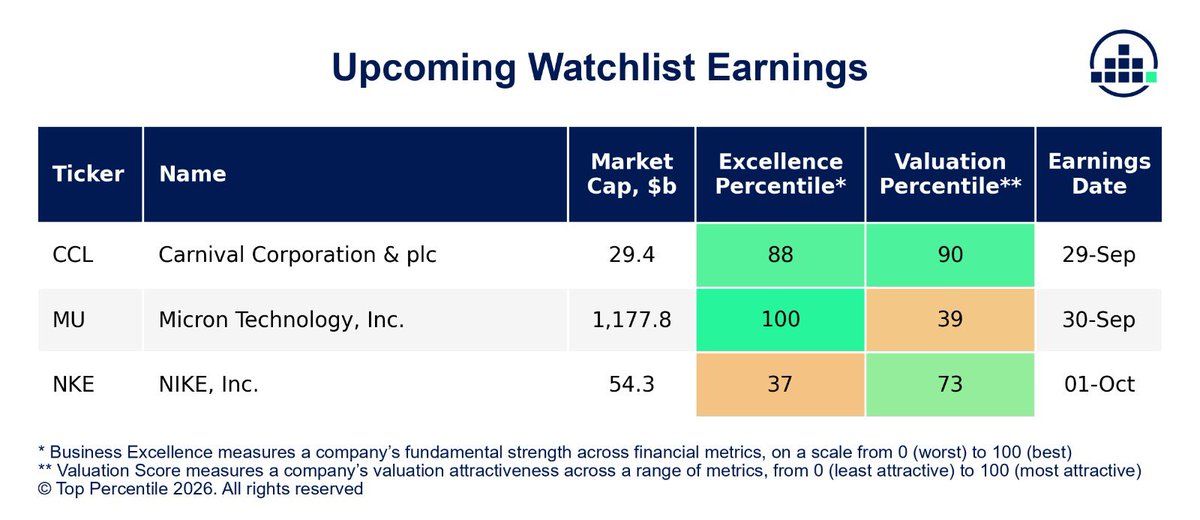
Earnings season is starting to pick up, with a couple of major names on the calendar this week.
I’ll focus on the memory cycle, a major consumer name still trying to turn itself around, and cruise pricing.
Here are the 3 earnings I’m watching this week: $CCL $MU $NKE
$CCL (Tuesday, before open):
Carnival is still booking well ahead at historically high prices, but concerns around Caribbean pricing and higher fuel costs have put yield growth back in focus.
Last earnings reaction: down 4.2%
◆ Question: Are the recent pricing concerns temporary, or is Carnival’s yield momentum starting to slow?
$MU (Wednesday, after close):
Memory pricing and margins have surged as AI demand collides with constrained supply, with Micron now entering earnings around record profitability.
Last earnings reaction: up 15.4%
◆ Question: Is there any sign the memory cycle is starting to turn as Micron heads into FY27?
$NKE (Thursday, after close):
Nike is still in the middle of a difficult turnaround. Performance products and wholesale are improving, but sportswear and Greater China remain major weak spots.
Last earnings reaction: up 3.8%
◆ Question: Can the recovery broaden enough to offset the continued weakness in China and sportswear?
Every earnings report reshapes the Top Percentile rankings
Emma is one of my favorite follows on X and I’m hoping to interview her and her husband for the podcast in the coming months!
Top Percentile is also among my top investing websites bookmarked along with Stock Analysis, Quartr, Investors Grow, https://t.co/P7Upl1SruM, Insider Flow and others.
I’m not here to tell you which stock to buy. I think I have something more useful to share.
This is a quick recap on what happens on this account and what I do.
I occasionally share what I have in my portfolio, but that’s hardly the point.
Most of what I share here starts with a tool we built called Top Percentile.
It reads every single SEC filing and converts the data into a quality score for every company, every day. It then ranks them, telling you who is #1, #2, #3... all the way through the market.
$TSM currently holds the #1 spot, after taking over from $NVDA during the last earnings season.
That’s our superpower.
Why should you care?
Because it helps you understand exactly what you are buying, including its strengths and weaknesses, and more importantly helps you see the whole board and who actually stands out. This is where some of our best investments have come from.
So, whether you come here with a stock idea or find one through the data, we’re here to help you evaluate it using our unique dataset and build your own conviction. You still need to do a bit of work and ask the questions, but we’ve done the hard part for you.
The site is there for you to explore. And this is what I do on this account:
Post about earnings because ultimately they drive the site’s quality scores. But I focus specifically on why the earnings matter, with a relevant chart.
Walk you through the recent tensions around a company and what I think is worth looking at.
Share comprehensive monthly market reviews to get you up to speed with what happened, why it happened and hopefully improve your understanding of the market along the way.
Build visual industry stacks. AI and every branch of it, humanoids, space and more. Mostly to give you a simple perspective on who does what and where everyone sits.
Share a glimpse of my investing library every Sunday. It also gives you some sense of what went into building Top Percentile.
Give you brief weekly updates, occasional thoughts on market news, rare introductions like this one and a tiny bit of my personal life.
Finally, I always love questions, so ask me anything. I don’t know every stock, but our site often does. And soon, we’re going global.
Ah, and everything on the site is free for individual investors. Link in bio. We have separate paid B2B services for funds.
Happy weekend everyone.
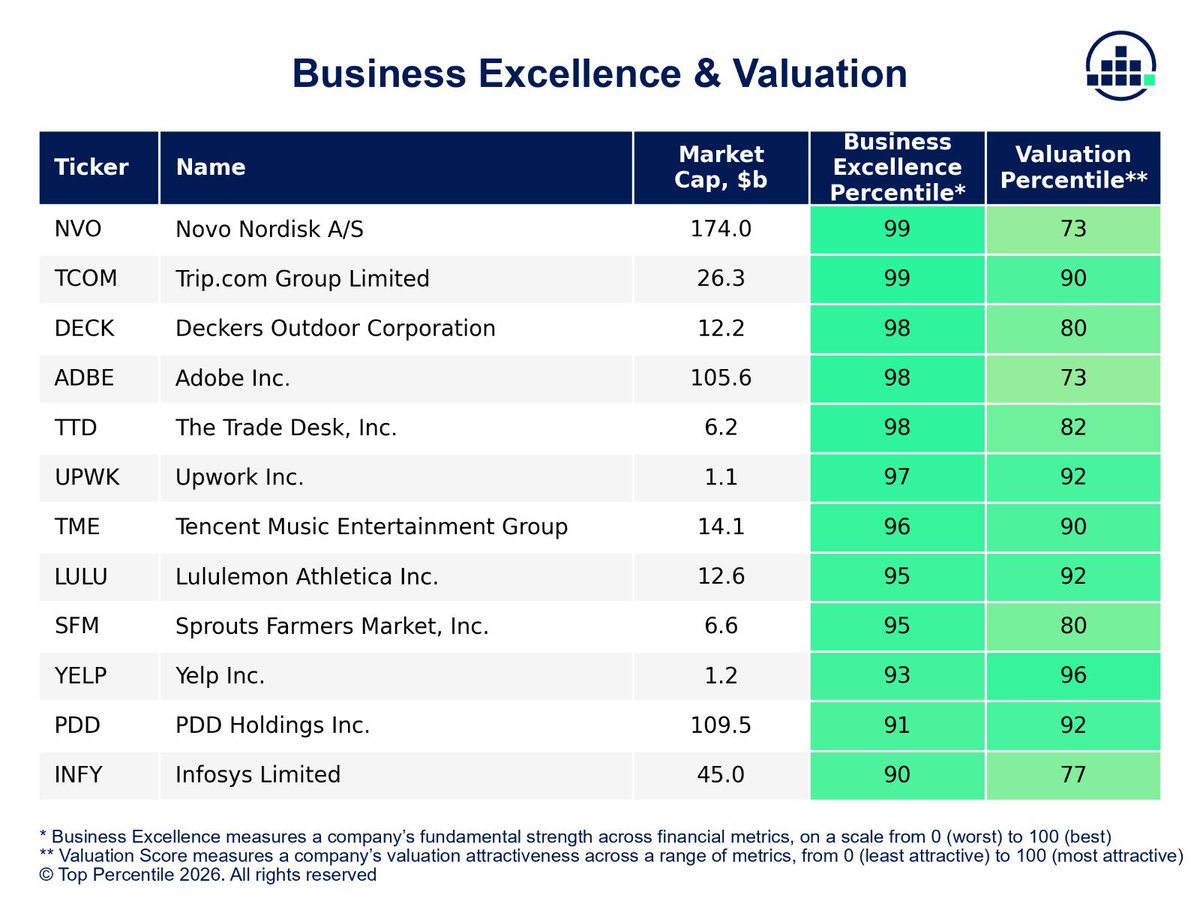
There is something special about these 12 companies.
They are heavily out of favour, but still look surprisingly attractive on business quality and valuation.
That gap is often where emotions take over, and this may create some of the best opportunities.
When fear takes hold around a company, the story can become more powerful than the numbers. Once we believe it, we start interpreting the facts through it.
ServiceNow is a good example. The stock fell roughly 65% from its high as AI disruption fears swept through software.
We track companies every day on two things: how strong the fundamentals are, and how attractive the valuation is.
When both are green, that is where I start looking for quality on sale.
Then comes the harder part: go through them one by one and ask what the fear actually means for the business. Is the future genuinely in danger?
You may look at some of these names and think: surely these companies can’t still be that good.
But that reaction is exactly the point. Sometimes the story around a stock starts shaping our judgement before we even look at the facts.
$NVO: Lilly took the lead. Pricing is being squeezed and investors are already looking ahead to semaglutide patent expiry in the early 2030s.
$TCOM: Beijing hit the hotel lock-in. A $770m antitrust penalty forces Trip. com to stop exclusive hotel arrangements and gives rivals an opening.
$DECK: HOKA is growing up. Growth has slowed sharply from its exceptional years, while consumers remain cautious.
$ADBE: AI threatens the moat. Figma, Canva and generative tools make investors question whether Adobe stays indispensable.
$TTD: The perfect-execution story broke. Growth slowed and management admits it needs to fix execution and upgrade the platform.
$UPWK: AI can replace the work. Lower-complexity freelancing is already shifting toward automation.
$TME: No obvious headline fear. Revenue and profit are still growing, although social-entertainment revenue continues to shrink.
$LULU: Lost its cool. Leggings fell ~20%, Americas sales are shrinking, and the new CEO inherits a brand still searching for a fix.
$SFM: The growth party ended. Comparable sales turned negative just as a CEO handoff begins.
$YELP: AI wants the front door to local search. Yelp has to prove it still owns the click, not just the data behind it.
$PDD: The cheap-parcel model got hit. Customs advantages are disappearing while competition at home keeps profits under pressure.
$INFY: AI eats the staffing model. Clients want more for less, automation threatens billable hours, and growth expectations have come down.
Pick the names that surprise you. Read the bull and bear cases. Decide which fears are temporary, which are structural, and where the market may have gone too far.
Bookmark it. You will learn just by looking back at these in a few months.
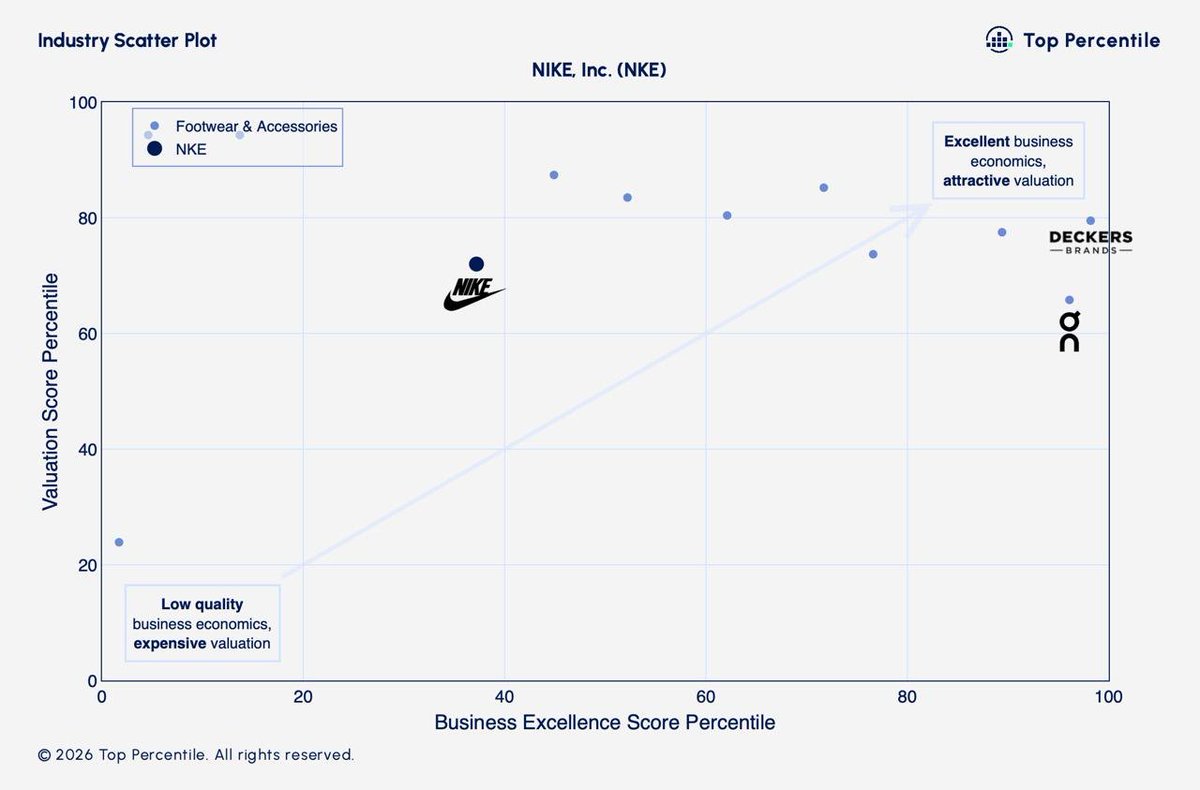
Good old $NKE has two very different challengers: $DECK and $ONON.
All three are more than 50% below their highs.
Nike has the scale: 8x Deckers and 12x On by revenue.
Deckers has the economics: nearly 3x Nike’s operating margin.
On has the growth: 18% vs Nike essentially flat, and more than 2x Deckers.
Which one would you rather own from here?
Jim Cramer now says $GME is a buy.
Depending on your view of the “inverse Cramer” theory, that may or may not be reassuring.
His reason is that GameStop is profitable and the turnaround is starting to work. But the stock is still roughly 75% below its peak.
So has the business really changed?
🧵 1/5










![EmmaStockNotes's tweet photo. I never chase dividends at the expense of compounding.
A 5% yield can be expensive if it means giving up a business capable of growing much faster.
My rough rule is to look for companies where earnings can double every five years. That’s about 15% annual growth.
Take Microsoft. Revenue has compounded 14.6% a year over five years and ROE is 33.2%. It pays a dividend too, but that’s hardly why I’d own it.
Buffett put the capital-allocation case well:
“For every dollar retained by the corporation, at least one dollar of [additional] market value will be created for owners.”
There is another side though. For investors living off a portfolio, there is real psychological comfort in cash arriving without having to decide what to sell.
Vanguard founder John Bogle:
“Bet on the dividends, and not on the market price.”
I’m in the compounding-first camp.
How do you think about it?](https://pbs.twimg.com/media/HTTDl1WWIAAdbma.jpg)