Watch this 60-second video to see how Data Graphs can transform scattered knowledge into structured intelligence. Ask questions of your business information using AI, without compromising your data security. Get in touch here for a demo!
https://t.co/pR4qTcweT6
Die Daten für den Digitalen Produktpass sind in den meisten Unternehmen längst vorhanden.
Sie liegen in ERP-, PIM-, PLM- und Lieferantensystemen sowie in Dokumenten unverbunden und schwer nutzbar vor.
Die eigentliche Herausforderung liegt in den Daten dahinter. Es geht darum, zu wissen, was der #DPP verlangt, welche Informationen bereits vorhanden sind, wo Lücken bestehen und wie alles aktuell bleibt, wenn sich Produkte und Vorschriften ändern.
Das ist eine unternehmensweite Herausforderung im Umgang mit Produktinformationen. Genau hier setzt Data Graphs an.
Unsere neue Partnerschaft als Solution Partner von @GS1 Germany stärkt gemeinsam mit unserer bestehenden Partnerschaft mit @GS1 Switzerland unsere Unterstützung für Unternehmen auf dem Weg von der DPP-Readiness über die Umsetzung bis zur Veröffentlichung und Auffindbarkeit auf Basis von GS1-Standards.
Data Graphs auf GS1 PINE entdecken → https://t.co/R90k08iPdp
Your AI knows the data. Does it know your business?
On October 21, @datagraphs joins JWS @HowieLongShort's AI Playbook II in New York City, alongside leaders from across the sports industry exploring how AI is delivering real business value.
We’re looking forward to hearing from Krishna Bhagavathula (@NBA), Saj Cherian (@Fanatics), George Hanna (@LAClippers / @IntuitDome), Alison Nabatoff (@spurs Sports & Entertainment), John Nicastro (@MLS), Jay Prasad (@owlaiofficial), Derek Zhou (@SeatGeek) and Cam Cooper (@Titans).
The agenda spans fan engagement, content, commerce, ticketing, and operational intelligence. All areas where the relationships between data, systems, and business domains increasingly matter.
At Data Graphs, we’re focused on how a shared semantic context layer enables AI to reason across those domains and answer more complex business questions.
Looking forward to the conversations in NYC.
Data Graphs. Context wins.
https://t.co/MP5q3OhDha
#AIPlaybookII #SportsAI #SportsBusiness
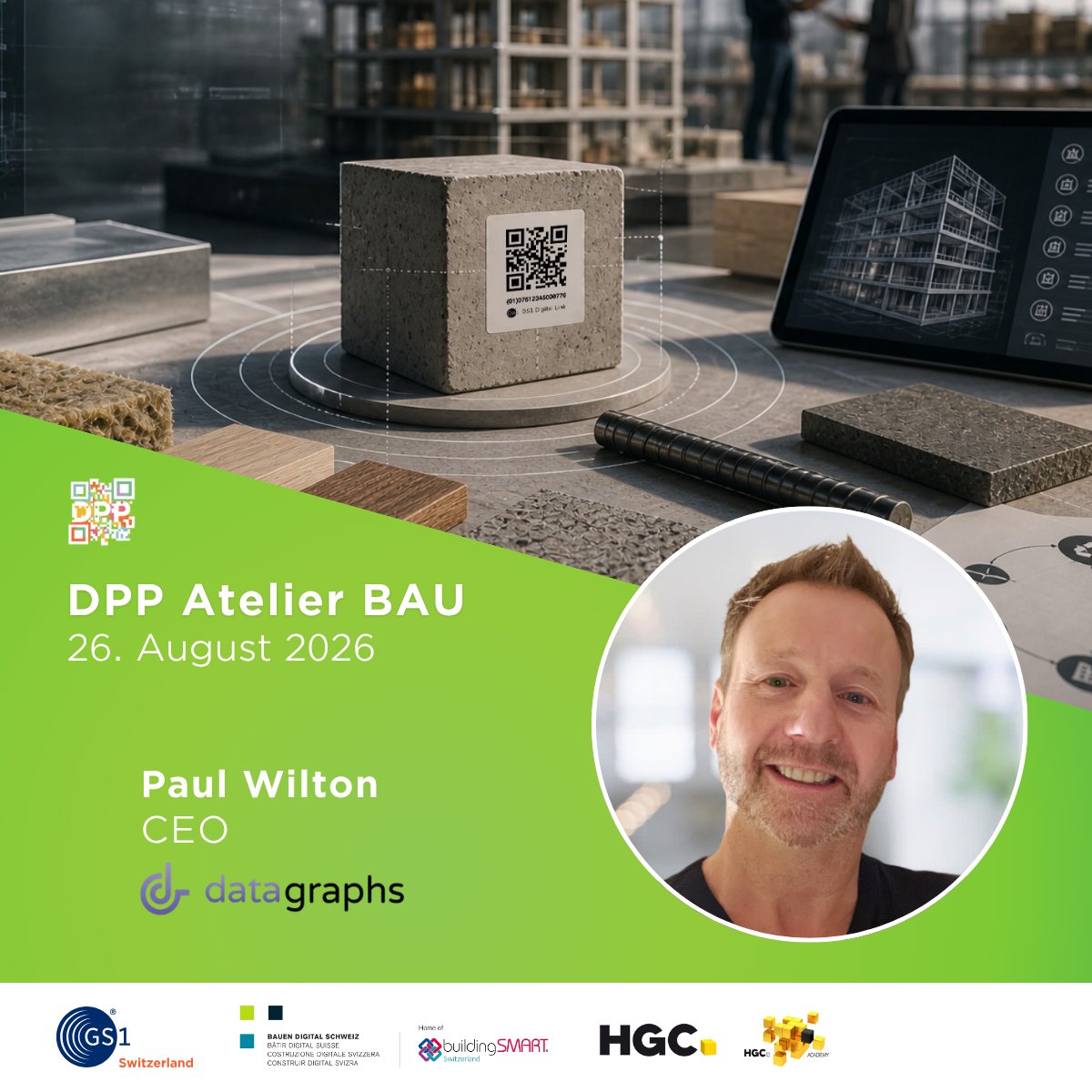
Fabio Colasanti (CDO) and Paul Wilton (CEO) will be at the #DPP Atelier BAU on 26 August 2026 in Herzogenbuchsee, showcasing how GTIN-native DPPs make construction compliance affordable, then running a hands-on session on end-to-end DPP creation with #GS1 Digital Link and @datagraphs.
Looking forward to this one!
Our COO Matt Shearer has published his analysis on the EU Digital Product Passport and what it means for manufacturers preparing for the February 2027 batteries deadline.
His central point: the DPP is not a single-deadline compliance project, but the first activation of a data architecture that will carry organizations through every disclosure regime rolling out to
2030.
Particularly relevant for Swiss manufacturers, who face the same deadlines as their EU counterparts and, in Matt's view, an unusually good opening to build the foundation correctly the first time.
https://t.co/1EQHeUv2SL
We asked two AIs the same question about the World Cup. Only one could answer it.
Compare the match minutes played by every England and Argentina player up to the semi-final.
A general AI gave impressions, not numbers.
Our Data Graphs AI, running over our World Cup knowledge graph, returned exact figures in seconds, right down to 67% of Argentina's goals coming after a substitution, against 45% for England.
Same class of model. Different outcome. The difference was the knowledge graph underneath it.
Our CEO Paul Wilton has written up the full analysis:
https://t.co/bbG4oLM1WY
If you followed our World Cup series over the last week, you saw our AI predict a lineup, grade its own accuracy, and write the match report. Here is the whole story in one place.
Paul Wilton has written up the full experiment: how modeling the tournament as a knowledge graph let the AI reason over real relationships, why it got 8 of 11 right and where it missed, and how it generated finished, connected editorial at the end.
The through-line is the one we keep coming back to. Your data is already there. What's usually missing is the model that connects it.
The World Cup was just the demo. What should we model next?
https://t.co/f1IRI4bHhN
We asked our AI to write the England vs DR Congo match report.
It pulled the data, wrote it in a commentator's voice, generated a hero image, and saved it back into the graph as fully tagged, connected data.
Editorial that is also structured knowledge. This is agentic AI on a knowledge graph. 👇
#AgenticAI #KnowledgeGraph #GraphRAG
We modeled the entire FIFA World Cup 2026 as a knowledge graph using a live data feed from @SportMonks_com, then asked the Data Graphs AI to predict England's starting lineup for tonight's match against DR Congo.
In the video, our CEO Paul Wilton shows how it works.
The AI reads the domain model, queries the graph with hybrid GraphRAG, and reasons to a full starting eleven, defending every pick.
The football is a fun way to prove a bigger point.
The same approach works on any domain where the data already exists. Model the world, and AI can finally reason across it.
Kickoff is tonight. The prediction is on record. We will see how it does.
#WorldCup2026 #AgenticAI #KnowledgeGraph #GraphRAG
An AI that reasons over your domain, not one that guesses at it.
We modeled the entire FIFA World Cup 2026 to show what that looks like.
Our CEO, Paul Wilton, walks through it here. 👇
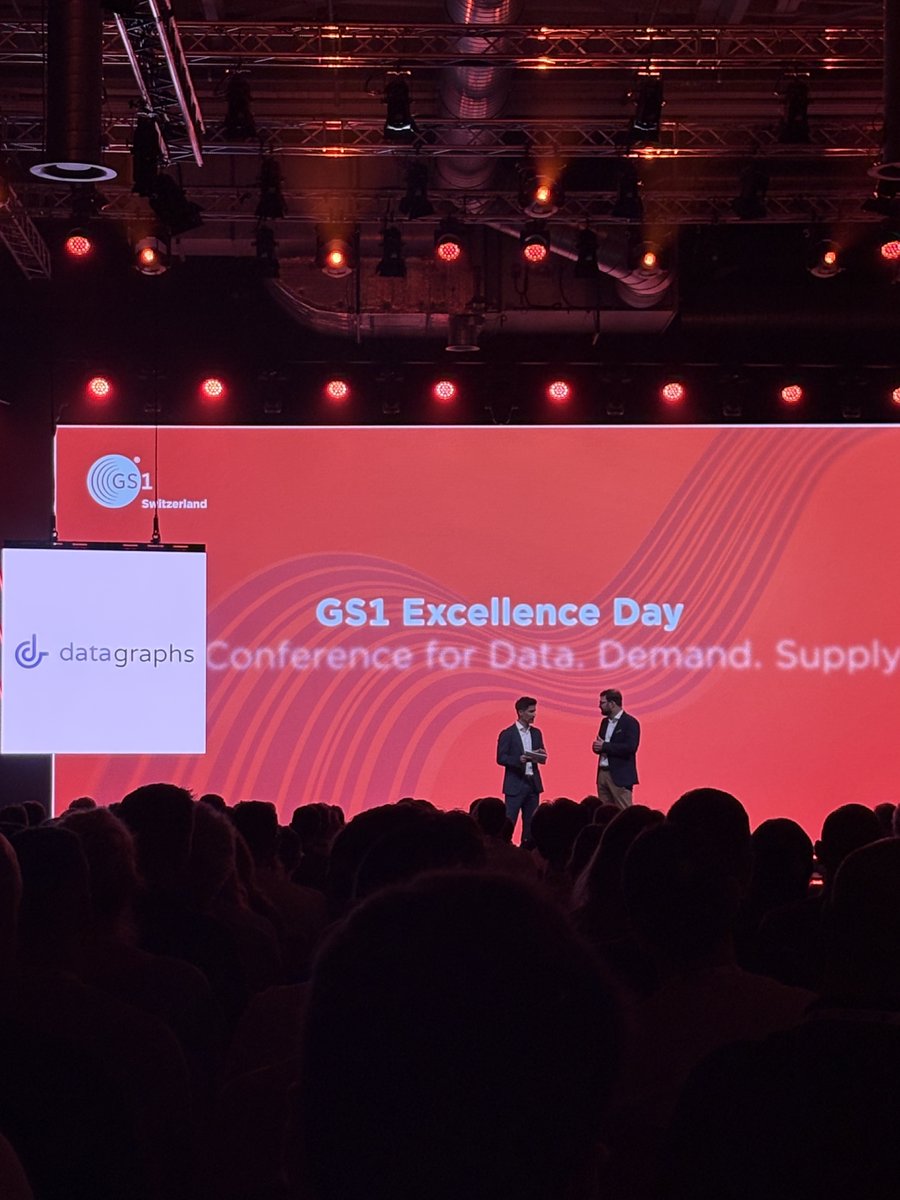
GS1 Switzerland Excellence Day is underway in Zurich. Great to see Jörg Pretzel, CEO of GS1 Switzerland, opening a packed house.
Looking forward to a day of conversations around Digital Product Passports, product data, and AI.
#GS1ExcellenceDay#DPP#DigitalProductPassport #DataGraphs
Data Graphs has been selected as one of three finalists for the Top 3 Best Use Case at GS1 Switzerland Excellence Day 2026, presenting the work we built with our customer Syngenta.
The story will be told from the Main Stage by Verena Wanner (@Syngenta) and Matt Shearer (@datagraphs): "A Unified Platform for Digital Labels & DPP." Thursday, June 18, from 1:30 PM to 2:15 PM in Zurich. Audience vote decides the winner.
Huge thanks to @GS1 Switzerland for the recognition, and to the Syngenta team for partnering with us on this end-to-end work, GTIN-based, GS1-aligned, and #DPP-ready from day one.
Food is currently exempted from the EU Digital Product Passport #DPP regulation, but the wider compliance landscape is moving fast.
Batteries lead the timeline in February 2027. Textiles, iron and steel, and tires follow throughout 2027 and 2028. Furniture, aluminum, and consumer goods extend into 2030.
Meanwhile, CSRD requires structured sustainability reporting. EUDR requires due diligence on commodity origin. Plant protection products are themselves regulated, and data about them is increasingly expected to flow downstream.
For food and retail, the challenge is the same: resolving a GTIN on the shelf back to the batch, the ingredients, the farms, and the inputs behind it.
Data Graphs delivers a @gs1 -aligned Digital Product Passport foundation built for that work.
Come talk food and retail data with us at GS1 Excellence Day 2026 on June 18 in Zurich.
From February 18, 2027, every industrial battery above 2 kWh placed on the EU market must carry a Digital Product Passport #DPP covering composition, carbon footprint, state of health, and recycled content.
The data already exists across PLM, ERP, MES, and supplier systems. The challenge is connecting representations of the same product across systems with different identifiers, structures, and semantics.
A GS1-aligned data foundation resolves that fragmentation and enables a coherent lifecycle record to be queried on demand.
See it in action at @gs1 Switzerland Excellence Day 2026 in Zurich on June 18.
Proud to be a @gs1 Switzerland Solution Partner.
GS1 standards make Digital Product Passports work at scale. Globally recognized, interoperable data from product identification to consumer delivery, for manufacturers of every size.
We’ll be at GS1 Switzerland Excellence Day 2026 in Zurich on June 18.
If #DPPs are on your roadmap, let’s connect in person.
Digital Product Passports are about to redefine what "knowing your product" means.
On June 18, Data Graphs will be at @gs1 Switzerland Excellence Day 2026 in Zürich to show how DPP becomes a strategic asset, not just a compliance project.
Are you scoping DPP for energy-related products, batteries, food, textiles or iron and steel? Come find us.
Why deep graph traversal breaks most engines. How Data Graphs runs deep queries orders of magnitude faster than Neo4j, in a fraction of the memory, and with higher throughput
https://t.co/NSzvFl7q0E
Netflix just published how they built multimodal video intelligence at scale.
Years of work. A dedicated ML organization.
Infrastructure most media companies will never have.
So here’s the better question: do you actually need to build it?
@bitmovin + @datagraphs now deliver this as a managed platform: scene-level AI connected to your rights, talent, and editorial data. Deployable in weeks, not years.
The Netflix gap has defined this industry for a decade. It doesn’t have to anymore.
Full breakdown below.
Most "Graph RAG" implementations are vector retrieval with extra steps.
@datagraphs built something different.
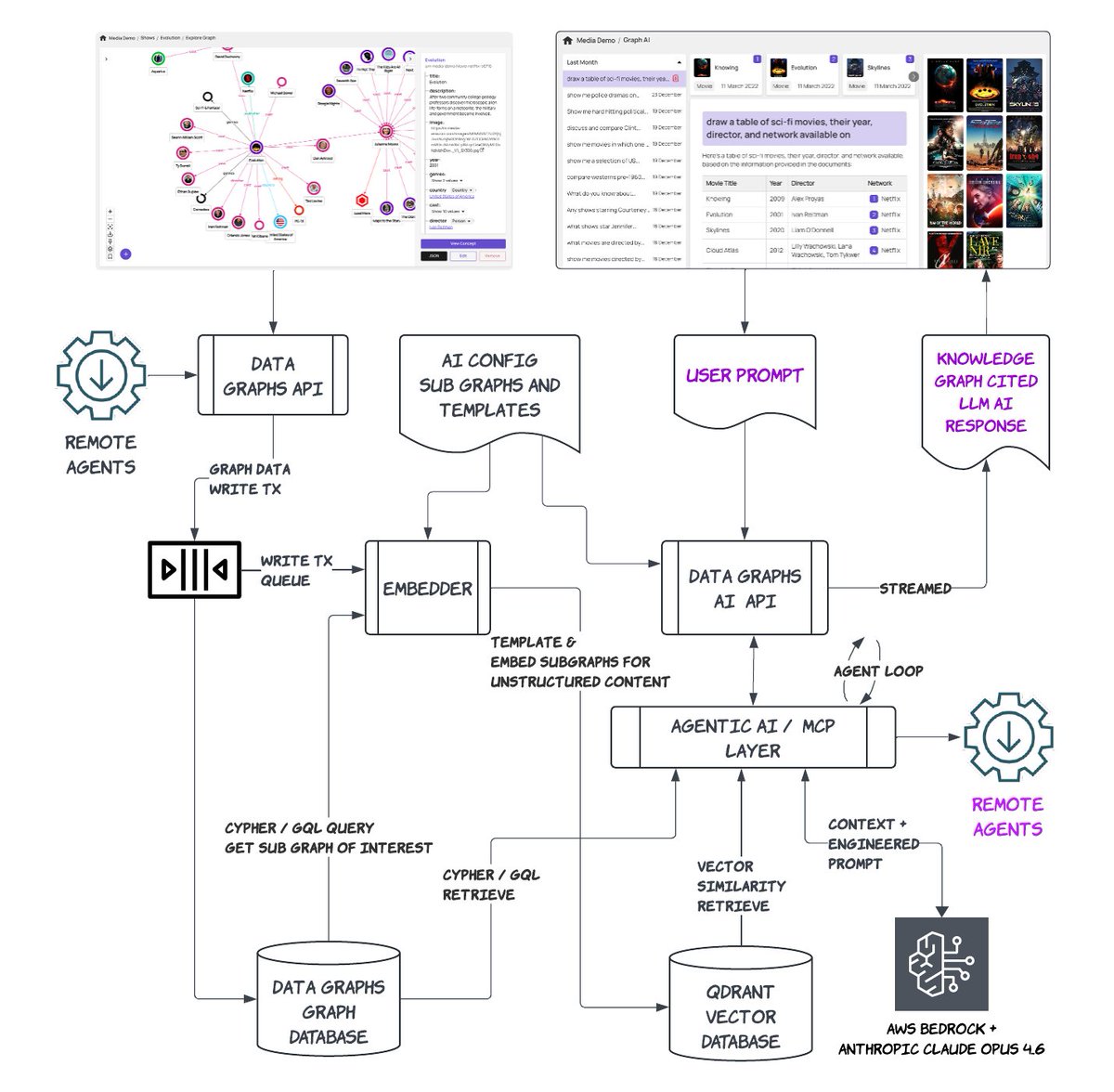
Their UK-based knowledge graph platform combines a proprietary graph database engine with Qdrant-powered semantic search, orchestrated by an agentic layer that picks the right retrieval path for each prompt.
The insight from CEO Paul Wilton: vector and graph aren't competitors. They're complementary.
Vector excels at semantic similarity over unstructured content. Graphs excel at empirical queries: negation, date ranges, mathematical operations on connected data. Force one to do the other's job and the system breaks.
What they built:
- Real-time embedding from the graph into Qdrant collections via streaming and queuing
- Schema-first retrieval where the agent pulls the full graph schema before deciding how to query
- Parallel execution across graph queries and vector retrieval, blended for the LLM
- Every answer cited back to source for verifiable provenance
Why Qdrant specifically:
- Hybrid Cloud kept the entire stack inside their own AWS environment
- Payload filtering DSL closely matched their existing OpenSearch patterns, so common metadata structures worked across the graph, OpenSearch, and Qdrant without translation
- Terraform support and infrastructure automation fit their existing CI/CD workflows
18 months in production. Zero significant issues.
The retrieval layer determines the ceiling of your AI's intelligence. Choose the right components. Compose them well.
Full case study: https://t.co/ffyuxltK9b
Most RAG systems use Vector retrieval.
Vector only does half the job.
@qdrant_engine just published a case study on the hybrid Graph RAG architecture we built at Data Graphs.
The agent reads the schema first, then routes:
→ Graph for empirical and relational questions
→ Vector (via Qdrant) for semantic similarity
→ Both in parallel when the prompt demands it
Every answer traces back to its source. No black-box retrieval.
Thanks to our partner Qdrant.
Case study below.