Many of you asked what software I used for that metaballs GIF. It's a custom UI made with @py5coding, a version of Processing for Python 3.9+.
It’s incredibly handy for building visual experiments while taking full advantage of the Python ecosystem.
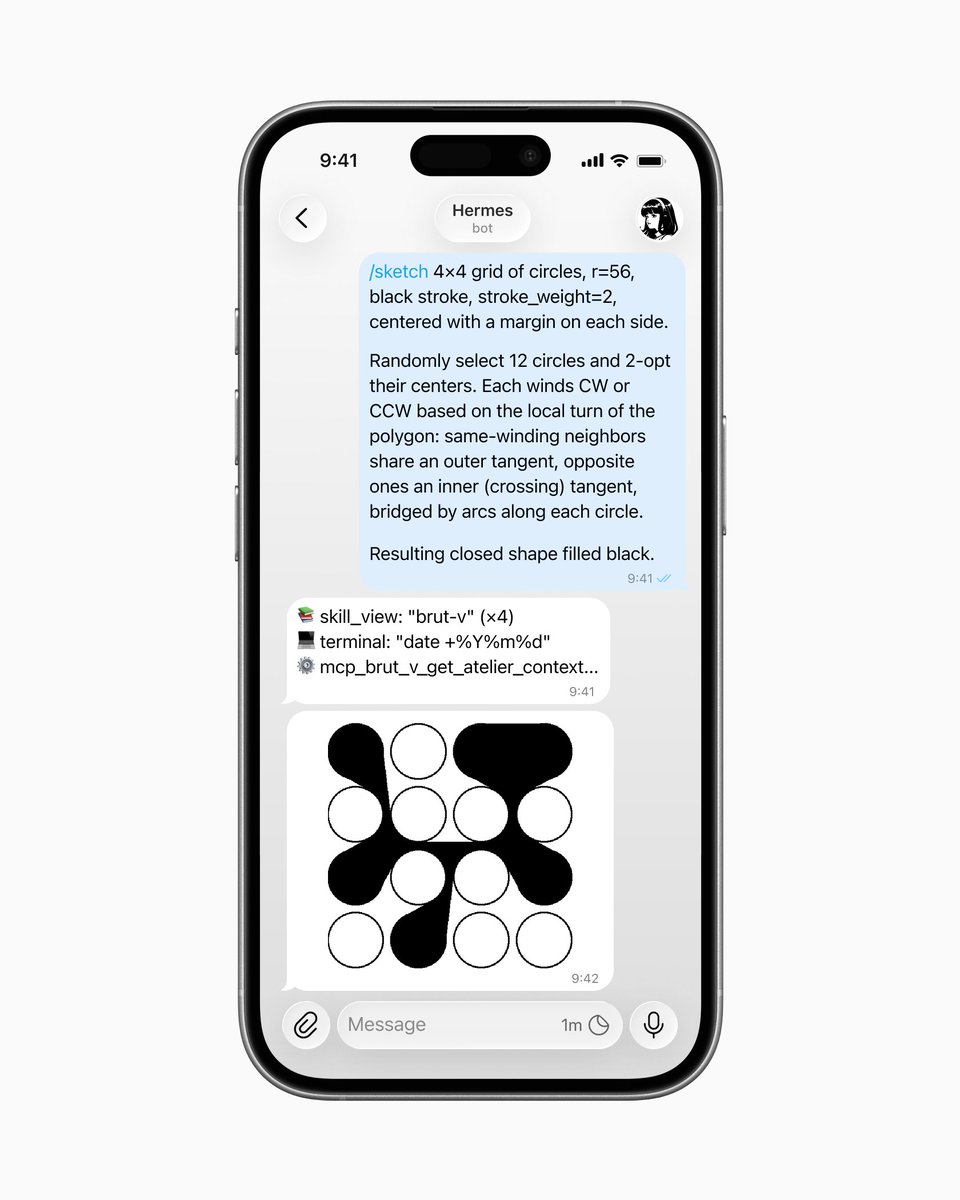
@NousResearch@Teknium One more piece of the Brut-V workflow: Hermes can control the runtime from Telegram.
A /sketch command triggers the whole loop: write RISC-V assembly, run the sketch in the web runtime, snapshot the output, and send it back.
You can also ask for the /source and an explanation.
Brut-V is a low-level graphics runtime written in pure RISC-V assembly, designed for sketching and learning at the instruction-set level.
It was built entirely with Hermes as part of @NousResearch Creative Hackathon. The agent also helped automate the creation of surprisingly convincing visuals around it.
A few notes from the build (+ live demo) below
Anyway, I jumped into this hackathon pretty late, and it was my first one, but I really enjoyed the pace of it.
Massive thanks to the @NousResearch team, and @Teknium, for the incredible work they put into Hermes, and for their astounding responsiveness throughout.
Also, shout-out to @eliheuer, whose enthusiasm gave me the final push to join. Much appreciated.
Hermes didn’t just help build Brut-V, it can control it too.
I like how a simple /sketch command in Telegram can trigger a full loop: Hermes uses its gateway, MCP tools, and project skills to write RISC-V assembly, run the sketch in the web runtime, snapshot the output, and send it back.
@NousResearch@Teknium
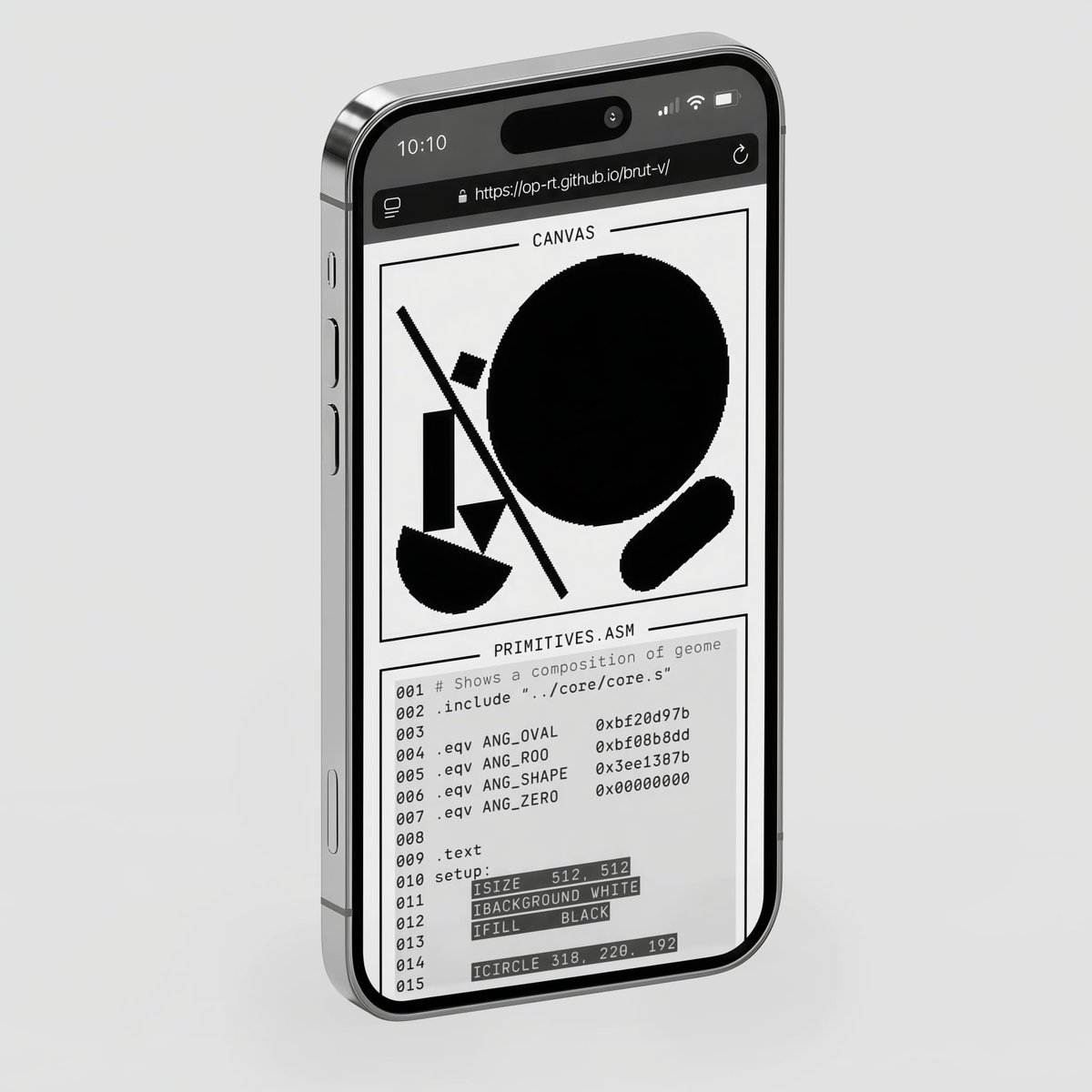
Brut-V got a proper web upgrade.
There’s now a debug console, smoother animations, better error handling, full macro docs, and a friendly Getting Started section with examples.
Pure RISC-V assembly creative coding, directly in the browser.
Give it a try, link below.
Codex definitely helped, but I wouldn’t reduce it to /goal.
For this project, the Hermes loop mattered at least as much: the byte-for-byte assembler work came from repeated assemble / diff / patch cycles against RARS, plus the surrounding tooling and persistence.
That’s the part I found really interesting.
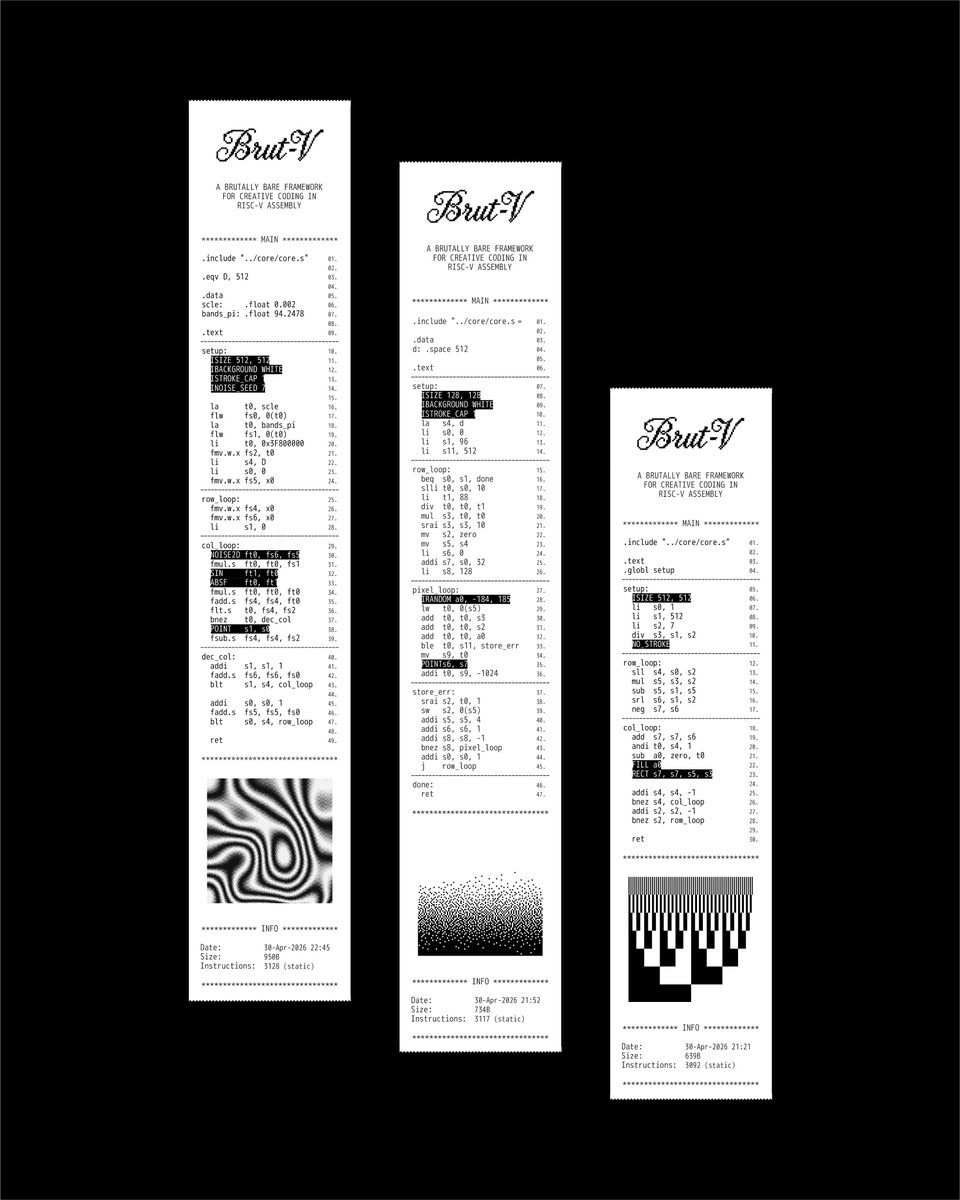
It’s an AI-generated mockup, made with the pipeline I describe in the thread.
I use Browser Harness to browse my Pinterest board and pull several reference images until I get a mockup I like, then use another prompt to project a real image into the blank area (the thermal paper) of that generated mockup. No 3D render involved, hence the distorted letters/words and other generation artifacts.
All of this happens from the Telegram bot.
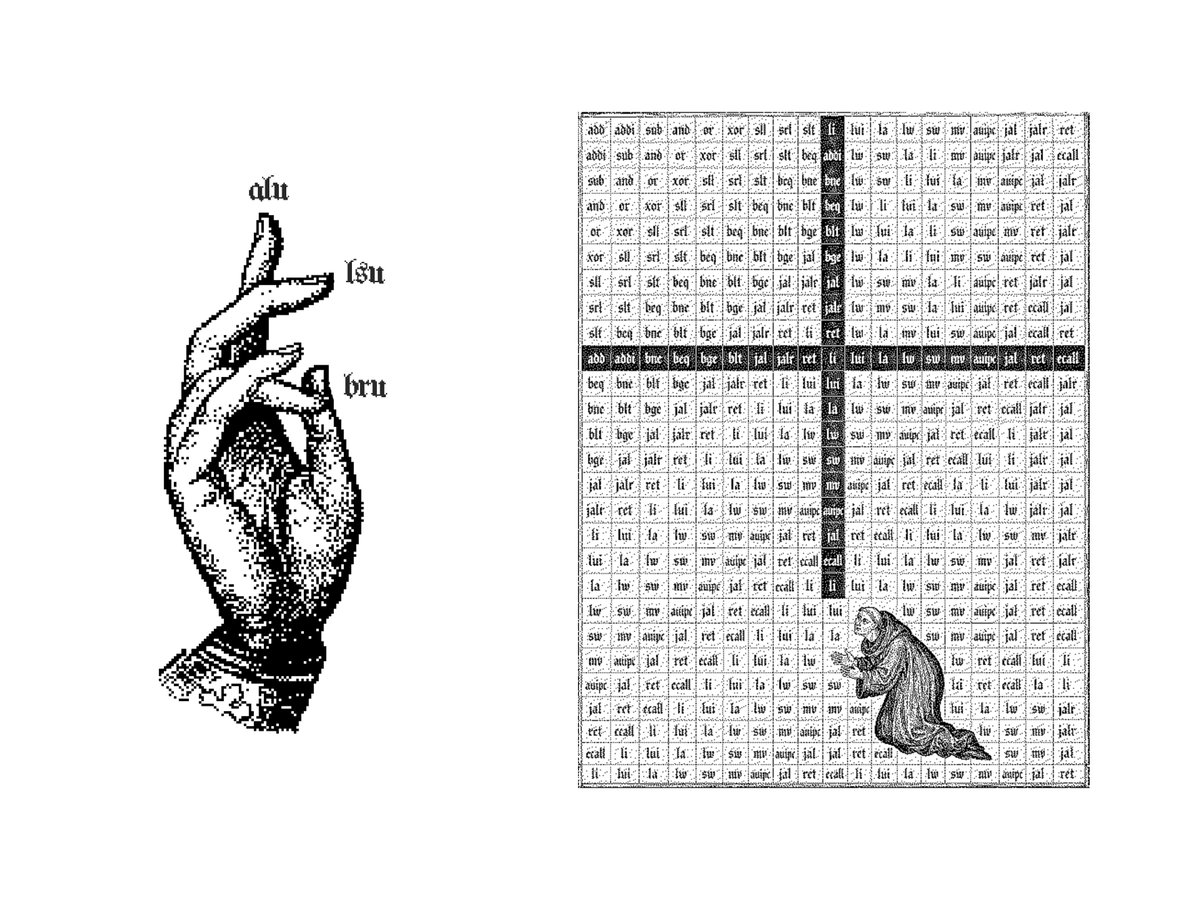
Programming in assembly is a form of monastic asceticism. Renouncing the comfort of abstractions, submitting to mental discipline, repeating simple gestures:
Compute, Store, Branch. The holy trinity of computation.
Three elementary operations from which all complexity emerges.
Anyway, I jumped into this hackathon pretty late, and it was my first one, but I really enjoyed the pace of it.
Massive thanks to the @NousResearch team, and @Teknium, for the incredible work they put into Hermes, and for their astounding responsiveness throughout.
Also, shout-out to @eliheuer, whose enthusiasm gave me the final push to join. Much appreciated.