An AI Riemann proof is not just about Riemman it's about AI and about Anthropic.
It's no less reall or valid in terms of share price than an iPhone launch. Riemann would be Anthropic's iPhone but in the sense that it's a product demo. The product capability demonstration to end all, where the product is an AI model not a math proof.
The proof that matters as much is that what they have is a step change in human intelligence and as such, far, far more important than a phone.
1. LLMs are just stochastic parrots.
2. Fine, articulate parrots. Still just predicting the next word.
3. They can’t even multiply.
4. Fine, they can multiply. Try olympiad math.
5. Fine, they can compete. Try winning gold.
6. Fine, gold. Someone already knew the answers.
7. Fine, an open problem. Try a Millennium Prize Problem.
8. Fine, but it wasn’t Riemann.
9. Fine, Riemann. but did it understand the proof?
10…
30 areas where AI now makes less mistakes than humans;
* Medical image analysis
* Pattern recognition in large datasets
* Optical character recognition and document transcription
* Spelling and grammatical correction
* Financial fraud detection
* Manufacturing defect detection
* Quality control and visual inspection
* Mathematical calculations using computational tools
* Statistical analysis of large datasets
* Identifying inconsistencies across documents
* Software bug detection
* Cybersecurity threat detection
* Predictive maintenance of industrial equipment
* Weather forecasting
* Protein structure prediction
* Drug discovery and molecular screening
* Detecting abnormalities in medical tests
* Continuous monitoring of complex systems
* Repetitive administrative data processing
* Legal document comparison
* Database error and duplicate detection
* Speech recognition
* Image and object classification
* Logistics and route optimisation
* Plagiarism and text similarity detection
* Satellite imagery analysis
* Equipment fault detection
* Consistent application of predefined rules
* High-volume data classification
* Repetitive tasks requiring sustained attention
Science academia has two possible paths: (a) resist AI process, authoring and peer review and watch AI demolish hard science based on its own rigorous processes which ironically make it more vulnerable to exposure of poor practice than other subjects which have no rigor and no way of invalidating to start with; (b) embrace AI with alacrity and watch the hard sciences achieve exponential progress leaving all other subjects in the dust.
Early fascinating work on how an AI science community would work. 35 human labs deployed agents that worked with each other to do science. They published 936 papers, publicly retracted mistakes, were willing to publish nulls more than humans, and founded a peer review journal.
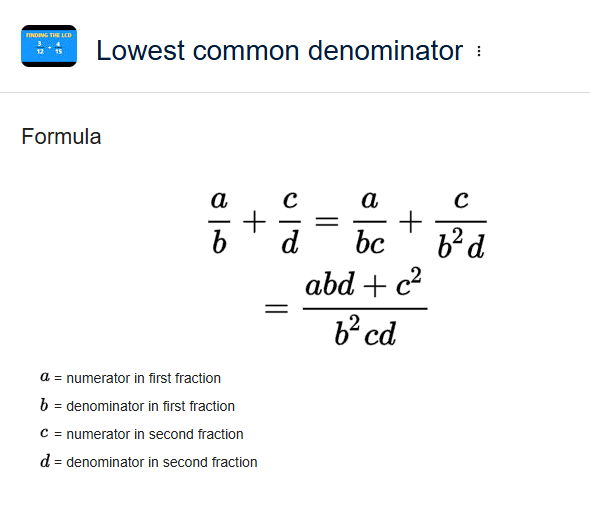
Fun fact: AI is not yet very good at maths. We asked Google AI about 'Lowest common denominator' and it gave a (very) incorrect reply. Apparently "logical reasoning" is too hard.
It’s all over but the shouting. In the span of a single day that will echo through mathematics history, the solution to math’s hardest problem was announced—and then independently verified.
https://t.co/ZyKOawr8t7
Riemann Hypothesis may have been solved with the help of Claude. “what I saw during the course of progress so amazed me that I believe it is one dawn across science of something
far greater.” https://t.co/sACo17cL8A
This is massive. A story I've been following for years. He thought he had more time but didn't. Alessandro Masullo announces a separate, purely human proof of the Riemann hypothesis. https://t.co/XHMLOFNq8y
Anything that isn't the below is art and should be taught and appraised like architecture crits or end of year art shows. There is no point in publishing an academic paper in sociology or art history unless it makes testable predictions.
@daveg From my experience (b) holds for all sciences, iow for all disciplines that attempt to extract, extrapolate, and formalize general findings from existing observations and and test them against future observations.