Label, check, scale.
Bounding boxes in FiftyOne → catch mistakes with embeddings → train an agent with text and visual prompts in Voxel51.
Full walkthrough with Eric Hofesmann: https://t.co/MBTLKQt2Sc
on a lake there are no lane lines, no fixed landmarks, no other vehicles to localize against
the shoreline shifts with your viewpoint, radar and lidar don't share a clock, and sonar is measuring a world the cameras can't see
CANOE is a multi-sensor USV dataset from UTIAS: 360° radar, 128-beam lidar, stereo camera, sonar, and GPS/INS ground truth across lakes and a reservoir in Ontario
parsed it into fiftyone multimodal so you can scrub every sensor on one synced clock and project lidar straight onto the camera to see where they agree and where they don't
checkout the dataset here: https://t.co/Sdj858hACO
or get hands on in this hugging face space: https://t.co/JyotisS0Bj
this intersection in tokyo ranked second worst in the city for traffic accidents.
six roads converge at a blind hill crest, cars cross centerlines on narrow curves, and the signal phasing has multiple unprotected turns
most autonomous driving datasets give you highways and four-way stops. this is none of that
Hard Intersection Multimodal Sample: 6 synchronized cameras, aggregated LiDAR point cloud, HD map projections, vehicle trajectories, and semantic annotations across 4 driving passes through a single intersection that breaks everything
grouped all 6 camera views with the 3D point cloud, frame-level HD map overlays, and trajectory projections in fiftyone
checkout the dataset here: https://t.co/1ccneoHnJs
or get hands-on in the HF space: https://t.co/TwhUJybu5h
robotics recordings are dense. cameras, lidar, GPS, IMU, diagnostics, all on separate channels, all ticking on their own clocks
until now, exploring them meant a dedicated tool and a separate workflow from the rest of your dataset
fiftyone 1.19 opens mcap files natively
point a sample at a .mcap file and the multimodal viewer renders every decodable channel on one shared playback clock
scrub the timeline and cameras, point clouds, GPS tracks, and IMU plots all move together. no ROS install required
try it right now without installing anything. 10 UAV flights through a Virginia forest, 31 channels per flight, all explorable in your browser
the fiftyone app is running in a hugging face space for the first time (its a bit hacky atm, but working on polishing it up)
space: https://t.co/wFTEjlltK2
full walkthrough: https://t.co/wquyljGgEz
𝗣𝗵𝘆𝘀𝗶𝗰𝗮𝗹 𝗔𝗜 𝗶𝘀 𝗺𝗲𝘀𝘀𝘆.
Anyone who has worked with robotics data knows the headache: cameras, LiDAR, GPS, and IMUs all streaming on separate channels, ticking on their own completely independent clocks. Historically, just looking at what your robot saw meant breaking your workflow to spin up dedicated tools like ROS, Foxglove, or rviz.
My guy @DataScienceHarp at @Voxel51 just blew me away with a breakthrough integration that brings this directly into the modern AI ecosystem.
With the release of 𝗙𝗶𝗳𝘁𝘆𝗢𝗻𝗲 𝟭.𝟭𝟵, we now support 𝗠𝗖𝗔𝗣 𝗳𝗶𝗹𝗲𝘀 𝗻𝗮𝘁𝗶𝘃𝗲𝗹𝘆. You can point a sample at a .𝚖𝚌𝚊𝚙 file and watch every decodable channel sync perfectly onto a single playback clock---with 𝘇𝗲𝗿𝗼 𝗥𝗢𝗦 𝗶𝗻𝘀𝘁𝗮𝗹𝗹𝗮𝘁𝗶𝗼𝗻 𝗿𝗲𝗾𝘂𝗶𝗿𝗲𝗱.
But Harpreet took it a step further: he has FiftyOne running natively inside a 𝗛𝘂𝗴𝗴𝗶𝗻𝗴 𝗙𝗮𝗰𝗲 𝗦𝗽𝗮𝗰𝗲.
You can play with it right now in your browser. He's hosted a dataset of 10 autonomous UAV flights through a Virginia forest. We're talking 31 parallel channels of dense data---stereo cameras, 3D LiDAR point clouds, and live GPS tracks---all perfectly synchronized and scrubbable directly in a web app.
This narrows the gap between raw robotic memory and curated AI datasets. It's a massive win for reproducibility and accessibility in Physical AI.
Take a look; WDYT?
👉 Try the Hugging Face Space: https://t.co/Mb3KfD9IUQ
📖 Read his full technical walkthrough: https://t.co/wFqMvNoapF
@julien_c@huggingface
fiftyone 1.19 now opens mcap files natively
point a sample at a .mcap file and the multimodal viewer renders every decodable channel on one shared playback clock
scrub the timeline and cameras, point clouds, GPS tracks, and IMU plots all move together. no ROS install required
the fiftyone app is running in a hugging face space for the first time - its a bit hacky atm, but working on polishing it up
try it right now: https://t.co/wFTEjlm1zA
this is a $100B market for AI training data including RL env. my take: it's not more data. it's the right data.
what is the right data? deep integration with the product, model, service. and the verification that gains can actually land with the customer.
today this deep integration only happens for the coding domain, but the world is your oyster. we need the same force on unsexy domains, like telecom-at&t, reltail-walmart, manufacturing, supply chain ...
nobody is driving a real vehicle into a flood to get training data.
but a model that's never seen standing water will drive straight through it
i built a workflow that generates the missing conditions from real frames
comfyui runs inside fiftyone.
open a sample, restyle it to rain, fog, snow, or dusk, save the result back with full generation metadata and a link to the source frame
synthetic data you can trace is an asset. synthetic data you can't trace is a liability
learn the full workflow here: https://t.co/r6YW2vOP9g
EvoLogics uses Voxel51’s FiftyOne Enterprise to prepare the right training data and evaluate perception models for autonomous subsea missions, giving the team greater control and speed from data to production.
Learn more about how FiftyOne can optimize your computer vision workflows by booking a demo: https://t.co/IUXbrtea3I
Learn more about Evologics: https://t.co/mrvFGixqTV
EvoLogics designs and manufactures underwater communication systems, positioning networks, and autonomous vehicles for the world's most demanding subsea environments. Based in Germany, the company has built technology for clients across commercial, offshore, defense, and research sectors.
Operating at depths and in conditions unreachable by conventional means, EvoLogics systems locate survivors in search and rescue operations, inspect subsea pipelines and infrastructure, monitor ocean environments, and support naval mine countermeasure activities. Their systems process multimodal data, including sonar data from various types, underwater and surface-mounted cameras, LiDARs, and hydrophones, in real time, during live missions.
#computervision #ai #artificialintelligence #machinevision
#machinelearning #datascience #physicalai #mcp #agents
2025 had 261 work days. in that time i shipped 116 integrations for fiftyone.
66 datasets
38 models
12 plugins
that's not to mention the various workshops, virtual events, and in-person meetups held around the world in places like ann arbor, boston, chicago, munich, berlin, dusseldorf, paris (where i got to meet @mervenoyann, @reach_vb, and others from hf) amsterdam (where i got to meet @tuanacelik) , brussells (where i got to meet @NielsRogge), stuttgart, saarlands, and more places that i probably forgot
here's a quick summary of what i focused on:
--gui agents--
this was the year gui agents took off.
i built the data infrastructure to support it—17 GUI grounding datasets, 6 visual agent models (GUI Actor, ShowUI, UI-TARS, OS-Atlas, MiMo-VL), plus tooling to collect, synthesize, and evaluate gui data inside fiftyone
if you're training agents that see and click, you need to debug what they see.
--document visual ai--
enterprise wants multimodal RAG that works on real documents.
i integrated ColPali, ColQwen, Jina v4, the ModernVBERT variants—alongside ocr models and document datasets spanning forms, receipts, and scanned text.
fiftyone now handles visual document retrieval end-to-end.
--plugins--
datasets and models are useless without workflows.
i built a gui dataset collector for capturing and annotating screen interactions in coco format.
a lerobot importer that preserves multi-camera views and trajectory metadata.
a wandb plugin for tracking training data and model predictions with full lineage.
text evaluation metrics (ANLS, CER, WER) for benchmarking OCR.
NVIDIA NeMo Retriever Parse for extracting structured text with bounding boxes.
the plugins close the loop between data curation, model evaluation, and experiment tracking.
--vision language models--
the vlm landscape moves fast.
I kept fiftyone current: Qwen2.5-VL, Florence2, Kimi-VL, PaliGemma2, MedGemma, Nemotron Nano, FastVLM, MiniCPM-V, Moondream3, Qwen3VL.
each one integrated into the remote model zoo so you can run inference on your data in a few lines.
whatever vlm you're using, it should work with your data tooling.
--physical ai--
early investment in physical AI.
built a lerobot dataset importer and started exploring how fiftyone can support policy evaluation and failure analysis for robotic manipulation tasks.
The importer handles multi-camera views, episode grouping, and full trajectory metadata—joint states, actions, velocities, efforts.
where things are heading in 2026? and how can i make fiftyone useful for where visual AI is actually going?
i have a hunch that vision language action models is the next wave
i've heard of multimodal datasets, but could this be a multisensory dataset? its a dataset that visualizes what nyc smells like
shout out to @EgeOzguroglu@LiangJunbang and co for smelling around the city so we don't have to
Introducing Physical AI Workbench — integrated with @nvidiaomniverse NuRec and @NVIDIA Cosmos to solve the biggest bottleneck in physical AI.
More than half of all physical AI simulations fail — not from bad models, but from bad input data. A timestamp off by milliseconds or a calibration drift of a few degrees can cascade through your neural reconstructions, leaving you with unusable results after weeks and millions in wasted compute.
📘Read the full technical breakdown: https://t.co/6EBba9E2v0
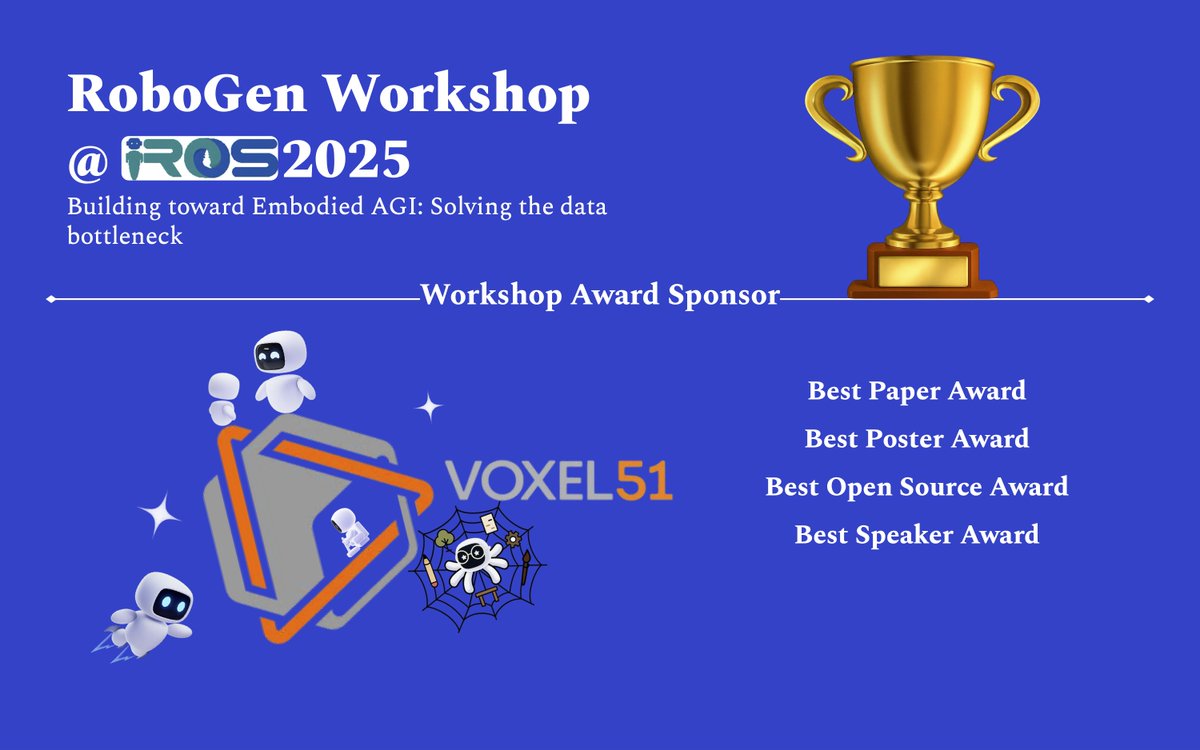
Huge thanks to our sponsor @Voxel51@davemeky@_JasonCorso_ for making the #IROS2025 RoboGen Workshop Awards possible. We will present 4 Awards: Best Paper, Best Poster, Best Open-Source, and Best Speaker !
One of manufacturing's biggest headaches is training computer vision systems when defects are rare and data is messy. @_JasonCorso_ reveals how computer vision is reshaping production floors on this episode of @omiosumfg's Manufacturing Tomorrow podcast.
Tune in to learn more about:
➡️ The critical importance of high-quality data in implementing computer vision for manufacturing
➡️ How AI can improve manufacturing through defect detection and safety monitoring
➡️ How FiftyOne's Verified Auto-Labeling, a breakthrough in AI data annotation, can help manufacturers build more accurate AI models faster and more efficiently
Listen here: https://t.co/2EGF1im7ST
#VisualAI #ComputerVision #MachineLearning #ManufacturingAI #Manufacturing #FiftyOne
Very nice! You could also use FifityOne for this (and more) at a larger scale. Both Qwen2.5 VL are integrated as well:
• https://t.co/ypXZ7sNQsy
• https://t.co/GWziVDDTTp
Explore how @Voxel51’s Verified Auto Labeling (VAL) workflow combines zero-shot models with human-in-the-loop QA to dramatically cut labeling cost and time.
https://t.co/Aq282cQoCH
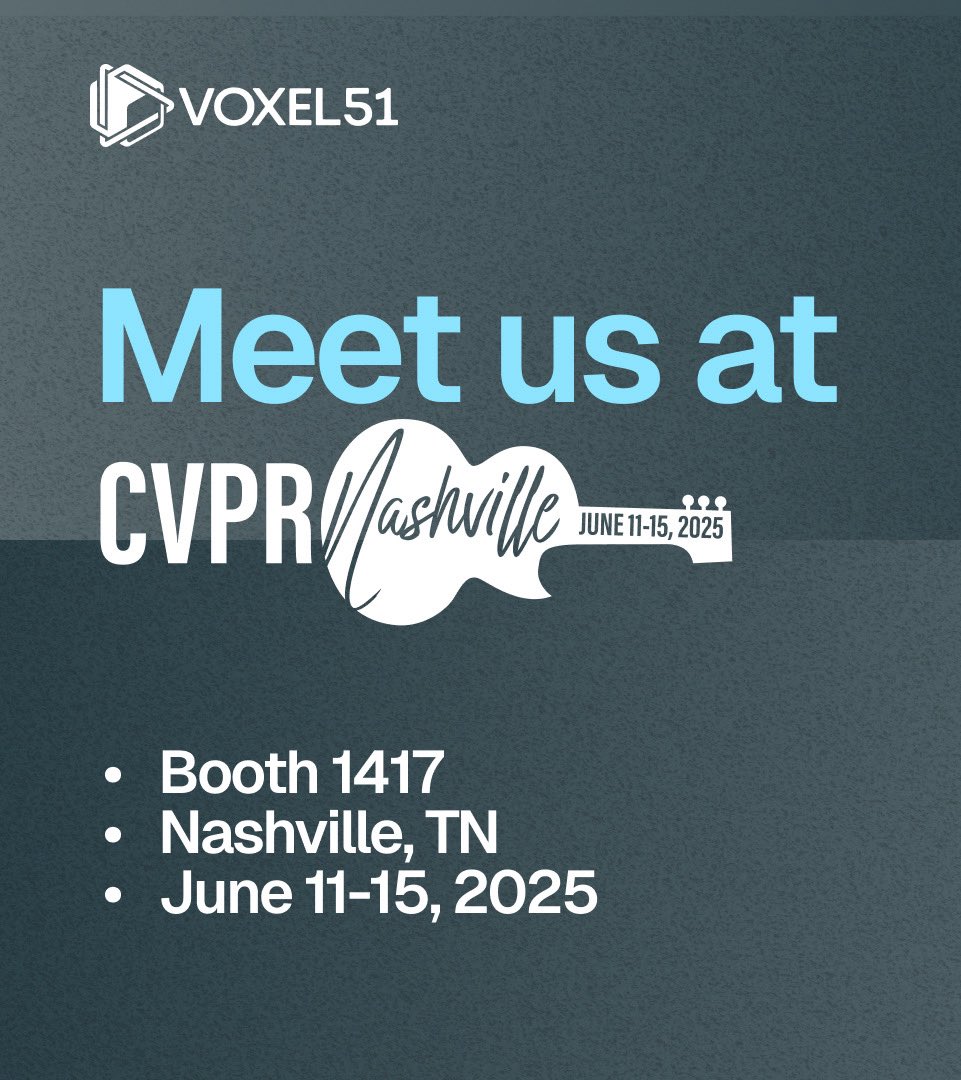
Enroute to Nashville for #CVPR2025
Excited for:
- Meeting researchers and talking about their work during poster sessions
- Workshop on Exploring the Next Generation of Data
- Reseaech on GUI/OS/Visual Agents
- Reseaech on Composed Image Retriveal
- Finding cool new datasets and VLMs to integrate into FiftyOne’s open source library
- FiftyOne Open Source Community Happy Hour
- The expo hall! come say “Hi!” at Booth 1427. I’m working the mornings of Friday, Saturday, Sunday
Let me know if you’re gonna be there, beer/coffee on me!