Inspired by the incredible real-time AI vision demos and ngxson's live SmolVLM + llama.cpp project, I wanted to see what was possible on Apple Silicon! 🍏
Super excited to share my SmolVLM Real-Time Webcam Demo with MLX-VLM! 😙
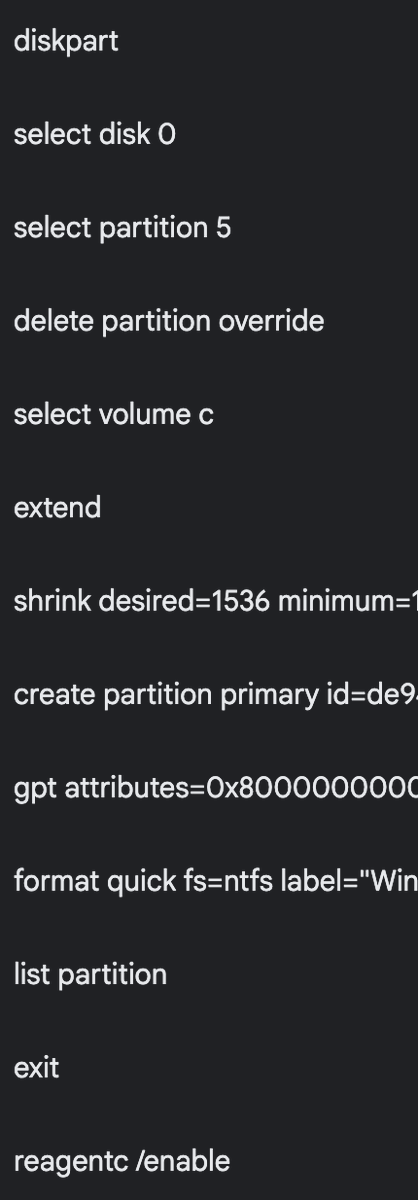
I'm not a Windows user, so without AI's help, I would've struggled to figure out how to remove Linux Mint, delete its partition, and reclaim that disk space for Windows.
With AI, I got it all done in just 10 mins.
Are there any papers or technical docs explaining how @ClaudeDevs and @OpenAIDevs are improving their AI models' design capabilities?
Is it mainly through adding more rules, specifications, and instructions, or are there other approaches?
Just wondering how do they train models to develop better design taste and judgment?
Gemini 4 Neon has rolled out in Google Antigravity. Interestingly, Google also offers an Orchestrator (Neon) model designed primarily to coordinate and delegate tasks to Hydrogen.
Gemini 4 Neon is rolling out in Google Antigravity!
Bringing frontier-level intelligence and ranking #1 on the Artificial Analysis Coding Agent Index, Neon is rolling out today across the desktop app, CLI, and IDE Extensions for paid Google AI Pro and Ultra subscribers, and for enterprise users through Gemini for business.
You can also use Orchestrator to pair Neon as the planner with Hydrogen as the executor, giving you Neon's judgment where it matters and Hydrogen's speed everywhere else.
Yeah I am still using it, just not by itself.
Jev sits next to a few other decision models in our safety ops, mostly phishing detection and content moderation.
Gemini Decisions API has been the best one for us so far (surprise 😁), barely any false alarms.
But Jev is cheap though, so it stays in the mix. I ran a little test on this if you wanna have a look 😄
https://t.co/ZN7ZguThnw
Google launched a Decisions API this week, so it went into my Trust Me Bro Phishing test with Jev and the other Decisions models 😄
200 real phishing emails, plus 200 normal emails written to look like them. Same questions and rules for every model.
Phishing caught / false alarms:
- TypeSafe Jev: 180 / 8
- OpenAI Decisions API: 185 / 3
- Cloudflare Clef: 191 / 7
- Gemini Decisions API: 188 / 1
1 false alarm in 200 is the lowest of any AI model I've tested. It beat Jev on both counts, and the gap is too big to be luck. Clef still catches a few more, but that gap is too small to call.
Downsides: about 2x Jev's price, and 709ms per email from Sydney. Around 350ms of that is just the trip to Google's servers.
@nichochar Yeah, I found it too. It's pretty similar to DeepSeek V4.1 Flash 1017, but DeepSeek is more cost effective.
At the end, I still need to use Opus 5.5 to fix all the bugs made by Grok and DeepSeek, though.
Snow that falls harder as your context fills.
If you want one today, Snowfall by Brezn610 does exactly this, and it's now on Build with Claude with install commands:
https://t.co/kEJsPuMqj1
Custom themes are just mods so your background can even react to your actual session!
Here I just asked Claude to make it snow as my context fills up (the mod hooks into turn.step) but you can get really creative with it ☃️
Custom themes for Claude Code desktop just landed, so I added a Themes section to "Build with Claude".
59 themes so far across desktop and terminal, each with a preview and install commands. All 20 official scenes are included.
Built a theme? Submit a PR. Get it seen by an audience of 100K+ monthly viewers.
https://t.co/wL2XTbJrjQ
You can now build custom themes for Claude Code on desktop with mods! Change the colors, add an animated background, and make it your own.
Just tell Claude how you want it to look, or get started quickly with the theme-examples plugin. We'd love to see what you make!
Google launched a Decisions API this week, so it went into my Trust Me Bro Phishing test with Jev and the other Decisions models 😄
200 real phishing emails, plus 200 normal emails written to look like them. Same questions and rules for every model.
Phishing caught / false alarms:
- TypeSafe Jev: 180 / 8
- OpenAI Decisions API: 185 / 3
- Cloudflare Clef: 191 / 7
- Gemini Decisions API: 188 / 1
1 false alarm in 200 is the lowest of any AI model I've tested. It beat Jev on both counts, and the gap is too big to be luck. Clef still catches a few more, but that gap is too small to call.
Downsides: about 2x Jev's price, and 709ms per email from Sydney. Around 350ms of that is just the trip to Google's servers.
Today we’re launching the Gemini Decisions API, powered by our new Gemini Decision 1 model in @GoogleAIStudio.
Instead of generating text token by token, it’s built for closed-set choices scoring up to 1,000 questions across text, images, audio, video + PDFs in a single pass. A few details:
- 3 decision types: yes/no, multiple choice (up to 255 options) + rubric scoring
- $0.10 / 1M input tokens with $0 billed for output tokens (~5x cheaper than Flash-Lite)
- leads on several benchmark evals with lowest calibration error
Google teams are already building with it, below is a look at Stitch Rapid designing a full product flow in seconds (1x speed)