Let’s have some constructive criticism.
First, this isn’t ₦500k–₦1M “salary”.
Rather, a one-time gig, zero benefits, no guarantees of recurring income.
All for work that exceeds full-time (7 days a week. No breaks.)
And the math doesn’t add up:
Let’s even break it down 👇🏾
$EOS.AX - This $1B laser defense stock is Iran's Worst Nightmare.
I have worked in the defense sector for 20 years and I have never seen risk/reward like Electro Optical Systems.
Here's why this tiny energy directed weapon specialist inspired by Star Wars is the next multi-bagger.
The nature of warfare has fundamentally shifted.
Expensive, multi-million dollar platforms are now vulnerable to $2,000 drones.
This has created a $100B+ global scramble for a Hard Kill solution that scales.
EOS is the only company with the tech, the battle-tested results, and the export freedom to own the global market.
The Rest of World Monopoly
Geography is the ultimate moat in defense.
US-based pioneers like $LASR (nLIGHT) are world-class but bound by strict ITAR (export) regulations.
The EOS Edge: $EOS.AX is completely ITAR-free.
While US tech is often locked behind years of red tape, EOS can deliver to Europe, the Middle East, and Asia with unmatched agility.
This is why Germany recently bypassed legacy domestic giants like Rheinmetall to invite EOS to the table.
As CEO Andreas Schwer (ex-Rheinmetall) stated: "EOS can deliver twice the power for half the price by 2027"
The Sovereign Pivot - Australia’s $5B Bet
The Australian Government has identified a negligible domestic drone defense capability and allocated $5B–$10B to fix it.
EOS is the only domestic player with integrated, battle-proven kinetic (Slinger) and laser (Apollo) systems.
Global Validation (The 100kW Milestone)
While others are in the R&D phase, EOS is in the delivery phase.
The Netherlands - Signed the world’s first export contract for a 100kW High Energy Laser (HEL)—a €71.4M (~A$125M) deal.
Ukraine & Middle East - EOS systems are already on the ground, proving their kill-link accuracy in the most intense electronic warfare environments on earth.
The Geographic Valuation Gap
The market is pricing $EOS like a local manufacturer, ignoring its role as the global challenger to US-restricted tech.
$LASR - Valued at ~$3.6B USD as the US domestic champion.
$EOS.AX - Valued at ~$1.2B USD as the Rest-of-World champion.
Both companies are addressing the same massive structural tailwinds, but $EOS.AX provides exposure to the entire global market at a fraction of the valuation of its US-listed peers.
The Financial Inflection (By the Numbers)
Gross Margins - Hit 63% in the most recent results; tier-1 tech margins.
Order Backlog - A record $459M (up 238% YoY), providing massive revenue visibility into 2027.
Bottom line - $EOS has the technology that Europe, the Middle East, and Australia are desperate for.
It is the only ITAR-free pure-play in the world capable of delivering the future of counter-drone warfare today.
For a deeper look into EOS, check out my substack (link in profile + first comment) for deeper dives into all things EOS.
There's a physicist at Stanford named Safi Bahcall who modeled this exact principle and the math is wild.
He calls it "phase transitions in human networks." When you're stationary, your probability of a lucky event is limited to your existing surface area: the people you already know, the places you already go, the ideas you've already been exposed to. Your opportunity window is fixed.
When you move, your collision rate with new nodes in a network increases nonlinearly. Double your movement (new conversations, new cities, new projects) and your probability of a serendipitous encounter doesn't double. It roughly quadruples. Because each new node connects you to their entire network, not just to them.
Richard Wiseman ran a 10-year study at the University of Hertfordshire tracking self-described "lucky" and "unlucky" people. The single biggest differentiator wasn't IQ, education, or family money. Lucky people scored significantly higher on one trait: openness to experience. They talked to strangers more, varied their routines more, and said yes to invitations at nearly twice the rate.
The "unlucky" group followed the same routes, ate at the same restaurants, and talked to the same 5 people. Their networks were closed loops. No new inputs, no new collisions.
Luck isn't random. Luck is surface area. And surface area is a function of movement.
The lobster emoji is doing more work than most people realize. Lobsters grow by shedding their shell when it gets too tight. The growth requires a period of total vulnerability. No protection, no armor, soft body exposed to the ocean.
That's the cost of movement nobody posts about. You have to be uncomfortable first. The new shell only hardens after you've already moved.
spent the last few hours answering questions from strangers on the internet while sitting on a plane and the thing that keeps striking me is how similar every question sounds once you strip away the context
the BB analyst making $200K wants to know if his life has meaning. the 20-year-old in a frat wants to know if he is on the right path. the guy running a $15M environmental services company cannot sleep because his leverage ratio scares him even though his covenants are fine. the first-year law student wants someone to tell him the career pivot will work out. the immigrant who got laid off wants to know he is not falling behind permanently
the details are different. the feeling underneath is identical. am I going to be okay
we pretend that money and status and titles fix this. they do not. I sit in rooms with people who control nine-figure portfolios and they are nervous about the same things as everyone else. they just have more expensive language for it. the fund manager calls it "risk management." the analyst calls it "career strategy." the 20-year-old calls it "figuring out my path." same anxiety wearing different suits
I watched a grown man worth more than most people will earn in ten lifetimes throw a tantrum in a conference room because someone questioned his assumption in a model. not his competence. not his track record. an assumption in a spreadsheet. a cell in Excel. he turned red and raised his voice because for 15 seconds he felt like he might be wrong about something and his entire identity could not absorb that possibility
that is not a professional disagreement. that is a kid on a playground who got told he is not the fastest runner
Schopenhauer wrote that humans are not rational beings who occasionally feel emotions. we are emotional beings who occasionally think rationally. the rationality is the exception. the feeling is the baseline. every framework we build in finance and in business and in life is an attempt to impose order on a brain that is fundamentally running on fear and desire and the need to be seen as competent by other people who are also running on fear and desire
the most dangerous version of this is the person who thinks they have outgrown it. the one who believes that enough success or enough money or enough status has made them rational. that person is not more rational. they are less accountable. nobody around them pushes back anymore so the irrational impulses go unchecked and get rebranded as conviction and vision and leadership
the best operators I know are the ones who understand that they are still unreasonable kids underneath everything. they lose their temper over small things. they take criticism personally even when it is constructive. they make emotional decisions and reverse-engineer a logical justification after the fact. the difference is they know they do this. they have systems to catch it. they hire people who are allowed to tell them when they are being stupid. they build in a 24-hour delay before any decision made while angry
the worst operators are the ones who think they have evolved past it. they confuse pattern recognition with wisdom. they confuse wealth with emotional maturity. they confuse the silence of the people around them with agreement when it is actually just fear
Nietzsche said that the most common form of human stupidity is forgetting what one is trying to do. I think the more common form is forgetting what one is. which is a complicated animal that learned to use spreadsheets but never stopped being afraid of the dark
none of us outgrow being unreasonable. the question is whether we build a life that accounts for it or one that pretends it does not exist
thanks for the questions today. you are all going to be fine. even the ones who do not feel like it right now
I am not going to motivate you because if you need motivation from a stranger on a plane the answer is stay
but I will give you the game theory
your corporate M&A gig is a repeated game with diminishing marginal returns. year 1 you learn everything. year 2 you refine it. year 3 you are executing pattern recognition. year 4+ you are being paid more to do the same thing with slightly larger numbers. the learning curve flattens but the golden handcuffs tighten because every year the comp goes up and the opportunity cost of leaving gets more painful on paper
this is a classic status quo bias trap. the payoff of staying is known and comfortable. the payoff of leaving is uncertain and scary. so you stay not because staying is optimal but because the asymmetry of regret is lopsided. you can imagine regretting the leap. you cannot as easily imagine regretting the years you stayed too long because that regret builds slowly and never hits you in one moment
here is where game theory actually helps:
in your M&A seat you are playing someone else's game. the firm sets the rules, the deal flow, the comp structure, the promotion timeline. you optimize within their framework. you are a very well-compensated player in a game you did not design. your upside is capped by whatever the partnership or MD economics look like. your downside is protected by a salary. that is the trade
owning a local business flips the entire payoff matrix. you design the game. you set the rules. the downside is real and unprotected but the upside is uncapped and compounds in ways a salary never does because you own the equity. a $2M EBITDA business bought at 4x and grown to $3M EBITDA over 3 years is worth $12-15M on exit. no M&A salary trajectory produces that kind of wealth creation in that timeframe unless you are a founding partner
the Nash equilibrium of your current situation: you and every other M&A professional are competing for the same promotions, same deal credit, same bonus pool. the competition is fierce because the players are identical. same schools, same skills, same hours. you are in a crowded equilibrium where everyone works 80 hours to stay in the same relative position
local business ownership is a different game with different players. the competition is a 62-year-old owner who stopped innovating in 2014 and a 35-year-old who inherited the business and does not want to be there. you walk in with financial sophistication, deal structuring experience, and the ability to read a balance sheet faster than anyone in the room. you are overqualified for the game which is exactly where you want to be. the best strategy in game theory is to play games where your existing skill set gives you an asymmetric advantage over the other players
the timing question is about optionality. every year you stay in M&A your financial optionality goes up slightly because you save more. but your operational optionality goes down because you get further from the reality of running anything. the M&A guy who leaves at 28 adapts to operations in 6 months. the one who leaves at 38 has a decade of habits built around delegating to analysts and reviewing decks, and managing a P&L feels foreign in a way it would not have 10 years earlier
but again. if you need me to motivate you, stay. the people who actually do this do not need motivation. they need a spreadsheet that shows the math works and then they cannot NOT do it. if you have the spreadsheet and you are still asking strangers for motivation the spreadsheet is not the problem
This is WILD.
Peter Thiel just bet $2 billion on a collar that wraps around a cow’s neck.
The company is called Halter and it has a proprietary algorithm that runs the entire operation.
They actually trademarked the name for it and called it the Cowgorithm and here's how it works.
A farmer opens an app, taps a button, and 600,000 cows across three countries start walking toward the milking station on their own.
No farm dogs, fences or physical labor, it's just a solar-powered GPS collar sending sound and vibration cues to each animal.
The collar does more than move cows around.
It monitors digestion, fertility cycles, and health patterns in real time, 24 hours a day, using machine learning trained on the behavior of hundreds of thousands of animals.
Halter was founded by a rocket engineer who built spacecraft at Rocket Lab before deciding that farming was the bigger unsolved problem.
US ranchers alone have already used the technology to build over 11,000 miles of virtual fencing, roughly the full perimeter of the continental United States, saving an estimated $220 million in physical fencing costs.
Halter's previous funding round valued the company at $1 billion.
This new round, led by Thiel's Founders Fund, doubles that valuation to $2 billion before the new money even hits the account.
And they charge farmers between $5 and $8 per animal per month on a subscription model, meaning the more cows they collar, the more locked-in the revenue becomes.
The most powerful venture capitalist on earth just decided that the future of food and farming runs through an algorithm named after a cow.
He might be right.
Do you understand what happens to @phygitals once the market recovers? 👇
They are killing it on all fronts:
- Fully community-owned
- (15-30% supply airdrop LIKELY, Hyperliquid style)
- Just made $4.1M USD in 4 days 🤯
In this market? Join me before it's too late: https://t.co/g1YXe7UGhX
Do you understand what happens to @phygitals once the market recovers? 👇
They are killing it on all fronts:
- Fully community-owned
- (15-30% supply airdrop LIKELY, Hyperliquid style)
- Just made $4.1M USD in 4 days 🤯
In this market? Join me before it's too late: https://t.co/g1YXe7UGhX
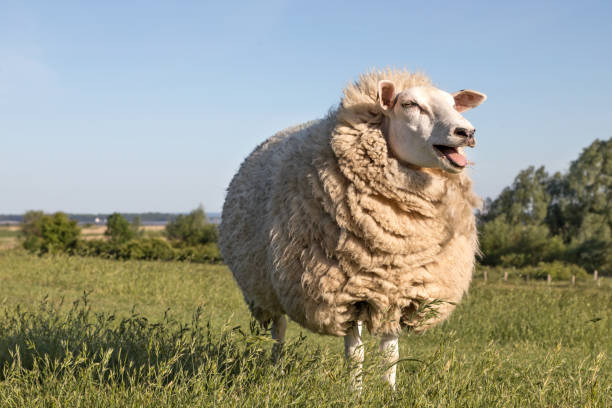
Doris is a four-year-old Texel ewe on a fell in the Lake District.
Doris is, according to several recent opinion pieces, destroying the planet.
Let's check in on Doris.
6:30am - Doris began grazing. The fell she is grazing is semi-natural upland grassland. It has existed in this condition for approximately eight hundred years because sheep have been grazing it continuously for approximately eight hundred years. Without Doris, the coarse grasses outcompete the finer ones. The wildflowers disappear. The skylarks that nest at ground level lose the open sward they need and abandon the site. Doris does not know what a skylark is. She has found some good grass near the wall and that is the full extent of her agenda.
7:45am - Doris walked into the bog. This was not the plan. There was no plan. Doris extracted herself, turned around, and regarded the bog with the expression of an animal that has decided the bog started it.
9:00am - Doris found a gap in the wall and went through it. She was now in Brian's field. Brian's field is, by any measurable standard, identical to Doris's field. Doris is aware of this and does not consider it relevant.
10:30am - Doris was returned to her field. The farmer repaired the gap. Doris watched the repair with the focused attention of an animal taking measurements.
11:15am - Doris rolled into a dip in the fell and got cast. This means she ended up on her back and could not right herself because the weight of her fleece shifted her centre of gravity past the point of recovery. She lay there in the dip looking at the sky with the composure of an animal that has decided the sky is quite interesting actually.
11:40am - The farmer found her, righted her. Doris walked away at speed. No acknowledgement. Complete dignity. As though the last twenty-five minutes had happened to a different sheep.
1:00pm - Doris grazed the area around the base of the dry-stone wall. The grazing keeps the vegetation short enough that the wall's base stays dry and frost doesn't work into the joints and expand. The wall is two hundred and sixty years old. It will outlast everything currently being written about livestock farming if the vegetation around it is managed. It is being managed by Doris eating grass. Doris does not know she is doing conservation work. Doris has found something particularly good near the fourth stone from the bottom.
3:00pm - Doris produced manure. The manure will feed the soil microbiome. The soil microbiome will grow the grass. The grass will grow back where Doris has grazed it. The grazed areas will remain open enough for the tormentil and harebells to survive. The tormentil and harebells are why people drive three hours from Manchester to walk on this fell.
This system has no external inputs. It has been running since Texel sheep were brought to these fells from the Netherlands in 1970 and discovered the gaps in the walls shortly afterward.
5:00pm - Doris lay down. The fell was quiet. The skylarks were still up. The wildflowers were still in the turf.
5:47pm - Doris found a new gap. She was in Brian's field again.
Brian has started keeping a log.
Introducing Rork Max
AI that one-shots almost any app for iPhone, Watch, iPad, TV & Vision Pro. Even Pokémon Go with AR & 3D.
Max is a website that replaces Xcode. Install on device in 1 click. Publish to App Store in 2 clicks.
Powered by Swift, Claude Code & Opus 4.6.