@mhudack How did you get it to do it? I’ve tried a couple of times but it decided I was trying to create a bioweapon or something and kept on declining 😂
I wonder why all the socialists/communists in America don’t move and live in socialist countries instead of putting such effort to change the best country in the world built on capitalism. I would happily raise money to buy them all one-way tickets to these paradise countries.
Introducing Glow⚡️
The bitcoin app anyone can use, and any developer can explore.
Passkey Login. Stable Balance. Lightning Address. Send USDT/USDC. And so much more.
This is what bitcoin UX should feel like. Powered by Breez.
Available now on:
• @AppStore → https://t.co/PS1ddmYNon
• @GooglePlay → https://t.co/tZlxOCPcmF
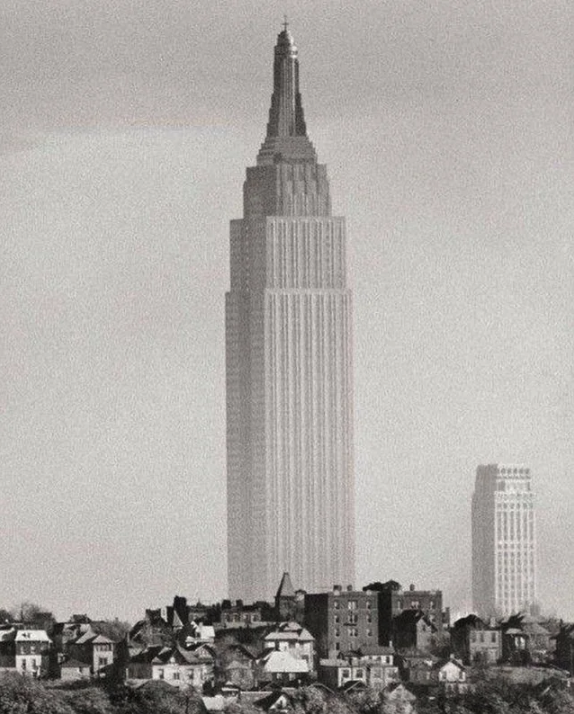
1930's Americans were badasses. The regulatory landscape was also very different. No one would argue about building datacenters then, we would just BUILD.
In re-sharing this post, I went down a rabbit hole on the Empire State Building. It was built in 1930 in 410 days and landed under budget, despite having none of our modern-day advantages or technologies. As a corollary, the World Trade Center broke ground in 1966 and took 7 years to build. The ESB is ~1,250ft to roofline, the WTC was ~1,370ft to roofline.
The ESB did it by subordinating every design decision to speed:
- No exotic materials or systems were used; just known steel, floor, and window systems
- Window placement, stone thickness, and cladding attachment were all chosen to minimize on-site cutting and hand-fitting
- Engineers explicitly designed systems so trades could work independently and in parallel without waiting on each other, reducing the risk of delays
- Demolition started before design was finished, foundations were poured while upper floors were still being designed, steel was ordered a month ahead of need
- The owner, architect, engineer, and contractor sat together through construction, resolving details jointly instead of each one handing off their piece independently
- On-site narrow-gauge railways, dedicated hoists for brick and stone, and on-floor cafeterias removed friction from moving material and people
Interestingly, the profit-maximizing design was determined to be 63 stories, but they built it to 85 stories for prestige and to beat Chrysler. Speed discipline saved the vanity height economics.
For contrast, the WTC took over a decade because it was plagued by lawsuits, political fights, and novel/untested systems, the reverse of the ESB's playbook.
Lots of learnings for startups, both inside the building (focus, parallelizing vs serializing, etc) and outside the building (regulatory, etc).
Always listen to @mickymalka speak. He has a different kind of wisdom than your run-of-mill investor, an unusual life story that allowed him to acquire it, and more importantly, he’s one of the best humans I’ve ever met in my life.
.@mickymalka is the founder of @RibbitCapital — the firm behind Revolut, Robinhood, Nubank, Coinbase, and more.
He bought his first share of Berkshire Hathaway when he was 13, in Venezuela, with money he borrowed from his grandfather.
His grandfather charged him interest.
He started his first company at 17. In his mid-20s, he put every dollar he had into launching a bank in Brazil for the 50 million Brazilians nobody else would serve.
Micky is a quiet killer. Respected by the elite of the elite.
When I asked @patrick_oshag how he’d describe Micky to someone who didn’t know him, he said: “He’s a mfing moneymaker.”
Micky hates labels. The only label he wants is on his tombstone: “He was a rebel.”
0:00 Why Micky Malka Refuses to Be Labeled
3:00 Writing Your Way to Conviction
5:41 Buying Berkshire at 13 and Learning Buffett's Operating System
11:48 Token Factories, AI Bankers, and the Future of Money
18:38 The Infinite Game: Why It's Better to Be Behind
22:09 Gen Z Founders and the Chaordic Company
29:00 Why Young Founders Want to Build Atoms, Not Just Bits
34:29 Bringing Beauty and Taste Back to Technology
36:56 Revolut, Founder DNA, and Earning Deep Trust
45:54 Building OnePay With Walmart
50:53 From Lemon Bank to OnePay: A 20-Year Idea
56:00 Compounding Trust and Protecting Your Reputation
1:00:30 Node and the Rebel Case for Digital Art
1:07:34 What It Means to Live as a Rebel
1:10:50 Why Ribbit Is Built Like a Startup
1:14:41 Charlie Munger and the Power of Time
Includes paid partnerships.
I have a feeling that the last 5 months of 2026 will bring more change than the last few years combined. Everything’s accelerating at a maddening rate.
Since the @elonmusk/@zannymb Economist interview 8 days ago:
• 7/25 Berlin Pride: van ramming + stabbing
• 7/27 Paris: 3 women stabbed. Perpetrator released(!!)
• 7/30 Spain: 1000s migrants storm border from Morocco. Many dead.
But let’s pretend all is fine in Europe.
Solid piece, and I believe Mark’s take is right. If everyone gets superintelligence, the world will be better for it. I still strongly believe agency will be key, and those with it will benefit disproportionately.
When selecting your global stablecoin + money movement + card issuance partner, make sure your very long term incentives are aligned. At @lightspark we’re structurally permanently aligned with our customers and partners.
We need clear rules of the road for America to continue leading the rewiring of the global financial system. This coming week will be critical. The CLARITY Act must pass.