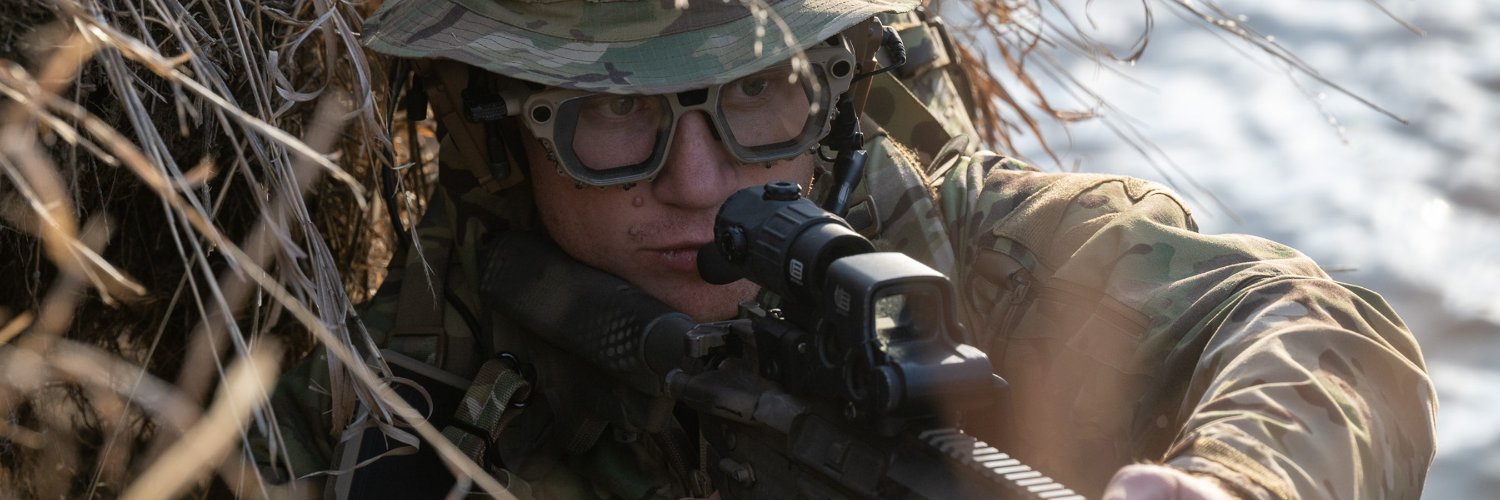
Analog skills built the legacy.
Now we’re equipping the most powerful system in any domain—the human one—with digital senses to stay ready for what’s next.
@onepeloton and @GarminFitness was so glad to see the integration start...
Peloton passes activities to Garmin, great. However Peloton activities do not seem to accrue to Garmin intensity minutes... Is this on the roadmap @Garmin
"I'd like to point out that these drones were originally an Iranian design, we took it back to America, made it better, and then launched them right back at Iran"
This is one of the most low key savage statements a CENTCOM commander has ever made. 🇺🇸 #MIGA
American tech's role is to build the absolute best tech in the world and deliver it to those that defend the US Constitution.
If you don't agree, you are missing the fundamental element which makes the US the most special place in the world.
@NickJFreitas@POTUS this is the righteous and logical solution to a 180 year old issue that was driven by Virginia slave holders! This is a bipartisan issue which has plagued our region since 1846, and only you can fix it!
Most of the founders of the country were definitely not agnostic.
55 framers were practicing Christians.(28 Episcopalians, 8 Presbyterians, 7 Congregationalists) only 3 were deists. None were agnostic.
I could support a claim that Jefferson may have been privately atheist, or deist and could conversationally conflate the universe and a deity to obfuscate his true believes. He said he was "in a sect all to his own".
There is no evidence for any being agnostic, none.
The country was founded by Christians and the US Constitution was modeled after common law with common links of moral code drawn from Christian biblical principles.
Jefferson held critical views of Islam. He described it as "stifling free enquiry" in his early Virginia political notes. He referenced it as an example of religion intertwining with political authority, suppressing rational thought and individual freedoms.
His most direct encounter with Islam came through the Barbary Wars, when North African states (Tripoli, Algiers, etc.) demanded tribute from American ships, citing religious justifications rooted in Islamic law. In 1786, as a diplomat in London, Jefferson (with John Adams) questioned Tripoli's ambassador about the basis for their attacks on non-Muslim nations. The ambassador replied that it was founded on the laws of their Prophet, written in the Quran: non-Muslims were sinners, making it their right and duty to wage war and enslave captives, with paradise promised to fallen Muslim fighters. Jefferson recorded this in a letter to John Jay. He refused tribute payments on principle and advocated military action to protect commerce. As President he launched the First Barbary War to end the practice.
Overall, Jefferson disapproved of certain aspects of Islamic doctrine and governance, yet he advocated for Muslims' full inclusion in American society as a matter of principle.