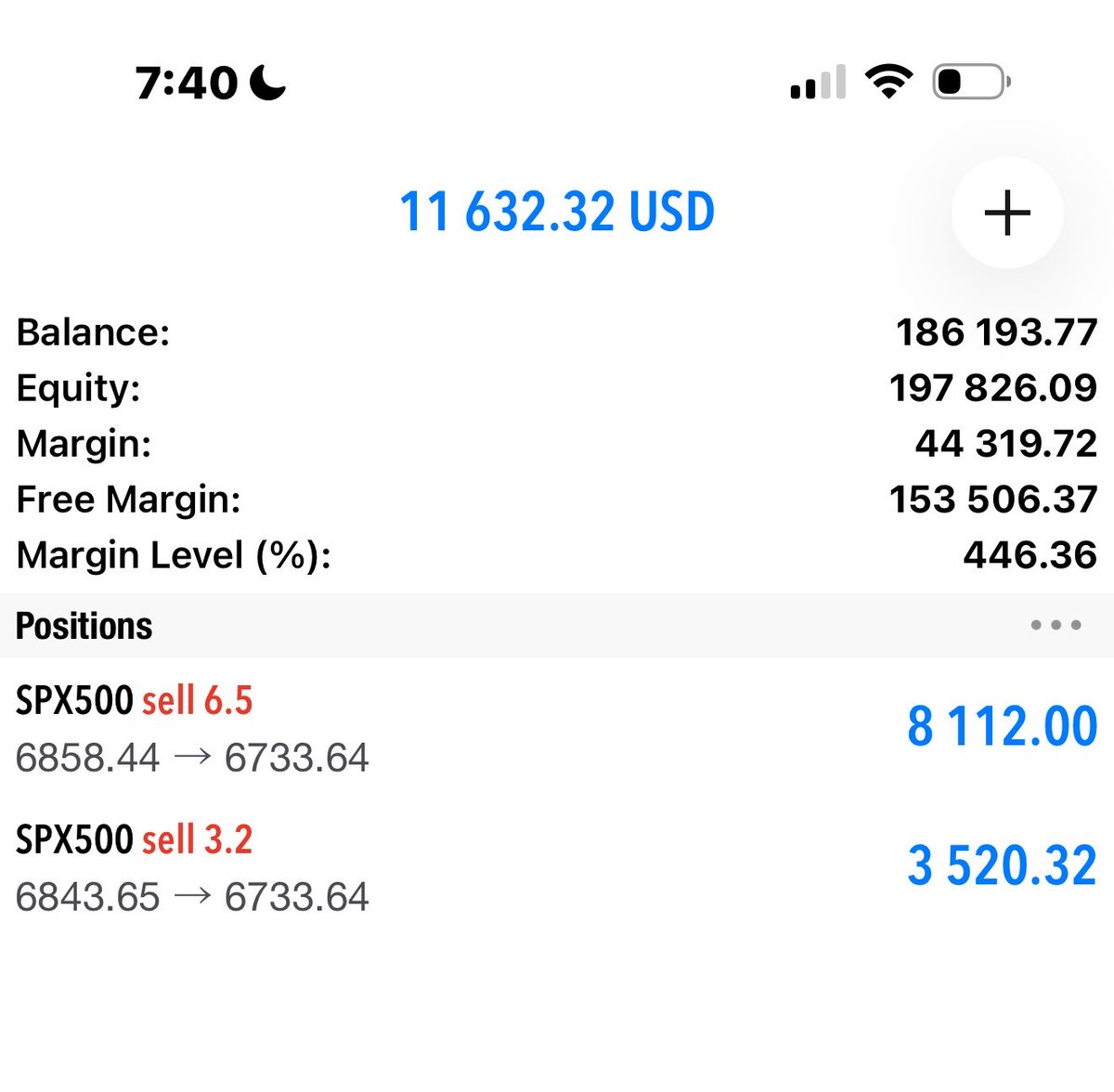
7% drawdown. $186,000 balance on one of my $200,000 accounts.
Only 3% left before it was gone. Most accounts don’t recover from that.
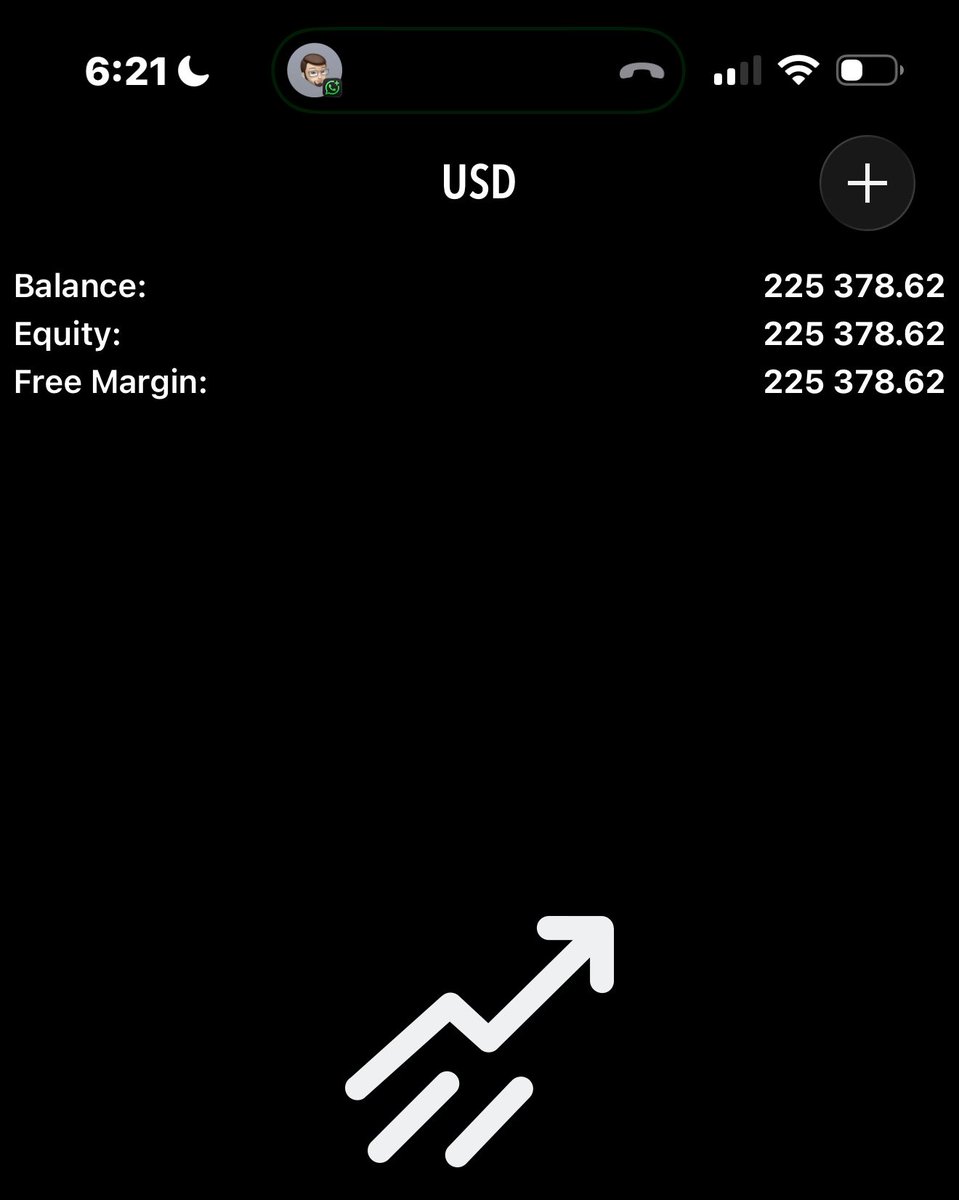
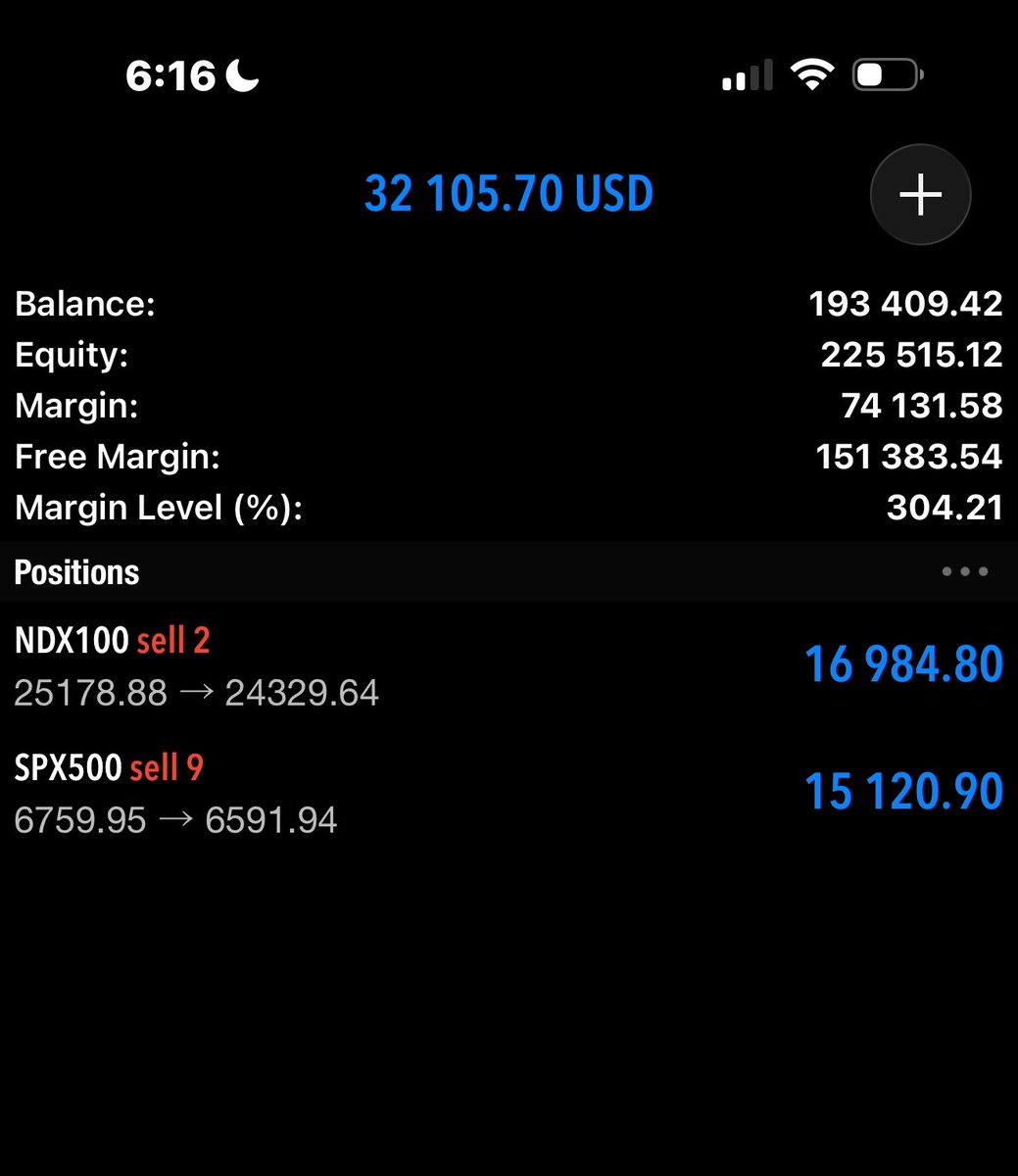
I took it from 7% down to 13% profit ($225,000) in just a few trades.
Here’s exactly what I did, and how you can realistically climb out of a drawdown without revenge trading your way into a blown account.
Read till the end. 👇
With the current market conditions, drawdowns are everywhere on the timeline right now. Even consistently profitable traders are getting hit. I’ve been there too.
Here’s how to recover from drawdowns realistically, not the “just stay disciplined” motivational nonsense.
I’m talking about the actual things that stop you from turning a -5% drawdown into a blown account.
1. Cut your risk immediately.
If you normally risk 1%, drop to 0.25–0.5%.
Why?
Because when confidence is damaged, execution usually gets worse too.
You don’t recover from drawdowns by swinging harder.
You recover by surviving long enough to regain consistency.
My standard risk across all my accounts is 1%. The moment I hit a drawdown above 2%, I immediately cut risk to 0.5% and stay there until I’m back at breakeven.
That one rule alone has helped me trade my $300,000 FundedNext account for over a year and my $400,000 FTMO accounts for 3 months + without a breach or blown account.
Your first priority in a drawdown is survival. Profits come after.
2. Find out what actually caused the drawdown and be brutally honest.
Was it:
• Overtrading?
• Revenge trading?
• Ignoring bias changes?
• Poor entries?
• Trading while emotional?
• Breaking your model?
• FOMO?
Most drawdowns are psychological before they’re technical and sometimes your strategy isn’t the issue, you are.
A profitable system traded by an impatient trader becomes unprofitable very quickly.
You can’t out-trade poor emotional control.
3. Go back to your A+ setups only.
In recovery mode, stop taking mediocre trades. No “maybe” setups, no boredom trades, no random pair hopping, only what has historically worked best for you.
If it’s not an A+, it’s a no.
4. Eliminate the urgency to recover your account in 24 hours.
That urgency creates bad decisions.
A healthy recovery can take 2-4 trades depending on RR. It can take weeks sometimes.
That’s normal.
5. Protecting capital matters more than recovering ego because the market doesn��t care that you “need” the money back.
Trade what’s there, not what you wish was there. Chasing recovery is how a 7% drawdown becomes a blown account.
Survive first. Everything else follows.
Also for my crypto traders, if you’ve been eating heavy spreads trying to trade crypto on forex prop firms, there’s a better option.
Crypto Funded Trader is the first prop firm built specifically for crypto traders. The account types, trading conditions, everything was designed with crypto in mind.
I’ve used it personally. The difference is noticeable. If you’ve been looking to get into prop trading with crypto, this is where I’d start.
Follow me, @Starr_gael, and turn on post notifications to stay updated and be the first to see whenever I make a post.
You’ll find trade documentaries, breakdowns, insights, results and my personal thoughts on my WhatsApp. Click the link below to connect.👇
https://t.co/HOc1mv5KrZ
CFOs and treasury teams who move money across borders, especially in African and Asian markets, are increasingly asking important questions. Are stablecoins truly safe? What backs this token? Who checks the reserves? What happens when it’s time to redeem?
We explain how reserve-backed stablecoins work, what the GENIUS Act and MiCA mean for institutions, and why the main risk is not the stablecoin itself but the infrastructure provider behind it.
Worth a read if you're managing cross-border payments, supplier settlements, or treasury operations in emerging markets.
Read the full article here: https://t.co/FndgEjBdkV
#Stablecoins #CrossBorderPayments #TreasuryManagement #Fintech #EmergingMarkets #Web3
Some books from where I took ideas for this article:
- The Wealth of Nations
- Zen and the art of Motorcycle Maintenance.
- Jefferson’s bio & his writings.
- Jeff Bezos’s shareholder letters.
- The Origin of Species.
- Notes from Underground.
- Deep Simplicity.
- Conditioned Reflexes.
- Built from Scratch.
- Fingerprints of the Gods.
- Cicero’s speeches.
- Snowball, Buffett’s bio.
- Poor Charlie’s Almanack.
- Ice Age.
- The Principia.
- Newton’s correspondence.
- Darwin’s autobio.
- Scale.
- Michael Mauboussin’s articles.
- Buffett’s shareholder letters.
- Sam Walton’s autobio.
A merchant in Lagos prices their goods in dollars, not by choice, but because the naira is too unstable to protect their margins. Customers are forced to pay in naira at whatever the day's rate is, so the merchant spends more time managing currency risk than running the business.
This isn’t a niche problem. It happens every day across emerging markets, in retail, services, and small businesses that don’t have treasury teams or FX desks. They’re left with a pricing problem and tools that weren’t made for them.
Stablecoins change things. They’re not just for big institutions moving millions, but also for merchants who want a checkout that accepts USDT/USDC directly so prices stay the same on both sides. NGOs can accept global donations without incurring FX conversion losses before the funds reach their cause. Service businesses can send a payment link and receive payment in USDT or USDC instantly, with no bank delays or currency conversions.
The use case for stablecoins in payments is bigger than most people realize. Cross-border infrastructure is just one side. The other is giving stable, accessible payment tools to businesses that have never had reliable options.
That’s the part I think deserves more attention as our industry evolves.
-David Osawaru
Product Manager, Ledig.
#stablecoins #crypto #Africa #emergingmarkets #fiat
Most treasury teams and PSPs focus on rates, fees, and settlement time when choosing a Stablecoin provider. These are important, but in large-scale B2B payments, there is an even more important question that often gets overlooked.
Thin liquidity in emerging market corridors can quietly cost businesses thousands in slippage per transaction, often without anyone realizing it is the reason.
To learn more about how this affects your business, read the full article at: https://t.co/iIwoK5LNz8
I just had the craziest experience at the airport.
We are about to board a flight to Atlanta when the pilot from the incoming plane walks out of the jetway. Guy is probably late 50s, salt and pepper hair, military look. The kind of pilot you instantly feel good about seeing on your flight.
Pilot walks over to the counter, gets on the PA system, and starts addressing everyone. “Folks, I’ve been doing this a long time. Flying one of these jets is easy. The hard part is looking at 130 people and telling them their flight is going to be delayed.”
Audible groans throughout the boarding gate. Most people here are flying to Atlanta as a layover before another flight. 130 people just had their day become a complete mess.
The pilot goes on. “I get it, trust me. But here’s the deal: During our landing, we had a small mechanical issue. I’m not your pilot for the next leg, but I don’t feel confident the jet’s safe to fly until we have a mechanical team look it over, and I don’t feel comfortable asking the next pilots to fly you guys until we get confirmation.”
He points at the agents next to him behind the counter: “Now, none of this is the agents’ fault. Please be kind to them. I’m the one who made this decision, not them, so any inconvenience you experience is my fault. Just please know that I don’t do this lightly, and I’m only doing it because I believe it’s in the best interests of everyone’s safety.”
Now this is where the story gets crazy. The pilot puts the microphone down, grabs his suitcase, and all the people in the gate…
Start clapping.
I’m not joking, everyone starts clapping for the guy. 130 people who just had their travel plans ruined give an ovation to the guy who made the decision and delivered the message.
All because he addressed them with decency and transparency, took ownership of the decision, made it clear that it was necessary, and explained why it was in everyone’s best interest.
It’s honestly one of the best examples of strong communication—of strong leadership, for that matter—that I’ve seen in a long time.
@Delta, whoever your Atlanta to Wichita pilot was this morning, he’s one of the good ones. Please tell him the delayed passengers of flight 1637 appreciate what he did.
The brain is designed to learn through constant repetition and active, hands-on involvement. Through such practice and persistence, any skill can be mastered.
When a Blockchain sets up a base in your region, you have about 2 years to become sustainable.
There are certain expectations that need to be met. The grants that are given are not just free money. There is no such thing as free money.
What does it mean to be self sustainable as a blockchain ecosystem in a region:
- Enough projects being built on the blockchain protocol
- You need to build a community that will consume and pay for the services and gas fees for the projects
- Local investors to invest in the projects
The blockchain protocol would benefit from the consumption of projects from the community. This is why the community is the backbone. The gas fees need to be paid to have an ROI on the funding to the protocol itself.
Remember, the founder of the project wants to make money. The investors want their money to return with profit.
So if there is no money coming from your region then it's not worth the investment.
Now Africa tends to need time, 5 to 6 years approximately. But other regions can find uptake in about 2 years. Also Africa might need more support. i.e Local investors rarely invest in Blockchain projects.
At the end of the day it's all about money. Crypto is very capitalist
At this U.S. visit to China dinner banquet, the most eye-catching figure in the prime center seat between Musk and Cook was Lansi Technology founder Zhou Qunfei—from a rural factory girl to China's richest woman, with absolutely no background to rely on, building everything from scratch through her own grit. She was born in a small village in Hunan Province. At age 5, her mother passed away, and her father became disabled and blind from a work injury, leaving the family in dire poverty with nothing to their name. At 16, unable to afford school fees, she was forced to drop out and head to Guangdong to work in a factory, grinding glass on the assembly line—working days away during the day and furiously self-studying at night, earning certifications in accounting, computer operations, and other skills. That's how she spent a few years, until she scraped together 20,000 yuan from her wages, rallied eight relatives including her brother, sister, sister-in-law, and brother-in-law, and started a small workshop in Shenzhen doing watch glass processing. She handled machine repairs and sales runs single-handedly, grinding away like that for another four years.
By the 2000s, the mobile phone industry began booming on a massive scale. By a stroke of luck, her watch glass factory landed an order for TCL phone screens. She spotted the huge potential in the phone glass market and quickly founded Lansi Technology, specializing in the production, R&D, and sales of phone glass. At first, they only handled domestic phones and knockoffs, but everything changed when she went after a Motorola order—foreign companies had insanely strict quality standards. She bet nearly all her resources to meet Motorola's demands and snagged the V3 order, which sold over 100 million units worldwide, catapulting Lansi Technology straight to industry leadership. From there, she smoothly secured deals with Nokia, Samsung, and other foreign giants.
The pivotal turning point hit again in 2007, when Jobs unveiled the first iPhone, revolutionizing phones toward full-glass touchscreens. Jobs' obsessive craftsmanship demands left the whole world scrambling for a supplier that could meet them. Zhou Qunfei keenly sensed this was another massive opportunity, so she led her team in a three-month joint push with Apple engineers, breaking through key processes to mass-produce the first-generation iPhone glass panels. That locked in a long-term Apple contract, and soon after, nearly all Apple gear—from iPads to MacBooks—went to Lansi Technology for production. It also propelled Lansi to become the world's top player in touch glass panels.
That's why she got to sit next to Cook. But why was Musk right there beside her too?
After dominating global glass panels, Lansi Technology branched into more diverse smart devices, including car cockpits and robots. In autos, they've already locked in deals with 30 carmakers like Tesla, BMW, Mercedes, and Li Auto for windows, center consoles, and more. In robotics, they handle joints, sensors, and other components—areas with deep overlap in Musk's businesses.
A girl who dropped out at 15 with just a junior high diploma, emerging from rural Hunan to build an empire from nothing and become China's richest woman—forty years later, stepping into U.S.-China talks, seated between Musk and Cook. That's Zhou Qunfei's story.
- @hihongjie
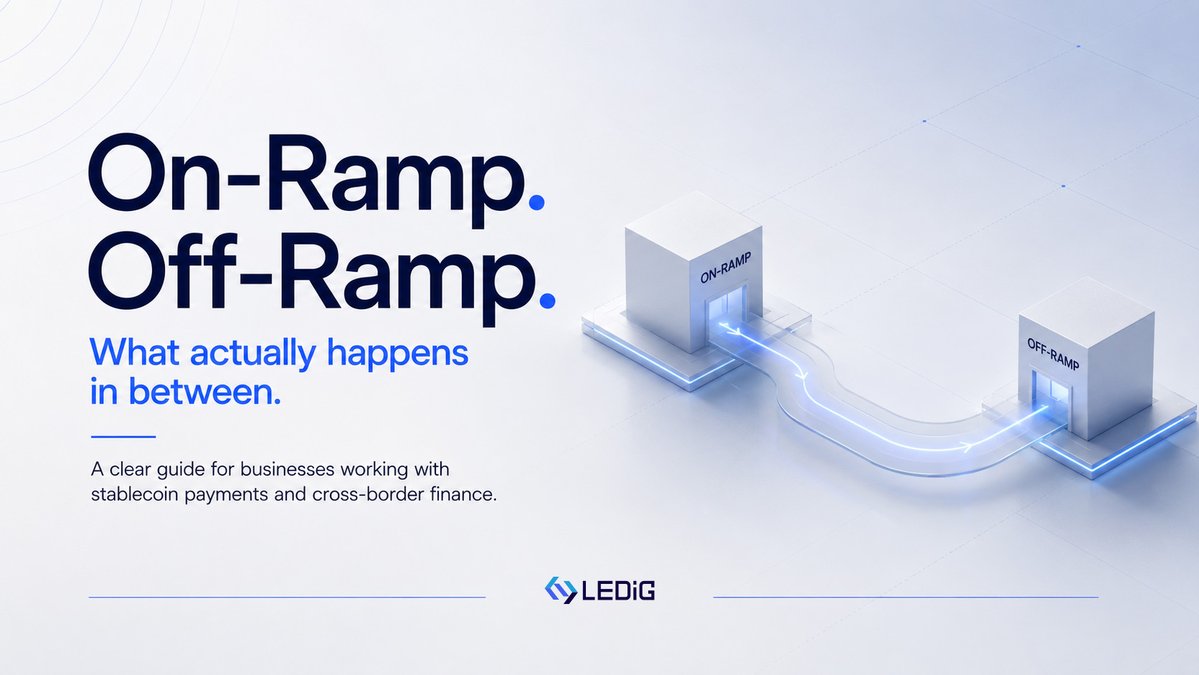
If you work with stablecoin payments or cross-border finance, you often hear the terms on-ramping and off-ramping. Most people have a general sense of what they mean, but here’s a clear explanation.
On-ramping means converting fiat into a stablecoin. For example, a business that accepts dollars, pounds, or euros converts those currencies into USDT or USDC. This lets them move value quickly using stablecoins instead of waiting for traditional banks. The process goes through a licensed provider or OTC desk, the rate is set in advance, and the stablecoin arrives in the business’s wallet, ready to use. This is how you get started.
Off-ramping is the exit. For example, a supplier in Lagos might receive payment in USDT but need Naira to pay employees and keep the business running. The stablecoin is converted to Naira and sent directly to their bank account via local banking systems. To do this well, the provider must have real banking partners and sufficient local-currency liquidity in that market, not just offer it as an option on their website.
Which brings up what most people get wrong. Off-ramping is not universally harder than on-ramping. The corridor decides. A market with deep liquidity, solid banking infrastructure, and clear regulation processes both smoothly. A market with dollar shortages, limited banking access, or complex compliance requirements needs more expertise and stronger local connections to get the same transaction across the line.
So, instead of asking a provider how many markets they cover, ask which ones they truly support and how they do it.
Ledig provides on and off-ramp infrastructure across African and emerging market corridors, in markets where the banking relationships and liquidity are already in place.
Visit https://t.co/CZqFv2FDff to find out more
#Stablecoins #CrossBorderPayments #OnRamp #OffRamp #Fintech #EmergingMarkets #Ledig #Treasury #Africa #USDT #USDC #cNGN
When building a community, never hirer mercenaries.
Build out from the back. Find true believers, lone builders, people with a shared value.
Mercenaries give you an early jolt of activity but it's always ephemeral.
"It's a wonderful time to be a pragmatist building onchain."
Chris Dixon, Ali Yahya, Eddy Lazzarin, and Guy Wuollet on Crypto Fund 5, where crypto is right now, and where it's heading next.
00:00 Open
01:31 Why raise Crypto Fund 5 now
02:10 The GENIUS Act and what regulatory clarity unlocks for builders
04:32 Why stablecoins are crypto's WhatsApp moment
08:54 Why the next era of crypto founders will be pragmatic, not ideological
11:49 From cypherpunk revolution to crypto's "collared shirt era"
15:02 Programmable money meets AI
21:15 Onchain capital markets for compute, energy, and credit
25:57 Why finance is the foundation, not the ceiling
28:48 AI agents as first-class economic actors
38:19 Why privacy is the only moat
41:26 Jevons paradox and the future of blockspace demand
43:20 Jolt and the zero-knowledge breakthrough
58:15 Writing the next chapter of Read Write Own
@cdixon@alive_@eddylazzarin@guywuolletjr@rhackett
Notes from our Crypto Fund 5 conversation:
1. Successful founders in this next era will tend to be product-focused, go-to-market-focused, and pragmatic rather than ideological.
2. The goal: get a billion people onchain through stocks, bonds, stablecoins, and remittances. Once they're onboarded to the infrastructure, adjacent services can follow naturally.
3. We don't have a global financial network. We have a patchwork of small networks glued together by humans and legacy processes. Stablecoins are global from day one: the WhatsApp moment for money.
4. Stablecoins are leading crypto's mainstream traction. ~$300B issued, transaction volume approaching major payment network levels, and growth uncorrelated with trading.
5. The Genius Act gave stablecoins a regulatory framework, and unlocked builder energy overnight. The Clarity Act (or SEC/CFTC rulemaking) could do the same for the rest of crypto.
6. Crypto is winning the revolution, now it's time to govern. That means working with the system, not overthrowing it.
7, A growing share of transactions (potentially the majority) will be done by AI agents, not humans. If you tell one to save you money on your monthly spending, it will use whatever software does that, and it won't care what gets disintermediated.
8, You cannot vibe code USDC or Hyperliquid. Network-effects businesses are the one thing the model companies can't easily replicate.
9. Privacy may be the most durable moat in crypto. Once an application's state is encrypted, it can't be trivially forked to another chain. Switching costs return.
10. If every human on earth gains access to a dollar-denominated, stablecoin-powered account, that alone would be a generational upgrade to the global financial system.
Steve Jobs once told a room full of people:
"I don't give a F**k what the students want, the parents think, or anybody thinks. It's what I want. They don't know what they want till I tell them what they want."
Kevin looked Jobs in to the eye and said:
"Steve, you sound like such an a**hole."
Jobs did not flinch.
"Are you making money with me? Have we not been wildly successful? Then shut up and do what I say."
That was Steve Jobs. Not a nice guy. Not even a little.
But here is what that man learned from working with him. And it is the only success formula that actually holds up.
Kevin worked for Steve Jobs in the early 1990s, building educational software.
One day he walked into a meeting and told Jobs they needed to do market research on Oregon Trail. A massive title. Running in 110,000 school buildings across the country. An update would cost 12 to 15 million dollars.
He wanted to know what students wanted. What teachers wanted. What parents wanted.
Jobs stopped him cold.
He did not want surveys. Did not want focus groups. Did not want to know what anybody thought.
Because in his mind, none of that mattered.
What mattered was signal.
Here is the concept Jobs understood that almost nobody else did.
Every person alive is swimming in two things at all times.
Signal. And noise.
Signal is the three to five things that absolutely must get done today. Not next week. Not next month. Not someday. Today. The things that if done, move everything forward. The things your mission cannot survive without.
Noise is everything else.
The unnecessary meeting. The email that can wait. The social media scroll. The small talk. The market research nobody asked for. The decisions that feel urgent but are not. Everything that fills your hours without filling your purpose.
Jobs ran at 80% signal, 20% noise.
Every single day.
Kevin knew this because Jobs would email him at 2:30 in the morning and expect a response. Not because he was unreasonable. Because for Jobs, 2:30 in the morning was still signal hours. He was still working. Still moving. Still locked in.
The 18 hours he was awake were 18 hours of signal.
Kevin says the only person he has ever seen operate at a higher ratio than Jobs is Elon Musk.
Musk has almost no noise. Sixty seconds of every minute. Sixty minutes of every hour. Every waking hour pointed at whatever the signal is that day.
And the results, like Jobs, speak for themselves.
Jeff Bezos had his own version of this.
He would not make a single decision after 1pm.
Not because he was lazy. Because he understood that by afternoon, the noise had accumulated enough to cloud his judgment. His signal hours were in the morning. So that is when he decided things. And he protected those hours like they were sacred.
Because they were.
Here is the uncomfortable truth buried inside all of this.
Noise is not always bad things.
Sometimes noise is your family. Sometimes it is a friend calling to catch up. Sometimes it is a guitar sitting in the corner of the room. Sometimes it is rest.
The people running at 100% signal, Jobs, Musk, the geniuses of history, paid a real price for it socially. Relationships suffered. Normal life suffered. Warmth suffered.
Jobs himself was famously difficult to be around.
But here is the question worth sitting with:
Most people are not choosing between 100% signal and a balanced life.
Most people are choosing between 30% signal and 70% noise.
They are not sacrificing family time for focus. They are sacrificing focus for nothing. For scrolling. For distraction. For busy work that feels productive but produces nothing.
That is the real problem.
Kevin now tells every CEO he works with the same thing.
It does not matter if you run an S&P 500 company or you are three weeks into your first business.
The formula is the same.
Identify the three to five things that must get done today. Not tomorrow. Not eventually. Today.
Then protect those things with everything you have.
If you can spend 80% of your waking hours on signal, you are operating at the level of the most successful people who have ever lived.
If you drop to 50/50, signal and noise in equal measure, you will fail.
It is, Kevin says, that simple.
Jobs was not successful because he was a genius.
He was not successful because he was charismatic or visionary or ahead of his time, though he was all of those things.
He was successful because when he woke up every morning, he knew exactly what mattered.
And he refused, sometimes rudely, sometimes brutally, sometimes at the cost of every relationship in the room, to let anything else in.
Most people spend their whole lives reacting to noise and calling it work.