🧬 El fin de la ciencia inventada? Cero alucinaciones en PubMed con Claude
Usa el nuevo protocolo MCP para conectar Claude directamente a la base de datos de PubMed. ¿El resultado? Analiza más de 50 papers médicos en segundos con 0% de alucinaciones.
Lo que soluciona:
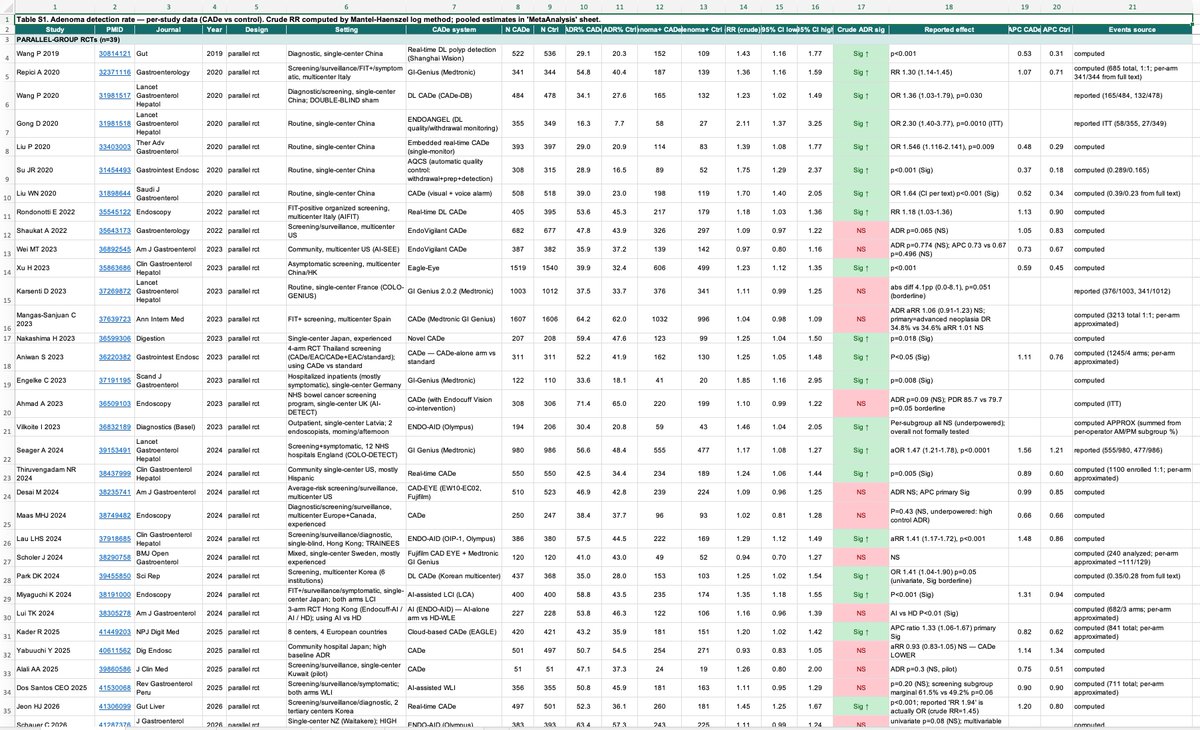
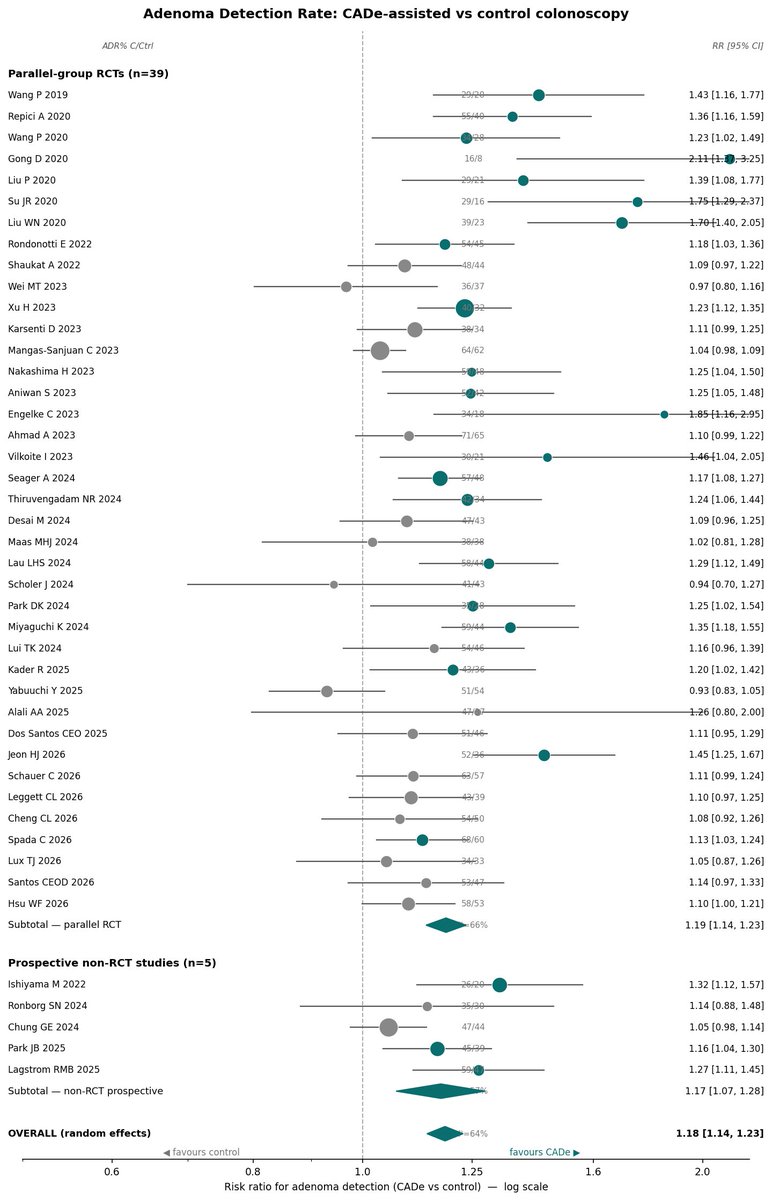
Conexión Real: Consulta la API oficial de PubMed en tiempo real (mira las tablas y gráficos adjuntos).
Cero Datos Falsos: Valida identificadores (PMID) y resultados clínicos reales de forma exacta.
Metanálisis Express: Convierte horas de lectura médica en resúmenes estructurados al instante.
El Siguiente Nivel (Idea de Producto):
Review Pipelines: Agentes que redacten revisiones sistemáticas automáticas basadas en este protocolo.
Clinical Alert Bot: Un bot que monitoree PubMed y publique hallazgos críticos en X o Discord de forma autónoma.
Se acabaron las citas bibliográficas falsas.
Repooooo 👇👇
Genomics just hit its “foundation model” moment.
AlphaGenome now predicts thousands of molecular effects from 1Mb DNA sequences at single-base resolution [1]. Pair that with UK Biobank’s 490,640 whole genomes and AI is no longer just speeding analysis it’s changing what questions researchers can ask 🧬
Industry noticed. Illumina and NVIDIA are combining sequencing, multiomics and accelerated AI to push drug discovery and clinical research forward [2]. The edge will go to teams that can connect wet labs, compute and interpretable models ⚙️
The challenge: don’t treat ML as magic. Treat genomic data quality, diversity and governance as core infrastructure or the benefits will concentrate in a few regions and companies.
🤔 Where do you think the real bottleneck is now: better models, better data, or better trust?
[1] [https://t.co/6dLRk4Di9Y](https://t.co/6dLRk4Di9Y)
[2] [https://t.co/txyXLUsjiF)
[3] [https://t.co/osygkFOonG](https://t.co/osygkFOonG)
#Genomics #MachineLearning #BioAI #PrecisionMedicine
En 2021, les opposants à la vaccination craignaient "une hécatombe" dans les années à venir.
Nous sommes 5 ans plus tard et une immense étude sur les données de 29 millions de Français (23 millions vaccinés, 6 millions non-vaccinés) prouve le contraire
👉 https://t.co/p0HXW6N8S8
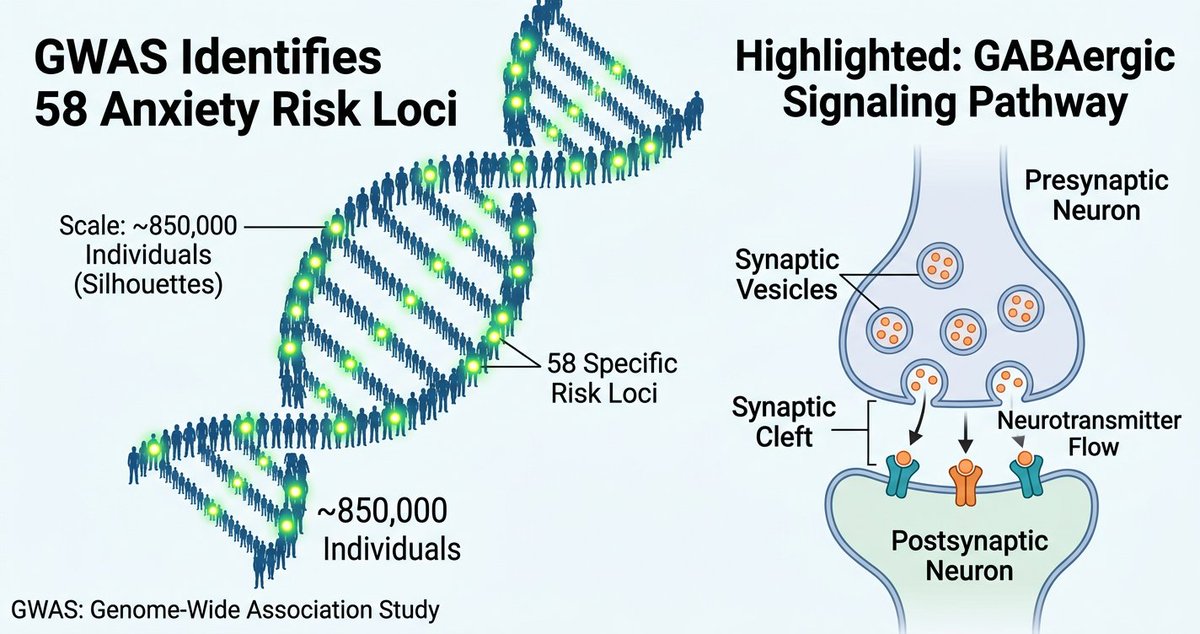
🚨 The largest anxiety GWAS to date JUST dropped
Over 850,000 genomes
It found 58 risk loci and strongly points to GABAergic signaling as a core driver...
...the same neurons targeted by benzodiazepines.
We finally have a robust genetic map for anxiety 🧵
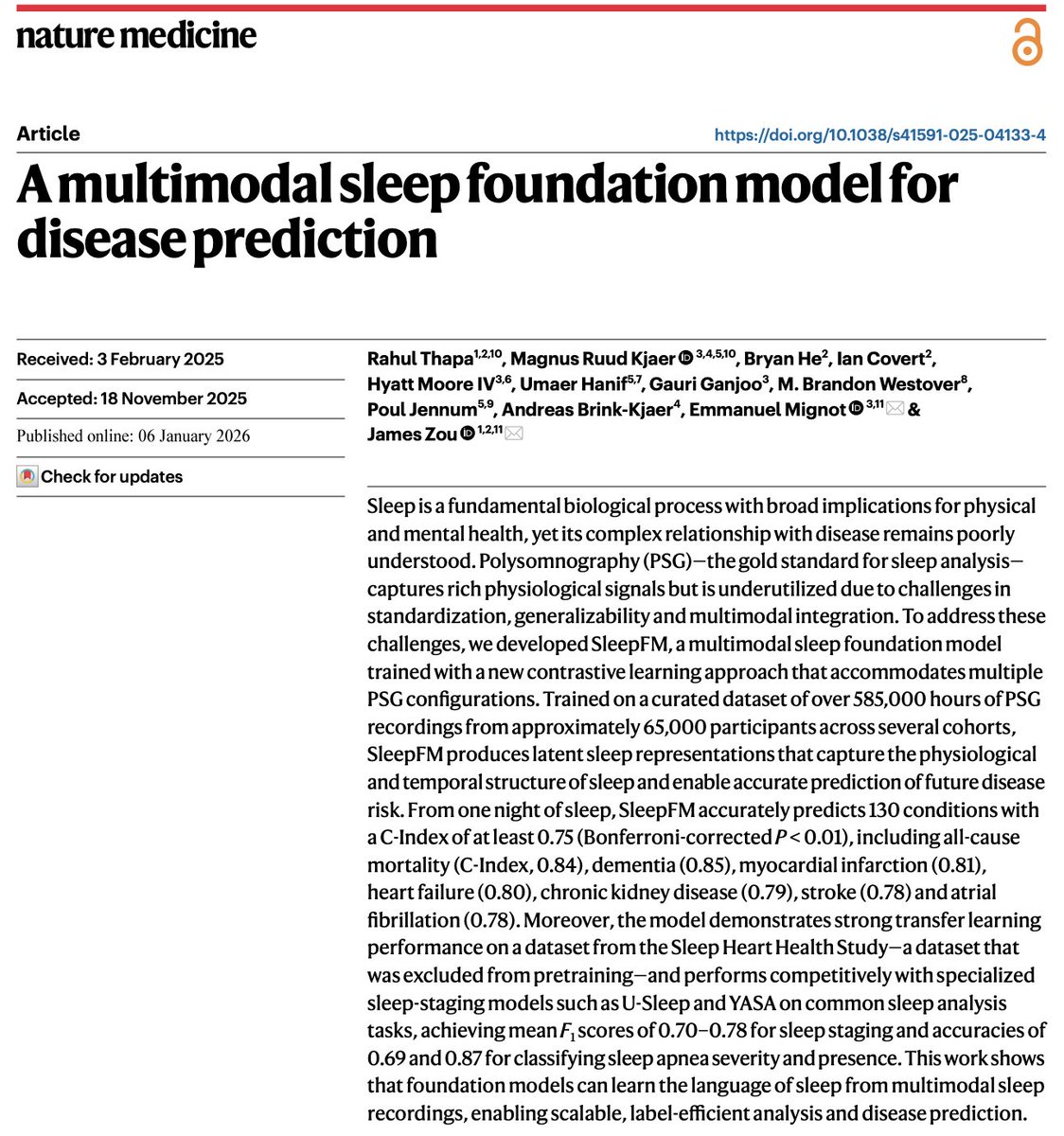
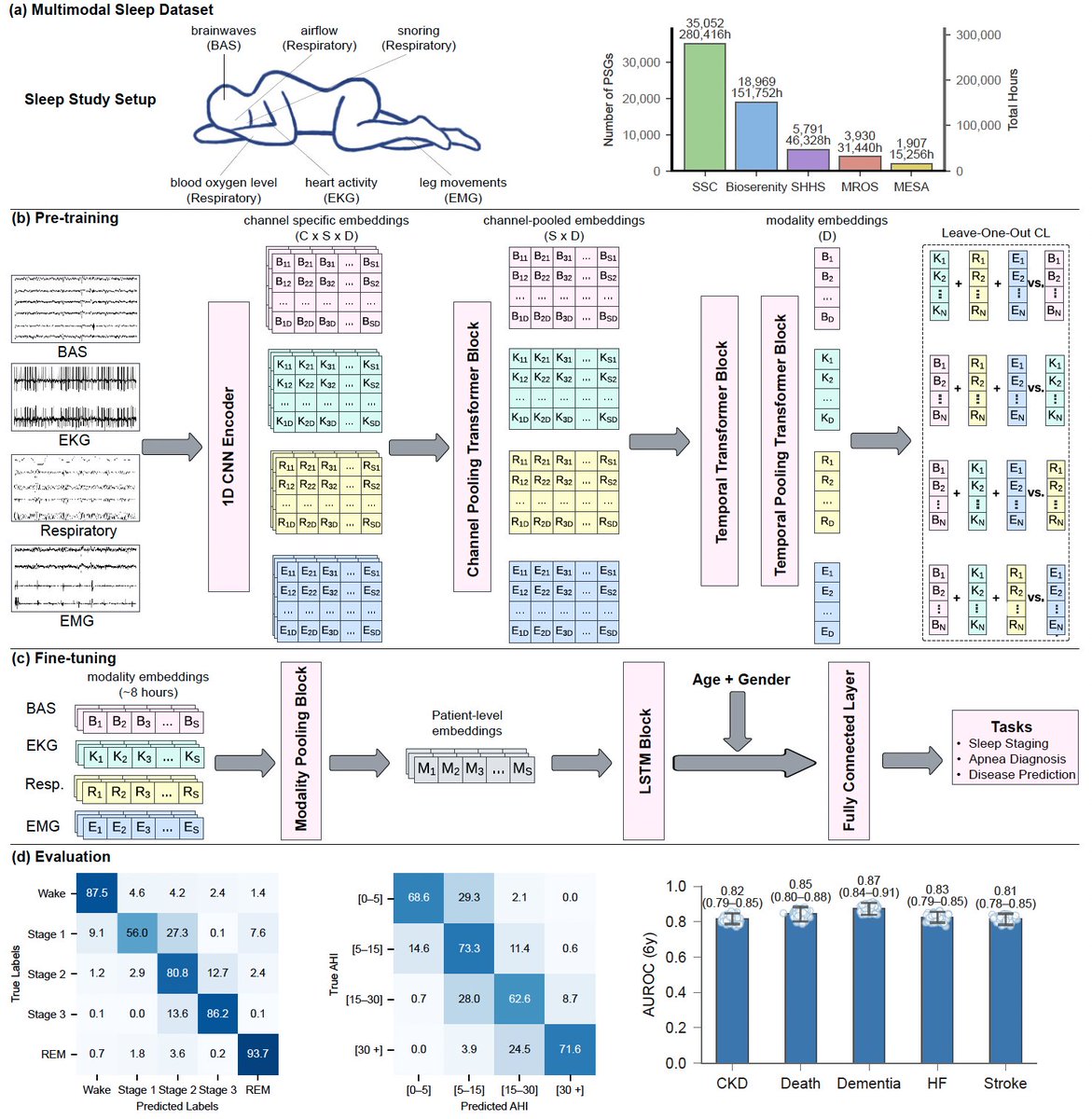
Today in @NatureMedicine we report that AI can predict 130 diseases from 1 night of sleep🛌
We trained a foundation model (#SleepFM) on 585K hours of sleep recordings from 65K people—brain, heart, muscle & breathing signals combined.
AI learns the language of sleep🧵
What are the favorable and unfavorable gut microbiome organisms associated with health markers? And effect of dietary interventions? New report from 34,000 participants
https://t.co/1z4u8Qfvb5
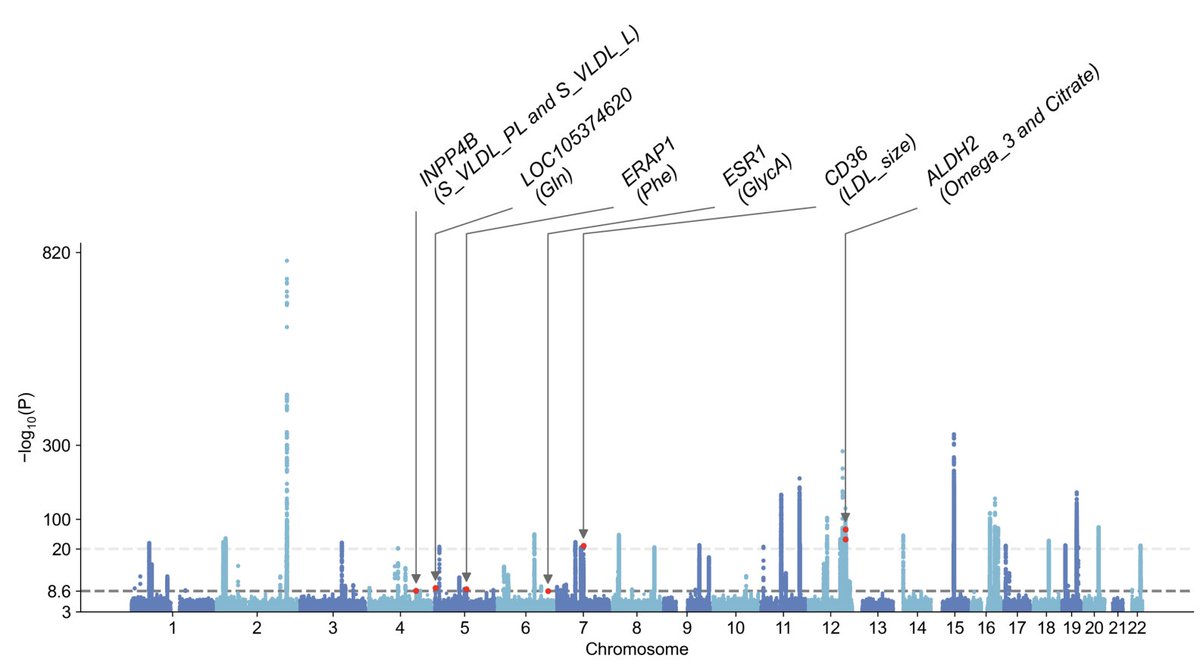
Biobank Japan now offers GWAS data for NMR metabolomics (N=37,969), as well as a multi-ancestry meta-analysis with UK Biobank & Estonian Biobank (total N=657,341).
The data cover 248 metabolites and expand our metabolomics resources for following-up GWAS signals.
Epigenetic Reprogramming in humans is coming early next year (2026)... This is one of the first steps towards longevity escape velocity.
We've known that you can reset the age of DNA taken from an "old cell" and putting it into a "young egg".
Epigenetic reprogramming is real, and its coming. Get ready for a longer, healthier life... just in time to Surf the Singularity!
PathogenSurveillance: an automated pipeline for population genomic analyses and pathogen identification https://t.co/UabJPCyIO4
Code: https://t.co/2OYQuV70QQ
Nextflow nf-core pipeline: https://t.co/aUoOA1Ft6f
🧬 In-Vivo CAR-T: Pharma’s New Holy Grail
Ex-vivo cell therapy was biotech’s moonshot. But it’s running into gravity, manufacturing drag, cost friction, and clinical complexity.
The next frontier is in-vivo CAR-T, programming immune cells directly inside the body.
Pharma’s deal flow makes the shift obvious.
> $ABBV bought Capstan for its targeted LNPs.
> $GILD took Interius for integrating in-vivo delivery.
>$AZN scooped EsoBiotec for immune-tropic vectors
> $BMY grabbed Orbital for circular RNA payloads.
These aren’t bets on “CAR-T 2.0.” They’re bets on skipping the cell therapy factory.
⚙️ What Pharma is Buying
1️⃣ Delivery that actually hits T cells.
Platforms with immune-tropic vectors or LNPs that deliver RNA/DNA directly to lymphocytes are the crown jewels. The focus is on delivery/tropism and human data proving transduction at drug-like doses.
2️⃣ Autoimmune first, oncology second.
Autoimmune diseases are the new on-ramp. Rebooting B-cells with in-vivo CD19 or CD20 CARs offers a faster regulatory path and cleaner biomarkers than solid tumors.
3️⃣ Control layers.
Investors miss this: buyers aren’t paying for “permanent cures.” They’re paying for reversible control. RNA or epigenetic switches that let you turn therapy off, re-dose, and manage risk are where the value pools sit.
4️⃣ CMC scalability.
If a CAR-T can be shipped like Humira, not manufactured like a transplant, it’s a platform. Simple fill-finish beats elegant biology every time.
💡 What Differentiation Looks Like
>Immune reset, not immune destruction.
Design for measurable immune recalibration (e.g., B-cell depletion, autoantibody drop, reconstitution window) with built-in rescue drugs. It’s a narrative payers understand.
>Targeted LNP + circRNA stack.
CircRNA extends expression without permanent edits, and LNP tropism turns dosing into a controllable dial. It’s the combination investors should hunt for.
>Non-genotoxic engineering.
Replace DNA cuts with transient RNA knockdowns (Cas13) or epigenetic silencing. Same function, lower risk, and better suited for systemic delivery.
> Programmability over potency.
Logic-gated CARs that activate only in certain cytokine or antigen contexts will dominate next-gen designs. Think conditional biology, not brute force.
🧭 What Comes Next
>The endgame is obvious: off-the-shelf in-vivo immunomodulation that looks like a biologic and behaves like gene therapy.
>First applications will be autoimmune reset, then solid tumor infiltration, then regenerative immune programming.
>Pharma’s M&A tells you where translation is headed, away from autologous complexity and toward drug-like cell engineering.
https://t.co/fMuztv2idE
Gut bacteria can produce serotonin which may be the underpinning of intestinal dysfunctional motility such as irritable bowel syndrome
https://t.co/pS0ygX065y
It’s probably not a surprise that healthy longevity is linked to a lifelong web of support from family, friends, community, and faith. What’s new: this social advantage shows up in molecular markers of aging.
🧬 The GrimAge methylation clock detected significantly slower aging.
🩸 Inflammation markers in serum? Provide only a hint (IL-6).
💧 Stress hormones in urine? Failed.
Novelty: epigenetic clocks are revealing how relationships get under the skin.
Anthony Ong, Frank Mann FD, Laura Kubzansky LD (2025) Cumulative social advantage is associated with slower epigenetic aging and lower systemic inflammation. Brain Behav Immun Health. 2025 https://t.co/ZbuZeEiMVn
It'll be interesting to see where the aging clock field will head in terms of the utility of these clocks as biomarkers.
For now, using them as aging endophenotypes to run GWASs and understand mechanisms potentially driving organ-specific aging process holds most promise.
Microbiome research just hit a new gear: from giant DNA “inocles” hiding in our mouths to global atlases and FDA-regulated therapies, our microbial neighbors are reshaping medicine. 🧬🔥
Nature Communications reports “inocles”—huge extrachromosomal DNA in the oral microbiome, present in 74% of people and reduced in some cancers—hinting at biomarker potential. [1]
At scale, a Cell compendium (168k samples) maps global gut patterns; meanwhile, FDA-cleared fecal microbiota products move from niche to clinic. [2][3]
Next: translate signals to outcomes—trials are accelerating across mood, metabolism, and infection. 🧪 [4]
🤔 If the microbiome becomes a “vital sign,” who sets the reference range—clinicians, regulators, or algorithms?
Sources
[1] https://t.co/OjvDfc6bDk
[2] https://t.co/LjMSRDWrLz
[3] https://t.co/mov0PWaalG
[4] https://t.co/RfxitMNWbo
#Microbiome #DigitalHealth #TranslationalMedicine
Sciqst: AI-powered literature reviews in minutes.
Generate comprehensive, up-to-date scientific reviews from the latest papers with one click.
https://t.co/4Y9Imt8uIJ
🚩 ¿Los edulcorantes ayudan o perjudican para perder peso? ¿Y a la microbiota?
Un nuevo ensayo clínico publicado en Nature Metabolism (SWEET Study, 2025) acaba de dar respuesta a una de las preguntas más polémicas en nutrición.
Hilo 👇🏻 🧵