Are regulatory pathways shaping what gets invented?
Across 7,873 neurosurgical device authorizations, functional/stereotactic devices and startups took longer to clear.
@NeurosurgeryCNS
doi:10.1227/neu.0000000000004269
After a major #stroke, everyday activities became a challenge for Dr. Mirza Baig.
With the help of #Vivistim, a device that stimulates the vagus nerve during rehabilitation, he’s making remarkable strides toward recovery.
Read his story: https://t.co/VkjXi6Nwo6
@daviddarrow
We are delighted to share that Dr. Joseph Neimat has accepted the role of Chair of the Department of Neurosurgery, effective Jan. 29, 2027! 🎉
Read more: https://t.co/DUaChPbIjS.
@umnneurosurgery
this kind of work is not possible without @CourageKennyAH@MHealthFairview@umnmedalumni
Dr. Baig's story is so powerful. I can't wait to see how he will continue to reflect on #stroke and recovery with a psychiatric perspective
Paired VNS, expert rehabilitation and a patient’s hard work. Grateful to Dr. Mirza Baig, psychiatrist, for sharing his stroke recovery story and privileged to be a part of his care. https://t.co/FH1wZr9Ndx
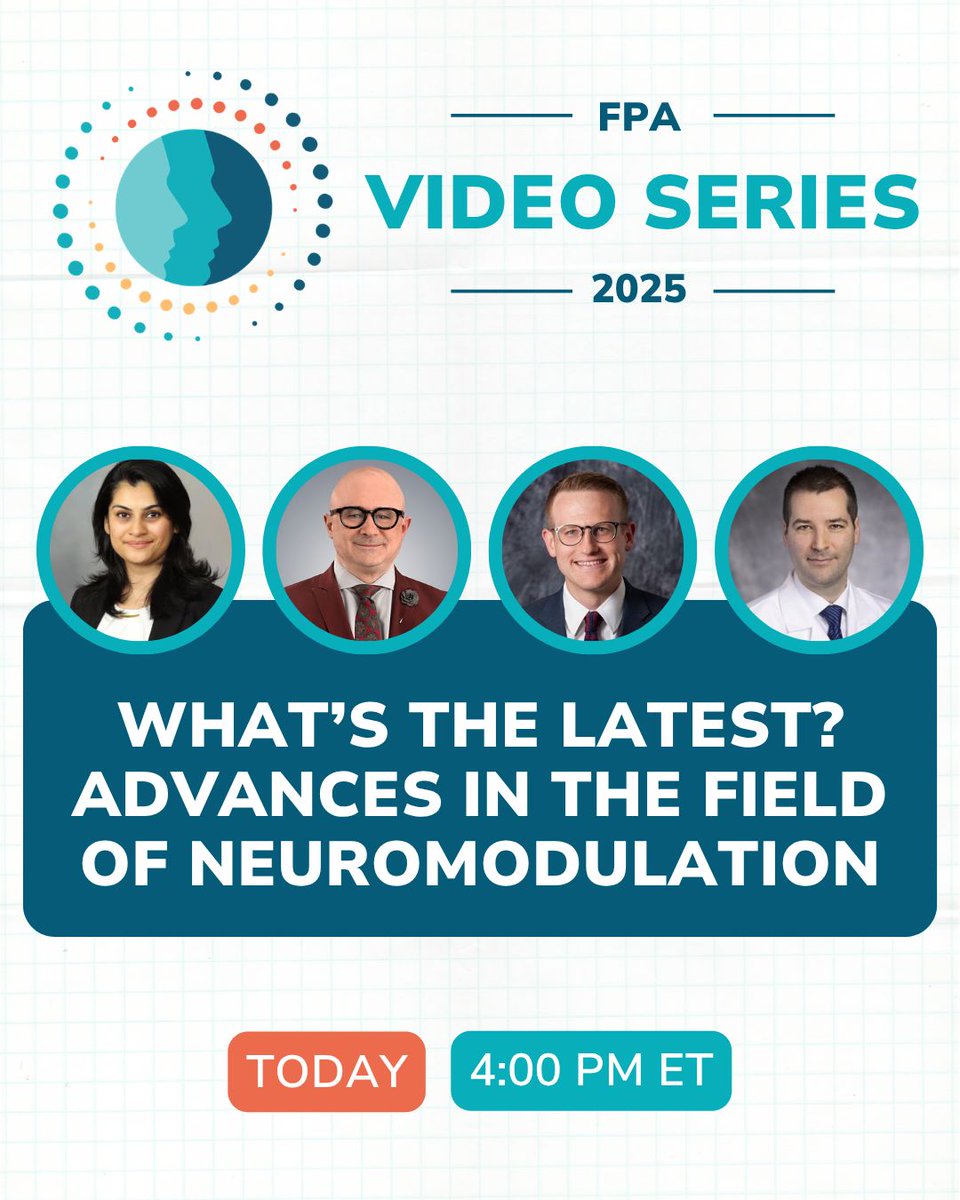
Join us TODAY at 4:00 PM ET for our latest webinar: "What’s the Latest? Advances in the Field of Neuromodulation" presented by Rushna Ali, MD, Nicholas Boulis, MD, David Darrow, MD, and Mike Staudt, MD.
The video will be available on our website and our YouTube channel.
Can we measure the “dose” of trigeminal balloon compression? In 41 TN patients, higher post-op serum NSE predicted less recurrence. pretty wild
@NeurosurgeryCNS@unicatt
doi:10.1227/neu.0000000000003724
Cingulotomy asks: not only “Does it hurt less?” but “Does pain control the person less?” At 8 years, 72% reported less pain, 55% stopped narcotics, and 67% improved family life. Historical data but is there a role? @NeurosurgeryCNS https://t.co/ViCCvWRxu9
Help us shape the future of neuromodulation for SCI. We're hiring a postdoc at Hennepin Healthcare/HHRI to work on epidural stimulation in chronic motor-complete SCI. Human SCI research experience is preferred.
Lab: https://t.co/kdjWBx5Nlw
Apply: https://t.co/NqPZV3mgb6
All 14 patients improved after cordotomy but 4 developed new contralateral pain. Pre-op temporal summation predicted who was at risk. A small, compelling case for physiologic phenotyping before irreversible pain surgery. @AssafBerger@NeurosurgeryCNS https://t.co/WpbH1dBGdD
The earlier paper that defined this clinical subgroup: “The Spectrum of Trigeminal Neuralgia Without Neurovascular Compression.” @OHSUBrain https://t.co/MyZ4BDqeGn
Magown, Ko & Burchiel found that 32% of TN1 patients had no neurovascular compression. Yoshida et al now report asymmetric CSF flow and 78.6% BNI I/II after arachnoid dissection. Could “noncompressive” TN still be mechanical + vulnerable? @NeurosurgeryCNS https://t.co/Wc6adGVRIe
Some mail you never forget opening.
Thank you @NIH @NIH_NINDS + the HEAL Initiative for funding SENAP, a trial for central neuropathic pain: pain generated by the brain itself after stroke, MS, or spinal cord injury.
We finally know where it lives. Now we get to go there. 🧠
A privilege to build this with an amazing team @AlexHermanMDPhD (co-PI) and @TNetoff Michael Park Andrew Grande @DrDamienFair Ziad Nahas — psychiatry, engineering, neurosurgery, and neuroimaging on one problem.
Pain prevention after amputation may need to start when the nerve is cut. In 32 tumor amputations, RPNI was linked to less 12-week pain (25% vs 68.8%) and no phantom limb pain (0% vs 43.8%). Lin et al. @PKU1898@NeurosurgeryCNS https://t.co/2Lp5MYWlGW
Negative SCS trials/explants were associated with higher 10-year mortality; ongoing SCS was not. Could a trial test pain diagnosis and responsiveness before later procedures...even fusion? Luikku et al. @nissen_mette@MFraunberg@NeurosurgeryCNS https://t.co/riDzkvKFqi
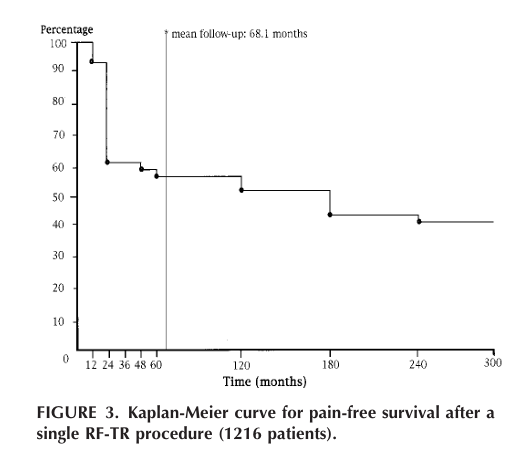
After the recent navigation paper, a classic from @NeurosurgeryCNS: in 1,216 TN patients, pain-free survival after a single RF rhizotomy was 57.7% at 5 years. The long tail of this curve is striking. https://t.co/OhMdxXkMie #TrigeminalNeuralgia