@Breedlove22 What about dancing as a form of fitness, both in classes and social dancing? Maybe something that's a little faster like salsa or variations of Latin dance that has more speed that makes you sweat?
Should the global tech community continue investing in Malaysia?
Given recent events, I raise this question respectfully for the consideration of Prime Minister Yang Amat Berhormat Dato’ Seri Anwar bin Ibrahim (@anwaribrahim), for the people of Malaysia, and for our friends in the Malaysian tech community. The answer will be of interest to anyone in global tech that’s considering building, investing, or expanding in Malaysia, including executives at Google, Amazon, Apple, and Microsoft, founders of tech unicorns like Coinbase and Solana, and investors at the world’s largest venture capital funds like a16z and Polychain.
As context, I am the former CTO of Coinbase and former General Partner at a16z. In October 2024, I opened a startup society called Network School in Malaysia, because I felt I’d been invited in by the government’s pro-tech policies.
Specifically, the KL20 initiative set out Malaysia’s ambition of becoming a top 20 global tech hub. Their MDEC digital nomad visas and MM2H investor visas were created to facilitate an influx of global talent and capital. And the Johor-Singapore Special Economic Zone was announced to facilitate the flow of capital and talent between Malaysia and Singapore, where I live. When taken in combination with Malaysia’s datacenter buildout and its policy of welcoming visa-free visits for 98% of the world, it seemed like Malaysia might be a great place to build a global tech hub that was simultaneously inexpensive and easy to visit (especially for non-Westerners).
And that’s what we did, by creating Network School. It’s an international tech community with its first node in Forest City, Malaysia. We picked Forest City because it had millions of square feet of empty space, because it was one hour from Singapore’s capital markets, and because it was within the Johor-Singapore Special Economic Zone. Then, within 18 months, without a single penny of government money, we built Network School into a global attraction that brought thousands of engineers, investors, and builders from 70+ countries to learn technology, burn calories, earn online, and have fun, integrating with the local Malaysian economy along the way.
Indeed, in terms of quantifiable contribution to the Malaysian economy, we’ve already invested 100M+ MYR in our campus to make it startup-friendly. For perspective, that’s about 4% of the budget of Johor, the Malaysian state where Forest City is located. We employ dozens of Malaysians directly and indirectly at every level from executive to staff. We’ve backed Malaysian tech startups like Collektr, hosted events for local teams like Superteam Malaysia, and are major customers of many local businesses like barbers, laundromats, and restaurants. We’ve also revitalized the multibillion-dollar Forest City project, causing millions of MYR in real estate appreciation. And, as the video below describes, we were on the cusp of a 500M+ MYR expansion to grow our community, as well as a global merit scholarship with my friend Amjad Masad of Replit.
However, that emerging multi-billion dollar success story — which should rightfully have been hailed as a huge victory for the pro-tech policies of the Malaysian government — is at risk of being derailed by a fake story spread by an anonymous account named MP4P.
In short: on the day before the July 11 Johor elections, MP4P posted an Instagram post falsely accusing Network School of harboring illegal aliens. The sensational accusations caused a tizzy in Malaysia, until Malaysian authorities came to our campus on July 14 to investigate. (I should note that the officers were very polite and professional.) After checking hundreds of physical passports from 40 countries, including dual passport holders, the authorities confirmed to the press on July 15 that all travel documents were in order. During the process, we cooperated fully; in the thread below you can see a photo of the men, women, and children of Network School smiling and holding up their passports in the bright daylight. Our faces are shown and our names are known; we have nothing to hide.
With that said, the process is the punishment. What MP4P did is very similar to the American crime of “swatting”, because MP4P created a hoax report of a serious threat, thereby forcing the Malaysian police to take time away from protecting the Malaysian people towards investigating a nonexistent issue. Moreover, this anonymous MP4P account has also called for Malaysia to boycott Apple, Google, Amazon, and Microsoft…a move that would cost ordinary Malaysians thousands of jobs…even while MP4P’s own Instagram collaborators promote their Apple and Google apps! I mean, we aren’t talking about a credible accuser, but just someone screaming inconsistently at the top of their lungs on social media for traffic, an all-too-common phenomenon these days.
Anyway, at this point, all further investment we were planning to make in Malaysia is on hold until we get sufficient assurance that such issues won’t recur. So are the investment plans of many of our friends, including the execs and investors at global tech firms that we brought to Forest City. Because to put it very plainly: we have invested 100M+ MYR in Malaysia, while creating jobs for dozens of Malaysians, and our faces and names are known. Our Malaysian executives and employees deserve the benefit of the doubt over anonymous internet trolls.
There are two paths forward. In the first case, if Malaysia still wants continued global tech investment, if it wants to be a top 20 tech hub, if it wants us to revitalize Forest City, then we request an audience with the Prime Minister’s office to discuss the terms of a memorandum of understanding between Network School and the Malaysian government, similar to the document recently signed between the Solana Foundation and the Kazakhstan government.
Specifics can of course be discussed, but we would publicly commit to abiding by all Malaysian laws (we already do) and respecting Malaysia’s sovereignty (never in question). In return, they’d get to know our friendly community, and realize that we actually chose Malaysia because we thought it was a great place to build a tech hub where engineers from the global South, investors from the West, and builders from Malaysia itself could meet new people, build cool things, and perhaps create millions of dollars in economic growth in the fullness of time.
That vision of peace and trade, internationalism and entrepreneurialism, is still on the table. We aren’t asking for any money — just a meeting, to help restore confidence in Malaysia as an investable jurisdiction. Alternatively, if you don’t want our investment, or those of our colleagues at billion dollar funds and trillion dollar companies, we will of course respect your wishes, and reallocate our capital to other countries instead.
Either way, we will remain friends and abide by your decision. Please let us know.
Call me crazy, but I think parents should determine what their teenagers do online rather than the government.
And that governments shouldn't use system-level ID checks to identify and monitor everything.
This is the moment when @RealRossU joins the conversation and speaks directly with @keonne about Keonne’s jail sentencing for building the Bitcoin wallet, SamouraiWallet. An incredibly bold move by Ross.
It was arguably the most powerful “live” moment of my career.
This 15 minute segment of our conversation from Sunday is uncomfortable and jarring, but incredibly real.
Thank you, Ross. We truly appreciate you, sir.
Please share this so @realDonaldTrump knows @RealRossU is onboard with this pardon. Stronger together. 💪🟠
#PardonSamourai
It would mean a lot if you would sign this petition calling on @realDonaldTrump to pardon me and Bill
In 30 days we will report to prison. Unless the President steps in.
Developers shouldn't be liable for the actions of bad actors using their software
#freesamourai
https://t.co/xQNGAVlu3r
The Future of Lava
Recently, we announced our $200M raise and the global launch of Lava’s bitcoin-backed line of credit (BLOC)— the lowest fixed-rate borrowing product in the industry at 5%.
With Lava, you can access dollars instantly without selling your bitcoin.
No monthly payments. Open terms. The most flexible, secure, and low-cost way to unlock liquidity on your bitcoin.
Why We Built Lava
Bitcoin is the best savings vehicle — and Lava was built from the ground up to help people maximize their bitcoin savings.
But it’s not just about saving. It’s about what saving makes possible.
Over the past few years, Lava has helped bitcoiners around the world borrow to fund their dreams. Users have bought homes, funded renovations, paid tuition, taken vacations, purchased cars, and paid taxes— all without selling their bitcoin.
Many users used Lava to buy their dream home, and by funding offers in cash, we helped them secure 10–20% discounts on their purchase price. Others paired Lava with a traditional mortgage to fund their downpayment, and through our partnership with Roam, we’ve helped lower the monthly cost of homeownership.
Bitcoin Line of Credit (BLOC)
Our original loan product was similar to a mortgage— fixed rates, fixed payments, and fixed terms.
It worked well for many users, but we realized that bitcoiners needed more flexibility. So, we rebuilt the product from the ground up.
The new Lava Bitcoin Line of Credit (BLOC) removes friction around payments and terms, giving users complete control:
- Borrow as needed in real time.
- No monthly payments required.
- No origination or early repayment fees.
- Open terms. You decide when to repay.
You can borrow and repay anytime, keep your line of credit open indefinitely, and access liquidity instantly when you need it.
The capital charge is a small annual fee that covers the cost of keeping your line of credit open. It’s the only fee Lava charges, and it’s based solely on what you borrow. The charge equals 2% of your largest outstanding balance during the year. It’s applied to your balance a year after you open your line of credit (or when you close your line), and interest doesn’t accrue on it during that year. This structure allows users to draw and repay freely throughout the year, while only paying a fee on their maximum balance. It’s simple, transparent, and enables Lava to offer the lowest rates in the world with maximum flexibility.
The new line of credit product is only possible because the world is realizing that bitcoin is pristine collateral, and lending against it is the new risk-free rate of return.
Security
Security is the foundation of Lava.
From day one, our goal has been to build the most trusted financial institution for bitcoiners— one that combines institutional-grade infrastructure with a transparent, client-first culture.
While many in this industry play “trustless theater,” we take a different approach.
With any bitcoin service, there is always a level of trust required between the user and the service provider. Even in a system built on trustless principles, you still rely on the software you’re running, the hardware it runs on, and the integrity of the people and infrastructure behind it. No service is fully trustless, so our goal at Lava is to build the most secure, trust-minimized, and transparent system possible while still offering the best user experience.
We don’t hide from that. We embrace it. And we work relentlessly to earn and keep that trust.
Lava’s infrastructure is built to reduce risk across every layer of the system. It eliminates single points of failure and is fault-tolerant, geographically resilient, and operationally redundant.
We use cold storage and institutional-grade security systems that have safeguarded over $100B in assets globally. All assets on Lava are backed 1:1 and never rehypothecated. Bitcoin used as collateral is held in segregated cold addresses and only moves when a loan is initiated or closed.
We began by using DLCs and atomic swaps. We still leverage some of that cryptography in our systems today, but we realized that the technology wasn’t secure enough for what we needed to build. Some of the technology is promising in theory, but our team has spend years working with it in practice and found that it just didn’t offer the security we needed for our users. That wasn’t a compromise we were willing to make. We needed infrastructure that could safeguard trillions in wealth, and that’s what we’ve built.
Lava’s infrastructure today is built on cold storage and hardened systems that meet the standards of the largest financial institutions in the world.
Lava has been audited by independent security experts and is backed by the world’s leading fintech investors, including Khosla Ventures, Founders Fund, and Susquehanna.
Our team includes bitcoin developers who have contributed to Bitcoin Core, the Lightning Network, and DLCs, as well as helped build critical infrastructure at fintechs like Current and Affirm, and tech companies like Google and Spotify.
US-based client service is available 24/7, so you can always reach someone on our team directly.
Lava was built from day one to be the most secure platform for bitcoiners. Security is our top priority.
What’s Next
The future of Lava is banking.
We’re building the world’s first truly global bitcoin fintech — a new way to provide financial services to the world. One where you can save in bitcoin, borrow in dollars, and spend anywhere.
Over the next year, we’ll launch additional services that tie directly into the Line of Credit designed to help bitcoiners manage and grow their wealth responsibly.
At Lava, we define success by one simple metric: How much more bitcoin you have because you used Lava versus if you didn’t.
Lava is live today at https://t.co/aDqi6yTLl9
The entire world wants you to gamble. We want you to save.
What we’ll show with Lava is that the best path to financial freedom is through saving, not speculation.
Technological progress will continue to make life cheaper, faster, and more accessible. But if you’re not saving in sound money, you won’t be able to benefit from that progress.
The future of finance isn’t speculation— it’s saving. And the future of saving is bitcoin.
Lava is building the financial institution for that future.
@icolbl Yes. So many people's next statement is "Oh, but at least an eV can do something useful". Yes, driving middleclass people from one point to another is useful, but a world where currency cannot be debased is not apparently.
My new book, The Gold Standard, will be out on November 14!!
You can get your high-quality cloth hardcovers from https://t.co/QVUhWYnJ67 (pre-order available now), or a paperback from Amazon. Audiobooks and ebooks will be available, too!
Retweet and follow for a chance to win a free copy!
What would the twentieth century have looked like on a gold standard? What would have happened to the state without its money printer? What would have happened to prices, wages, living standards, capital markets, politics, energy production, technology, and education?
In The Gold Standard, I answer these questions with a unique alternative history that is one-third history, one-third novel, and one-third economic analysis.
In 1911, French aviation pioneer Louis Blériot partners with the Wright brothers to build the Blériot Transport Corporation (BTC), an airplane-based decentralized peer-to-peer gold-settlement network.
Dismissed by economists and the press as a doomed eccentricity, BTC alters world history in 1915 when it offers Europeans the chance to escape central bank war inflation by exporting their wealth to neutral countries, triggering a global financial panic that bankrupts the world’s major central banks and destroys their currencies. The World War comes to an abrupt end, and the fiat money experiment is strangled in its crib.
A new world order emerges around a free-market decentralized gold standard, and an entirely different twentieth century unfolds. Hard-money savings make capital plentiful and cheap, accelerating technological progress and increasing energy production. The death of central banking and the emergence of a free market in banking force banks to become safer and more responsible. Governments become accountable service providers, while their citizens become customers who expect, and get, better service at a lower cost year after year. Much more unfolds in this gripping, serious, and provocative thought experiment written in Ammous’s trademark engaging style.
Pre-order now at https://t.co/I7zjpi8xO2
Kindle version available for preorder on Amazon.
Hi Liberals!
Deflationary money like Bitcoin is WAY better for communists and socialists than inflationary money.
Think it through. Inflationary fiat money, with central banks constantly printing and governments constantly borrowing, doesn’t “help the little guy.” It hurts them:
•The wealthy own assets (stocks, real estate, scarce collectibles).
•The poor hold wages and savings in cash.
•When the money supply inflates, the rich see their assets pump while the poor watch prices rise faster than their paychecks.
Fiat printing is not “neutral” policy. It’s a deliberate wealth transfer from workers and savers to asset holders and debtors. A hidden tax on the working class and poor.
Now imagine a money that can’t be printed. A money where supply is capped, predictable, incorruptible. What happens?
•Wages retain their value.
•Savings actually store purchasing power.
•The rich can’t front-run with access to cheap credit.
•The state can’t inflate away your labor.
That sounds a lot closer to “worker empowerment” than endless money-printing schemes sold as “stimulus.”
Communists and socialists rail against inequality, but inflation is one of the biggest engines of inequality ever devised. Central banks are the politburo of capital.
So ask yourself:
If you really care about the working class, if you want money that levels the playing field instead of entrenching elites, shouldn’t you favor a deflationary, incorruptible money?
Bitcoin is the real “People’s Money.”
This Harvard prof wants you to know that the reason he said Bitcoin would more likely hit $100 than $100,000 was NOT because he made any errors. Harvard professors don’t commit errors.
He insists that if everyone else hadn’t acted so stupidly, he would have been right
"Sweden is proof socialism works!"
Your professor loves this story. Politicians too. But there's one problem: Sweden got rich BEFORE it tried socialism.
And when they actually tried it, everything fell apart. 🧵
@arrington@coinbase I disagree the problem is execs. The problem is the state.
The state forces companies to collect KYC data that they do not want to collect. This issue is much bigger than crypto, and regulation is the actual thing to target.
With ZK, no need for KYC.
https://t.co/kszGEy2tuZ
“Some people at the FDIC were so opposed to crypto that the fear was not that we were going to fail because of crypto, but that we were going to succeed … they didn’t want there to exist a successful bank serving crypto.”
— Barney Frank Ex-BOD @ Sig Bank, fmr Chair HFSC
This is Chun Wang — he just made history as the first human to purchase and command a space mission exploring Earth’s poles. Chun mined Bitcoin when it was worth $1 and founded the first Bitcoin mining pool in China, still one of the world’s largest to this day.
The first article in the Covenant Series, breaking down CHECKTEMPLATEVERIFY in context of all the covenant proposals floating around. https://t.co/JyMxvD0bfN
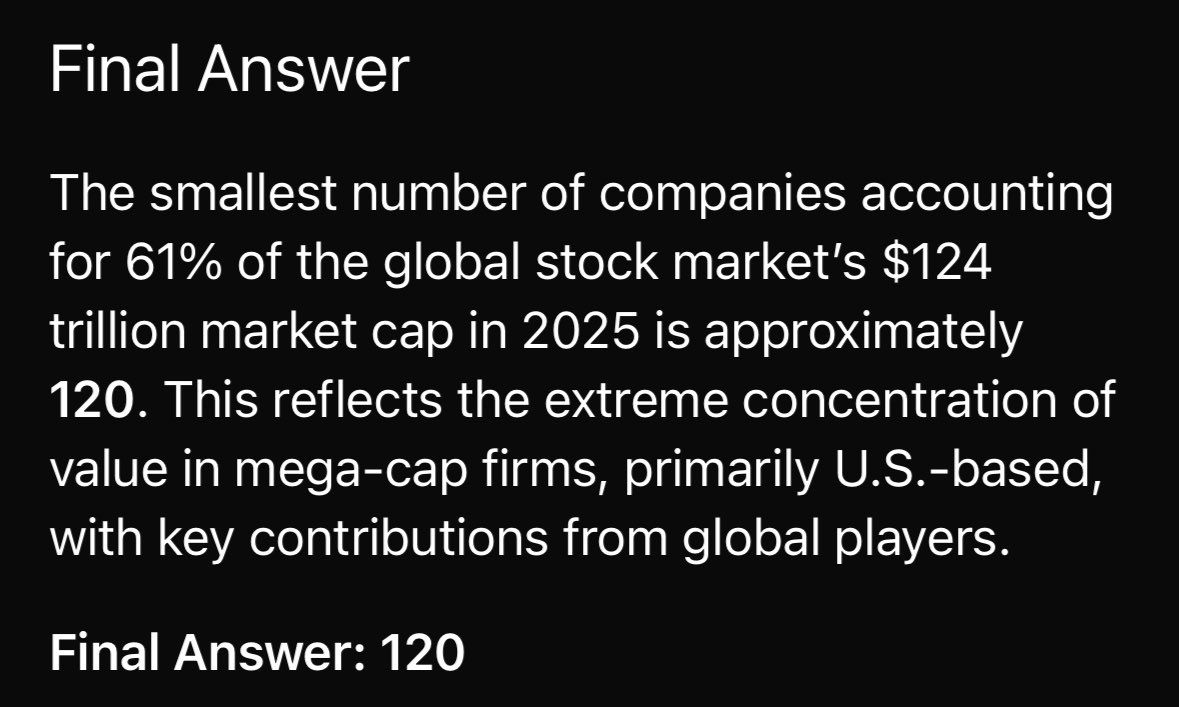
Bitcoin is 61% of all crypto value, including stablecoins. To get thr equivalent dominance in the domain of equities you’d need to merge the world’s largest 120 companies into one company.