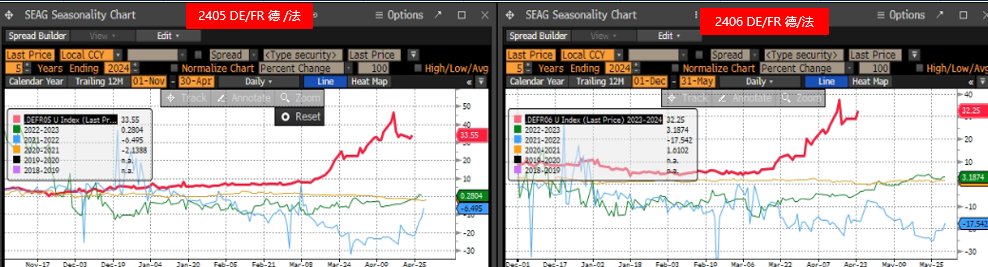
DE-FR power price premium for May and Jun are now at an all-time high, likely due to lower Net Transfer Capacity from early March. Do you think such high premium can sustain or will get narrow/normalise nearing to delivery months? #PowerTrading#EUETS#EDF@Emericdevigan
Low demand, rock-bottom prices, yet reservoir hydro generation remains robust. Is it time to clear space in reservoirs for the upcoming snowmelt in a high renewable/low demand era?
Les centrales gaz et charbon en Allemagne tournent peu cet hiver, et ceci malgré une production renouvelable plutôt moyenne.
La cause : la demande est détruite, surtout côté industriel, et les imports (de nucléaire français) sont en hausse
2025 est encore un peu haut, à 72 €, mais avec 2026 autour de 64 €/on va peut etre pouvoir s'offrir un peu d'électrification et voir la conso rebondir.
Et malheureusement voir resurgir les problème de rentabilité des actifs et de signal d'investissement.
Equation insoluble ?
Chez @kpler, on prend du temps pour ajuster la consommation à la météo, et ainsi estimer la destruction structurelle de demande. Mais les hivers de plus en plus 'cléments', ne sont-ils pas devenus la norme? Peut-être est-il temps de revoir nos fameuses 'normales de saison'?
Power prices are dropping, yes.
But watch out! It's the clean spark spreads that reveal the real story.
The demand destruction trap is tightening its grip on electricity producers.
From utility hedging perspective, dark spreads for both Y1&Y2 are getting more competitive than spark spreads, providing some support for EUAs.
#EUETS#EUA
@ChetJPatel supply - demand, for which demand mainly project power sector, I maintain no change for industrials. power sector mainly based on total power demand based on 10y avg tempt, and gas% + coal% assumptions (each have diff co2 intensity), which is derived assuming 10y avg wind output.
Projection of EUA balance sheet suggests weekly deficit could emerge from mid-Nov onwards, even with 10-year average temperature and wind output #EUETS#EUA