Seguim de prop un incident antisemita ocorregut aquest cap de setmana en una sauna de Barcelona. Des del consolat general dels EUA, condemnem aquest acte de discriminació contra ciutadans estatunidencs. Demanem una revisió exhaustiva del que ha passat i una resposta clara per part de les autoritats locals.
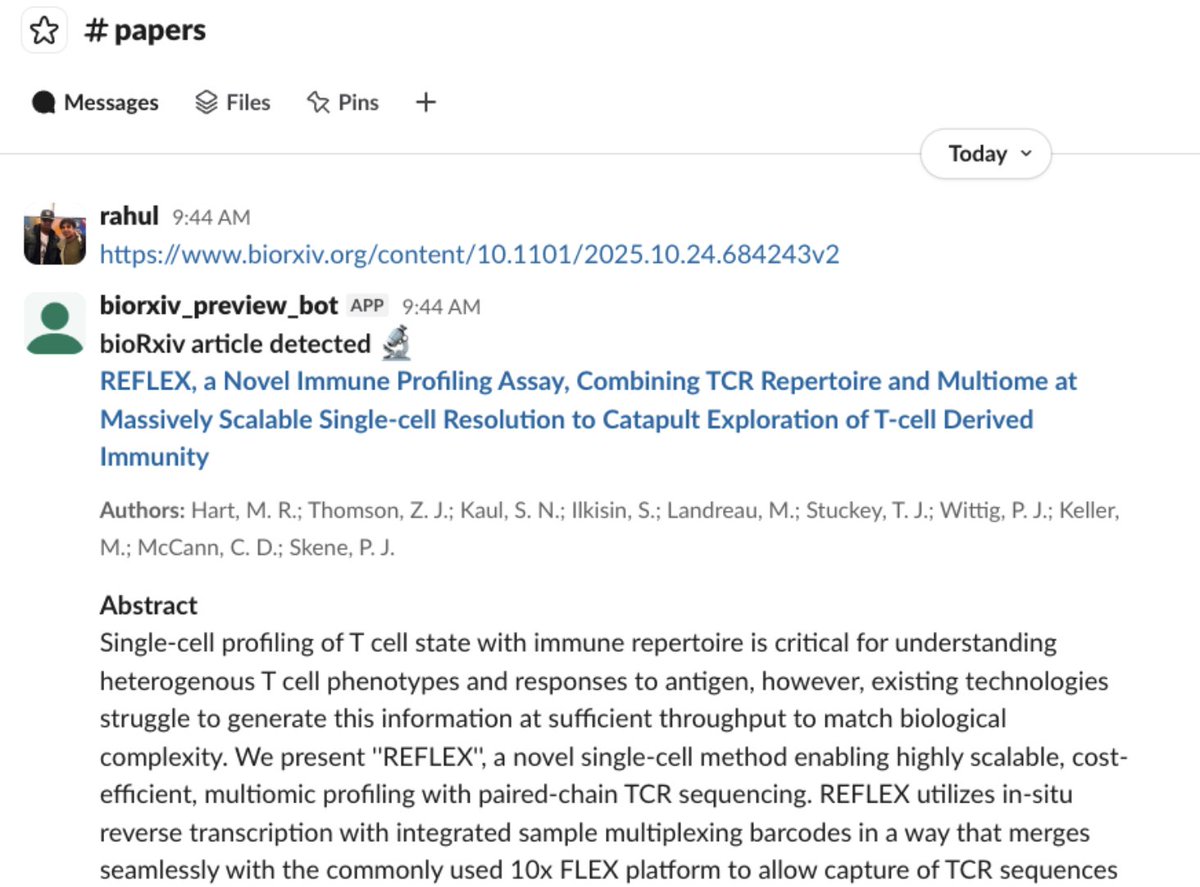
We vibecoded a Slack app that detects bioRxiv and medRxiv links posted to our lab's #papers channel, and auto-posts the title+authors+abstract for easy previewing
Posting the Github repo here - Free to install/deploy in case anyone else finds it useful
https://t.co/OjVy41e8LS
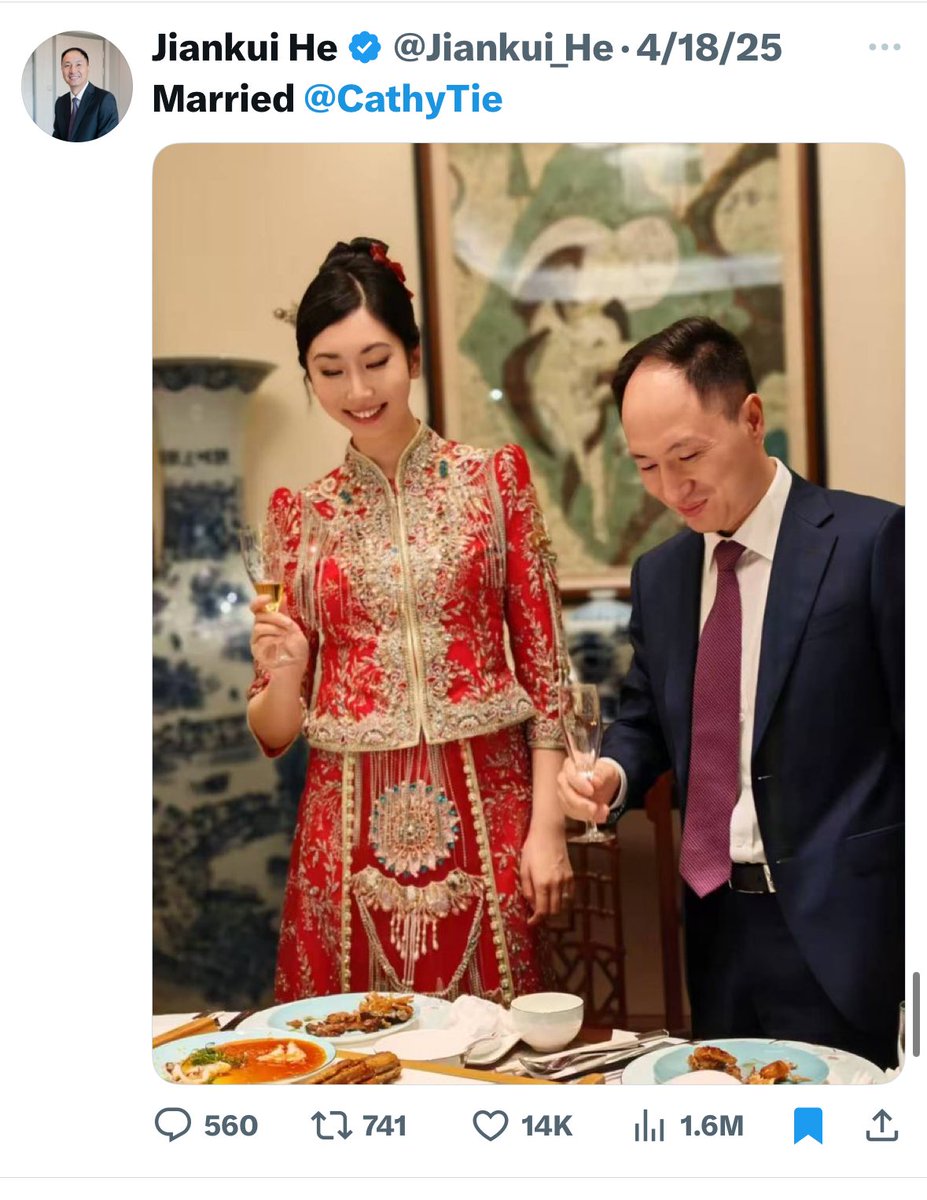
Tie, who has called herself Biotech Barbie, focuses her entrepreneurial ambitions on a controversial goal: altering the genome of human embryos to prevent genetic disorders
https://t.co/NCNZWYYjqz
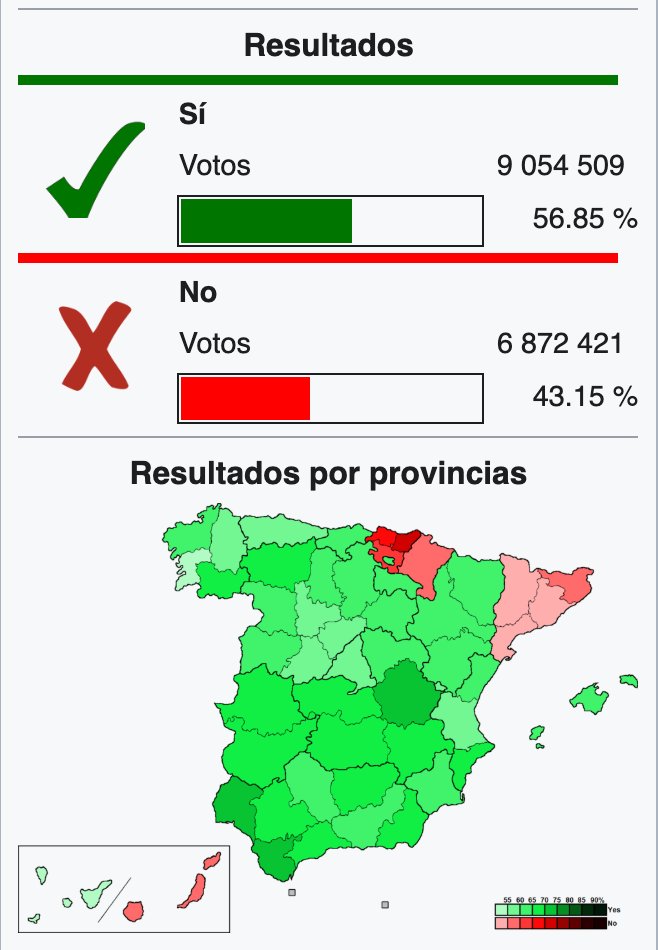
Funny to see this within historical context, post dictatorship Spain joined NATO with heavy criticism from the socialists (now in power) They then later won the elections and switched sides to support NATO They still had the common decency to throw a referendum that barely passed
Trump suggests kicking Spain out of NATO as a “laggard” — Finnish president left speechless
During a meeting with Finnish President Alexander Stubb, Donald Trump said that Spain should be “kicked out of NATO” because it’s “falling behind on defense payments.”
“Maybe you should just throw them out of NATO, frankly!” Trump said, adding that Madrid isn’t meeting the demand to spend 5% of its GDP on defense.
Stubb was left staring in silence, not knowing how to respond 😅
Both Mary Brunkow and Fred Ramsdell were at Celltech's laboratories in Seattle when they published the paper. Interestingly, Celltech was originally founded primarly by the UK goverment and eventually sold to a Belgian biotech (lol)
https://t.co/NxiNbcETJQ
Congratulations to Mary Brunkow, Fred Ramsdell and Shimon Sakaguchi for this year's Nobel Prize in Physiology or Medicine. It also demonstrates the fairness of the prize, as Mary Brunkow is a Senior Program Manager (not a professor) at the @isbsci.
https://t.co/DIGW0l7X81
So for 5 years, “offline” has been the #1 request.
Today, thanks to the perseverance of our engineering team, @NotionHQ finally works offline. Your ideas don’t need Wi‑Fi to exist!
For Notion community: thank you for your patience while we built this right.
This is a journey, I want to share what we had to invent to make this real... 1/n
📄 In this work, we try to bridge two parallel research areas: the well-established literature on agent-based modeling in biological systems and recent advances in learning update rules in CA from data with autodifferentiation.
https://t.co/4EsZECaEYV
After four and a half years of building, I’m beyond excited to announce today family planning via genetic matching on @nucleusgenomics.
Imagine knowing nearly every possible genetic outcome for you and your partner’s future children, starting with your future children’s risk of inheriting over 900 diseases.
In the future, all couples everywhere will check their genetic compatibility before having children.
In doing so, couples can choose not to pass down hereditary disease to their kids. This is what modern genomic science is about — building tools that lets anyone, anywhere be healthy and have healthy children.
What better way to announce genetic matching than syncing with @MollySOShea? Watch to find out if we’re compatible😉
For #AI prediction of protein structure, now there's Massive Fold to save cost and time
https://t.co/FUrZyCAVrX @NatComputSci @GBrysbaert
and #AlphaFold3 just went open-source https://t.co/GSbkwEp8lw @Nature@ewencallaway
@BioMickWatson@XLR@rtraborn so europeans will have to grow up, start working together and independently deal with our own problems, is that "worse for europe"?
most names are actually quite random though. e.g. TP53, named after something like "tumor protein with 53 kDa".
My favorite trivia is that the actual molecular mass is not 53 but 44, just runs as heavier because of how many prolines it has.
A central mistake in biology was to name genes.
This over-simplification made reconciling what is happening on the molecular level a mess - it's not rare to find reports of opposite mechanisms in different contexts, claimed involvement in dozens if not hundreds of different processes, sometimes inhibiting and sometimes amplifying and most of the time being oblivious to the potential for sequence-level variation.
Nobody would be surprised about this diversity of findings if we instead recognized genes as (sometimes quite lengthy and complex) pieces of sequence that carry state and interact with and are interpreted by their environment - often producing dozens of gene products that are in turn themselves context-dependent and modulated. Naturally, such a highly amorphous composition of objects has many diverse effects, and masking this complexity behind a single name more often than not ends up being a harmful abstraction.
The primary role of gene names then is to give us the false appearance of comfort in the face of enormous biological complexity.
One under-appreciated potential of the emergence of AI tools in biology is to undo this mistake, and - instead of assuming it away - extend our ability to lean further into this complexity.