Every officer on a modern staff has an AI assistant now. Individual output is up. Organizational output looks about like it did in 2019.
Individual productivity matters far less than how the pieces fit. We bought single-player tools and dropped them into the most collective work there is.
A private chat reaches one step of a staff process. It can’t see the fires cell’s objection or check the draft against the base order, and the moment it leaves your session the AI is out of the loop.
Multiplayer AI is the part that’s missing: shared sessions, versioned artifacts, attribution on every action, governed context, and the whole thing running at the edge when the network drops.
The Mission is Multiplayer, by @DavidNorthStar https://t.co/oANfZXlF8a
Staying out of the "crash out" chatter, the important signal to take from Alex Karp's way-too-talked-about interview is that we're entering a new and more useful phase in Enterprise AI. Here's my BLUF:
"If sovereignty means exits rather than ownership, then every layer of the stack has to compete for the customer on the merits, every quarter, forever. The model vendors compete on capability and price. The data platforms compete on how cheaply they let your data leave. The vertical apps compete on whether they still earn their seat once an agent can do the workflow without them. And the orchestration layer competes on whether it stays honestly model- and data-agnostic or quietly becomes the new lock-in with a friendlier logo. That competition is the whole prize. It is the first arrangement in the history of enterprise software where the buyer sets the terms on purpose rather than by accident."
Making Fetch a Thing, by @DavidNorthStar https://t.co/V2Lv2jk0SM
"There is a need for many more AI solutions that can help with intelligence gathering, logistics and other aspects of war that will happen outside Palantir."
That's how @WSJ framed Legion Intelligence CEO Ben Van Roo's (@DavidNorthStar) argument in Saturday's piece on Palantir's AI vulnerability.
Maven is real. Agentic AI on real mission data with operators in the loop, running in production. It works. And in Ben's words, "it's a subset of workflows out of thousands" in the Department of War.
Intelligence gathering, logistics, sustainment, contracting, enterprise back office. Each of those is work that hasn't been built yet, for environments most current systems can't reach.
"That's the decade ahead," Ben told the Journal.
https://t.co/nPQxg8mpVv
Which workflow gets built next: intel, logistics, sustainment, contracting, the enterprise back office?
MICROSOFT DROPPED A 4B PARAMETER MODEL THAT TURNS ONE IMAGE INTO A 3D ASSET IN 3 SECONDS
and it's open source
TRELLIS.2 fully textured, physically accurate 3D models with PBR textures out of the box
not a rough mesh..not a placeholder
roughness, metallic, opacity the kind of detail that makes things look real under any lighting
and it handles the weird stuff too..open surfaces, hollow interiors, geometry that breaks every other tool
the model doesn't know the word "limitation" apparently
https://t.co/BoNwq30ulK
demo is live on hugging face right now
MICROSOFT DROPPED A 4B PARAMETER MODEL THAT TURNS ONE IMAGE INTO A 3D ASSET IN 3 SECONDS
and it's open source
TRELLIS.2 fully textured, physically accurate 3D models with PBR textures out of the box
not a rough mesh..not a placeholder
roughness, metallic, opacity the kind of detail that makes things look real under any lighting
and it handles the weird stuff too..open surfaces, hollow interiors, geometry that breaks every other tool
the model doesn't know the word "limitation" apparently
https://t.co/BoNwq30ulK
demo is live on hugging face right now
The headlines say AI is autonomously selecting 1,000 targets in Iran.
Ben Van Roo (@DavidNorthStar), who has spent 2.5 years integrating AI into DoD systems, told the Washington Post the baseline use case is "chat and advanced search functions — essentially summarizing information."
https://t.co/0D3okSja0Y
The Anthropic debate is about who controls AI safety guardrails.
Ben Van Roo (@DavidNorthStar) says the bigger question is going unasked:
"People are going to lose jobs and the economy is going to shift" — regardless of who wins the Pentagon contract.
There’s a tendency to frame this as a fight between AI vendors. I think that misses the point.
In practice, these systems are being used to accelerate human analysis, surface intelligence gaps, and reduce decision latency, not to hand over judgment. That distinction matters.
As AI becomes embedded in operational workflows, model access becomes a strategic dependency. Demand will not pause because a provider is uncomfortable with a lawful use case. It will move.
So the real issue is bigger than one company or one contract. It is about procurement resilience, governance, and whether critical decisions about national security infrastructure are being made through democratic oversight or product policy.
https://t.co/ti9iEbmWQn
A few days ago, I posted my take on Anthropic DoW, and specifically called out, "If the U.S. enters a military conflict with Iran in the coming days or weeks, where will the frontier labs stand? Will they engage, or will they spend the first 72 hours of a crisis debating their acceptable use policies?"
@DavidNorthStar https://t.co/djv0SrOmQR
@Jason@jason, @legion_intel is the nat sec focused orchestration command layer for agentic warfare, we're already deployed on several networks, but we're later stage (Series B) than most of your typical investments.
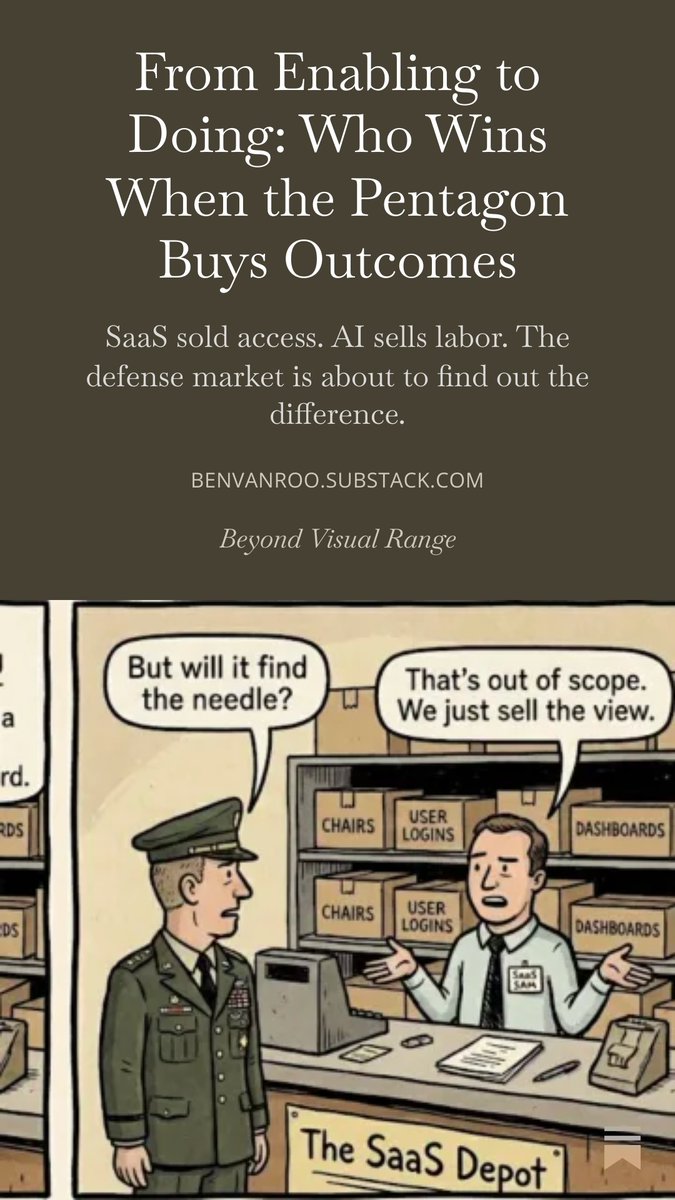
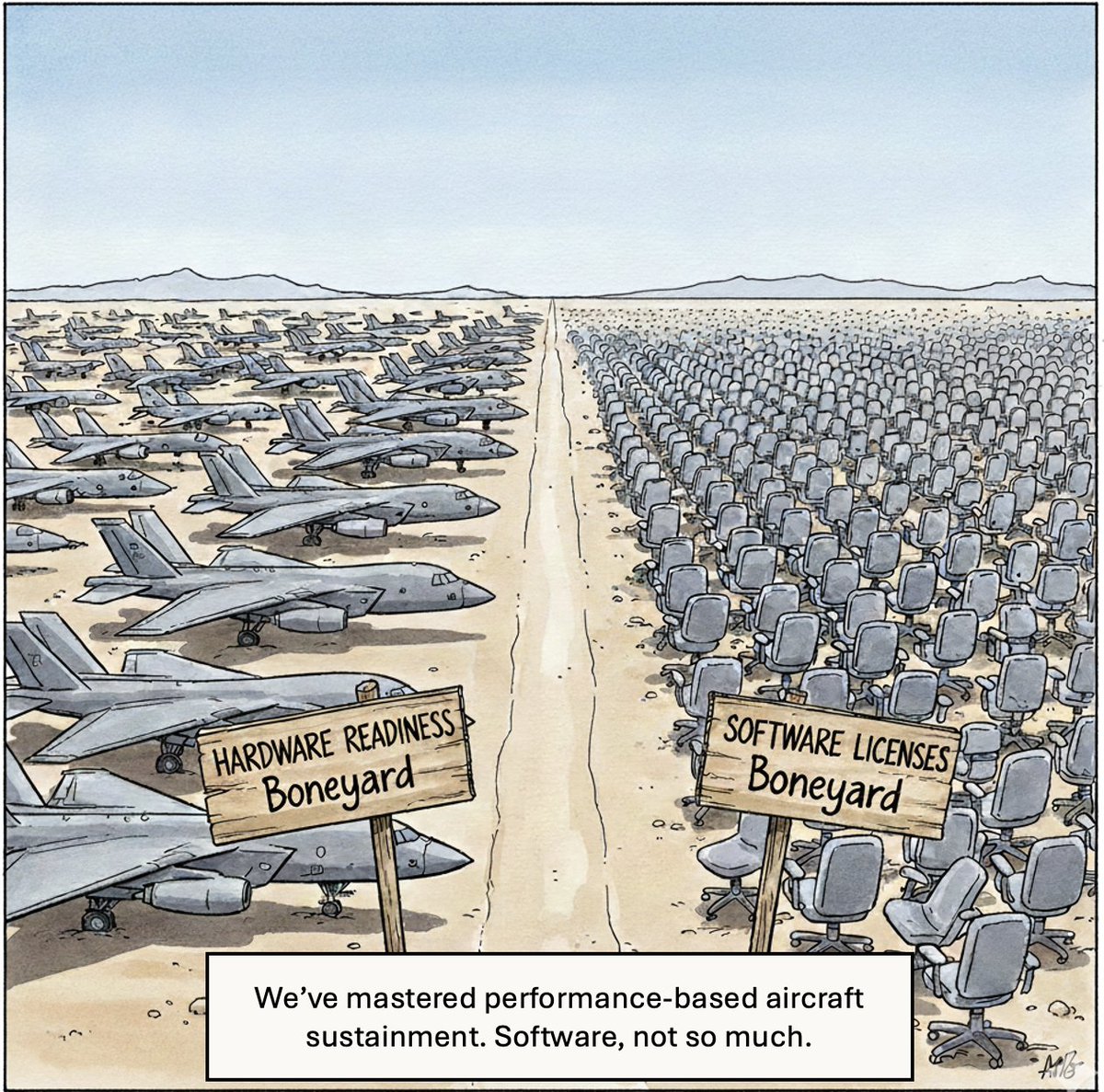
From Seats to Sorties: Why the Pentagon Should Buy Software the Way It Buys (Some) Weapon Systems, by @DavidNorthStar
Software is deflationary. We have a unique moment in time to shift to outcomes.
https://t.co/gjpuSlvIte
San Francisco-based military AI startup @legion_intel is taking him up on that. The company launched a new tool called Centurion that aims to put generative AI in the hands of warfighters at the edge.
https://t.co/uosnqZRrZV