CHINUA ACHEBE: WE MUST WRITE OUR OWN STORIES
On 21 March 2013, renowned Nigerian poet and novelist Chinua Achebe transitioned into an ancestor. His work continues to shape African literature today.
In 1988, Achebe (1930-2013) reflected on the literature he studied at university. Upon reading these works closely, he realised that the so-called ‘savages’ often resembled characters that looked like him, African, while the stories portrayed white people as heroes. He explained that without a conscious understanding of this narrative, what may seem like ‘innocent’ fictional tales can misinform Africans who have endured the oppression of slavery and colonialism.
Achebe's solution? Africa must take control of its history by writing about it.
Video credit: ‘A World of Ideas,’ @PBS
Two Years of President Ibrahim Traore of Burkina Faso: A Report Since Assuming Leadership of the Nation
1. Burkina Faso's GDP rose from around $18.8 billion to $22.1 billion.
2. He declined loans from the International Monetary Fund (IMF) and the World Bank, stating, "Africa doesn’t need the World Bank, IMF, Europe, or America."
3. He cut the salaries of ministers and parliamentarians by 30% while raising civil servants' salaries by 50%.
4. He cleared Burkina Faso's domestic debts.
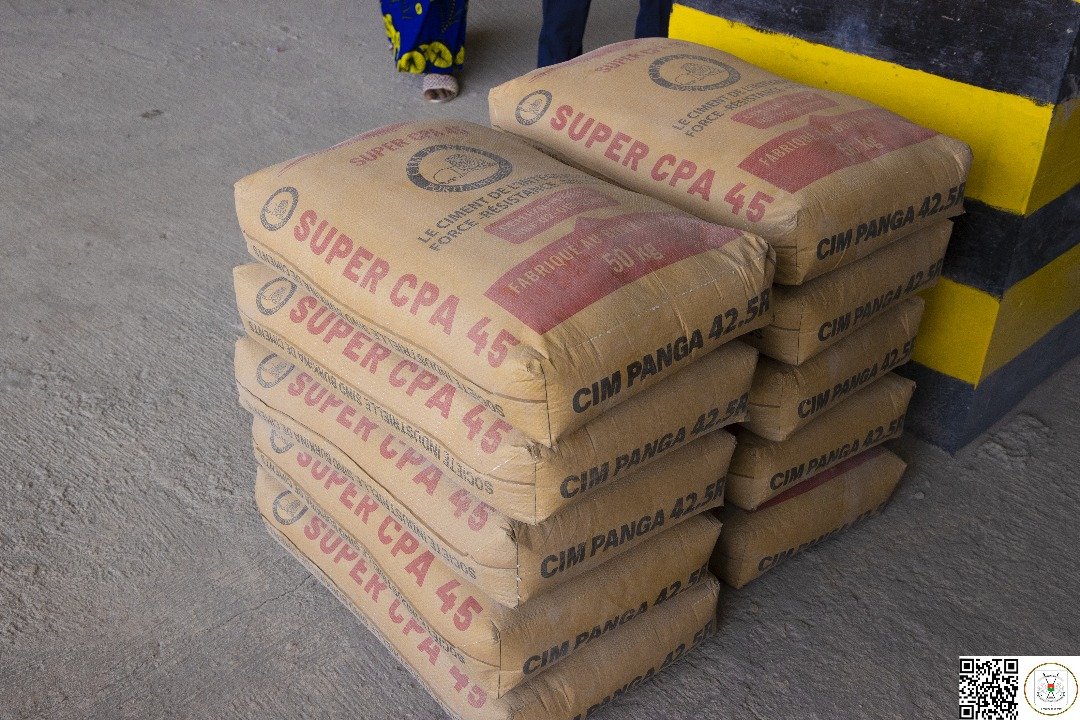
5. He established the country's first-ever tomato processing plants.
6. In 2023, he launched a modern gold mine to strengthen local processing capacity.
7. He halted the export of unrefined gold from Burkina Faso to Europe.
8. He constructed Burkina Faso’s second cotton processing plant, adding to the single existing one.
9. He inaugurated the National Support Center for Artisanal Cotton Processing, the first of its kind, to aid local cotton farmers.
10. He prohibited the use of British legal wigs and gowns in local courts, replacing them with traditional Burkinabé attire.
11. He prioritized agriculture by distributing over 400 tractors, 239 tillers, 710 motor pumps, and 714 motorcycles to enhance production and support rural communities.
12. He facilitated access to improved seeds and other agricultural inputs to maximize farming yields.
13. Tomato production grew from 315,000 metric tonnes in 2022 to 360,000 metric tonnes in 2024.
14. Millet production increased from 907,000 metric tonnes in 2022 to 1.1 million metric tonnes in 2024.
15. Rice production rose from 280,000 metric tonnes in 2022 to 326,000 metric tonnes in 2024.
16. He banned French military operations in Burkina Faso.
17. He prohibited French media from operating in the country.
18. He expelled French troops from Burkina Faso.
19. His government is building new roads, expanding existing ones, and converting gravel roads into paved surfaces.
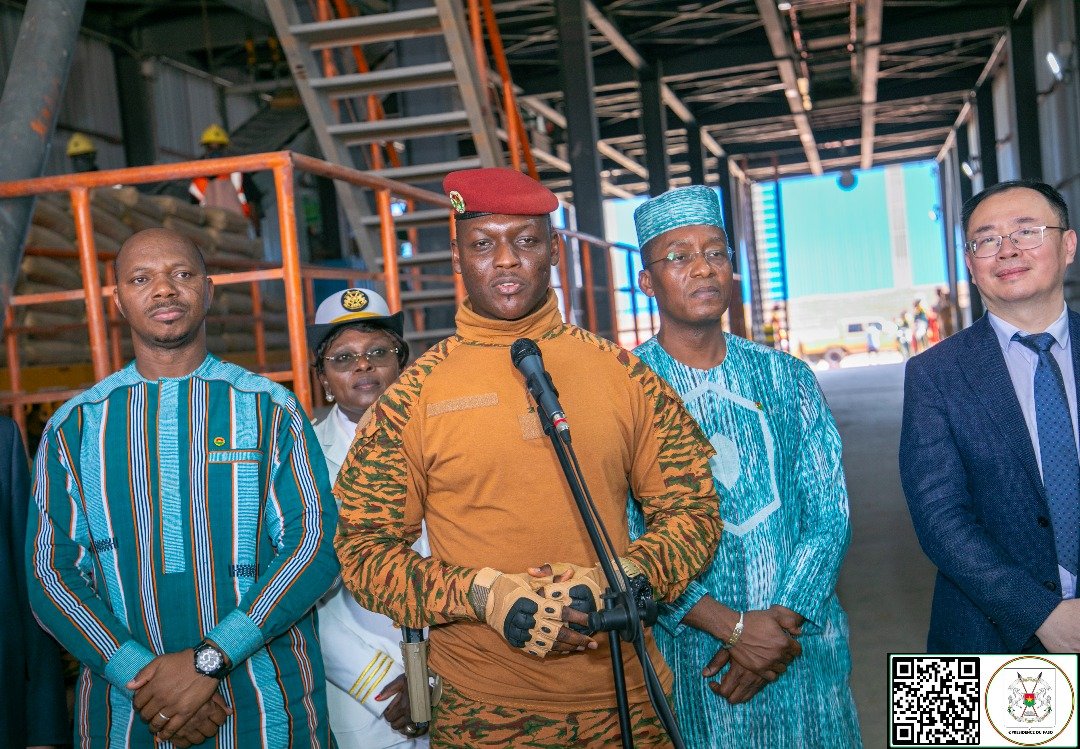
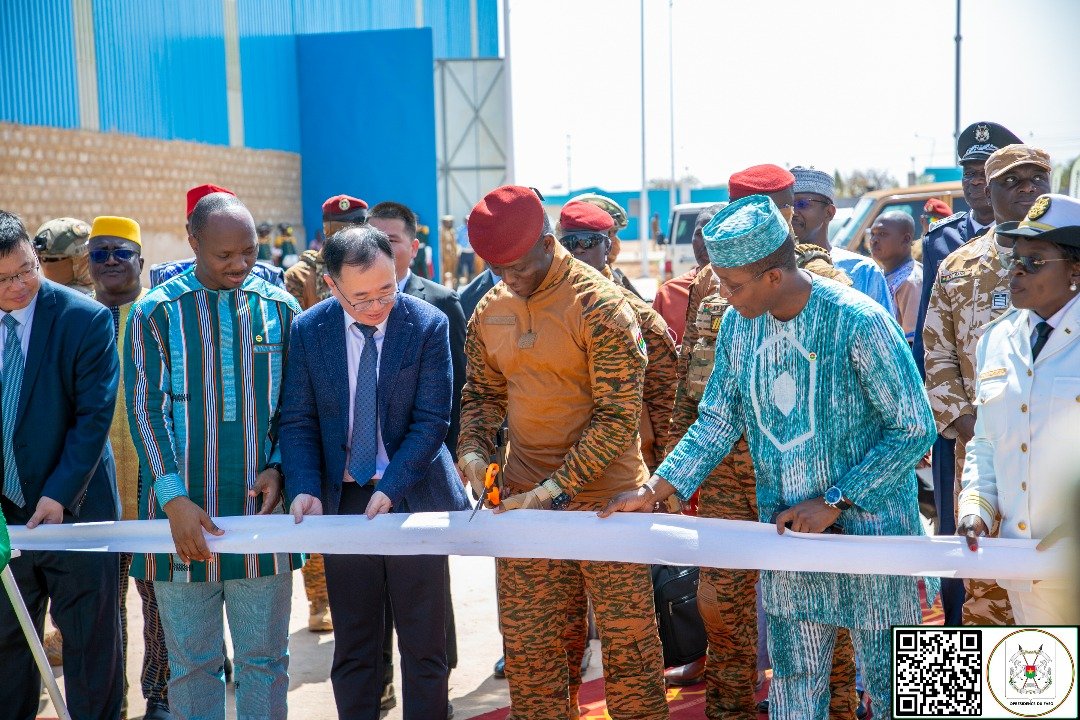
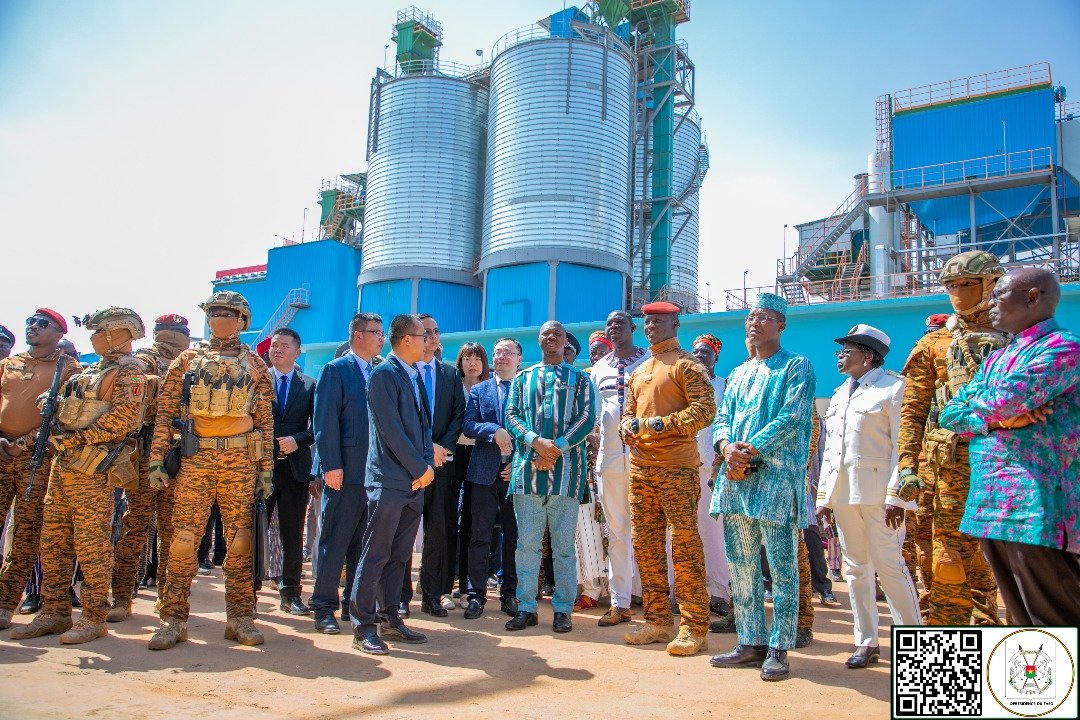
C'est avec une légitime fierté que j'ai inauguré, ce jour 20 mars 2025, à Laongo dans la commune de Ziniaré, région du Plateau-Central, la cimenterie de la Société Industrielle Sino Burkina de Ciments SA (CISINOB SA).
D'une capacité de production de 2000 tonnes par jour, elle procurera à la jeunesse de mon pays des centaines d'emplois.
Je félicite les promoteurs!
Cet investissement est le symbole d'un partenariat respectueux de notre souveraineté et mutuellement avantageux entre la République populaire de Chine et le Burkina Faso.
À tous les amis du Burkina Faso, nous restons ouverts aux partenariats sincères et respectueux de notre souveraineté.
Recently declassified US government files related to the assassination of US President John F Kennedy (1917-63) on 22 November 1963 show that the Central Intelligence Agency (CIA) established covert bases in Africa starting in the 1960s. One document lists the African cities of Harare (formerly Salisbury), Johannesburg, Lagos, Nairobi, Pretoria, Rabat, and dozens of other cities worldwide.
US President Donald Trump’s 23 January executive order forced agencies to release the documents to create the JFK assassination archive. It comprises around 6 million pages and includes photographs, videos, audio recordings, and artefacts.
Noteworthy for Africa are the CIA's dubious operations during the 1960s and ‘70s. British researcher Susan Williams highlighted these activities in her 2021 book, ‘White Malice: The CIA and the Recolonization of Africa.’ In it, she explained how the agency aimed to integrate newly independent African nations into the imperialist and capitalist sphere while thwarting any alignment with socialist ideologies, including that of the Soviet Union.
The CIA's primary focus was on the vast central African state of the Democratic Republic of the Congo (DRC), previously known as the Belgian Congo, due to its strategic significance. Just a year after gaining independence in 1960, DRC's visionary Pan-Africanist prime minister, Patrice Lumumba (1925-61), was assassinated in a CIA-orchestrated plot. At the time, CIA Director Allen Dulles (1893-1969) referred to Lumumba as ‘a Castro or worse.’
CIA schemes also ousted influential African leaders, such as Ghana’s Kwame Nkrumah (1909-72). The overarching impact of these operations was a covert recolonisation of Africa, characterised by removing capable people-oriented leaders and replacing them with compliant figures like Mobutu Sese Seko (1930-97), who permitted foreign powers to exploit the Congo’s resources.
Fast forward several decades, and the CIA continues to engage in covert operations that, on the surface, appear to focus on countert*rrorism. However, the reality is that these efforts, in conjunction with the Pentagon’s US Africa Command (AFRICOM), serve to maintain a persistent US military presence in Africa under the pretext of combatting ongoing insecurity created by Western machinations. Such is the case in Africa’s Sahel region, which has been overrun by arms and t*rrorists since the 2011 NATO invasion of Libya.
For historical reasons, we initially planned to develop Akii-Bua Stadium before others. However, after our bid for the Africa Cup of Nations (AFCON) was successful, we made a case for the Hoima location. This decision was influenced by the presence of an airport in the area, which we had already begun working on.
This evening, Maama Janet and I inspected the work at the stadium. I would like to congratulate the people of Hoima on these significant infrastructure improvements that will boost the local economy. I also encourage the private sector to contribute by providing additional services, such as hotels and other amenities.
I am super impressed by Trump's ability to make each person feel heard and acknowledged. Very few people have this skill.
Just watch this whole thing and tell me you're not impressed.
THE ECONOMIC CASE FOR AFRICAN UNITY
The recent cut in US aid to Africa - which was always a Trojan horse anyway - has only bolstered the case for overcoming decades of dependency by uniting as a continent. In this clip from last year, an Eritrean expert on development argues that a united Africa is our only defence against the predatory forces that plague us.
Speaking at the launch of The Afro-Asia Institute for Strategic Studies in Nairobi in January 2024, Milena Bereket said that Western powers reaped all the benefits when dealing with the individual ‘pieces’ of a fragmented Africa, leading to lopsided relationships and neo-colonial exploitation. Uniting under common economic and political interests would ensure African nations get the best deal, no matter who we’re dealing with.
Would it still be possible to shake-down an African nation when we are all speaking in one, loud voice?
Video credit: Afro-Asia Institute for Strategic Studies
ANCIENT EGPYT WAS A BLACK AFRICAN CIVILISATION
In a bid to present our ancestors as primitive people, European anthropologists and historians would discount the contributions of Africans towards civilisation. Ancient Egyptian civilisation is a case in point. Its achievements were often presented as the products of a White culture - for example, by the likes of French Egyptologist Gaston Camille Charles Maspero (1846-1916).
More recently, British writer Graham Hancock even suggested that Egyptian civilisation was (at the time) impossible to achieve without assistance from an advanced race - be it alien or some lost civilisation.
In this clip from the Cairo Museum, a lecturer in African history, civilisation, religion and culture dispels these myths using hair samples from ancient Egyptians to show that they were undoubtedly Black Africans.