Check out our paper on @askalphaxiv with a nice summary and a 5-min podcast!
https://t.co/JXhO5OX7gz
Tiny Aya L2-Thinker beats models 2-7x its size on in-language reasoning rate and task accuracy on data-scarce languages.
Comparison of sub-quadratic architectures xLSTM, Mamba-2, and Gated DeltaNet: https://t.co/ZzV9ORD8iH
Comparison of xLSTM, Mamba-2, and Gated DeltaNet on code pre-training, distillation, and time-series.
xLSTM outperforms the others due to its gating scheme and state tracking.
New paper "On Subquadratic Architectures: From Applications to Principles" 🙌
On commonsense & reasoning benchmarks, xLSTM, Mamba-2 & Gated DeltaNet perform nearly indistinguishably.
Therefore, we analyse them where structure genuinely matters: on code & time series.👇
After the enthusiasm of the shared task last year, we are running another shared task to create a community-made, culturally relevant multilingual benchmark! The deadline to contribute is August 1 AoE. See more details below.
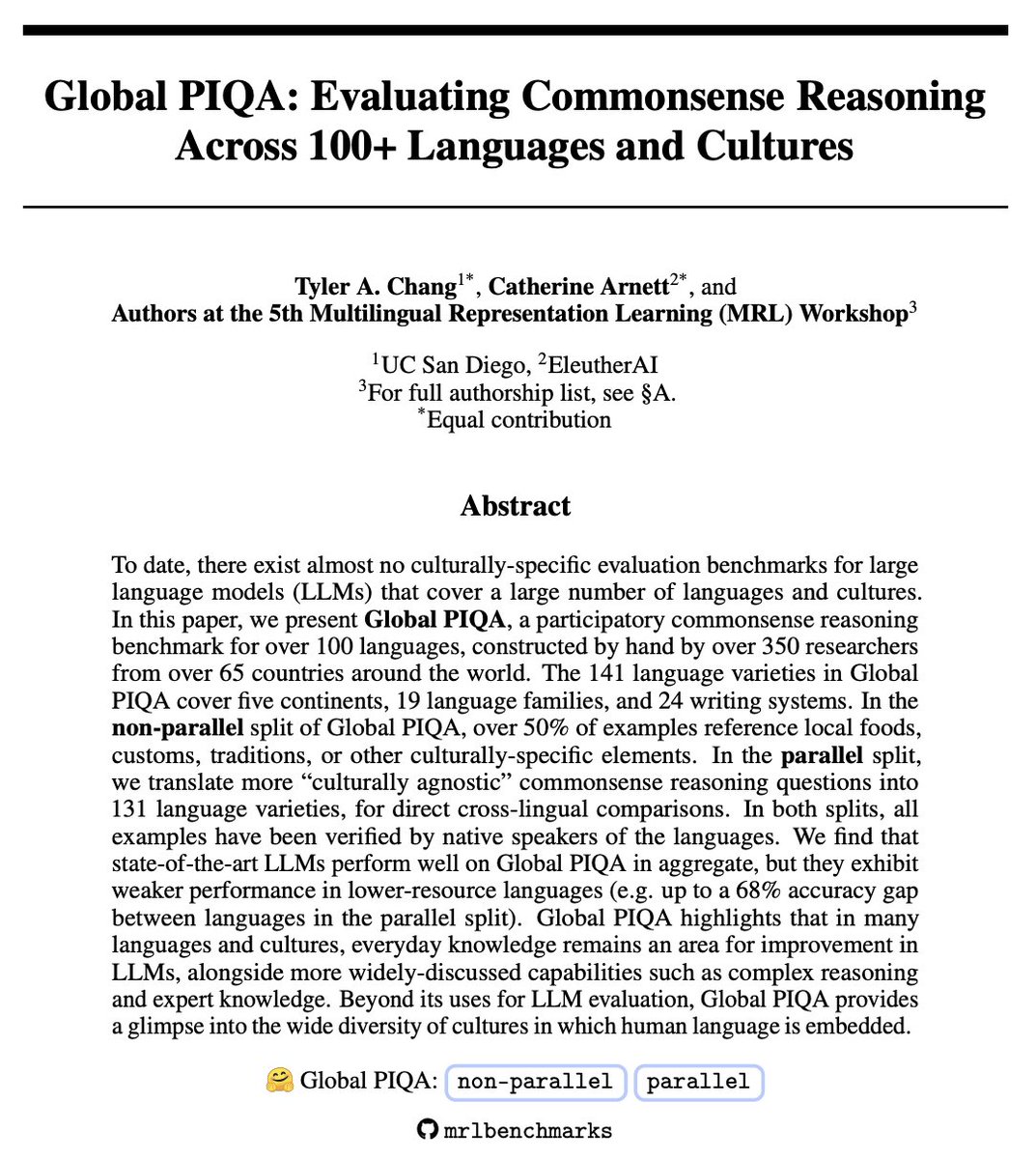
We are releasing an expanded version of Global PIQA! It now covers 141 language varieties and includes parallel and non-parallel splits. We are also releasing an updated preprint.
📢 Call for Papers:
6th Multilingual Representation Learning Workshop at EMNLP in Budapest, Hungary!
Join us and submit your works relating to multilingual NLP
Speakers to be announced, so stay tuned! 👀
More info in the CFP:
🔗 https://t.co/ZnQjqyBASQ
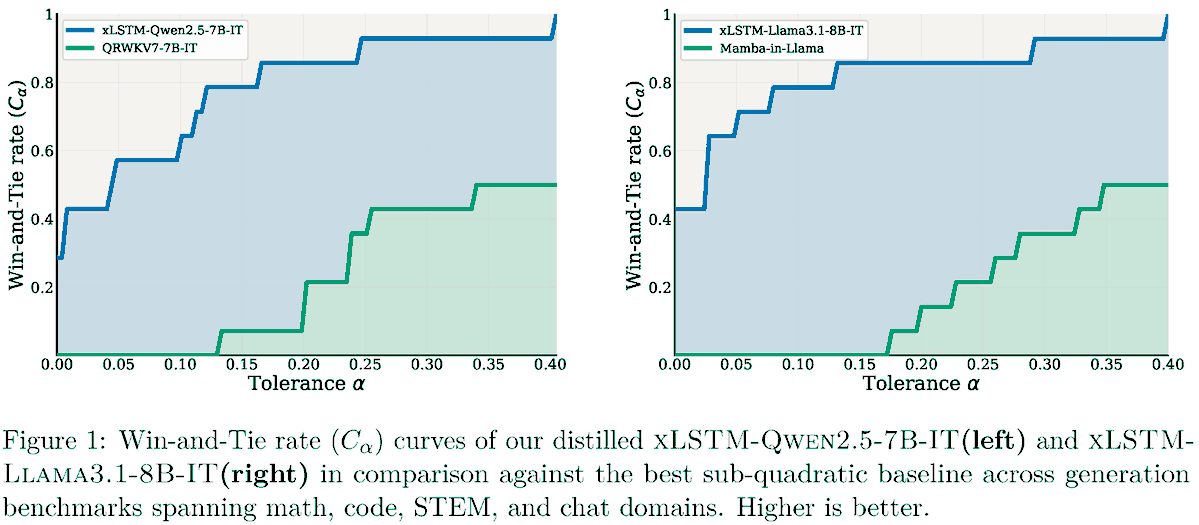
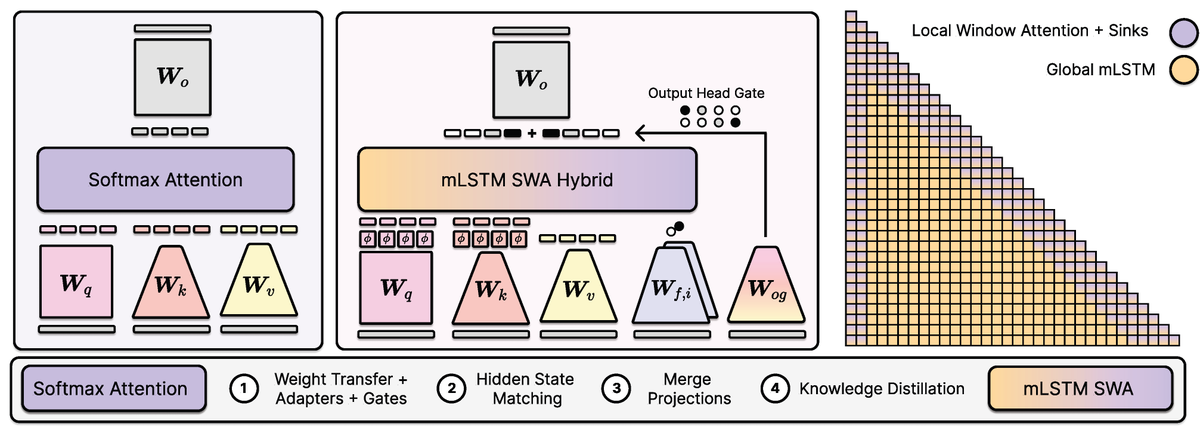
xLSTM Distillation: https://t.co/iBIJzGbzXX
Near-lossless distillation of quadratic Transformer LLMs into linear xLSTM architectures enables cost- and energy-efficient alternatives without sacrificing performance.
xLSTM variants of instruction-tuned Llama, Qwen, & Olmo models.
The call for papers is out for the 5th edition of the Workshop on Multilingual Representation Learning which will take place in Suzhou, China co-located with EMNLP 2025! See details below!
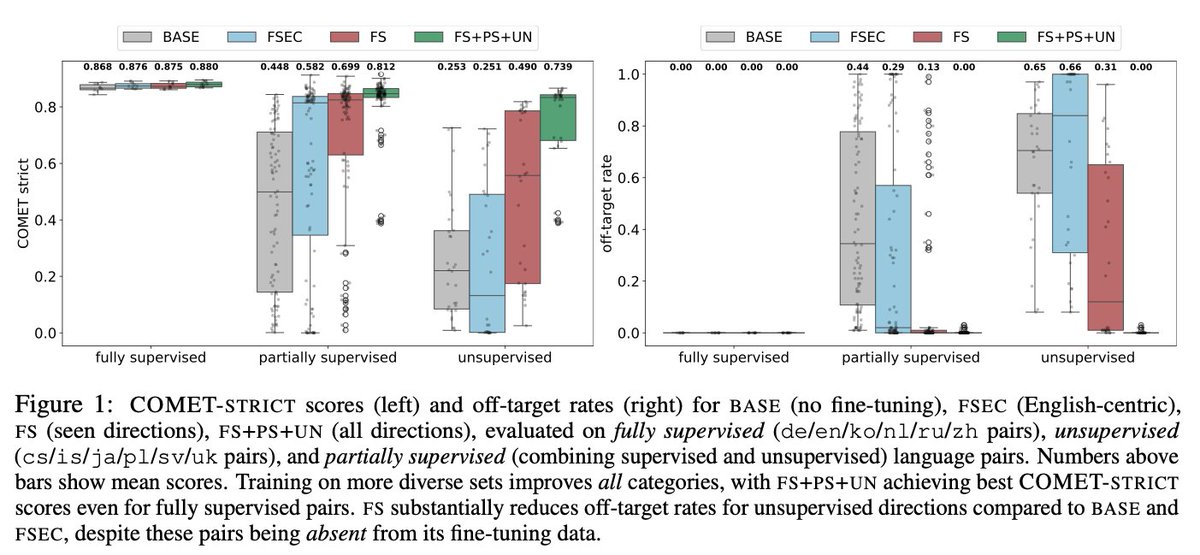
8/8📋 Key takeaway: Fine-tune with diverse language directions even when optimizing for specific translation pairs. But identify an optimal diversity threshold - too many languages can diminish performance for well-supported pairs while still benefiting less-represented ones.
🔍 How does language diversity affect LLM fine-tuning for translation?
We fine-tuned LLMs and found that MORE diversity consistently improves performance - even for language pairs that less diverse models were specifically trained to handle!
https://t.co/9M6Q7CcGTl
7/8 But there's a sweet spot! When scaling beyond 132 directions to 272 directions, we found benefits plateau or even slightly decrease for well-represented language pairs, while still helping underrepresented languages.
@JeffDean https://t.co/K5MN4xGEA9
Actually we find LLMs learn most/all translation ability from parallel sentences in the book, not the grammar.
And we can predict translation performance just from prompts' test set vocab coverage!
But we do find that grammar can help *linguistic* tasks