This is the largest monastic library on Earth.
It’s hidden in an Austrian mountain valley and is believed to have inspired the design of the iconic library in Disney’s Beauty and the Beast, but you’ve probably never even heard of it...
Completed in 1776 within the Benedictine monastery Admont Abbey, the library was designed by architect Josef Hueber as the intellectual crown of the abbey. It is 70 metres long, lit by 48 windows, and lined with white-and-gold bookcases that hold 70,000 volumes. Across the entire abbey, the collection runs to roughly 200,000 books and 1,400 medieval manuscripts.
Hueber designed the room to embody the philosophy of his era. "Like our understanding, spaces too should be filled with light," he said. The walls are white. The shelves are gilded. Sunlight pours through the windows and reflects off the gold leaf until the entire hall seems to glow from inside.
The ceiling holds seven frescoes painted by Bartolomeo Altomonte in the summers of 1775 and 1776. He was almost eighty years old. Each fresco depicts a stage of human understanding, beginning with the sciences and rising, dome by dome, toward Divine Revelation in the central cupola.
In 1865, a fire tore through the monastery. It destroyed the church, the dormitories, the workshops, almost everything. But the library survived untouched.
Two and a half centuries after it was completed, it is still called the eighth wonder of the world...
-- -- --
If you enjoyed this, I write a weekly newsletter read by over 50,000 people who love rediscovering the beauty of the past. You can join us here:
https://t.co/hgJUdR0jlx
If you'd like to support my work, a paid subscription is what makes it possible.
This once-in-a-lifetime moment happens when sun rays hit Horsetail Fall in Yosemite National Park, at the perfect angle, creating a glowing lava flow.
Thousands of people gather at the same spot to witness this rare event almost every year.
Walk through any European city built before 1900, then look at anything from after 1960, and ask yourself why we stopped building places people travel thousands of miles to see...
There is a reason some structures fill you with awe and others depress you. It is not a matter of taste. It is something more fundamental, something that operates on us whether we notice it or not.
And most people, it turns out, feel the same way about it. According to a Harris Poll conducted for the National Civic Art Society, more than seven in ten Americans — 72 percent — prefer traditional architecture for federal buildings over modernist alternatives.
Not many can articulate why. People just know that certain structures make them feel small in the best possible way, and others make them feel like they do not matter at all.
There are many reasons why things have turned out this way... one of the most compelling is probably rooted in how our ancestors approached building itself. They often worked with the assumption that what they created carried meaning and purpose that would extend beyond their own lifetimes.
Now we live in a society organized around the opposite principle — planned obsolescence, the deliberate engineering of things to fail and be replaced, because durability is the enemy of profit. We have applied this logic not just to our phones and our furniture but to our buildings and our cities. And we are living with the results.
We used to build train stations that looked like cathedrals. Now we have churches that look like conference centers...
As Roger Scruton once said: "Beauty is vanishing from our world because we live as though it did not matter."
I started this newsletter because the people who came before us left us something extraordinary, and almost no one is teaching us how to see it anymore. Every week I try to.
If that is something you would like to be part of, you can join here:
https://t.co/bnGG4VWs2m
I write about beauty in all its forms. If you'd like to support the work, a paid subscription is what makes it possible.
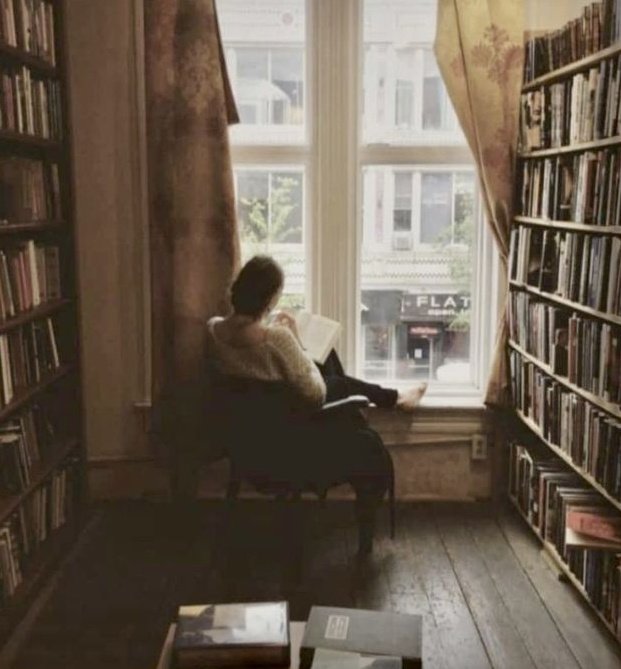
"But I protect myself, I surround myself with books, their silence does not demand anything, they exist, they are alive, they are for anyone to open, unlike us human beings."
— Bo Carpelan
Miami Vice (1984) changed television by treating contemporary pop music like cinematic storytelling instead of background filler. The pilot’s In the Air Tonight sequence was so influential that it redefined how TV used needle drops for decades after.
When Beethoven wrote this, he wasn’t fully deaf yet - but he knew silence was closing in…
Music: Tempest Sonata (3rd movement) by Beethoven
#piano#classicalmusic