Dying might be your client’s biggest fear, but it’s far more likely they’ll face an illness or injury that results in them being off work.
Change your advice today to make more of an impact on people’s tomorrow. Think income, think income protection.
@B329Leadership@ClaireA_OU
!Financial advisers!
Given all the information surrounding the financial vulnerabilities of today’s society, why do you place greater importance on life cover than income protection?
(part 2 to follow)
@B329Leadership@ClaireA_OU
#OUB329wk17 great to learn about the importance of storytelling in leadership to mobilise people for action. The five ingredients for storytelling are used in content writing - I suppose content writers are leaders in their own right? @B329Leadership@ClaireA_OU
#OUB329wk16 To be an effective activist, diversity and agonism are required. There are similarities between #activist leadership and constructive dissent, as both require constructive forms of conflict. @B329Leadership@ClaireA_OU
#OUB329wk15 learning about resistance leadership has changed my views of campaigning. Previously, I viewed some protesting as a waste of time that just leads to police brutality. This week has highlighted the positive outcomes of leading resistance @ClaireA_OU@B329Leadership
#OUb329wk14 interesting to learn the different categories of leadership challenges. I question the distinction between tame and wicked challenges, as the challenge may have been solved before, but the information may not be available to the leader? @B329Leadership@ClaireA_OU
#OUB329wk12 I now have an understanding of how a vision of success can help you get buy-in from project participants to deliver the common good. Constructive dissent could be useful to argue the shared goals. @B329Leadership@ClaireA_OU#leadership
#OUB329wk12 learning about how to achieve the common good has been particularly relevant, as it can be hard to keep a working group on track with the project deliverables due to competing priorities. @B329Leadership@ClaireA_OU#leadership#openuni
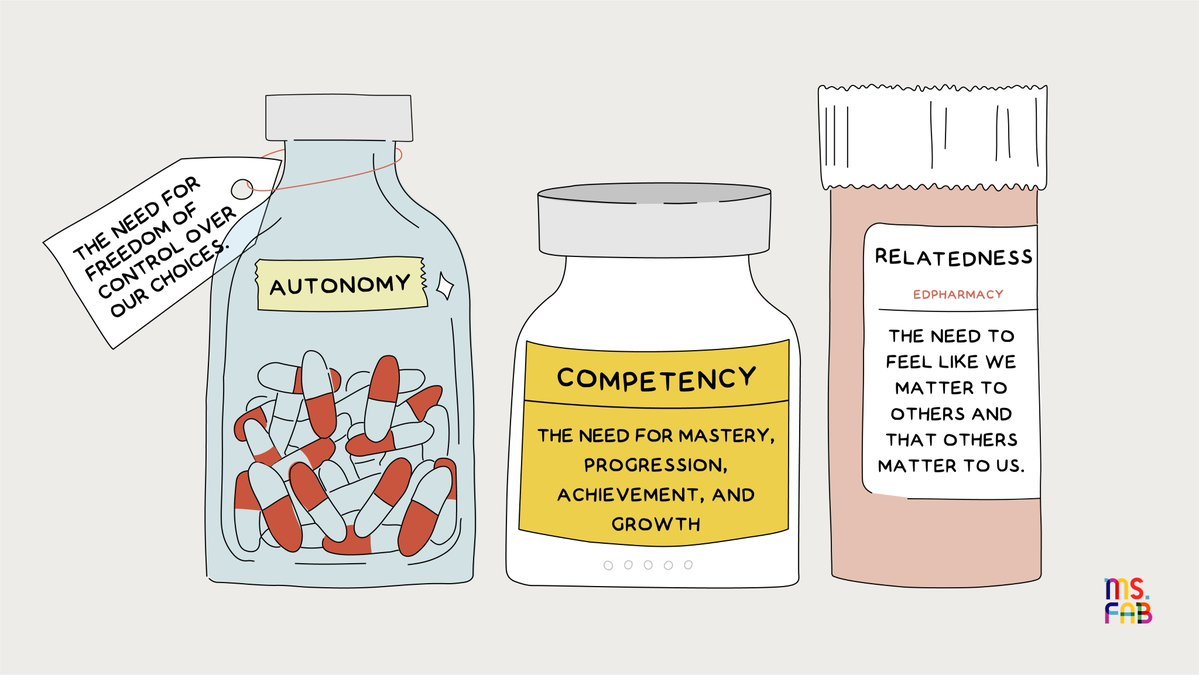
When leaders create 3 key conditions they get better outcomes from people. 1) Autonomy: do not micro-manage or enforce bureaucratic rules 2) Competency: give positive feedback 3) Relatedness: build teams with a sense of belonging https://t.co/RArQVmfN15 Via @CQ_Net@anafabrega11
#OUB3219wk11 Using Grint's description of constructive dissent, I want to work on building the characteristics of a 'wheelwright' as I can recognise instances where I've been an 'inappropriate follower'. #leadershiplearning@B329Leadership@ClaireA_OU
#OUB329wk11 This week, I've learned how to express disagreement in a constructive way that moves the debate/work forward. It's changed my view of conflict, as it can create positive change rather than having a negative impact @B329Leadership@ClaireA_OU
#OUB329 students, this post really resonates with me following our learning about relational leadership. I believe a mix of social iterations between formal and informal leadership roles is the key to a high performing team. Do you agree? @B329Leadership@ClaireA_OU
#OUB329wk10 has increased my awareness of how certain acts of leadership can be used by a 'follower'. We are all accountable in our workplace and can contribute to leadership directly or indirectly, even just by providing honest feedback. @B329Leadership@ClaireA_OU
#OUB329wk10 Interesting to learn more about how today's networked world can facilitate leadership influence from people classed as followers. There is a clear connection to our learning about populism & how powerful positions can abuse this dynamic @B329Leadership@ClaireA_OU
#OUB329wk9 the case studies have impacted my view of collaborative leadership, highlighting the variety of activities that can support collaboration. There’s no right answer, but there are the right qualities.. @B329Leadership@ClaireA_OU