@ArpitSTEM When models start predicting the future--creating a feedback loop between humans making decisions knowing the future--we will need a new kind of game theory. That game theory is called non-Nashian, and it is already peer reviewed and published.
https://t.co/TeCbjViZWv
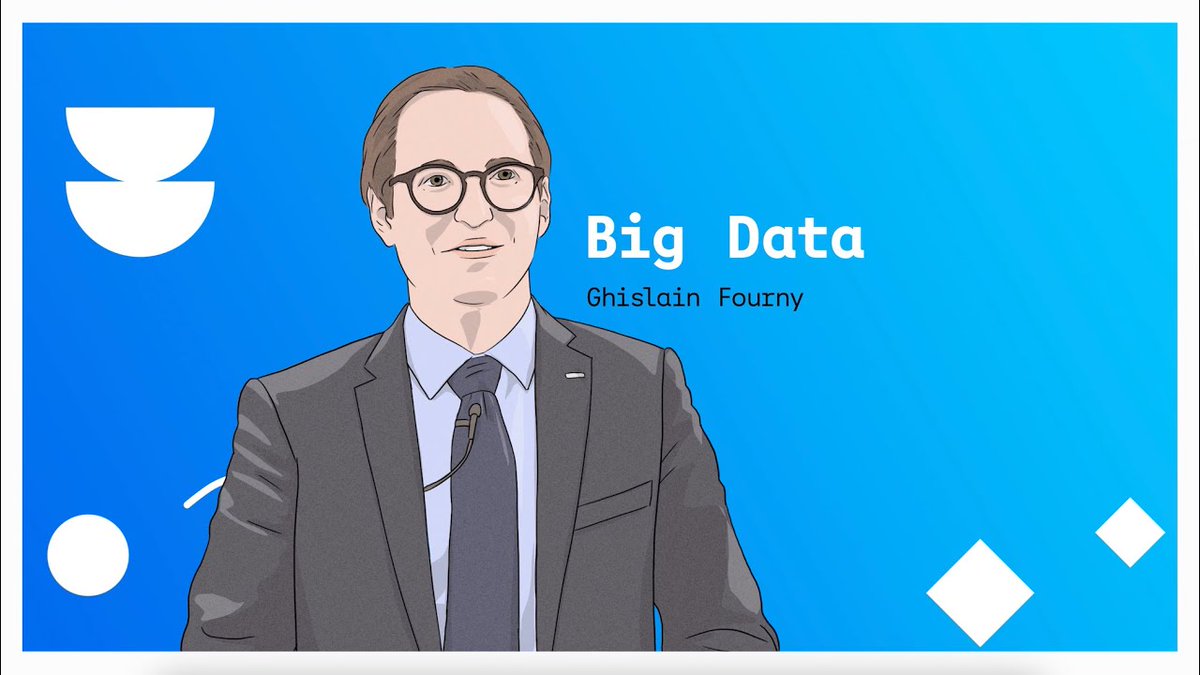
Ghislain Fourny from the Department of Computer Science is known for his #hybridteaching and for inlaying his slides on a green screen, akin to a weather forecast. If you’ve ever wondered what this looks like, check out the video: https://t.co/Aa3ax9Pu2U
@ETH_en#teaching
@AdrianSieber When we co-designed JSONiq (based on @XQuery, a W3C standard) as a JSON query language, back in 2011, the initial reaction was "Why do we need a query language for JSON?"
Today, there are 30+ languages to query JSON.
And counting.
@IanArawjo On hold does not necessarily mean that the content is not accepted. It often has editorial reasons (such as having put line numbers, etc) that are easily solved.
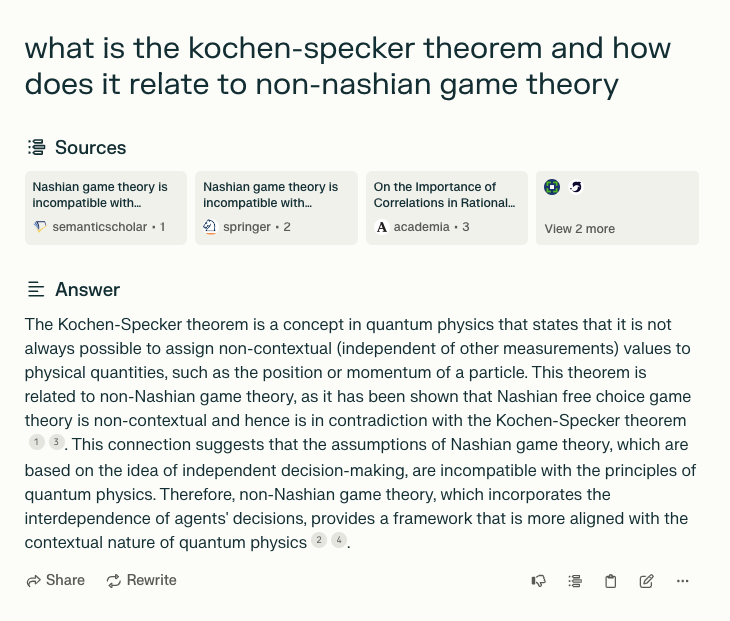
@AravSrinivas By the way, dear Aravind, Perplexity gets my research contributions perfectly right (see below)!
ChatGPT confuses quantum game theory vs. interpreting quantum theory as a game against nature, while Perplexity nails it.
Kudos to your team! 🙏
@AravSrinivas In the past 10 years, I have been putting my papers on arXiv having in mind an AI will process them.
Innovative interdisciplinary research takes too much time to publish in top journals, and it is very difficult to get visibility as a young researcher.
My hope is AI fixes this.
The corresponding paper:
https://t.co/uNXGaJJ1VT
The YouTube video also contains links to more details on the model for decision theory in Minkowski spacetime and the non-Nashian game theory solution concepts.
Recording of my 2023 talk on how:
- to see #quantum theory as a chess game between physicists and the universe,
- Nash equilibria are constrained by impossibility theorems,
- relaxing free choice brings back determinism and could prove Einstein right.
https://t.co/R38oRagstz
@ShriramKMurthi@TheOfficialACM Even if in say 25 years humans stop using SQL, things seem to be going in the direction of using LLMs not alone, but in collaboration with underlying knowledge bases/database systems.
That is, an LLM would generate, and use the results of, SQL queries. SQL remains in the stack.
Data independence is crucial to shield users from complexity, says Ghislain Fourny. We're live at Data Amplified discussing how to scale up the storage and management of #XBRL data for the age of big data. #DA2023