I got a number of questions on how we saved $30k a month on cloudwatch by moving logs directly to S3/Iceberg with Postgres so I wrote up how in a bit more detail - https://t.co/4F7kwv4Oz8
Auth has to be *systematic*
All the bits:
- Pages, components and forms in the browser
- Backend endpoints and validations
- Database access control
It all has to work together. Or your app won't be secure. 👇
Vibe-coders:
Make sure you instruct your favorite LLM to use an auth library with CSRF protection from password hijaking, and ask it to use CSRF protection on every sensitive route.
🚀 New: PostgreSQL Extension Store on Nile! 🎉
The best code is the code you don’t have to write. That’s why we’re making it easier than ever to supercharge your #PostgreSQL applications with 35+ extensions—no installation, no hassle, just powerful features ready to go.
What’s inside?
✅ AI-powered vector search (pgvector)
✅ Geospatial analysis (PostGIS, H3)
✅ Full-text search (pg_trgm, pg_bigm)
✅ Advanced indexing, specialized data types & more!
🔎 Explore & enable extensions effortlessly via the Nile console.
Build faster, smarter, and multi-tenant ready with Postgres extensions. Check out the full announcement and get started today! 👇
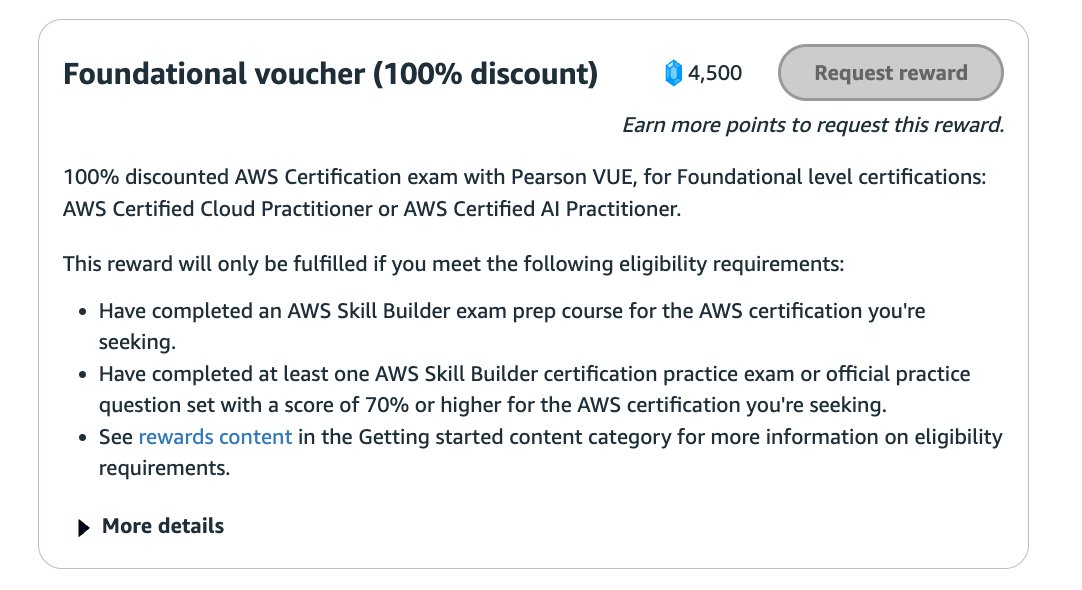
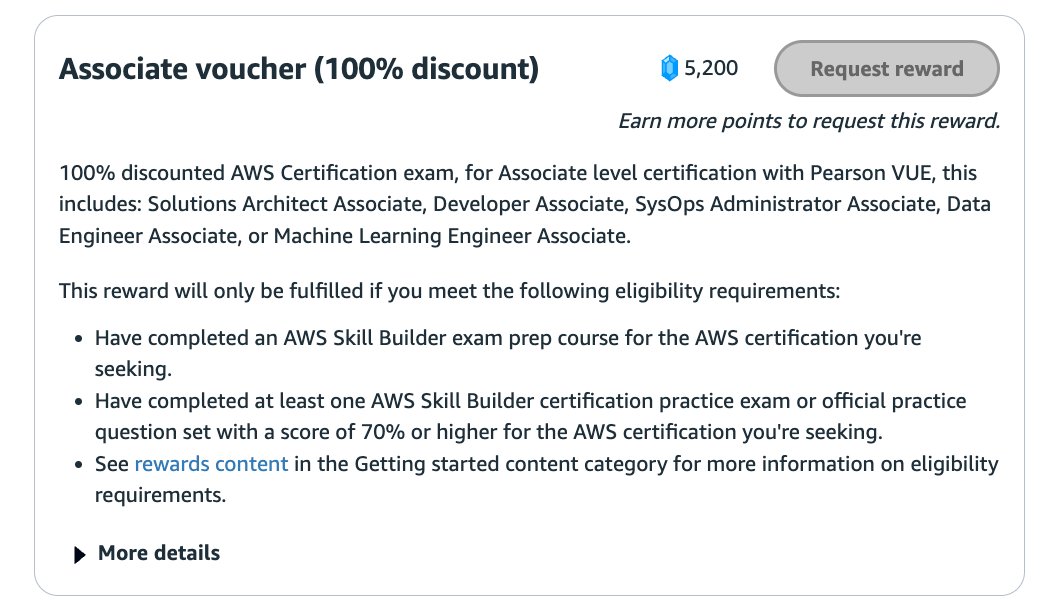
Some great news for those who have wanted to certify for AWS but are limited by funds. AWS Educate now offering 100% off vouchers for Foundational and Associate Level exams valid up to 31st August 2025. Here is how to get started. Sign up for AWS Educate https://t.co/zC0Jw3y8YZ
I've been hearing a lot about different programming workflows to make full use of LLMs, but I want in-depth accounts of how it works. This blog by @harper is exactly what I've been looking for.
https://t.co/mslbySfHla
While the computer science field of automated reasoning is rooted in the work of Socrates and Plato from thousands of years ago, @awscloud is the first and only cloud provider to use this technology in a way that gives our customers assurance in the correctness of generative AI.
Our mathematically sound Automated Reasoning checks add a more rigorous and verifiable approach to making sure that LLM-generated output is factually accurate. By encoding your enterprise domain knowledge into structured policies, customers can have confidence that their conversational AI applications are providing reliable and trustworthy information.
https://t.co/SDuS7k6F8F
I’ve mentioned how I’m starting to believe that GenAI making coding tasks faster is the least important metric. Implementation is just one part of creating software. Just as important (and maybe even MUCH more important) is the research, design, and exploration of options. I’m blown away by how GenAI can dramatically increase the ability to explore options, and defer having to make decisions. These decisions are so consequential before they are often “one-way doors”, where we have to commit to it, often given very imperfect or incomplete information.
Dr. Robert Merton earned the Nobel Prize for Economics (along with his colleagues Dr. Fischer Black and Dr. Myron Scholes) by observing that as uncertainty increases, the value of deferring decisions also increases. I was talking with @Steve_Yegge yesterday, and I shared with him my recent experiences playing with https://t.co/hBLlVYpisB from @stackblitz — I was surprised how easily I was able to experiment and implement numerous authorization services. In 45 minutes, I had a working app that had authentication working with Google Oauth working with Auth0, Firebase, and Supabase.
I never used any of those services before. Although it wasn’t exactly free of frustration, I’m sure that it would have taken me one day for each service in previous years. (And each day would have been so exhausting, I think I would have settled for whatever I had working — no energy left for exploring other options.)
(I've implemented OAuth maybe 5-10 times in the last 15 years. And I still barely know how it actually works.) I think it’s difficult to overstate the value of being able to explore three options, and defer a decision until I had actually tried all three. Yegge’s reaction: “In the past, these decisions were so consequential, they were basically one-way doors, in Amazon language. That’s why we call the ‘architectural decisions!’ You basically have to live with your choice of database, authentication, JavaScript UI framework, almost forever.
"But that’s changing with LLMs, because you can explore, investigate, and even prototype each one so quickly. Even technology migrations are becoming so much easier/cheaper/faster. “These are all examples of increasing optionality.” I love his observation of architectural decisions — because once you make it, it’s basically like you’ve buried yourself in concrete, and it will take a monumental effort to undo / redo it in the future. Imagine the value of driving that down by orders of magnitude.
AWS just announced Aurora DSQL - a purpose built, postgres-compatible serverless database and take it from me - it's amazing.
I've had a few months to play with it (more soon), but it's truly the single most exciting launch I've seen from AWS in a while.
You've gotta try it
It’s been three years since I was last at #AWSreInvent and excited to be back.
Am going to try doing a few low-key videos this week on recapping what I’m excited about and what we’re hearing from customers. Will start this series with a little reminiscing about the origin of AWS re:Invent.
Intend to share some thoughts on some launches tomorrow.
Finish the week with a Postgres video 🌟
All about using JSON in Postgres:
- when you should use it
- how to use it efficiently
- how JSONs actually get stored in postgres.
“Ten years ago, the world passed a major milestone – the amount of data available online surpassed 1 trillion gigabytes. Today, we create that amount of information every two weeks.” – @ddelmoli#HFX2024#EraOfIntegrity
Yes! A new Amazon API gateway release is out and it is a BIG one. Custom domain names for private endpoints! This has been a HUGE ask for some time. Enjoy!
https://t.co/pyHNleFP7g
🔐At #AWS, we’ve been building data centers for more than 15 years and GPU-based servers for over 12 years.
How we're engineering infrastructure to power generative AI: https://t.co/Whi82xlYsY
🙌 We continue to optimize our infrastructure to support #generativeAI at scale.
At #AWSInnovate, @USOPM CISO James Saunders, @Interior CISO Stan Lowe, and @AWS_Gov's @ddelmoli shared the biggest roadblocks faced early in their zero trust journey, how they addressed these challenges, and the lessons learned.