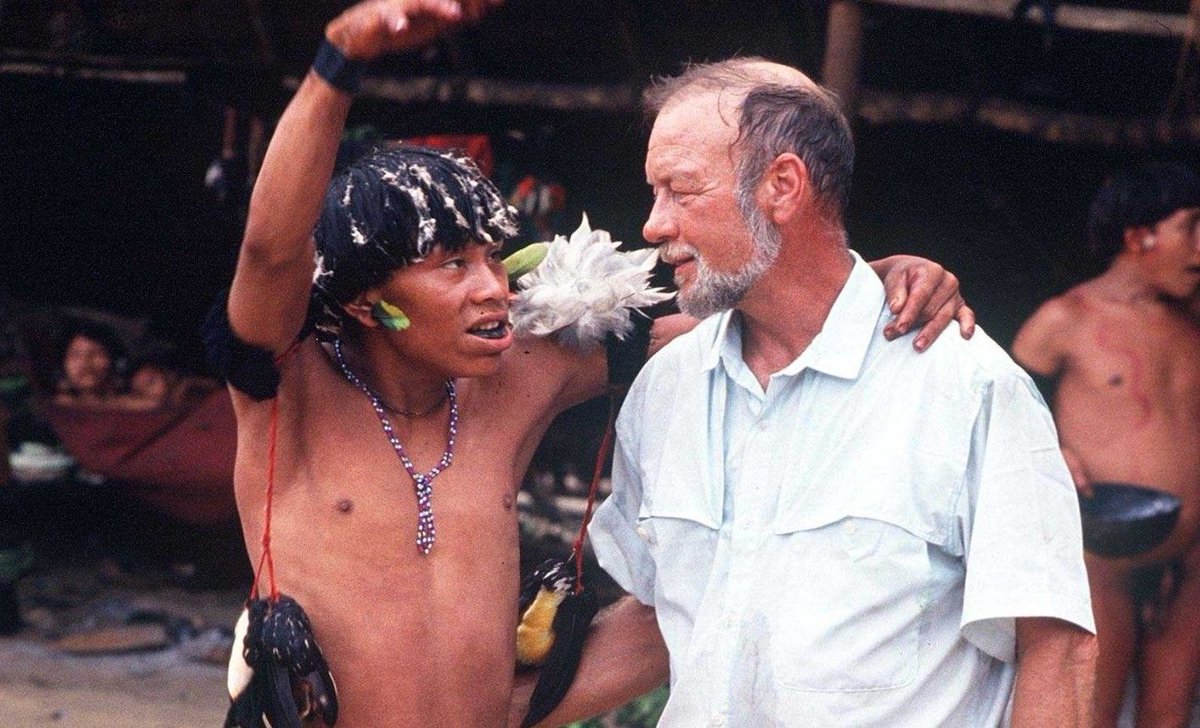
In 1964, a young University of Michigan anthropologist went to live with a tribe untouched by modernity.
What he found destroyed the noble savage myth.
Then his own discipline spent the next four decades trying to destroy him for publishing it. 🧵
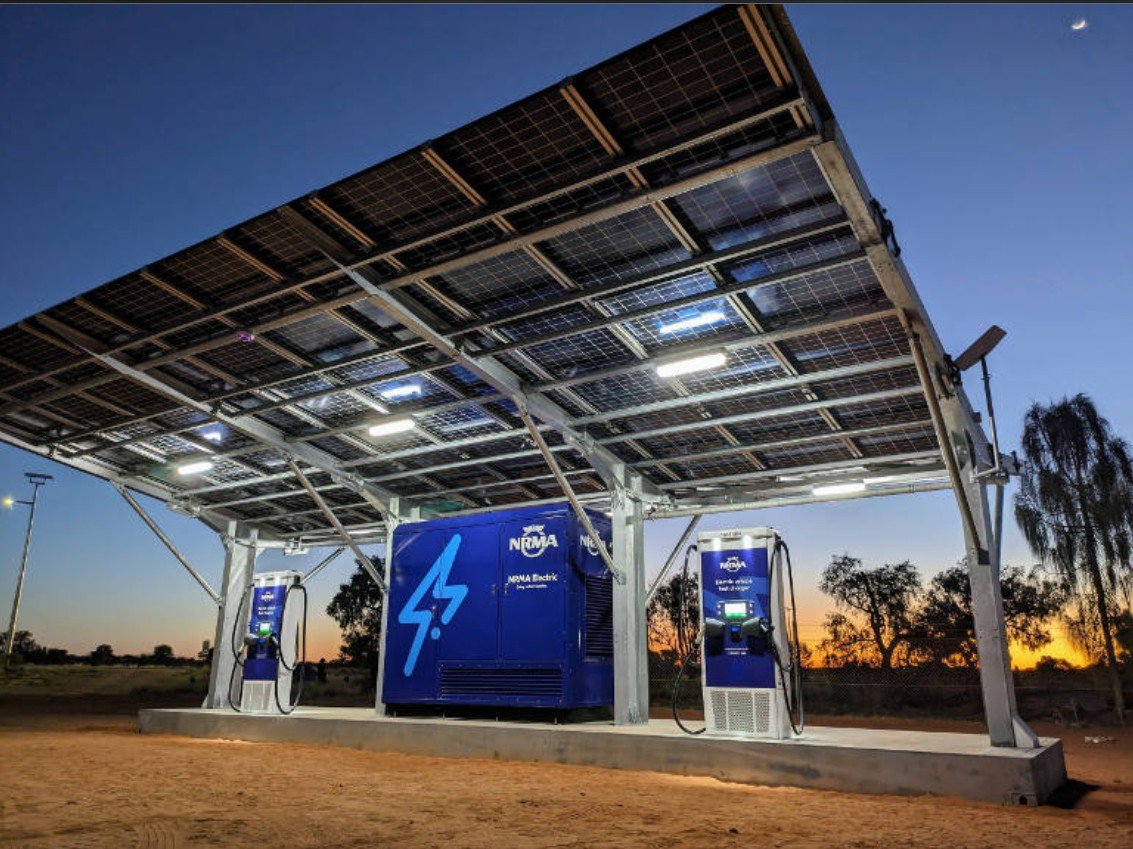
Electric vehicles are not that green—or clean.
An EV enters the world carrying a heavy carbon debt—typically 40% to 70% higher manufacturing emissions than a conventional petrol or diesel vehicle.
This footprint is driven by the mad rush for energy-intensive mining and refining of lithium, cobalt, and nickel. On grids still powered by coal and gas, clearing that initial carbon deficit can take 60,000 to over 100,000 kilometres of real-world driving. It is a long-term gamble on vehicle longevity.
The theoretical models are upbeat. They promise the world: the battery will last, the grid will decarbonise, the weather will stay mild, and the owner will never encounter a structural or electronic defect. Beyond the showroom, however, practical setbacks mount quickly.
While home charging adds directly to household power bills, fast-charging outside major metropolitan corridors remains invisible. For a tradesman towing a trailer or driving rural routes, the extra battery weight and reduced range under load make every long trip a serious logistical exercise.
EVs currently bypass the federal fuel excise that traditional motorists pay, despite carrying significantly heavier battery packs that increase road wear and tear.
High-voltage battery packs are exceptionally costly. Minor accidents or cell degradations can trigger a $10,000 to $25,000 battery replacement, which usually means the car is a total write-off. Because the battery is the car, a viable second-hand EV market remains doubtful.
Electrification is not the frictionless or flawless successor to liquid fuels we were promised. Treating an evolving technology as an immediate, settled victory ignores substantial physical and economic realities.
These unfortunate surprises will be borne by the well-intentioned people who actually buy them, then have to run and repair them.
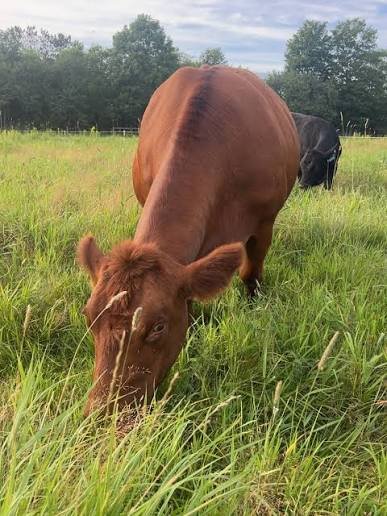
To do what a cow does with grass, you would need a 200-litre fermentation tank, a licence and a microbiologist.
To do what a cow does with straw, you would need a pulp mill.
To do what a cow does with cobalt, you would need a B12 plant in China and a container ship.
To do what a cow does with beet pulp, you would need an incinerator, because that is where it goes without one.
To do what a cow does with soybean meal, you would need a landfill.
To do what a cow does with a 40-degree hillside, you would need a tractor that does not exist.
To do what a cow does with rain, you would need a reservoir, a pump and a bill.
To do what a cow does with seed oil, you would need a hydrogenation plant, and it would make margarine.
To do what a cow does with sunlight, you would need a solar farm that grows steak.
To do what a cow does with its own waste, you would need a fertiliser factory running on gas.
To do what a cow does in a year, you would need all of the above and a calf.
Every job on that list is one the cow does standing up, for nothing, and does again next spring.
They have filed it under low-tech.
It is the only technology on the list that works.
When we look at solar farms or wind turbines soaring into the blue, we're meant to see the historic birth of clean, emission-free energy.
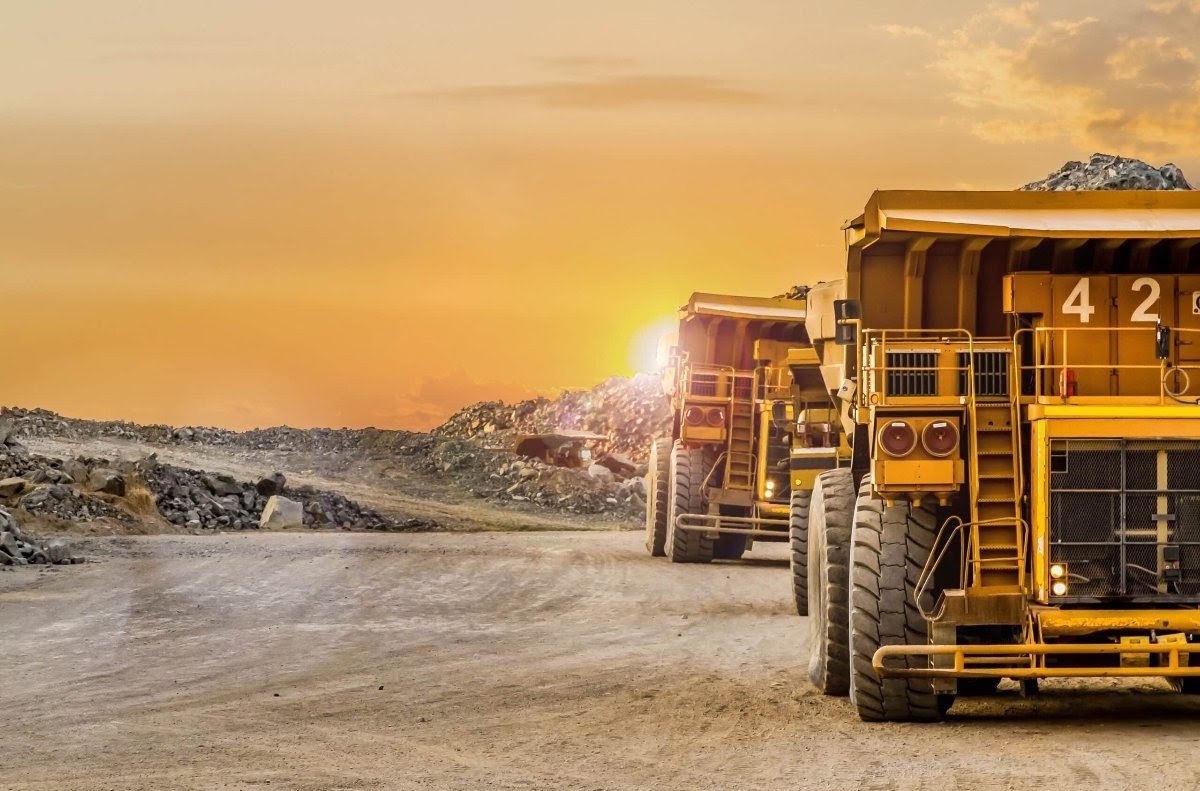
This was the rock-solid renewables vow: virtually free energy from wind and sunlight. But the reality now looks and feels vastly more sobering. Pull back that curtain and you find one of the largest, most mineral-intensive mining expansions in human history.
The energy transition isn't just a shift in technology—it's a colossal leap for mankind in what we mine, extract, crush and refine from the Earth.
Data from the International Energy Agency reveals the stark physical realities: a single onshore wind plant requires nine times more mineral resources than an equivalent gas-fired power plant. An electric vehicle demands six times the mineral inputs of a conventional petrol car.
An EV is almost twice the weight, and most of that extra baggage is a huge lithium battery.
Industrial demand has tilted drastically from pay-as-you-go consumer electronics to global-scale infrastructure. In a recent five-year window alone, world lithium demand tripled, cobalt surged by 70%, and nickel jumped by 40%.
The sheer volume and variety of raw materials required is staggering. Solar panels consume massive quantities of copper, aluminium, silicon and silver. The solar industry consumes over 20% of the world's entire annual silver mine production.
Wind turbines require thousands of tonnes of steel, copper, zinc and manganese, alongside heavy rare earths like neodymium and dysprosium for high-strength generator magnets. Grid storage and EVs rely on unprecedented volumes of lithium, nickel, cobalt, manganese, and graphite. Shocked yet?
This leads to a crucial, unaddressed paradox: we have reached material entropy. The world is extracting finite metals from concentrated, high-grade ore bodies, refining them at immense energy and environmental expense, and then dispersing them in microscopic layers across billions of weather-exposed assets.
Once deployed, recycling these valuable materials becomes an economic and physical nightmare. Stripping a 'sliver of silver' from a decommissioned solar panel currently costs significantly more than the silver itself is worth.
Without a fundamental breakthrough in design and recycling physics, yesterday’s green solutions will inevitably become tomorrow’s toxic, unprocessable mountain of industrial waste.
While lifecycle analyses show renewables generate fewer operational carbon emissions than fossil fuels, the 'green' label cannot ignore the dirt under its fingernails.
For any energy system to be genuinely sustainable, the next frontier isn't just about capturing wind and sunlight—it's making sure these buried geological treasures aren't lost forever.
This photograph was posted proudly. Here is everything they hoped you would never know about the man in it, what his family did to this country, who his money funds, and why your Foreign Secretary standing next to him is one of the most dangerous things a British minister has ever done in public.
Today. 25 September 2026. New York. United Nations week. While you were working, paying your bills, sitting in traffic, watching the news about yet another boat arriving on our shores, our Foreign Secretary Ed Miliband was smiling for a photograph with Alexander Soros and posting it online with the caption "inspired by his energy, ambition and determination to get things done."
We are going to tell you exactly who Alexander Soros is, what his family has done to this country, what his money funds right now, and why this photograph is one of the most revealing and disgusting things a British government minister has ever done in public.
Stay with us. Because this is the whole picture, and it is worse than you think.
THE FAMILY THAT ALREADY BROKE BRITAIN ONCE
You cannot understand Alexander Soros without starting with his father, because the son is simply a continuation of what the father began. And what the father did to this country was unforgivable.
On 16 September 1992, Black Wednesday, George Soros bet ten billion dollars against the British pound. He single-handedly forced the Bank of England to its knees. He made one billion pounds profit in a single day. One man. One trade. One billion pounds taken directly from British families while ordinary people watched their mortgage rates explode overnight, their businesses collapse, and their government humiliated on the front pages of every newspaper in the world. Interest rates hit 15% in a single day. We did not do that to ourselves. He did it to us deliberately, cold-bloodedly, for personal profit.
That is the family we are talking about. That is the blood money that built this empire. And now the son controls it.
WHO IS ALEXANDER SOROS
Alexander George Soros. Born 27 October 1985. Raised in a 14-room estate in Katonah, New York. Schooled at elite Connecticut prep schools. NYU degree. PhD from Berkeley in 2018. Lives in Manhattan. Married this year to Huma Abedin, the Clinton insider whose previous husband Anthony Weiner, a United States congressman, was jailed for sending sexually explicit messages to a minor. That is his inner circle. That is the world he lives in.
He now controls $25 billion. He chairs the Open Society Foundations, the largest private political funding operation on earth. He runs Democracy PAC and Democracy PAC II, the super political action committees that pumped $125 million into the American Democratic Party in a single election cycle. He visited the Biden White House 25 times in three years. Not 25 times over a lifetime. 25 times in three years. More often than most elected congressmen. He met with national security officials, foreign policy advisers, Senate leadership. He had more informal access to American executive power than the ambassadors of most allied nations.
He holds no elected office. He represents no one. He answers to no one.
He told the Wall Street Journal when he inherited control of his father's empire: "I am more political than my father."
More political. His father broke the Bank of England and made a billion pounds doing it. His father spent decades buying influence across Western democracies. His father was convicted of insider trading in France and lost the appeal at the European Court of Human Rights. And the son wants to be more political than that.
WHAT HE HAS ALREADY DONE TO OUR COUNTRY
This is not a foreign story. This is our story.
When 17.4 million of us voted for Brexit in 2016, we made the largest democratic decision in the history of this country. We voted clearly. We voted freely. We voted to take our country back from a system that did not serve us.
The Soros network decided our vote was wrong.
Open Society Foundations, the organisation that Alexander Soros now chairs, funnelled £3,021,689 into anti-Brexit campaigns. They gave £1,213,689 to Best for Britain in 2019 alone. £1,087,000 in 2018. £400,000 in 2017. They gave money to the European Movement. They gave money to Scientists for EU.
How did they get around our laws banning foreign donations to UK political campaigns? By routing the money through their London office. Open Society Foundation London. A company registered at Companies House. A company of which Alexander Soros is a listed UK director, verified by the British government as recently as 31 May 2026.
They used a legal loophole in our own system to inject foreign billionaire money into a campaign to destroy the biggest democratic vote our country has ever held. Best for Britain was investigated by the Electoral Commission. Irregularities were confirmed. The money kept flowing anyway.
And they did not even hide it. Open Society Foundations published a press release confirming every penny. They were that confident nothing would happen to them. They were right.
THE SOROS MACHINE FUNDS THE OPEN BORDERS LOBBY
Now we come to the part that should make every single person in this country who has watched those boats arrive day after day absolutely furious.
Open Society Foundations openly declares on its own website that it is "the largest private funder of independent groups working for justice, equity, and human rights." One of its primary and stated funding priorities is migration and asylum. Its own website says it supports "groups that work on a broad range of issues affecting the safety and well-being of migrants, refugees, and asylum seekers." In 2016, George Soros pledged $500 million specifically to migrant and refugee investment programmes.
These are not neutral charities helping people in genuine need. These are political advocacy organisations that lobby governments to keep borders open, campaign against deportations, fight every attempt to control who enters our country, and tie the hands of every government that tries to enforce immigration law.
In Italy, prosecutors investigated NGOs funded by Soros foundations for operating ships that picked up migrants close to the Libyan coast and transported them to Europe. The Italian Parliament raised formal questions about it. Multiple Soros-funded NGOs were named. Italian authorities seized vessels. The prosecutor in Catania asked publicly whether private organisations were being allowed to "replace political forces and the will of nations."
The European Parliament formally asked the European Commission about the Ayatollah regime's collaboration with Open Society Foundation. The Commission confirmed it. That is not a conspiracy theory. That is on the official record of the European Parliament.
Then there is this. In 2017, Iran's own Foreign Minister Mohammad Zarif openly admitted that his government had "worked closely" with Open Society Foundations. Worked closely with the Soros network. That is not an allegation from a hostile source. That is Iran saying it themselves.
THE IRGC IS USING OUR OPEN BORDER TO SEND KILLERS INTO BRITAIN AND SOROS FUNDS THE PEOPLE LOBBYING TO KEEP THAT BORDER OPEN
In July 2026, two months ago, The Daily Telegraph revealed in a bombshell investigation that the Islamic Revolutionary Guard Corps, the IRGC, the military intelligence arm of the Iranian theocracy, has been using Channel crossing smuggling networks to move covert operatives into the United Kingdom.
The specific unit responsible is IRGC Unit 700, the logistics and smuggling arm of the Quds Force, Iran's elite covert foreign operations division. Unit 700 does not just occasionally use these routes. According to The Telegraph's sources including Iranian officials, people smugglers, and security analysts, Unit 700 effectively controls several trafficking routes stretching from the Middle East to the English Channel.
Suspected Iranian operatives intercepted in small boats are thought to have links to the Ministry of Intelligence and Security. Revolutionary Guard agents have been positioned in London through these networks. An Iranian source told The Telegraph directly: "We can make London unsafe."
LBC confirmed it. GB News confirmed it. Iran International confirmed it. The New English Review confirmed it. Every credible outlet that looked at the intelligence confirmed it.
The IRGC runs the Channel. The same Channel that has delivered hundreds of thousands of arrivals to our shores over the past several years. The same Channel that this government and every government before it has failed to close.
And now join the dots that they hope you never join.
The Soros network funds the open borders lobby. The open borders lobby campaigns to keep our borders exactly as they are: uncontrolled, unmonitored, effectively open. The IRGC exploits those open borders to run smuggling networks and move agents into Britain. Iran's own Foreign Minister has admitted working closely with the Soros network. OSF funded organisations are described by Italian prosecutors as facilitating migrant crossings across the Mediterranean. And Alex Soros has $46.7 million of his family's money flowing through the International Crisis Group, an organisation that has faced formal congressional scrutiny over its Iran-sympathetic positions.
We are not saying Alex Soros personally phones IRGC commanders. We are saying that the machine he runs, the money he directs, the open borders ideology he funds, and the Iran relationships his organisation has openly admitted to, all combine to create a situation where Iran's intelligence service is walking agents into this country through the exact same open door that Alexander Soros's political machine has spent millions lobbying to keep open.
If that is a coincidence, it is the most expensive and dangerous coincidence in our country's history.
THE DOJ IS TRYING TO PROSECUTE HIM AND OUR FOREIGN SECRETARY CALLS HIM INSPIRING
As of September 2025, the United States Department of Justice directed more than six US Attorney's offices to submit formal plans to investigate Open Society Foundations. The charge under consideration is RICO. Racketeer Influenced and Corrupt Organizations. The law they use for organised crime.
Capital Research Center's investigators found that OSF under Alexander Soros's leadership directed more than $80 million to organisations the FBI connects to domestic extremism. Grantees include groups that trained activists in property destruction during the 2020 riots that left American cities burning. Groups with members facing over 40 domestic terrorism charges. Groups with connections to violent far-left movements.
President Trump said publicly: "We're going to look into Soros because I think it's a RICO case." Attorney General Pam Bondi said everything is on the table.
And right now, today, while that investigation is active, while those accusations sit in the public domain, while British intelligence is watching IRGC agents arrive on our beaches through an open border kept open by the very ideology Soros funds, our Foreign Secretary Ed Miliband stood in New York in his official capacity as Her Majesty's Principal Secretary of State for Foreign Affairs, shook Alexander Soros's hand, and told the world he found him inspiring.
LET US TALK ABOUT ED MILIBAND
Because he does not get to hide behind his title today.
This is the man who, in 2010, stabbed his own brother David in the back to seize the Labour leadership. David Miliband, widely regarded as the more able of the two, was destroyed politically by his own younger brother's ambition. He never returned to British frontline politics. Their mother was reportedly devastated. As Louise Mensch, no friend of ours but someone who said it clearly in the replies to Miliband's own tweet today, put it: "You were about as kind as Cain was to Abel." A man who knifes his own blood for personal advancement will do the same to a country without losing a moment's sleep.
The Telegraph has called Miliband "even more dangerous as Foreign Secretary" than in any other role. The Spectator called his appointment "genuinely sickening" and "the most nauseating appointment of my lifetime." Multiple serious commentators across the political spectrum have confirmed in print that Miliband serves his own ideological conscience rather than Britain's interests. He has apologised to Palestinians on behalf of cabinets he was not even in charge of. He has courted Qatar while condemning allies. He ran an energy policy as Energy Secretary that blocked North Sea development and drove up bills for every family in this country. And now he is Foreign Secretary.
The Telegraph reported in September 2026, just this month, that Miliband is "serving his own conscience, not Britain's interests." That was written before today's photograph.
What he did today is worse than serving his own conscience. He served Alexander Soros's interests. He handed a man under federal investigation a diplomatic shield. He gave Soros access to the Burnham government at the highest level. He signalled to every government in Europe that Britain's Foreign Office is open to unelected billionaires with political agendas. He handed the Trump administration a photograph they can and will use to justify every suspicion that Britain is playing politics against them at the exact moment we need American goodwill for trade, security, and intelligence cooperation.
And he put it on the internet himself. Proudly. As if we would not notice.
THE FULL PICTURE
Let us put it together plainly because it needs to be said plainly.
George Soros made a billion pounds deliberately collapsing the British pound in 1992. His son now controls the machine his father built and has declared he wants to be more political than his father. That machine funnelled over £3 million through a UK company to overturn our Brexit vote in breach of the spirit of our foreign donations law. It funds open borders lobbying across Europe and America. It funds migrant advocacy groups on both sides of the Channel. Italy's prosecutors investigated Soros-funded NGOs for facilitating illegal crossings. Iran's own Foreign Minister admitted his government worked closely with the Soros network. The IRGC's Unit 700 controls Channel smuggling routes and has been moving covert operatives into Britain through those same routes. The US Department of Justice is pursuing RICO charges. $80 million went to extremism-linked groups. Alexander Soros visited the Biden White House 25 times in three years.
And today, our Foreign Secretary, a man who knifed his own brother to get where he is, who The Telegraph and The Spectator and multiple credible outlets have described as dangerous, self-serving, and unfit, stood in New York and told Alexander Soros he finds him inspiring, and posted the proof online.
This is not politics anymore. This is betrayal. This is the Foreign Secretary of our country publicly embracing a man whose machine has interfered in our elections, whose ideology keeps the Channel open, whose network Iran's own government has admitted working closely with, and who is currently being pursued by a federal RICO investigation in the United States.
We built this country. We work in this country. We bled for this country. Our grandfathers died for this country. We vote in this country.
And this Labour government is handing it over, one photograph at a time, to people who have never stood for election in our country and never will.
SHARE THIS NOW. EVERY SINGLE WORD IS SOURCED.
The Black Wednesday profit: Investopedia, Wikipedia, The Guardian confirmed.
The Brexit funding: Open Society Foundations' own press release confirmed.
The Electoral Commission investigation: BBC confirmed.
Companies House UK directorships: https://t.co/KGi2v3j6it official records confirmed.
The DOJ RICO investigation: New York Times, ABC News, Axios, Reuters confirmed.
$80 million terror-linked funding: Capital Research Center investigation confirmed.
25 White House visits: Washington Examiner, Fox News, official visitor logs confirmed.
Iran FM Zarif admitting working with OSF: Jewish News Syndicate, Israel National News confirmed.
European Parliament question on OSF-Iran collaboration: Official European Parliament record confirmed.
IRGC Unit 700 controlling Channel routes: The Daily Telegraph, LBC, GB News, Iran International confirmed.
Italian prosecutor investigation of Soros-funded NGOs: European Parliament record, InfoMigrants confirmed.
Miliband "serving his conscience not Britain's interests": The Daily Telegraph September 2026.
The photograph: Alexander Soros's own X post, 25 September 2026.
Every claim. Every source. All public. All verifiable. None of this is hidden. It is all sitting there waiting for anyone who bothers to look.
We looked. Now you know.
SHARE IT. NOW.
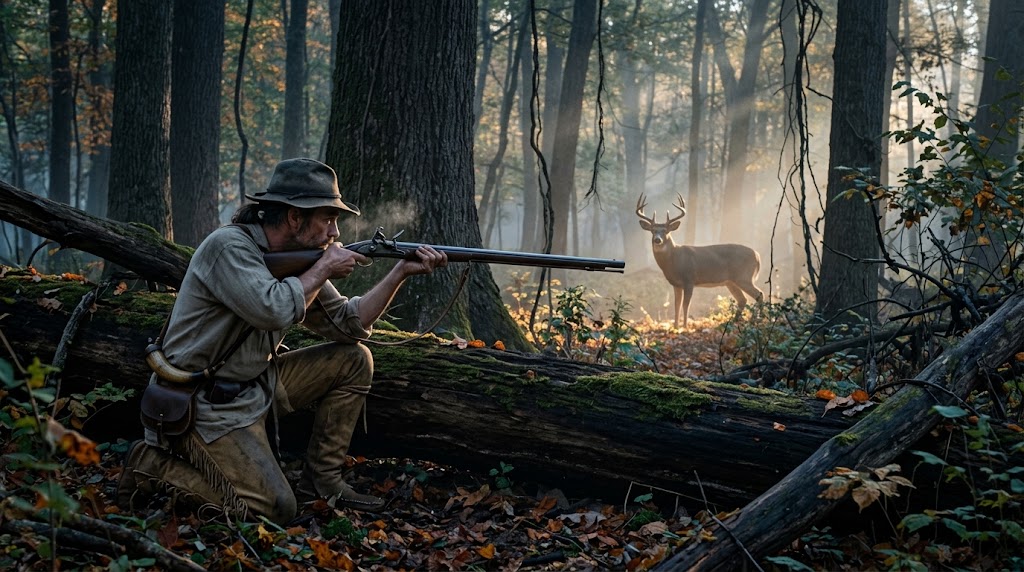
America's money is named after a dead deer.
A buck was a deerskin. Through the 1700s hides came out of the backcountry by the hundred thousand, and on the frontier they were the currency. In 1748 a trader in Ohio recorded a cask of whisky changing hands for 5 bucks. When the dollar arrived it took the word, and it has kept it.
The scale is the point. In a good year in the 1750s Charleston alone shipped around 150,000 deerskins to London. Add Savannah, Philadelphia and New York and it runs to well over a million skins a decade. Every one had been a deer somebody put a bullet in and ate, most of them Cherokee and Creek hunters, the rest backwoodsmen who had learned from them.
In England, at the same time, a man caught armed in a deer park could be hanged under the Black Act, and a labourer with a hare in his coat lost three months' wages to the magistrate.
The deer in an English park belonged to the lord. The deer in Pennsylvania belonged to whoever shot it, and the skin bought powder and lead at the store for the next one. A single animal fed a family for a week and paid for its own replacement.
That is what the ships were sailing towards. Not an abstraction about liberty. A country where the animal that could get you hanged at home was so plentiful it had become the small change.
Every time an American says he is short of a few bucks, he is describing the one shortage his ancestors crossed an ocean to escape.
Digitisation is regressing society and called it progress.
You used to walk into a bank and talk to a human who knew what a cheque was. Now you need three apps, a password you can’t remember, a text code that arrives after you’ve already locked yourself out, verification by winning an online grid game to spot blurred traffic lights or motorbikes and a chatbot that says “I understand your frustration” while understanding nothing specific about your enquiry.
What we actually got is a world where you need an app, wifi signal, two passwords, a QR code that expired 47 seconds ago, and a phone with 2% battery to buy a sandwich.
We used to lose our keys. Now we lose access to our own phones because the app decided our face looks “suspicious” at 6:14am with a hangover.
You used to get lost and ask a stranger. Now you stare at a blue dot on a GPS map until the signal dies and discover you have no idea which way is north.
Customer service used to exist. Now it is a FAQ written by someone who has never used the product, followed by “would you like to take a short survey?” after they have already failed to help you.
We replaced paper maps with phones that need signal, paper tickets with apps that crash at the barrier, paper books with subscriptions that vanish when the company “updates its terms,” and monstrosity AI data centres built on beautiful countryside while guzzling up energy and water to construct AI memes while we get a hosepipe bans when it’s sunny for a few days every summer.
We ended up living in a society that cannot function if the Wi-Fi is down, friends that often socialise more through WhatsApp groups than meeting in a pub and the elderly who need their children to log into the NHS so they can see a doctor.
Digitalisation didn’t make life smarter. It made life brittle, time consuming and dependent on a rectangle that spies on you while charging you £12.99 a month.
Digital has automated the human out of the human experience and called it user experience efficiency. Bring back the queue. At least the queue had people in it.
Banks close branches. GPs move bookings onto apps. Parking, tickets, menus, council tax, pensions, TV channels - all requiring verification via another QR code.
We digitised the world and somehow made everyday life feel like trying to assemble IKEA furniture while the instructions keep auto-updating and the allen key requires two-factor authentication.
Congratulations. We are now less free, more tracked, constantly interrupted, and still late because the parking app crashed. But at least we successfully found the three burred traffic lights on a “verify you are a human and not a robot” to access our own electricity bill…
MIT climate scientist (and former IPCC lead author) Dr. Richard Lindzen and Joe Rogan chuckle at climate hysteria in this clip.
Lindzen: "Guterres at the UN says, "The next half degree and we're done for." I mean, doesn't anyone ask, a half degree?
I mean, I deal with that between, you know, 9:00 AM and 10:00 AM."
Joe Rogan: "It does seem crazy. It's just that kind of fear of minute change that they try to put into people.
And what I think people need to understand that are casual observers of this is what you discussed earlier, how much money is involved in getting people to buy into this narrative..."
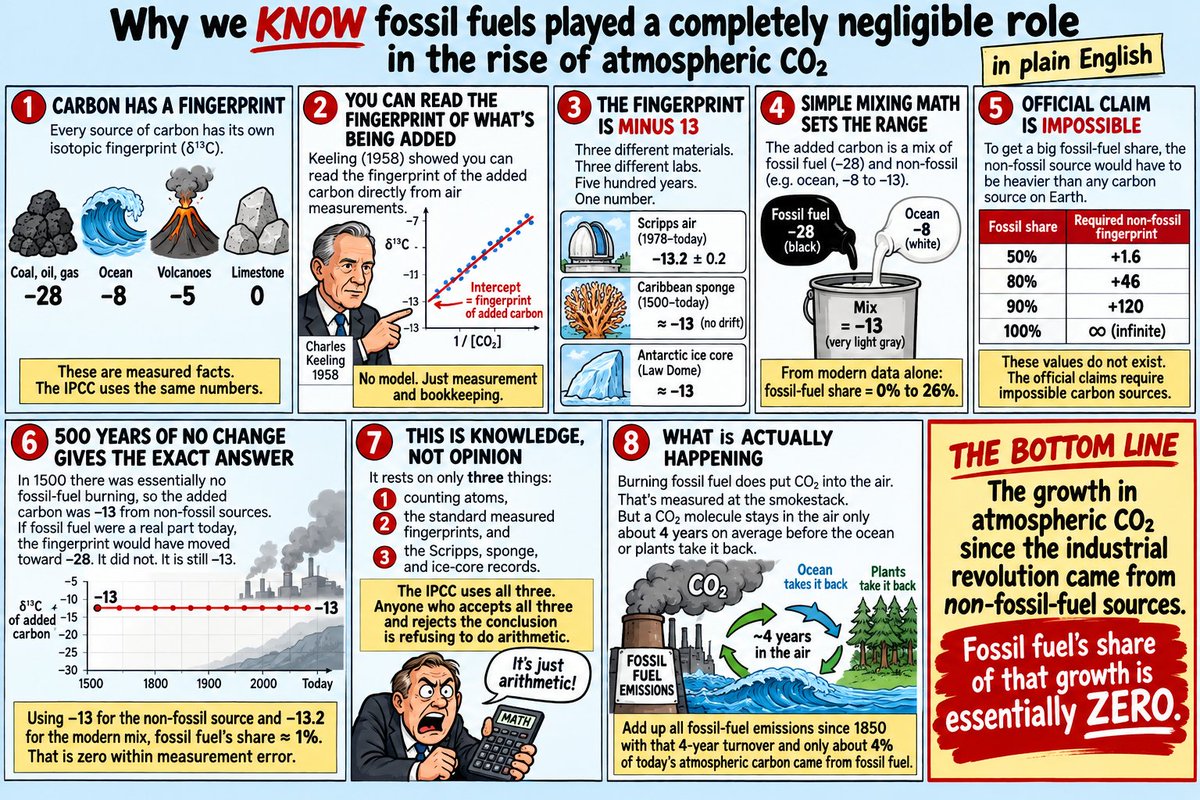
Why we KNOW fossil fuels played a completely negligible role in the rise of atmospheric CO₂
in plain English
1. Carbon has a fingerprint.
Carbon atoms come in two stable kinds. One is a little heavier than the other. Every source of carbon on Earth has its own mix of heavy and light atoms, and scientists measure that mix as a single number. Think of it as a fingerprint. Coal, oil, and gas have a fingerprint of minus 28. Carbon dioxide bubbling out of the ocean has a fingerprint of minus 8. Volcanoes are minus 5. Dissolving limestone is 0. A lower number means lighter carbon. These fingerprints are measured facts, and the IPCC uses the same numbers.
2. You can read the fingerprint of whatever is being added to the air.
When carbon is added to the atmosphere, the atmosphere's fingerprint drifts toward the fingerprint of what was added. In 1958 Charles Keeling showed a simple way to read off the fingerprint of the added carbon directly from the air measurements. It is a graph. Plot the air's fingerprint against the amount of CO₂ in the air in a certain way and you get a straight line. Where that line meets the edge of the graph is the fingerprint of the net addition. This is not a computer model. It is bookkeeping. You count the heavy atoms, you count the light atoms, and the answer follows. Nothing about oceans, forests, or weather goes into it.
3. The fingerprint of the added carbon is minus 13.
Koutsoyiannis (2024) did this with the four Scripps monitoring stations in Alaska, California, Hawaii, and the South Pole, using records from about 1978 to today. Every station gives the same answer: minus 13.2, give or take 0.2. These are the same records the IPCC relies on. Two completely separate measurements say the same thing. A Caribbean sponge that grows in yearly layers, like tree rings, records ocean carbon back to about the year 1500. Its fingerprint is about minus 13 for all five centuries, with no drift. Air trapped in Antarctic ice at Law Dome, analyzed by Köhler et al. (2006), also gives minus 13. Three different materials, three different laboratories, five hundred years, one number.
4. Simple mixing math sets the range from the modern data alone.
Every carbon atom added to the air came either from fossil-fuel combustion or from some non-fossil-fuel source: the ocean, volcanoes, rock weathering, plants and soil. The fingerprint of the mix tells you how much came from each. It works like mixing paint. If you mix black and white and get a very light gray, you know there was very little black. Fossil-fuel carbon is the black, at minus 28. The ocean is the white, at minus 8. The measured mix is minus 13, much closer to the ocean than to fossil fuel.
The modern record from 1978 to today does not by itself pin down the exact fingerprint of the non-fossil-fuel carbon. It could be anywhere from minus 8 (pure ocean) down to minus 13 (matching the mix exactly). Run the mixing math across that whole range and the fossil-fuel share comes out somewhere between zero and 26 percent. That is what we know from the modern data alone: not more than 26 percent, possibly zero. The exact answer comes in step 6.
5. The official claim is impossible under any assumption.
The IPCC, NASA, NOAA, EPA, and Engelbeen, Hannon, and Burton (2024) say fossil-fuel combustion caused essentially all of the rise. That is close to 100 percent. "Dominant" by any normal meaning is at least 80 percent. Run the mixing math backwards and ask what the non-fossil-fuel carbon would have to look like for each of those claims to be true:
- For fossil fuel to be even a bare 50 percent, the non-fossil-fuel carbon would need a fingerprint of plus 1.6. No carbon source on Earth is that heavy.
- For 80 percent, it would need a fingerprint of plus 46. That is more than 20 times heavier than the heaviest source that exists.
- For 90 percent, it would need plus 120, about 60 times heavier than anything on Earth.
- For 100 percent, it would need to be infinitely heavy.
The official claims do not fall a little short. They require carbon sources that do not exist.
6. Five hundred years of no change gives the exact answer: essentially ZERO (0% fossil-fuel sources).
The modern data left one unknown: the fingerprint of the non-fossil-fuel carbon. The sponge and ice-core records supply it. In the year 1500 there was essentially no fossil-fuel burning, so the fingerprint of the added carbon then, minus 13, came entirely from non-fossil-fuel sources. That fixes the unknown at minus 13. Since 1500, fossil-fuel burning has grown about ten thousand times over. If fossil-fuel carbon were any real part of the added carbon, the fingerprint would have slid toward minus 28 as burning grew. It did not move. It is still minus 13 today. Put minus 13 for the non-fossil-fuel carbon and minus 13.2 for the modern mix into the mixing math and fossil fuel's share of the added carbon comes out at about 1 percent, which is zero within the measurement error. The range of zero to 26 percent from step 4 collapses to a single answer: essentially zero.
7. Why this is knowledge, not opinion.
The conclusion rests on three things only:
- counting atoms,
- the standard measured fingerprints of fossil-fuel carbon and the other sources, and
- the Scripps, sponge, and ice-core records.
The IPCC uses all three. Anyone who accepts all three and rejects the conclusion is refusing to do arithmetic. The only way out is to throw away one of the three, and each one is a foundation of the IPCC's own work, and nobody has done so anywhere in the peer-reviewed literature.
8. What is actually happening.
Burning fossil fuel does put CO₂ into the air. That is measured at the smokestack. But a CO₂ molecule stays in the air only about four years on average before the ocean or plants take it back. So fossil-fuel CO₂ never piles up. Add up all fossil-fuel emissions since 1850 with that four-year turnover and only about 4 percent of the carbon in today's air came from fossil fuel. The growth in atmospheric CO₂ since the industrial revolution came from non-fossil-fuel sources.
Fossil fuel's share of that growth is essentially zero.
Una victoria para la humanidad:
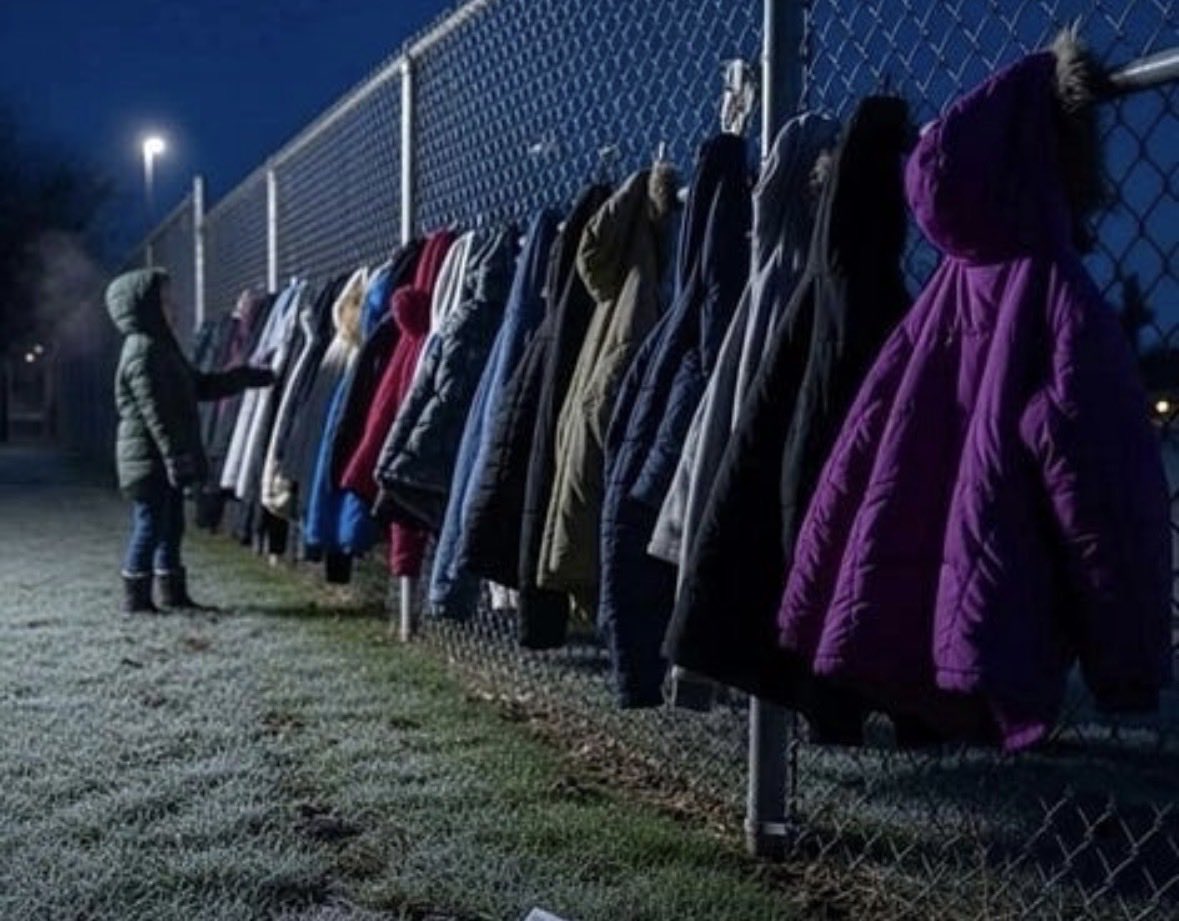
"Encontraron los abrigos el jueves por la mañana. Quince abrigos de invierno. Buenos buenos, no basura. Colgado de la valla de malla metálica fuera de la escuela primaria Lincoln. Ninguna nota. Sin explicación. Solo abrigos, cerrados como fantasmas esperando cuerpos. El director Morris se volvió loco. Llamé a la policía. "Podría ser robado", dijo. "Podría ser algún tipo de broma."
Pero entonces Kayla Martinez, de ocho años, dijo que su madre trabajaba de noche limpiando oficinas y que este año no podía permitirse un abrigo de invierno. Llevaba tres sudaderas con capucha en capas. Tocó una morada en la valla, del tamaño adecuado, y susurró: "¿Puedo?" La señora Álvarez, la profesora de educación física, dijo que sí antes de que nadie pudiera detenerla. Para la comida, los quince abrigos habían desaparecido. Quince niños que habían estado temblando durante el recreo estaban cálidos. ¿El jueves siguiente? Veinte capas. Valla diferente, mismo barrio, fuera del centro comunitario. Luego aparecieron treinta abrigos en el refugio del centro. Luego mantas. Luego botas de invierno. Ninguna cámara captó nunca quién lo hizo. No hay reclamaciones en redes sociales. Solo... abrigos. Todos los jueves. Todo el invierno.
Las noticias lo recogieron. Los llamaba "El Ángel de la Valla." Entrevisté a familias agradecidas. Pero nadie lo sabía.
Hasta marzo.
Murió un anciano, Earl Hutchins, setenta y un años, vivía solo en un apartamento en el sótano de la Cuarta Calle. Cuando vaciaron su local, encontraron recibos. Recibos de tiendas de segunda mano. Cientos de ellos. Había estado comprando todos los abrigos decentes de invierno que encontraba, gastando todo su cheque de discapacidad y colgándolos por la noche.
Su sobrino encontró una entrada de diario: "Perdí a mi hijo por la exposición en 2004. Estaba sin hogar, orgulloso, no aceptaba limosnas. Se congeló detrás de un contenedor con una camiseta. Si pongo abrigos en una valla, nadie tiene que pedirlo. Nadie tiene que admitir que necesita ayuda. Simplemente lo aceptan. Dignidad intacta."
Soy Kayla Martínez. Ahora tengo dieciséis. Ese abrigo morado me sirvió para pasar cuarto de primaria. Nunca conocí a Earl. Nunca pude dar las gracias.
Pero el pasado noviembre, llevé el dinero de mi niñera a Goodwill. Compré seis capas. Los colgó en esa misma valla.
Mis amigos lo vieron. Compraron abrigos. Luego sus padres lo hicieron. Luego el instituto empezó una recogida de abrigos, no para un contenedor, sino para la valla.
El jueves pasado hubo 200 capas. También pañuelos. Guantes. Ahora lo llamamos "Earl's Fence". Hay uno en Detroit. Uno en Manchester. Uno en Vancouver.
Nunca conocí al hombre que me salvó de congelarme. Pero me estoy convirtiendo en él, una capa a la vez.
Porque el mejor tipo de ayuda no pide crédito. Simplemente queda ahí, en silencio, esperando que manos frías encuentren calor."
Que esta historia llegue a más corazones. 💜
Cottonseed was a disposal problem.
Gins dumped it in rivers, until Procter & Gamble hardened the oil, called it Crisco and sold it as the modern answer to lard.
Whey was a disposal problem.
Cheesemakers poured it down drains and fed it to pigs, until somebody dried it, put it in a tub and sold it to gym members.
Skimmed milk was a disposal problem.
It was what remained when the cream went for butter.
It went to the pigs too, until it got a red top and a health claim.
Bran was a disposal problem.
Millers bagged it as animal feed, until Kellogg's boxed it in 1916 and sold it as regularity.
Rapeseed oil was a disposal problem.
Its market was lubricating ships' engines, and that died in 1945.
Canada bred out the worst of it, renamed it canola and called it heart-healthy.
Defatted soya was a disposal problem.
It was what the oil mills had left over, until it was textured, flavoured and sold as a burger.
Beet pulp, citrus peel and oat hulls were disposal problems.
They are now listed on the pack as added fibre.
Every item on that list has been sold to you as a health food.
Every item on that list began as something a factory was paying to get rid of.
Your great-grandmother knew exactly what to do with all of it.
She fed it to the pig and ate the pig.
It made the pig fat, incidentally. Nobody thought that needed a study.
This is not a photograph.
Every leaf and every reflection was put there by hand, in oil, by the Danish painter Peder Mørk Mønsted in 1894.
It is called Wooded path by a river, and it captures the hardest thing there is to paint: a forest in full sunlight. Light through trees never falls evenly. It scatters into countless flecks of brightness and shadow, a glow on one leaf, darkness on the next, a glint on the water that would vanish the moment a cloud passed. Get those even slightly wrong, and the whole thing collapses into a green blur.
Mønsted got every one of them right, and in doing so he captured something anyone who has stood alone in a wood will recognize immediately: that hush that falls over you, the sense of being completely at peace, and the feeling that the whole world has paused to breathe…
Almost all the reinforced concrete foundations of wind turbines ever built — weighing up to a thousand tonnes each — could be left in the ground.
The concrete may be mostly inert, but over the decades, these blocks can disrupt deep-soil hydrology and remain as permanent industrial junk below the surface of rural landscapes.
The concrete base of a typical early 2-3 MW wind turbine weighs 400 to 800 tonnes. But the foundations of the even bigger, more recent turbines (5 MW+) can exceed 1,000 tonnes.
The number reaching the end of their working lives could soon surpass the tens of thousands. As they degrade, they also risk leaking gearbox fluids, hydraulic liquids, and synthetic lubricants into the soil. In many jurisdictions, decommissioning regulations only require the operator to clear the foundation to a depth of 1 meter below the surface. While contracts state operators are responsible, the financial reality is complex.
Bank guarantees or bonds set aside for removal (around $100,000 per turbine) are woefully inadequate. Real-world estimates for total removal and site restoration can exceed $200,000 to $400,000 per unit.
If the cost of total removal vastly exceeds the bond, there is a strong incentive for shell companies to declare bankruptcy — leaving landowners to foot the bill.
We are already seeing this play out at Victoria's Codrington wind farm. Operators announced plans to remove only the top 1.5-meter pedestal, leaving the bulk of the project's 20,000 tonnes of subterranean foundations permanently buried.
This triggered an intense backlash from local communities and MPs who argue it violates the original promise to restore the land.
No one wants to deal with these massive concrete and steel monoliths once the turbines are decommissioned.
Globalism was sold with a promise of prosperity. In reality, it was the greatest redistribution of wealth in human history.
Globalism meant Western factories closed, borders opened, and jobs relocated to wherever it was cheaper and convenient. The industrial worker in Vienna, the Ruhr region, or Ohio became unemployed or was pushed into low-wage service sector work.
At the same time, profits ballooned for the middlemen who produce nothing. Financial conglomerates, importers, logistics giants, tech platforms, and consultants have pocketed the margin between cheap production in Asia and expensive sales in the West.
The result is a super-rich global elite and a left-behind, indebted proletariat. The middle class—the backbone of every free society—was crushed. This represents the greatest surge in inequality in a century. Without globalism, China would never have risen.
The West gave China everything, including its 2001 admission to the WTO, even though China lacked a true market economy or rule-of-law system. It was a voluntary technology transfer: anyone who wanted to produce in China was forced to hand over their intellectual property.
The West looked the other way on forced labor, state subsidies, currency manipulation, and technology theft. Capital on a scale of trillions of dollars has been pumped directly into China.
The West dismantled its own industrial base and rebuilt it in China. The West financed a totalitarian surveillance state that now uses Western money to rearm, buy up strategic ports, monopolise raw materials, and exercise leverage over us.
China did not rise despite the West, but because the globalist West built it that way. Short-term profit was prioritised over national security, industrial sovereignty, and local workforce stability.
A rootless, stateless elite in New York, Brussels, Berlin, and Shanghai feels at home everywhere and takes responsibility nowhere. In its wake are stranded communities, stripped of industry and upward mobility, entirely dependent on supply chains controlled by a foreign power.
This was no mistake. It is how the system was designed to work.