I am with you on this, have also been using Claude Code to generate html outputs - much easier to consume, visually fun to read. Documents become unique instead of overly standardised. In saying that, there is a world where you can convert markdown ⇒ html easily as well, to make easier to read plans/specs/reports/docs. There needs to be a workflow and tooling around it to optimise the advantages. I have been building a tool in this space which I hope to release soon.
We’re introducing the Cursor SDK so you can build agents with the same runtime, harness, and models that power Cursor.
Run agents from CI/CD pipelines, create automations for end-to-end workflows, or embed agents directly inside your products.
Imagine every pixel on your screen, streamed live directly from a model. No HTML, no layout engine, no code. Just exactly what you want to see.
@eddiejiao_obj, @drewocarr and I built a prototype to see how this could actually work, and set out to make it real. We're calling it Flipbook. (1/5)
@saddle_paddle@Superset Can we choose a default behaviour for clicks? Especially for urls, I prefer they open my external brower rather than inside superset.
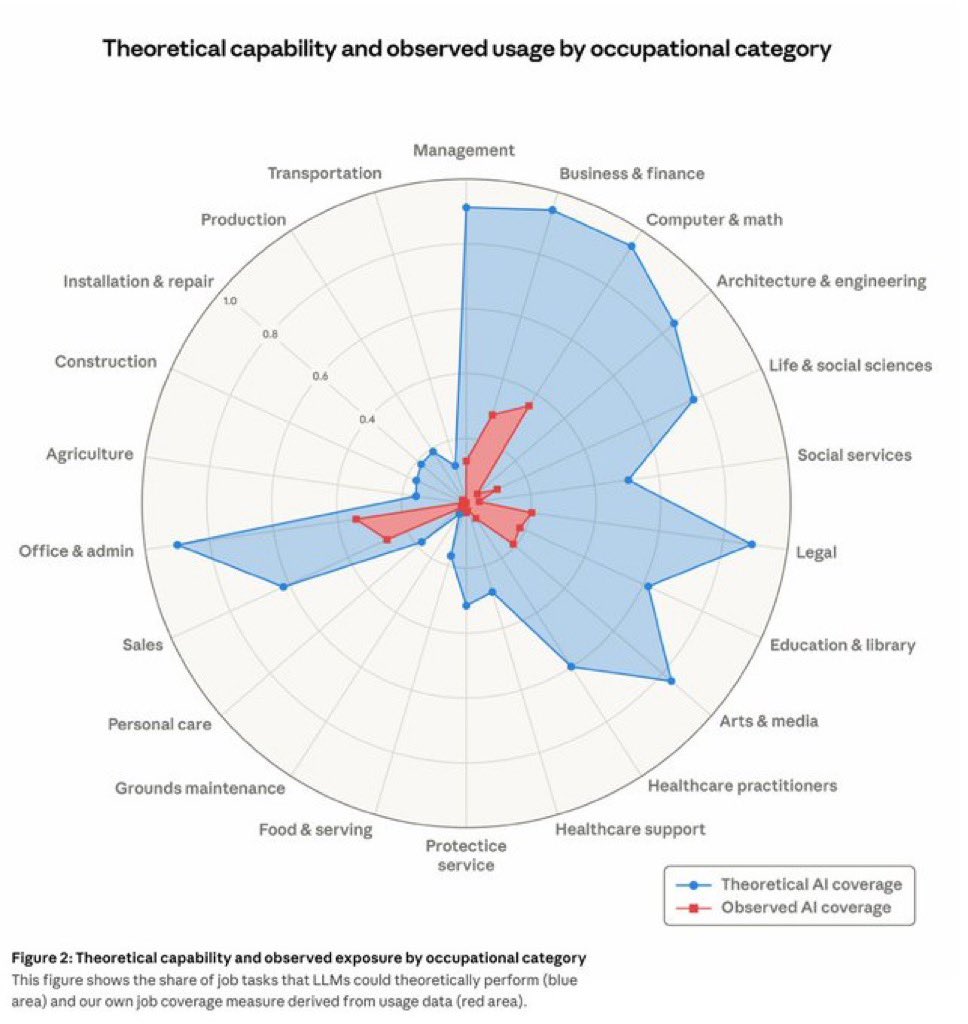
Anthropic just released the most IMPORTANT chart in the AI labor debate.
This comes from the company that builds Claude using data from 2 million real conversations.
Here’s what it shows.
The blue area is every task AI could theoretically do right now.
The red area is what people are actually using it for.
The gap between them is enormous and that gap is your career runway.
Computer programmers are already 75%
covered.
Customer service reps, data entry workers, financial analysts, they’re next.
But here’s what no one is talking about.
The mass layoffs haven’t really started.
Unemployment for exposed workers hasn’t budged.
So what’s actually happening?
Companies are closing the front door, hiring for workers aged 22 to 25 in AI exposed jobs has dropped 14%.
The most exposed workers aren’t factory workers, they’re college educated, higher earning.
49% of US jobs now have at least a quarter of their tasks inside AI’s reach.
That’s up from 36% just one year ago.
And the red area on that chart,
the real world usage is still a fraction of what’s possible.
Every month, it grows a bit.
Anthropic built the scoreboard and most people haven’t looked at it yet.
Introducing Project Glasswing: an urgent initiative to help secure the world’s most critical software.
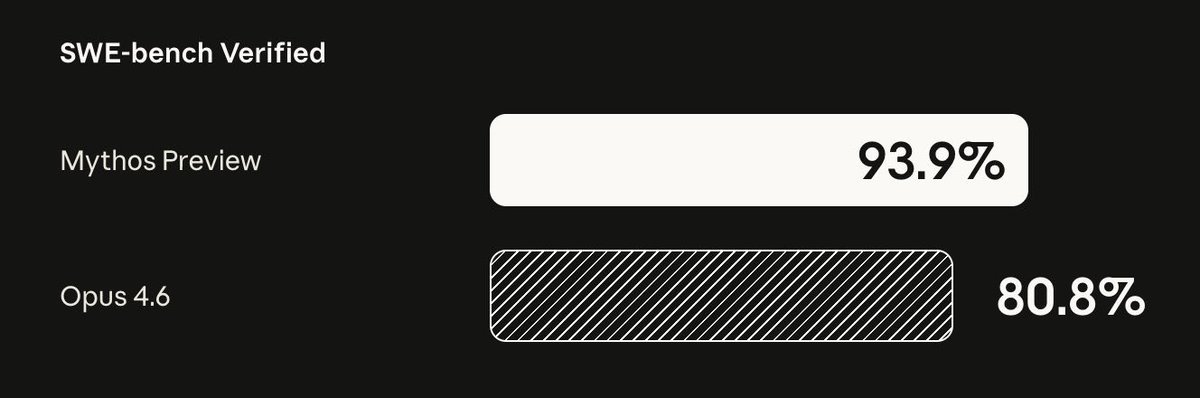
It’s powered by our newest frontier model, Claude Mythos Preview, which can find software vulnerabilities better than all but the most skilled humans.
https://t.co/NQ7IfEtYk7
@AnthropicAI 93.9% on SWE-bench 🤯
When the model becomes so smart it can find its way into most systems - better use it to secure those systems first before releasing it to the world 🌎 smart move
Opus → Mythos @claudeai#AI#cybersecurity
My dear front-end developers (and anyone who’s interested in the future of interfaces):
I have crawled through depths of hell to bring you, for the foreseeable years, one of the more important foundational pieces of UI engineering (if not in implementation then certainly at least in concept):
Fast, accurate and comprehensive userland text measurement algorithm in pure TypeScript, usable for laying out entire web pages without CSS, bypassing DOM measurements and reflow
Nervous of the usage implications here. But then again ... for us in NZ the session usage speedup is between 2am-8am (soon 1am-7am NZST).
Good reason to move to NZ? @trq212 🤗
To manage growing demand for Claude we're adjusting our 5 hour session limits for free/Pro/Max subs during peak hours. Your weekly limits remain unchanged.
During weekdays between 5am–11am PT / 1pm–7pm GMT, you'll move through your 5-hour session limits faster than before.