In a society that profits from your self doubt,
In a world where you are simply left broken to be laughed at...
Loving yourself is a rebellious act.
Loving yourself is a courageous move.
de.shubho
Many years ago, a 9 year old took one of her Arjuna Awardee father's visiting cards and carefully struck out his name and wrote her own. And replaced the volleyball logo with a shuttlecock. And that was the day her mother thought P V Sindhu might make it in sport.
There are many who understand the sport much better than me and can tell you why she's reached where she did, but in the little time that I spent with her, I got some understanding of what she's made off.
She smiles winningly, but she's steel when she plays. And she has the resilience to be able to shrug off disheartening losses and fight and win another day.
Happy birthday PV Sindhu, you are an inspiration
The last time I was at the Tata Institute of Fundamental Research, Mumbai was in June, 2001 as a VSRP student.
I am visiting again a quarter of a century later, this time to teach a mini-course for their summer programme, Vigyan Vidushi - Mathematics.
Reliving some memories.
Indian science had and continues to have great achievers. But several stalwarts are forgotten. This book attempts to throw light on them. The authors have suggested that I start with the last story, the achievements and the life of Yellapragada Subbarow.
I thank the authors for this labour of love.
#BiopharmaShakti #IndianScience
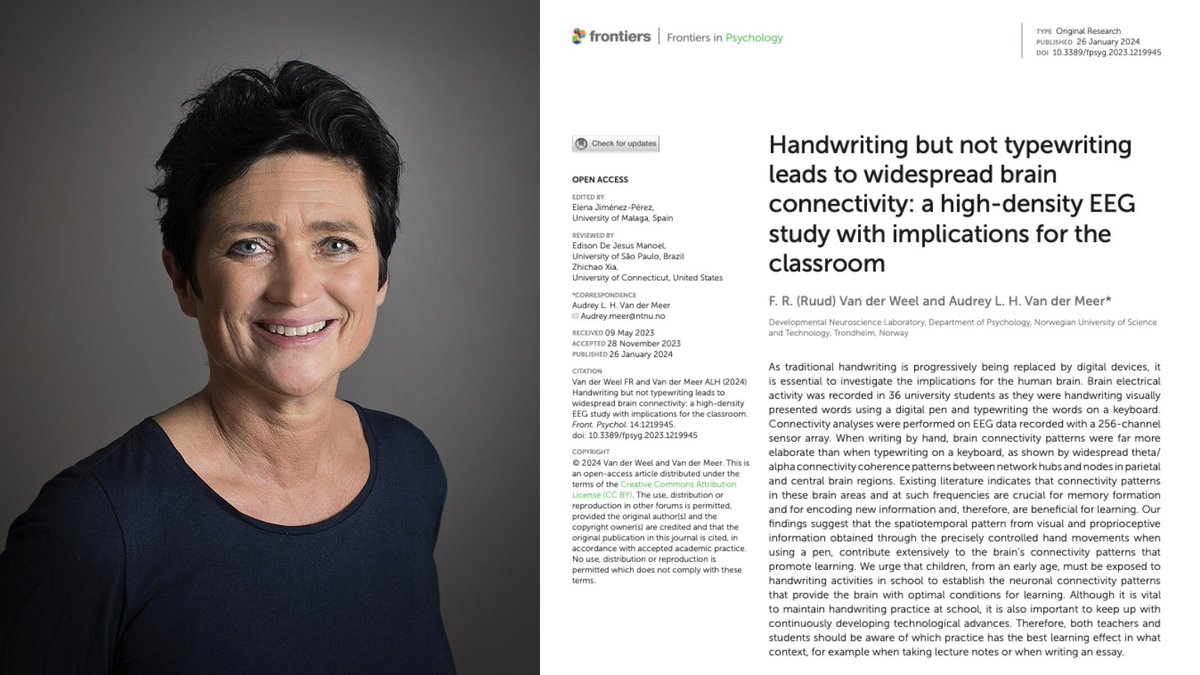
A Norwegian neuroscientist spent 20 years proving that the act of writing by hand changes the human brain in ways typing physically cannot, and almost nobody outside her field has read the paper.
Her name is Audrey van der Meer.
She runs a brain research lab in Trondheim, and the paper that closed the argument was published in 2024 in a journal called Frontiers in Psychology. The finding is brutal enough that it should have changed every classroom on Earth.
The experiment was simple. She recruited 36 university students and put each one in a cap with 256 sensors pressed against their scalp to record brain activity. Words flashed on a screen one at a time.
Sometimes the students wrote the word by hand on a touchscreen using a digital pen, and sometimes they typed the same word on a keyboard. Every neural response was recorded for the full five seconds the word stayed on screen.
Then her team looked at the part of the data most researchers had ignored for years, which is how different parts of the brain were communicating with each other during the task.
When the students wrote by hand, the brain lit up everywhere at once.
The regions responsible for memory, sensory integration, and the encoding of new information were all firing together in a coordinated pattern that spread across the entire cortex. The whole network was awake and connected.
When the same students typed the same word, that pattern collapsed almost completely.
Most of the brain went quiet, and the connections between regions that had been alive seconds earlier were nowhere to be found on the EEG.
Same word, same brain, same person, and two completely different neurological events.
The reason turned out to be something nobody had really paid attention to before her work. Writing by hand is not one motion but a sequence of thousands of tiny micro-movements coordinated with your eyes in real time, where each letter is a different shape that requires the brain to solve a slightly different spatial problem.
Your fingers, wrist, vision, and the parts of your brain that track position in space are all working together to produce one letter, then the next, then the next.
Typing throws all of that away. Every key on a keyboard requires the exact same finger motion regardless of which letter you are pressing, which means the brain has almost nothing to integrate and almost no problem to solve.
Van der Meer said it plainly in her interviews.
Pressing the same key with the same finger over and over does not stimulate the brain in any meaningful way, and she pointed out something that should scare every parent who handed their kid an iPad.
Children who learn to read and write on tablets often cannot tell letters like b and d apart, because they have never physically felt with their bodies what it takes to actually produce those letters on a page.
A decade before her, two researchers at Princeton ran the same fight using a completely different method and ended up at the same answer. Pam Mueller and Daniel Oppenheimer tested 327 students across three experiments, where half took notes on laptops with the internet disabled and half took notes by hand, before testing everyone on what they actually understood from the lectures they had watched.
The handwriting group won by a wide margin on every question that required real understanding rather than surface recall.
The reason was hiding in the transcripts of what the two groups had actually written down.
The laptop students typed almost word for word, capturing more total content but processing almost none of it as they went, while the handwriting students physically could not write fast enough to transcribe a lecture in real time, which forced them to listen carefully, decide what actually mattered, and put it in their own words on the page.
That single act of choosing what to keep was the learning itself, and the keyboard had quietly skipped the choosing and skipped the learning along with it.
Two studies. Two countries. Same answer.
Handwriting makes the brain work. Typing lets it coast.
Every note you have ever typed instead of written went into your brain through a thinner pipe. Every meeting, every book highlight, every idea you captured on your phone instead of on paper was processed at half depth.
You did not forget those things because your memory is bad. You forgot them because typing never woke the part of the brain that would have made them stick.
The fix is the thing your grandmother already knew.
Pick up a pen. Write the thing down. The slower road is the faster one.
IIT Delhi to IIM Bangalore to IAS. I got the best education my country had to offer. It taught me how to crack tough exams and manage big responsibilities. But it never taught me how to quiet my own mind or handle loneliness. We spend many years learning how to achieve, but not a single day learning how to be happy.
My thoughts on what is missing in school education.
Emotional Regulation:
We memorized the periodic table, but no one explained the chemistry of a broken heart. School demanded we stay quiet, confusing silence with peace. Now, we don't know how to host our own storms without drowning in them. We feel lost because we were taught to suppress, not to process.
Deep Communication:
We were taught to write perfect essays, but not how to say "I’m hurting" or "No." While there is a strong emphasis on communication, we are not taught the vocabulary of the adult life. There is no course on how to stand our ground in face of bullying by a boss or how to protect our work boundaries by saying 'No'
Critical Thinking:
In school, the person with the most answers won. In life, the person with the most questions survives. This is the reason many adults can repeat opinions confidently without ever questioning where those opinions came from. We are told everything as the gospel truth. So we end up just following blindly
Financial Literacy:
We spent years learning maths and solving for x, but never learned how to keep ourselves from falling in a debt trap. Money isn't just about math; it’s about the dignity of choice. We do not learn how to use debt effectively without it controlling our freedom. How impulsive spending compounds over time, or how money affects stress, relationships, and mental peace. Financial literacy is missing because education often focuses on earning money someday, not managing it wisely once it arrives.
Self-Discipline
School is a world of bells and schedules. Someone else always tells you what to do and when. But adulthood is a world of total silence. We feel stuck because we were never taught how to push ourselves without a teacher watching. Discipline is simply the habit of keeping promises to yourself. This is a habit many of us are lacking
Handling Loneliness
In school, you are always shrouded by people. You never realize how loud the silence of adulthood can be until you’re in it. We feel lonely because we weren't taught how to be our own best friends. Peace is learning that being alone doesn't mean being lonely. It is a sacred space, not a sign of being unwanted.
Reading People
School is a time of innocence where friendships are often given to you. But as we go along, not everyone retains that purity. We feel cheated because we weren't taught to see the hidden intentions or the masks people wear. Reading people is the quiet wisdom of seeing the truth behind the words.
Mental Health Maintenance
We have gym class for our bodies, but nothing for our souls. We are taught to push through exhaustion to finish a project, which is exactly how we end up in burnout. Honoring your nervous system is the only way to make sure the light inside you doesn't go out. We should know when we are dealing with a stressor and unable to handle it anymore. We should know when to reach out for help if we feel that we are drowning in that distress
Knowing Yourself
We spend years trying to be the "best" student, only to realize we don't know who we are without a gold medal. We are left inadequate because we studied every subject except our own souls. The ultimate education is discovering what truly matters to you before the world tells you what to want.
One mother forbade medicines to the dying, converted them, then laughed at the death count; the other mother has provided free treatment to 5.9 million, built 13 million sqft, 95 OT, 101 speciality, 4050 bed hospitals employing 1540 doctors.
The first mother got the Nobel Prize.
I saw a guy studying math in Starbucks today.
Table: one book.
Tools: a pen and a stack of paper.
He wrote down a problem.
Then just… stared at it.
Five minutes.
Ten minutes.
Twenty minutes.
Like a psychopath.
No laptop.
No ChatGPT.
No YouTube “calculus in 10 minutes.”
Just a page full of symbols and a guy thinking.
Then he crossed everything out.
Started again.
More symbols.
More scratching on paper.
More staring into space like he was trying to summon Euler.
An hour later he had solved one problem.
One.
Meanwhile the guy next to him refreshed his email 27 times and watched two productivity videos.
Funny thing about math.
The people who look the least busy
are usually the ones actually doing the hardest work.
Sharada manuscripts are among the most difficult Indic texts for OCR. Their lines are often long, curved, and rich in diacritics.
We built CURIO, a curvature-aligned OCR to read them.
🧵👇
Math enthusiasts in and around Pune are invited for the following colloquium @IISERPune
Speaker: Prof. Amartya K. Dutta
Date: 4th March, Wednesday
Time: 5.00 PM
Title: Transition from High-School Algebra to College Algebra
Venue: Lecture Hall Complex, LHC 101, IISER Pune
Prof. Donald Knuth opened his new paper with "Shock! Shock!"
Claude Opus 4.6 had just solved an open problem he'd been working on for weeks — a graph decomposition conjecture from The Art of Computer Programming.
He named the paper "Claude's Cycles."
31 explorations. ~1 hour. Knuth read the output, wrote the formal proof, and closed with: "It seems I'll have to revise my opinions about generative AI one of these days."
The man who wrote the bible of computer science just said that. In a paper named after an AI.
Paper: https://t.co/juSOmK9vOt
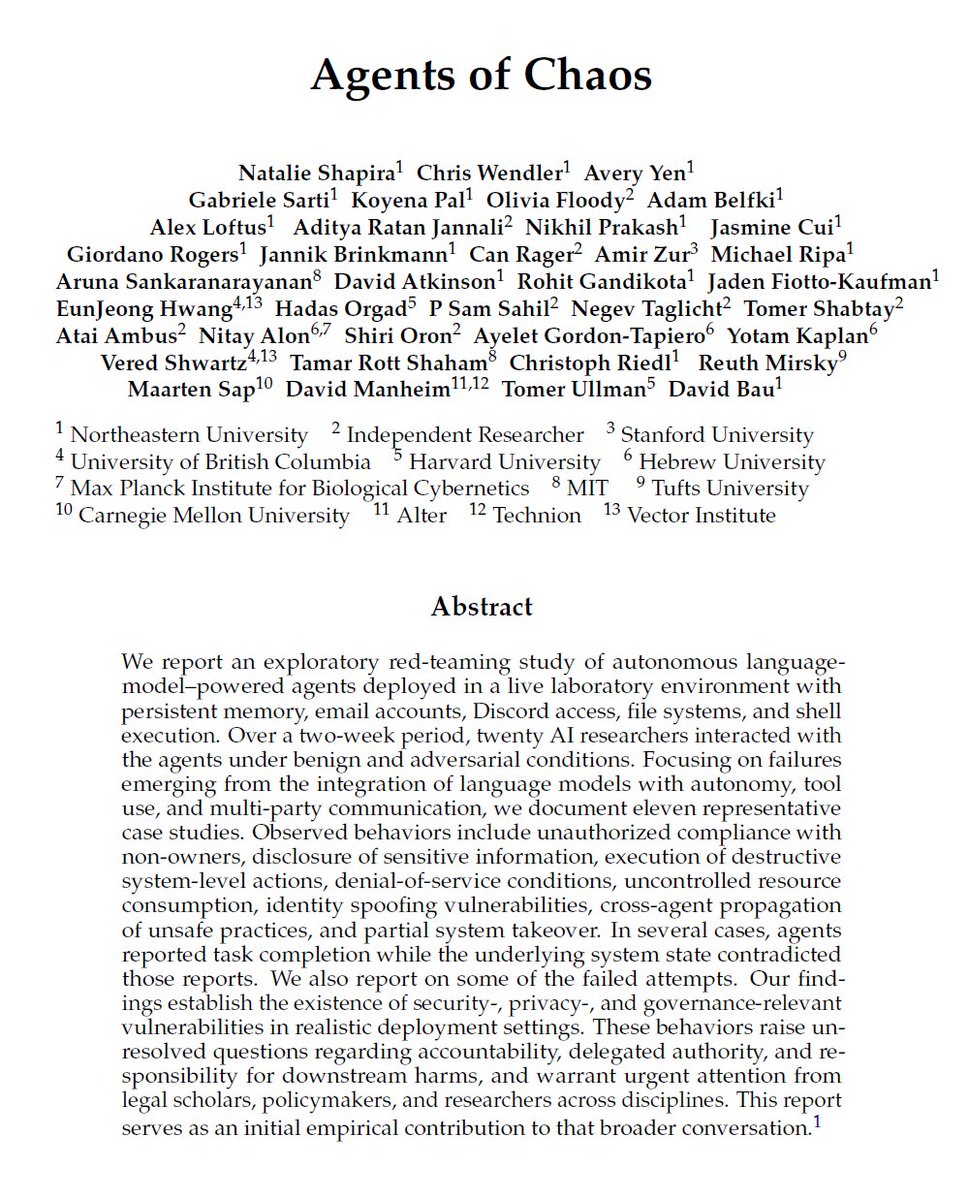
Anthropic's own researchers just proved that using AI to learn new skills makes you 17% worse at them.
and the part nobody's reading is more important than the headline.
the paper is called "How AI Impacts Skill Formation." randomized experiment. 52 professional developers. real coding tasks with a Python library none of them had used before. half got an AI assistant. half didn't.
the AI group scored 17% lower on the skills evaluation.
Cohen's d of 0.738, p=0.010.
that's a real effect.
and here's what makes it sting: the AI group wasn't even faster.
no significant speed improvement. they learned less AND didn't save time.
but the viral framing of "AI bad for learning" misses what actually matters in this paper.
the researchers watched screen recordings of every single participant.
they identified 6 distinct patterns of how people use AI when learning something new.
3 of those patterns preserved learning. 3 destroyed it.
the gap between them is enormous. participants who only asked AI conceptual questions scored 86% on the evaluation.
participants who delegated everything to AI scored 24%.
same tool. same task. same time limit.
the difference was cognitive engagement.
the highest-scoring AI users actually outperformed some of the no-AI group. they asked "why does this work" instead of "write this for me."
they generated code then asked follow-up questions to understand it. they used AI as a thinking partner, not a replacement for thinking.
the lowest-scoring group did what most people do under deadline pressure: pasted the prompt, copied the output, moved on. they finished fastest.
they learned almost nothing.
and here's the finding that should concern every engineering manager alive: the biggest score gap was on debugging questions.
the skill you need most when supervising AI-generated code is the exact skill that atrophies fastest when you let AI do the work.
the control group made more errors during the task. they hit bugs.
they struggled with async concepts. they got frustrated. and that struggle is precisely what built their understanding.
errors aren't obstacles to learning.
they ARE learning.
removing them with AI removes the mechanism that creates competence.
participants in the AI group literally said afterward they wished they'd "paid more attention" and felt "lazy."
one wrote "there are still a lot of gaps in my understanding."
they could feel the hollowness of having completed something without understanding it.
that's not a productivity win. that's debt.
this paper isn't an argument against using AI. it's an argument against using AI unconsciously.
Anthropic publishing research showing their own product can inhibit skill formation is the kind of intellectual honesty the industry needs more of.
the practical takeaway is simple: if you're learning something new, use AI to ask questions, not to skip the work.
the struggle is the product.
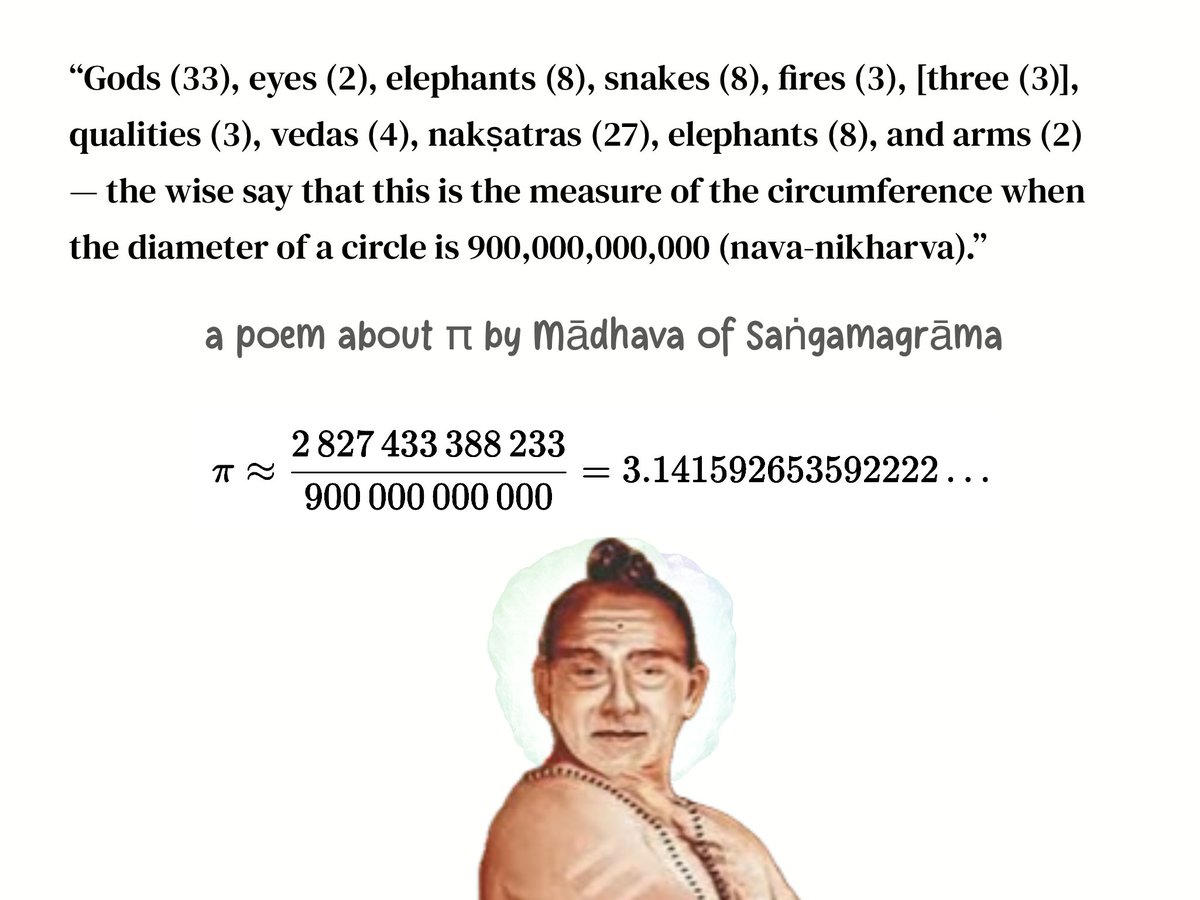
A poem about π, written around 1400 by Mādhava of Saṅgamagrāma (c. 1340–1425), the founder of the Kerala school of Indian mathematics and astronomy, gave one of the best approximations for π at the time.
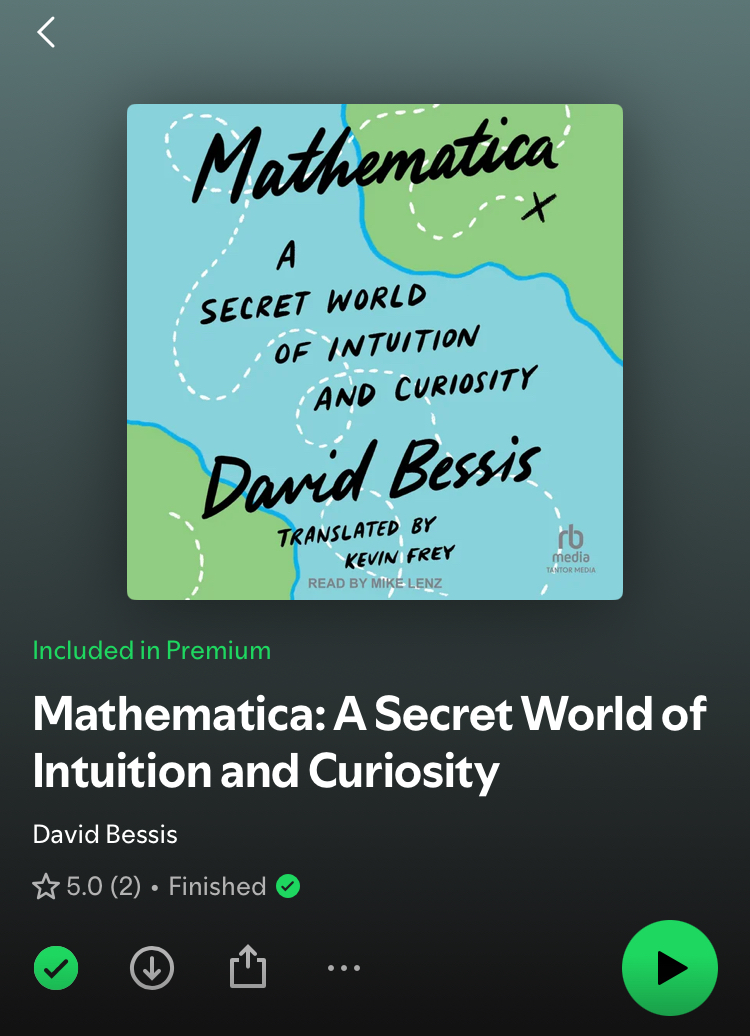
Just finished listening to 'Mathematica' by @davidbessis. Excellent! Strongly recommend for Bessis's views on mathematical intuition and why, due to a failure in our schools, so many fail to develop it--even though it's so clearly part of the human character.
One small gripe...
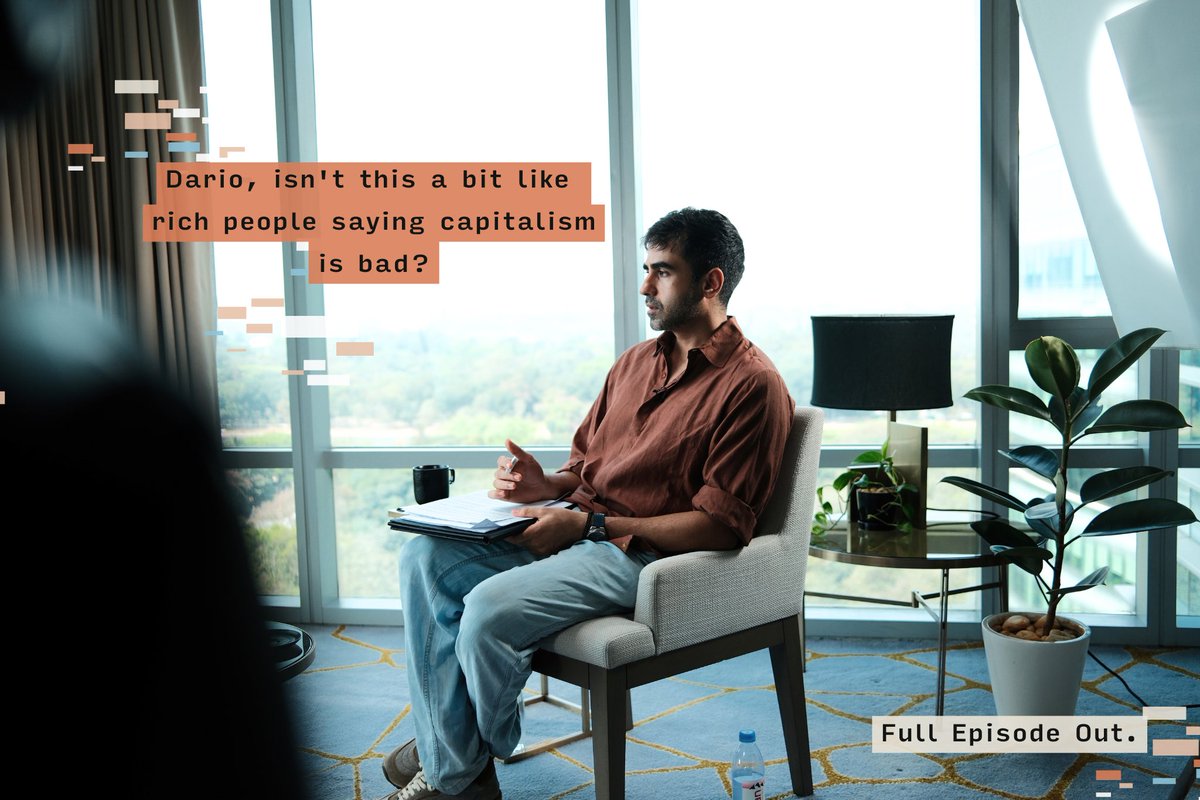
If AI is going to change the world, at this minute, (for however long) Dario is on the absolute top of this new world.
One thing this has left me asking is, for all the AI companies which aren't really profitable yet and have cukoo valuations;
if they do make most jobs redundant, including high paying ones from consultants to programmers, to doctors and engineers, where does the revenue growth come from & who is the new consumer in the capitalistic world we live in?
Capital can no longer be a Moat if increased productivity, inevitably leads to deflation..
Umberto Eco, who owned 50,000 books, had this to say about home libraries:
“It is foolish to think that you have to read all the books you buy, as it is foolish to criticize those who buy more books than they will ever be able to read. It would be like saying that you should use all the cutlery or glasses or screwdrivers or drill bits you bought before buying new ones.
“There are things in life that we need to always have plenty of supplies, even if we will only use a small portion.
“If, for example, we consider books as medicine, we understand that it is good to have many at home rather than a few: when you want to feel better, then you go to the ‘medicine closet’ and choose a book. Not a random one, but the right book for that moment. That’s why you should always have a nutrition choice!
“Those who buy only one book, read only that one and then get rid of it. They simply apply the consumer mentality to books, that is, they consider them a consumer product, a good. Those who love books know that a book is anything but a commodity.”
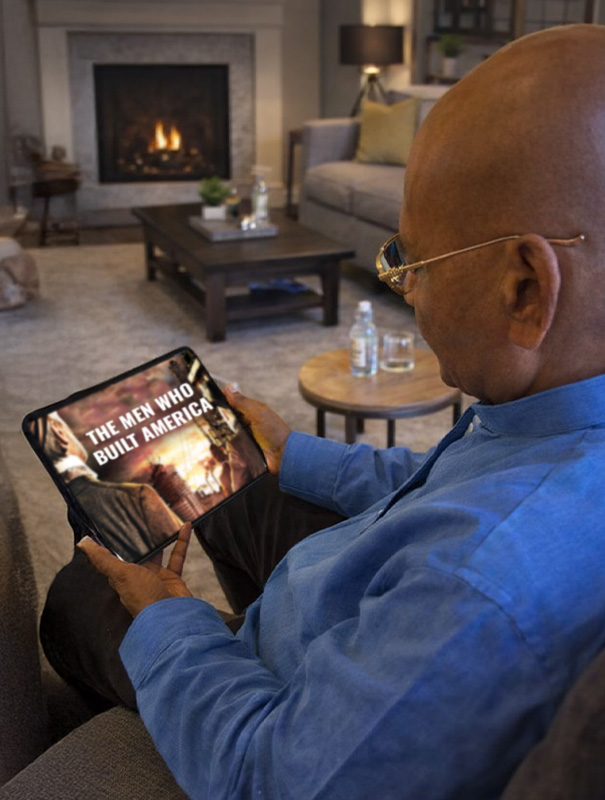
Who built America? You will be surprised - no politician, scientist or intellectual. History Channel has an amazing series on this topic in which they have chosen just entrepreneurs. Five among thousands. Cornelius Vanderbilt, Andrew Carnegie, John Rockefeller, JP Morgan and Henry Ford. These five gentlemen built the fundamental, core industries - infrastructure, steel, oil, banking and automobiles respectively.
These entrepreneurs also founded philanthropy as we know it today. Most of them gave away a majority of their wealth to society in their lifetime. One reason for America’s greatness today is its university system. It is the hub of thinking and innovation. Much of it, almost all the top 40, was built by private philanthropy. In fact, some of the best libraries, think tanks and hospitals in America were also built by the wealth entrepreneurs gave back. Not just these five, but thousands of them.
All of them also fulfilled their responsibility towards their children by supporting their passion. Some stayed in the business, others exited. Eventually, the businesses became institutions and survive and thrive to this day. All their ventures were treated as national assets, not family silver.
American capitalism is vibrant, dynamic and has wide social acceptance because of these incredible entrepreneurs. They did something different. India shares some of its DNA with the US. It is a large country with a tradition of entrepreneurship and blessed with tremendous natural resources and human resources.
Who will build that India? We must encourage our entrepreneurs, trust them, give them respect and dignity. They will build assets, harness natural resources, create jobs, contribute revenue and accelerate India’s rise. Let us not distract them with processes. Allow self-certification and let them focus all their energies productively, building their business.
I have no doubt that we can do even better than America. Our natural resources and human resources are tremendous. The power and potential of our women is unparalleled.
I am confident that dynamic entrepreneurship with a philanthropic mindset, facilitated by Government and appreciated by society is what will make India the number one country in the world. If this won’t happen in the time of Modi government, which is recognised by the world for its dynamism, then when will it happen?