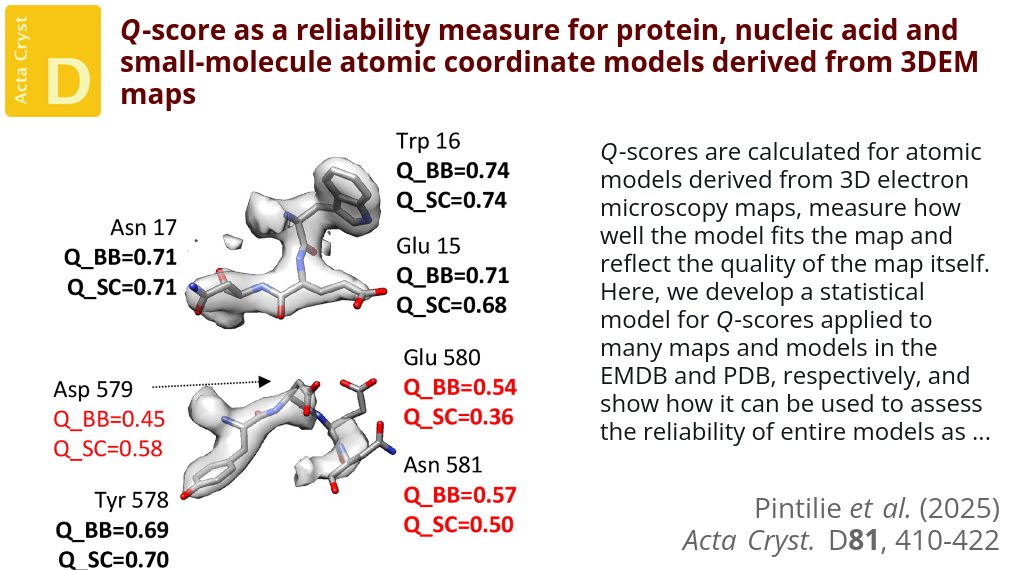
A comprehensive statistical analysis of how Q-scores are related to reported resolution, based on ∼10 000 EMDB maps and associated PDB atomic coordinate models archived in the EMDB @ucsandiego@ActaCrystD@IUCr#CryoEM#QScores#Validation https://t.co/PFmKDP70MO
Excited to share with you the good news! I have left Brown University and joined the Institute of Quantitative Biomedicine at Rutgers University. The lab is looking for new members at all levels, students, techs, postdocs! Plse retweet. https://t.co/fVxWwXipxQ
Hot fudge, strawberry or sprinkles? Gary Ruvkun isn't only a Nobel Prize laureate, he also helps out his local ice cream truck on occasion. Ruvkun visits the 'Frosty Truck' so often the owners consider him extended family.
The newly awarded medicine laureate celebrated his prize earlier this week by hopping on board and serving some sundaes to his lab members and colleagues.
Ice cream for everyone - isn't that a great way to celebrate a Nobel Prize?
And thank you @GordonConf for putting together a wonderful program on microbial stress responses. Thank you for the opportunity to speak and I hope to see all next time!
Attention synchrotron-using friends! The last day to voice your opinion on NIH funding of beamlines here: https://t.co/Y3DeTSn2iV
is Monday June 17.
Anyone who has used beamlines at ALS, SSRL, CHESS, NSLS-II, GM/CA CAT, BioCAT and NE-CAT, this affects you. Your opinion counts.
Staff scientist position with generous compensation available in my group! If you are a biochemist or structural biologist, see my website and email me!
Www. https://t.co/7TFfFCBlfk
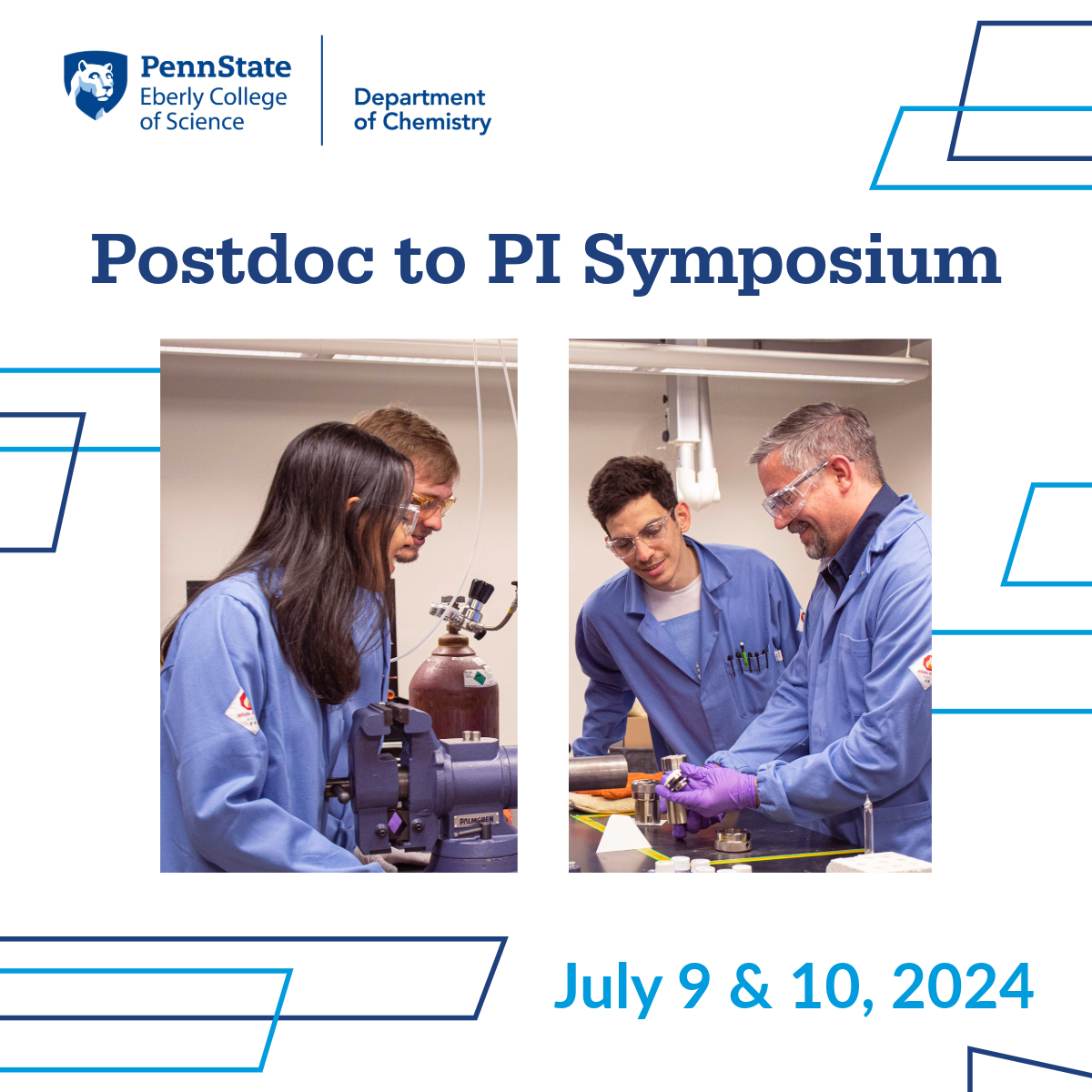
We are now accepting applications for the 2024
@psu_chemistry Postdoc to PI Symposium! This symposium is designed to build relationships with postdoc scholars early on in the academic hiring cycle.
Eligibility & Application details can be found here: https://t.co/nNWom1ZCSq
Amen. When I interviewed at Bell Labs at the end of graduate school, I was asked to prepare a 45 min talk that took me 90 min to deliver -- thanks to all the interrupting questions and debate that ensued. It was fantastic! It meant that they cared, and they pushed me in directions I hadn't considered, despite being the nominal expert in my subject. Too often today when I attend a talk, many are not paying much attention (laptops and phones), and the speaker receives little feedback except empty compliments or a few softball questions at the end. Even worse, some speakers take offense at being pushed to defend their work, further stifling intellectual exchange. They should remember that constructive critics are doing them a favor, and that it is an extreme privilege to have the freedom to do science.
Same holds true when scientists post their latest work. Rather than empty compliments and congratulations, they would be better served by thoughtful criticism and questions. This is particularly true for preprints, where the hive mind of X could go a long way to turning a good manuscript into a great publication.