What started as a wink-wink tradition among dedicated stoners to make Thanksgiving dinner more bearable has mushroomed into a full-blown holiday. Behold the “Cousin Walk.” https://t.co/2pejwV39f9
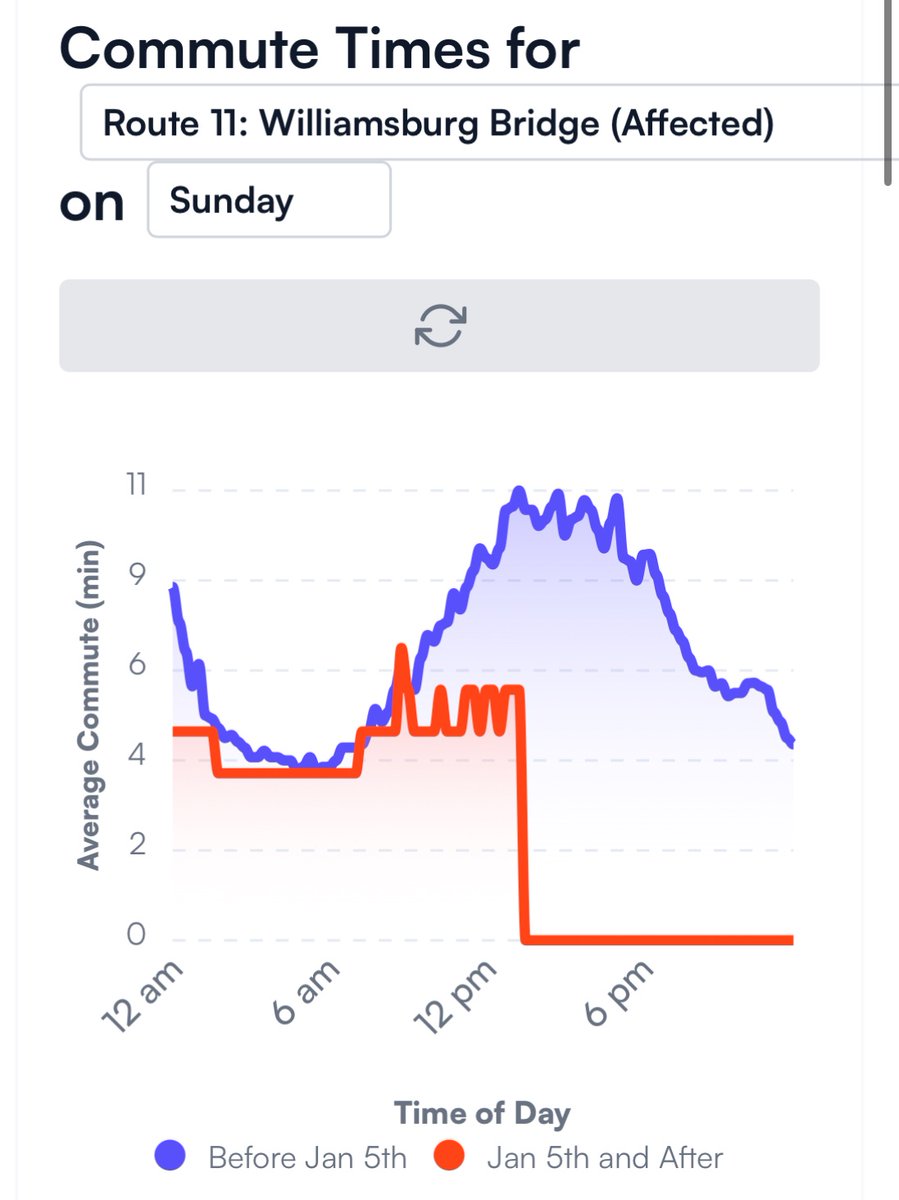
this is INCREDIBLE, congestion pricing is already working wonders
traffic at 1:30PM on the average Sunday vs today
Holland Tunnel: 27 mins ➡️ 9 mins
Lincoln Tunnel: 10 mins ➡️ 3 mins
Williamsburg Bridge: 11 mins ➡️ 6 mins
1881 map showing how long it takes to travel from London to other parts of the world. Think how big the world felt—only 140 years ago—when it took a month and a half to travel from London to Beijing.
I wonder whether we are going to see a burst of spending on consumer durables in Q4, as people pull forward spending on big ticket items ahead of the tariffs. I'm already hearing anecdata of this.
New York City officials finally decriminalized jaywalking. The City Council passed a bill last month to allow pedestrians to cross the street wherever they please, and it became law over the weekend. https://t.co/4n1qKMAXeb
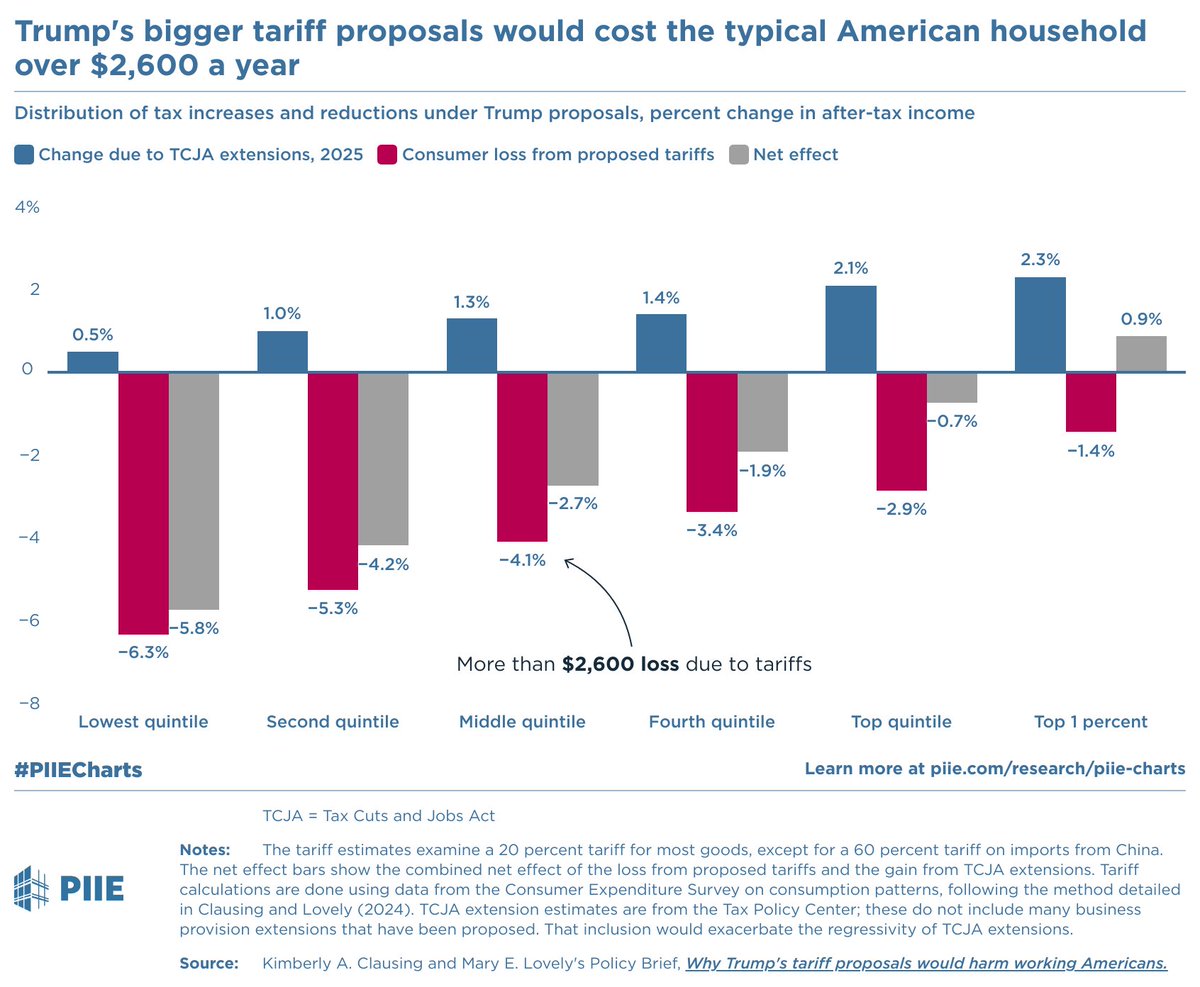
Tariffs are still taxes. Trump's proposed 20% across-the-board tariff plus 60% on imports from China would cost a typical household over $2,600 per year. #PIIECharts
More: https://t.co/oBcUBOeCzS
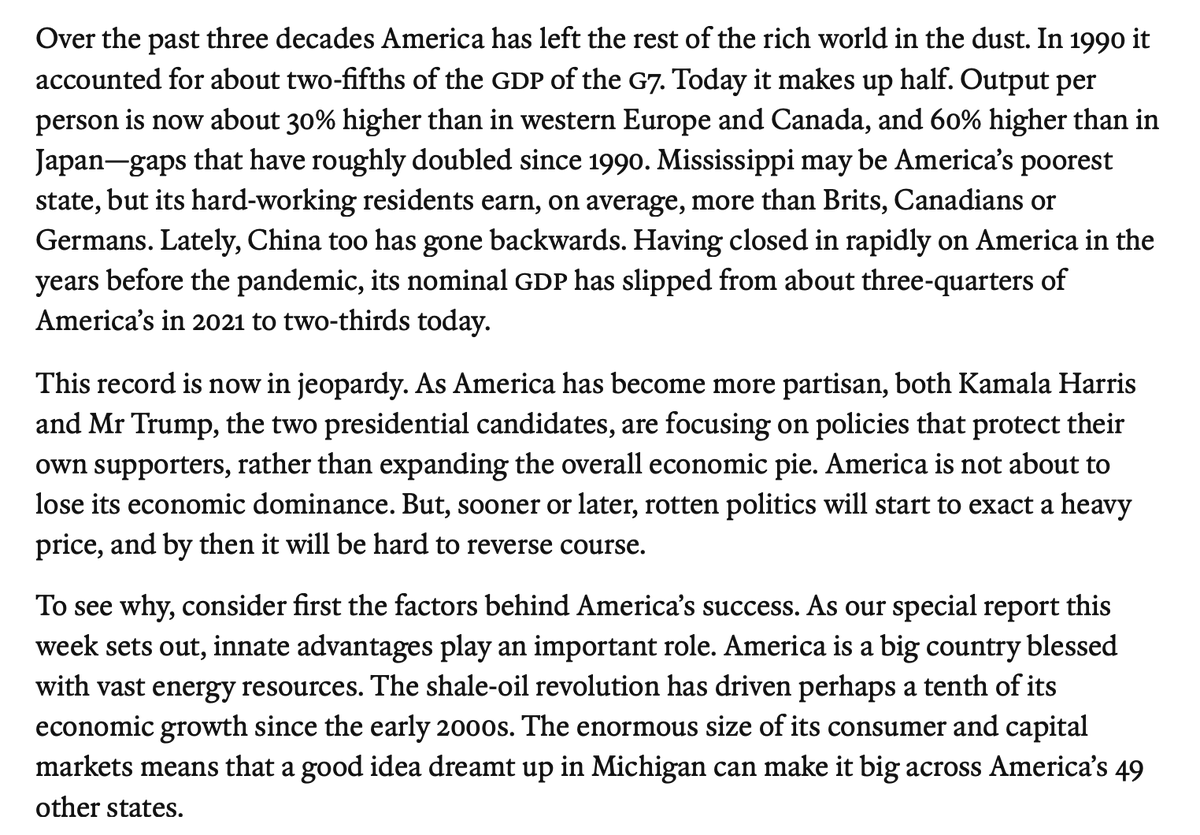
The Economist on the American economic miracle:
Over the past three decades America has left the rest of the rich world in the dust. In 1990 it accounted for about two-fifths of the gdp of the G7. Today it makes up half. Output per person is now about 30% higher than in western Europe and Canada, and 60% higher than in Japan—gaps that have roughly doubled since 1990. Mississippi may be America’s poorest state, but its hard-working residents earn, on average, more than Brits, Canadians or Germans. Lately, China too has gone backwards. Having closed in rapidly on America in the years before the pandemic, its nominal GDP has slipped from about three-quarters of America’s in 2021 to two-thirds today.
Every new ideology in American society is about how it is broken. Our chattering class has become mental due to the internet and social media. Their misery doesn't reflect what is happening in society.
Lakshman Achuthan, co-founder of Economic Cycle Research Institute @businesscycle, joins Jim Grant and Evan Lorenz on our podcast, Grant's Current Yield, to discuss where we are in the inflation cycle.
https://t.co/aj5UUr89Y9
U.S. home prices are in flux, with knock-on effects for Fed policy.
Our U.S. Leading Home Price Index offer you a glimpse of what lies ahead.
Check out more ECRInsights: https://t.co/JukInpcn26
#Housing#HomePrices
Some really thought-provoking insights on the Chinese and US economy here by @gave_vincent, the CEO of Gavekal.
For instance he explains why the stock market is really not that important in China, especially when compared with the US. This is because the Chinese economy is really not that financialized and only a tiny proportion of the Chinese, 10%, hold stocks as opposed to 70% of Americans: "So if tomorrow the US stock market goes down two-thirds, 70% of people feel very poor. In China, if the stock market goes down two-thirds, 90% of people don't care."
He also pinpoints a fascinating paradox, which is that there is much more competition between firms in the Chinese market, and many more bankruptcies than in the US: "I can name you 10 Chinese bankruptcies over the past three or four years of automakers, solar panel manufacturers, real estate developers, etc. Here we are in the Western world, whether in France, in the UK, in the US, and we pat ourselves on the back about how capitalist we are, about how we're red-blooded capitalists, etc. Yet when was the last big bankruptcy? Are we capitalist if nobody ever goes bust? How does that work? How does capitalism work without bankruptcy?"
As he explains, the way the Chinese economy works is that there is stronger management of the market by the government but this paradoxically leads to a situation where the market works more dynamically in creating new companies, as well as destroying companies that don't work anymore. Whereas in the US, where it is arguably the reverse situation with capital having more control of the government, monopolies are being created in most sectors and companies are bailed out by the government in myriads of ways to avoid bankruptcy.
So interestingly we're arriving at a situation where "communist China" might be today the best example of free-market 'creative destruction,' whilst the "capitalist U.S." seems to be calcifying into a form of corporate protectionism where big corporations are increasingly insulated from failure. This really raises fascinating questions on the role of government with regards to the economy... It sort of makes sense when you think about it that when you effectively let capital regulate itself, they'd want to move towards a situation where they can't lose and establish monopolies. And that you paradoxically need a strong referee above capital in order to foster a truly dynamic economic system.
If you think "dumping" a "flood" of immigrants on small towns is awful, please tell me your plan to save those places. Because I've been looking for alternatives for a decade, and immigrants are really the only thing that saves these towns from decline.
https://t.co/MBG3TIDM5w
In between these two (extreme) positions is a rational middle where free-market capitalism flowers but there are guardrails against its more pernicious aspects...
U.S. consumer spending data surprised to the upside this week.
Our U.S. Leading Index of Consumer Spending anticipated this strength, providing a reliable forward look.