Data @LEGO_Group, former Data Science & Marketing @RazorGroup @perch_hq, @Wayfair pricing, tweet about ecom, Boston, golf, and business. Views are mine
@chamath I’m thinking this phase is a realization of a skill/taste concentration problem. Suddenly 5x more employees are empowered to realize their taste, but the ones with taste were already making the valuable decisions pre agents. AI is still pre taste, but it will be post taste soon
@dwlz S&P uses float to determine index weighting. So SPCX will be a very small percentage of the index. Claude suggested about 0.1%. So not material. Other indices and tracking etfs may be more material
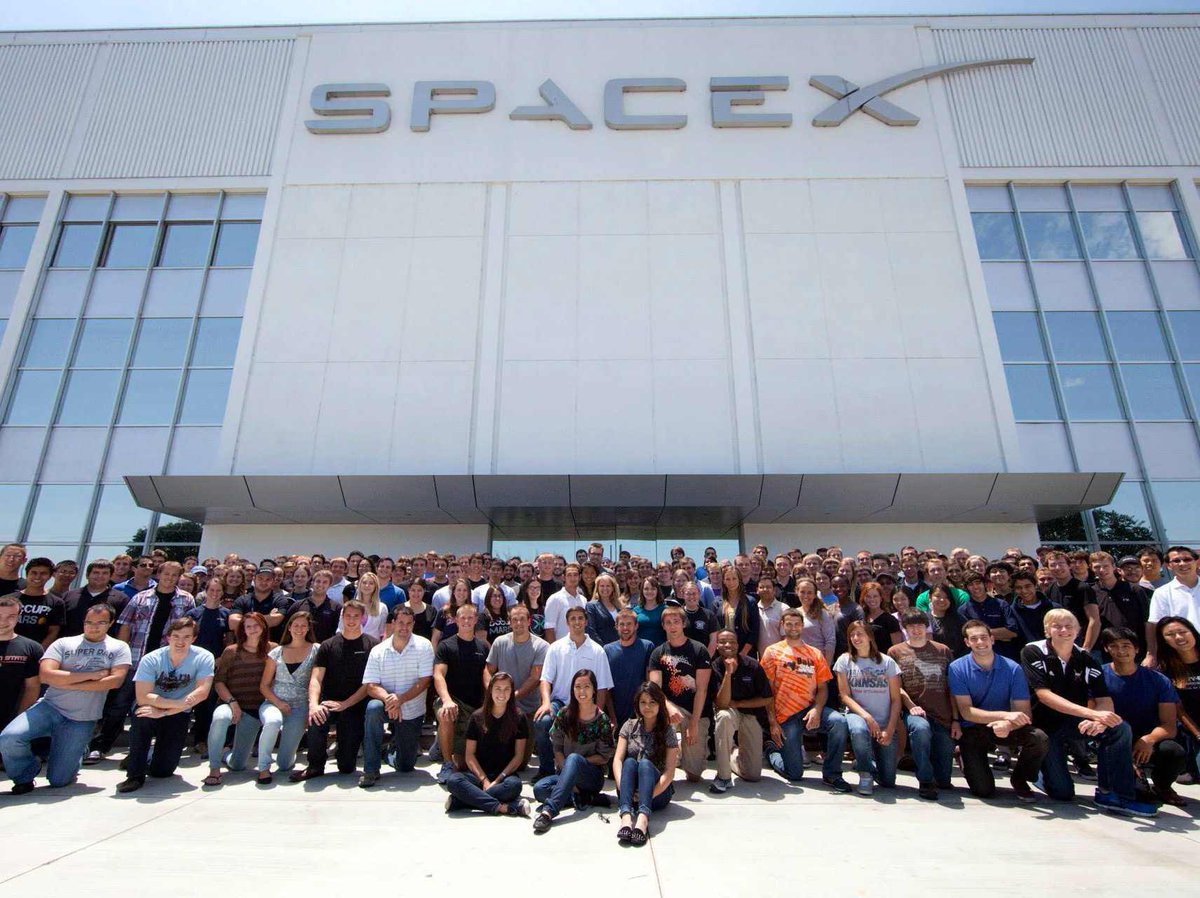
At graduation in 2012, the class speaker said 25% of my MechE class was going to work at SpaceX. SpaceX alone returned the value of our total class tuition.
SpaceX millionaires 4,000 x $1mil , 400 x $100 mil
Every employee who joined before the first succesful launch made (unless they sold early) more than $100 million.
SpaceX lists June 12 at ~$1.75T.
Work backward from the cap table. At $1.75T, clearing $100M takes ~0.0057% of the company.
- 2002–2008, first ~500 in: joined at a ~$50M company. Held to $1.75T = a 17,000x. The core of the club — maybe 150–250 left holding
- September 2008, SpaceX has first successful launch
- 2010–2016: joined at $1B–$10B. Needs a senior grant — directors, principal engineers, early Starlink. ~100–200
- C-suite + board: Shotwell, Johnsen past $1B. A layer of SVPs below them clears $100M on equity, not salary. ~20–40
- Post-2016: joined at $20B–$350B. To hit $100M you'd have needed ~0.4% of the company. Impossible for an employee. This is the millionaire tier — almost none reach $100M
The tally:
~400–500 at $100M+
A few dozen above $500M
A handful of billionaires past Musk
Same building. Same mission. Two orders of magnitude apart — set entirely by what year you walked in.
Early isn't a strategy. It's a date stamp.
Can @X give me the ability to filter out any post with a successful community note? Notes draw attention and therefore engagement, but are indicative of a post most don’t want in their feed. @nikitabier , please?
@jscottmoreland@pmarca I keep hearing this argument. What’s an example that doesn’t just steal share of demand and is actually net incremental in the consumer economy?
@HusKerrs I’m 4 months in. Babies change fast, as soon as you figure something out, the baby changes. Try lots of different methods and strategies.
Because they change so fast, focus on remembering and appreciating every moment
@Dr_Gingerballs Conversational shopping simply isn’t sufficient to make meaningful purchases. In e-commerce, a millisecond matters. Because humans need to make the ultimate decision, they need to see the comparison shop data. An eCommerce search results page won’t be beat in the next 3+ years
@Dr_Gingerballs I think this is meant to solve the transaction ownership issue, but the problem of agent performance will still be an issue. Agents simply are not good enough to make meaningful choices for humans yet and they probably won’t be for a while
@AnAverageGamerX Currently it’s used heavily in early product development. 3D printing reduces the cost to prototypes, resulting in lower barriers to entry and faster product iterations. All of this results in higher quality final products at lower costs for you and me.
@EconBerger I think the number is this high for two reasons:
-housing is a national number, but a family could choose a lower cost of living area and because childcare costs fluctuate in reality.
-Two kids in daycare is different than two kids in public school.
It’s still probably $100k
@Todd_Sykon How much do you think this private market cycle will impact public equities? Has private credit been funding the budgets ultimately earned by publics, and will that suddenly disappear?