A huge thanks to @DiverseGreen for spotlighting Pew!
We’re looking forward to new challenges, finding common ground, and pushing conservation forward in the new year.
Progress: An updated management plan for a 250,000-acre estuary reserve could help protect Florida’s long-beleaguered Apalachicola Bay and its oysters.
The Apalachicola National Estuarine Research Reserve can help us conserve and study this ecosystem. https://t.co/DMh5GLurmp
Fact: Up to ⅓ of South Atlantic tidal wetlands could be lost by 2060 due to sea level rise alone.
@USFWS’ Dan Chapman explains why so many are working to conserve and restore these essential yet quickly disappearing ecosystems. https://t.co/DYBXr5knYu
|@GOVERNING reports on @PewEnvironment's work with Oregon to develop a tool that enables governments and landowners to map and understand carbon "sinks" on their property that capture and store climate-warming greenhouse gases. https://t.co/Hy4lAvk8Sj
“[The South Atlantic Salt Marsh Initiative] gives me hope that we can meet the challenges of our day—chief of them is sea level rise. If we don’t take action for salt marshes, we may not have them [in the future].” —Our @Coastal_Cam 👉https://t.co/RRH89YkIZ1
The South Atlantic Salt Marsh Initiative's new plan could protect Georgia's nearly 370,000 acres of #saltmarsh, fight flooding and erosion, and benefit historical and cultural sites for local communities.
https://t.co/IpRt7PU7G2
ICYMI: A new plan outlines ways to conserve and restore vital salt marshes on the U.S. South Atlantic coast to fight flooding and erosion, benefit wildlife, protect military installations, and more. https://t.co/x52JQV1cXA
Salt marshes along the U.S. South Atlantic coast provide vital habitat, buffer shorelines, mitigate climate impacts, and more.
Now, a new framework can help communities, the military, and governments take action to protect them👇 https://t.co/x52JQV1cXA
Just released: A new plan outlines ways to conserve and restore vital salt marshes on the U.S. South Atlantic coast to fight flooding and erosion, benefit wildlife, protect military installations, and more. https://t.co/x52JQV1KN8
Nearly the size of Grand Canyon National Park, a vast U.S. South Atlantic salt marsh expanse is valuable for wildlife, communities and the economy. 🌾🐠🌊
📌Learn about a new plan to protect it: https://t.co/kKdMS8g5LY
#MarshForward#SASMI
This @sciam story highlights the importance of local communities in mitigating the effects of climate change, sharing about the Gullah Geechee people’s unique approach to coastal conservation woven through their culture. https://t.co/6enkIYOUsa
It’s encouraging to see how collaboration among government, businesses, conservation groups, and other stakeholders can protect habitats in a way that balances conservation and human use. https://t.co/IGZYNDZ23E
BREAKING: Florida just approved an extensive plan for conserving 700 sq. miles of vital coastal habitat—home to mangrove islands, salt marshes, oysters, sponges, corals, and more than 350,000 acres of seagrass. https://t.co/YA9tajm0oi
Mapping and monitoring seagrass is a critical part of conserving the valuable habitat. Our Aaron Kornbluth is at @ISBW14 today working to find the right approach for global seagrass assessments. https://t.co/D0aE1xPXEY
Seagrass helps buffer North Carolina shorelines from storms, provides vital habitat and more—but threats are mounting.
Today, our @LedaSea123, @NCDEQ partners, and others are discussing what’s needed at @ISBW14. Key background👇 https://t.co/Aj5yeftcZR
Florida’s Nature Coast is home to the Gulf of Mexico’s largest seagrass meadow. But changing ocean conditions & degraded water quality can threaten the habitat.
Our @JustinGrubich discusses today at @ISBW14—see what’s needed for effective stewardship👇 https://t.co/KjwY7sdXcz
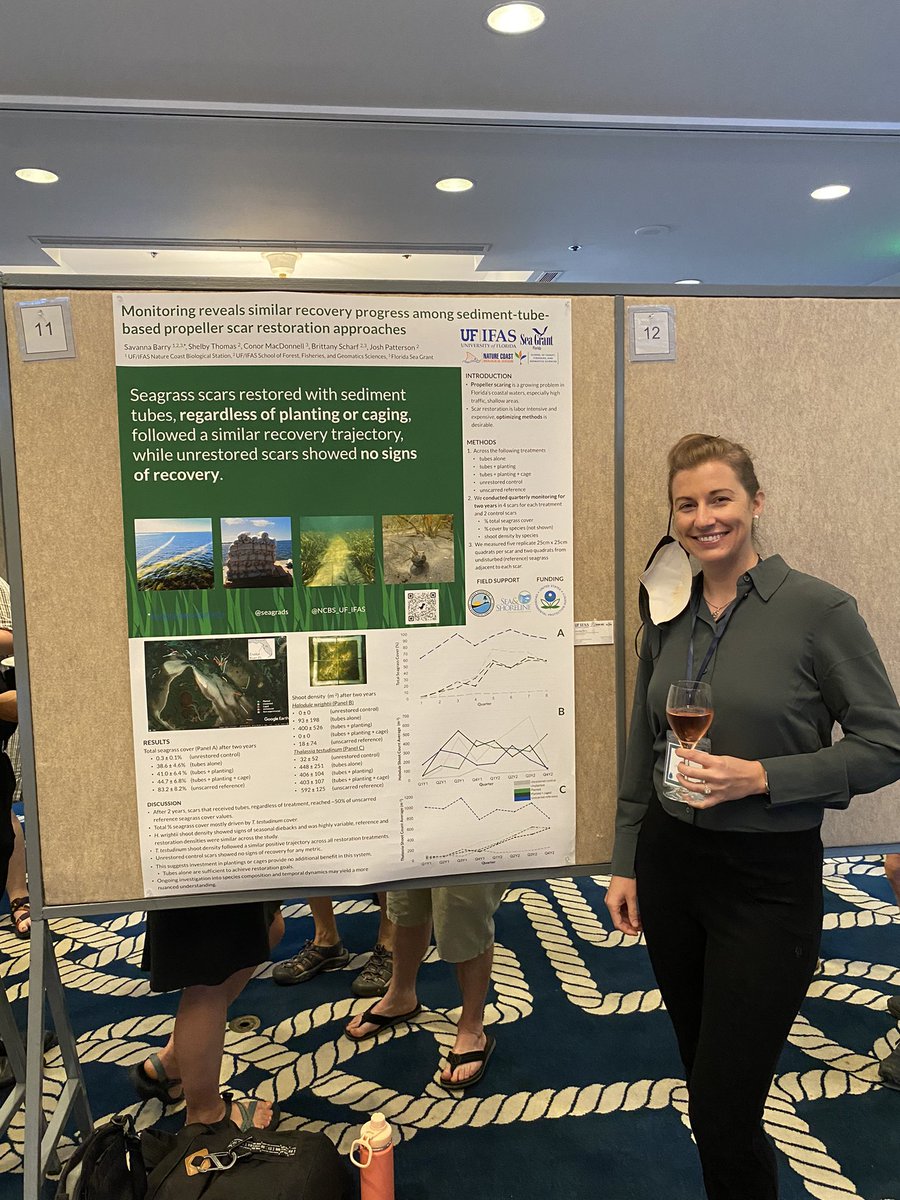
Sediment tubes can restore seagrass prop scars in the #NatureCoast without needing expensive planting or caging! Ask Dr. Savanna Barry how at #isbw14@seagrads@pewenvironment








![pewenvironment's tweet photo. “[The South Atlantic Salt Marsh Initiative] gives me hope that we can meet the challenges of our day—chief of them is sea level rise. If we don’t take action for salt marshes, we may not have them [in the future].” —Our @Coastal_Cam 👉https://t.co/RRH89YkIZ1 https://t.co/I1nwWN60BQ](https://pbs.twimg.com/media/F9JZN33XcAAW_pv.jpg)