Let me categorically Debunk this utter rot. @sainsburys.
I am a poultry Breeder. The hens that lay white eggs (Amberline/White Star) DO NOT have a lower carbon footprint.
Yes they eat a bit less and produce roughly the same amount of eggs as the Brown egg layers (Bovan/Lowman/ISA Brown) but they live shorter lives, are prone to dying suddenly when startled, a flighty and nervous and because they live shorter productive lives (12 -18mnths) vs brown 18/24mnths (both commercial farmed), you have to incubate more which is increased (Electricity/gas costs) and their eggs are not the same quality.
I breed and keep 20+ different breeds, including: ISA Brown hens and White Stars. All my hens are 100% free range, Not a single barn kept bird, I have ISA browns that are 5yrs old and still laying beautiful Brown eggs, I have not seen a White star live beyond 3yrs and certainly none have laid eggs past 18-24mnths.
White stars Lay themselves to death. They are slender birds and because they dont eat a lot, it drains their personal vitality to keep up laying the eggs you want to sell because of the nonsensical lie that they are "More Carbon Neutral"
You want to know about eggs, come talk to someone like me, Don't rely on some hairbrained imagination of a buyer who's trying to squeeze the profit margin for a few extra pennies at our expense and to the poor hens detriment.
PEACEFUL. PROUD. UNBREAKABLE. | My Urgent Message Before Saturday
The world will be watching on Saturday. Please stay peaceful, stay disciplined, and do not give the media or the establishment what they want. No aggression. No masks. No excuses. Families, women, and children will be there. This is about showing strength through unity, discipline, and pride in our country. If provoked, smile and rise above it. Britain cannot afford to fail.
How butter is made.
Take cream from a cow.
Shake it.
Strain off the buttermilk.
Salt to taste.
Total processing steps: three.
How seed oil is made.
Take seeds. Heat them to 88°C to denature the proteins and break the cell walls.
Crush them between mechanical rollers under several tonnes of pressure.
Mix the resulting paste with hexane, a petroleum-derived solvent originally used to dissolve grease off engine blocks.
Let the hexane bath dissolve the remaining fat from the press cake.
Distill the hexane back out, mostly. Some stays in the oil. The food regulators have decided this is fine.
Now wash the dark, stinking, brown sludge with sodium hydroxide to neutralise the free fatty acids that taste rancid because the oil already is.
Filter through activated bleaching clay to remove the colour pigments that would otherwise reveal what colour cooking oil naturally is.
Steam it at 240°C under vacuum for an hour to strip out the smell. Without this step, no human would willingly put it near food.
Pour the resulting clear, odourless liquid into a plastic bottle.
But yes.
Definitely healthier than butter.
Trust the experts.
The luxury cashmere industry is worth approximately $4 billion a year.
Cashmere comes from goats.
Specifically, the soft undercoat of goats, which is combed out by hand each spring as the goats moult naturally. The animals are not killed. They are not harmed. They are slightly less itchy in April than they were in March, and the resulting fibre is sold to fashion houses for hundreds of pounds per jumper.
The same fashion houses also produce vegan jumpers.
The vegan jumpers are made of acrylic.
Acrylic is a plastic. It is derived from petroleum. Each wash sheds approximately 700,000 microplastic fibres into the water system. It does not biodegrade. It cannot be recycled in any meaningful way. It will, eventually, end up in a fish, then in a person.
The vegan jumper is sold for slightly less than the cashmere jumper, with a tag explaining that no animals were harmed in its production.
No animal was harmed in the cashmere jumper either.
The goat got a haircut.
The fish, however, has been getting some news in recent years.
It has been less impressed by the arrangement.
Nobody has asked the fish.
The fish has not been included in the marketing.
In 1837, the Shah of Persia gave Queen Victoria a small herd of Kashmir goats as a coronation gift.
She kept them at Windsor for a while, then, for reasons lost to history, sent some of them to live on the Great Orme, a limestone headland sticking out of the North Wales coast like a thumb pointing at Ireland.
That was 189 years ago.
The goats are still there.
Nobody fed them. Nobody bred them. Nobody asked them to stay. They simply did, because the Great Orme is windswept, salt-blasted, vertical in places, and entirely covered in the kind of scrub that goats consider an invitation rather than an obstacle.
There are now around two hundred of them. Pure white, slightly mad-looking, technically still the property of the Crown, which has shown no particular interest in collecting.
During the 2020 lockdown, when the streets of Llandudno emptied, the goats came down off the headland and took the town. They wandered the high street. They ate the hedges of the Premier Inn. They blocked traffic on Mostyn Street and looked at drivers with the calm assurance of animals whose ancestors used to graze with the legions of Cyrus the Great.
A photograph of one of them standing outside a closed pharmacy went around the world.
The goats did not pose for it.
The goats were checking whether the pharmacy had hedges.
It did not.
The goats moved on.
The Royal Welsh Fusiliers' regimental mascot is still drawn from this herd. The Crown Prince of Britain is, technically, the goats' landlord. The goats have not been informed.
The goats are on the Great Orme.
They will outlast the Premier Inn.
They will outlast most of us.
They are not asking for anything.
They never were.
Nursing in the 1970s – A World Away from Today.
Back then, we changed patients’ beds daily sometimes more if needs required. Fresh, crisp sheets weren’t a luxury; they actually made people feel better. There was something healing about climbing into a clean bed with properly tucked envelope corners. We knew all our patients by name and they knew ours. Doctors in white coats and nurses in uniforms. We knew who everyone was.
The ward looked welcoming. Vases of flowers from relatives and the local flower stand to the entrance of the hospital. adorned the bedsides. Families weren’t “visitors” to be tolerated, on the contrary they were welcomed, included, and often helped with little jobs. It felt like a community. Any problems, family would be 1st to spot and report.
Matron ruled the roost. You didn’t want a summons to her office. One look from her and you straightened your apron and your attitude. Standards were non-negotiable.
We turned bedridden or unconscious patients every two hours, religiously, to prevent pressure sores. No exceptions. Fluid balance charts hung at the end of every bed, constantly we encouraged patients to drink, recorded every sip, and took mouth care seriously. Basic care was never “basic”, it was fundamental.
Doctors sometimes prescribed a pint of Guinness for the anaemic or a sherry for the frail elderly. It worked wonders for appetite and morale. After acute illness, patients went to proper convalescent homes for a week or two by the sea. Fresh air, good food, gentle exercise. It prevented bed-blocking and got people home stronger.
Palliative care wasn’t a separate specialty it was woven into our training. We knew how to sit with the dying, hold a hand, ease discomfort. TLC wasn’t a slogan. It was our mantra.
We didn’t have fancy equipment or endless paperwork, but we had time for patients. We saw the person, not just the diagnosis.
So… what on earth went wrong?
How did we move from this to where basic care is sometimes rushed or non existent, relatives feel like a nuisance, and “turning” someone properly is squeezed between targets and tick-boxes? When did we lose the simple things that actually made people feel safe and cared for?
This is just the tip of an iceberg, I could go on. I’d love to hear from other nurses who trained or worked in that era. What do you remember most fondly?
#Nursing #1970s #OldSchoolNursing #TLC #PatientCare
The British Vitamin D problem is not new.
Britain sits between 50 and 58 degrees north. London is on the same latitude as Calgary. Edinburgh is level with Moscow. From October to March, the sun does not rise high enough above the horizon for the UVB wavelength your skin needs to actually reach the ground. You can stand naked in February noon sunlight on the south coast and produce essentially zero vitamin D.
This is six months of the year, every year, for the entire history of human habitation on these islands.
The British have known this, in their bones, for ten thousand years.
Look at what was eaten in winter, before anyone had ever heard the term cholecalciferol:
Oily fish. Herring, mackerel, sprats, kippers. Three or four times a week from October to March. A single kipper carries roughly 250 IU of D3.
Cod liver oil. Spooned into every British child between 1850 and 1980, a teaspoon at a time. Distributed free by the Ministry of Food in the war on the explicit understanding that British children needed it through the dark months. Rickets fell by 90 per cent between 1940 and 1960. Cod liver oil was the reason.
Liver. Eaten weekly in working households until 1985.
Egg yolks from hens that had been outside in the summer.
Grass-fed butter, made from cream from cows on summer pasture, the fat-soluble vitamins banked into the cream and eaten through the winter.
The British solution to the British problem, evolved over centuries by people who could not articulate the biochemistry but knew, with absolute certainty, what kept the children growing through the dark months.
Then between 1955 and 2010, the British removed almost all of them.
Cod liver oil reduced to a niche supplement. Liver dropped from weekly to never. Oily fish consumption halved. Eggs rationed by the Department of Health on cholesterol grounds since retracted. Butter replaced with margarine carrying no fat-soluble vitamins at all.
Result, by 2020: roughly half of all British adults are vitamin D deficient by the end of winter. A third of children. Rickets has reappeared in British paediatric wards. The NHS now recommends every adult take a supplement from October to March.
This is the NHS recommending in 2026 what the British diet was doing automatically in 1926.
The geography has not changed. The latitude is the same. The sun is still inadequate from October.
The food used to handle it.
The kippers are still being smoked at Craster. The cod liver oil is on the chemist's shelf. The liver is at the butcher. The butter is in the dairy aisle, behind the spreads.
The sun was always seasonal.
The food was the backup.
The backup got thrown out.
Get it back.
They attacked wool. We got polyester.
Half a million tonnes of microplastic fibres enter the ocean from synthetic clothing annually.
Microplastics are now in human blood, lung tissue, and placentas.
Wool biodegrades in months.
Polyester persists for centuries.
They attacked leather. We got PVC.
PVC production releases dioxins.
The vegan leather peels within two years.
Both require petroleum.
Leather is a byproduct of food production.
It lasts decades.
It biodegrades.
The ethical alternative requires an oil well.
They attacked butter. We got margarine.
Trans fat disease for a generation.
Now on its third formulation.
Butter contains vitamins A, D, E, and K2.
Margarine contains seed oils and an ingredients list.
The butter never changed.
The butter never needed to.
They attacked beef. We got plant-based burgers.
Pea protein extracted with hexane.
Seed oils. Nineteen other ingredients. A supply chain across multiple continents.
Soy driving deforestation in Brazil at a scale that dwarfs British cattle farming.
Beef on British marginal land grows on hills that cannot grow crops.
Sequesters carbon. Fertilises without a factory.
Complete protein. Every fat-soluble vitamin. No dead zone.
In every case: the traditional animal product was nutritionally superior, environmentally lighter, and cheaper to produce.
In every case: the ethical replacement was industrially complex, petrochemically dependent, and worse for the body using it.
The ethics were the marketing.
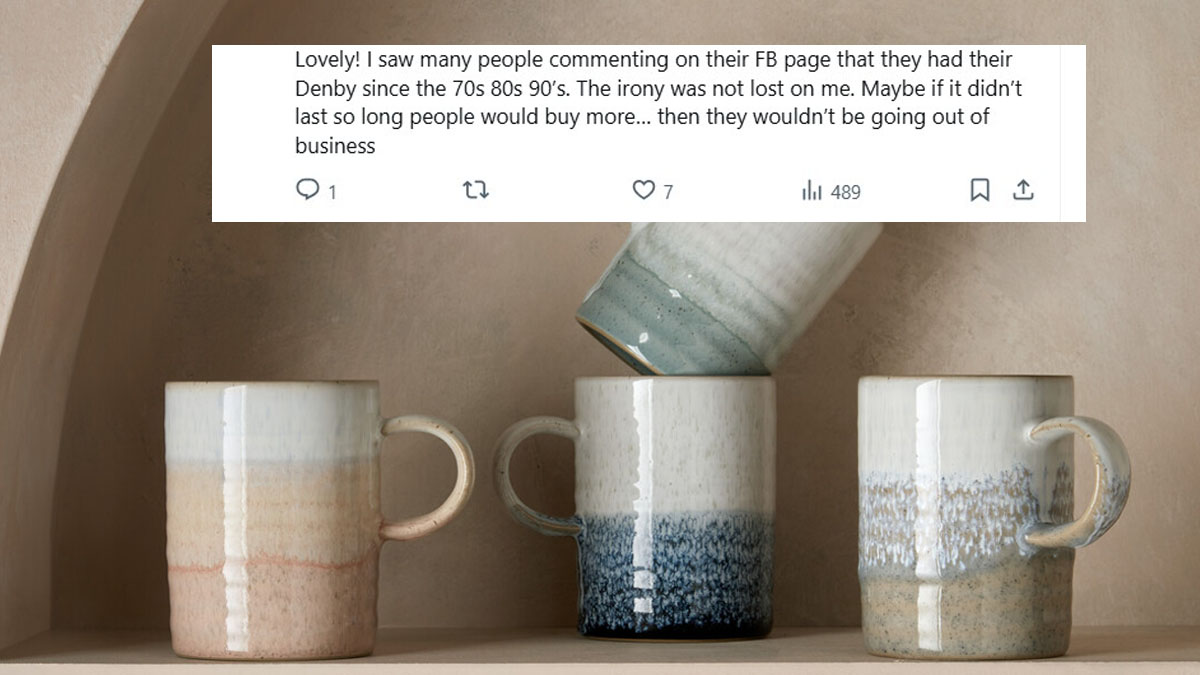
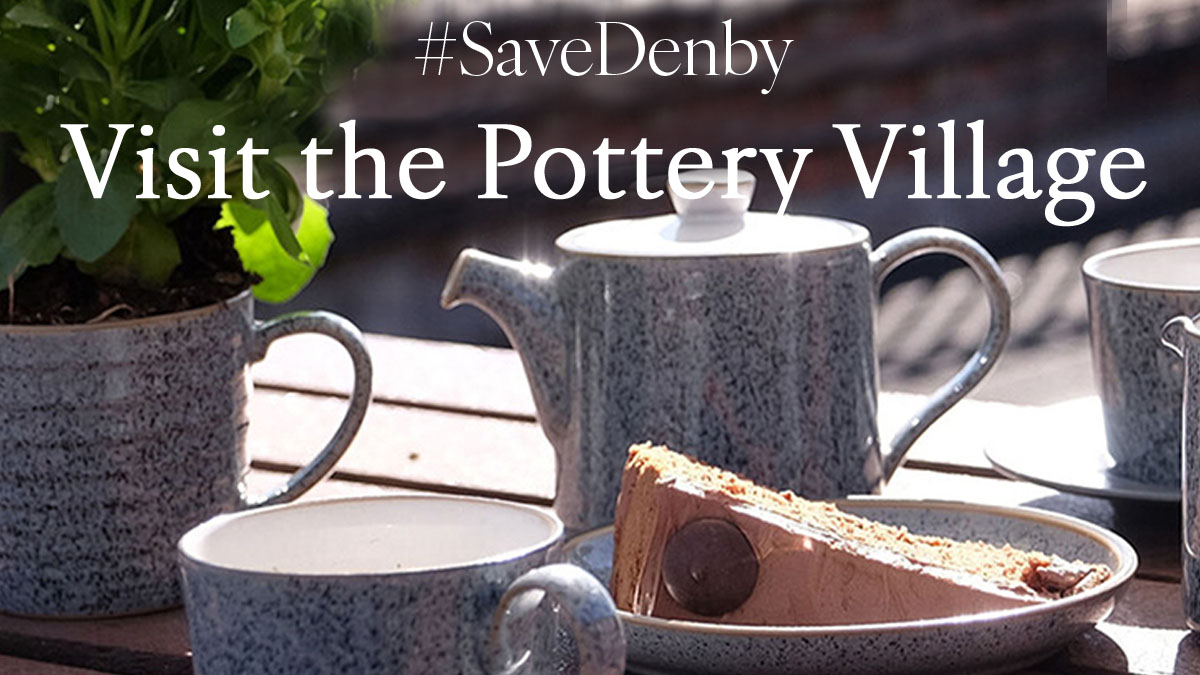
We're finding comfort in your kind words shared as part of the #SaveDenby campaign.
After tough market conditions, we may be forced to close.
Help us:
- Share #SaveDenby
- Sign-up https://t.co/qoyniagzzF
- Buy Denby
- Visit Denby Pottery Village
Read more: https://t.co/6W1D10P655
In 1809 Joseph Bourne found some clay in Derbyshire and began to make pots. He prospered and the name of “Bourne Denby” became famous. The very same clay still make @denbypottery today. Isn’t that alone worth saving? Sustainable since 1809. #savedenby
We need your help to #SaveDenby!
We are sad to share that we may be forced to close and a British institution could be lost.
We need your help:
1. Share this post
2. Sign the government petition
3. Buy Denby
4. Visit us at the Pottery Village
Read more: https://t.co/g17lHz2ETx
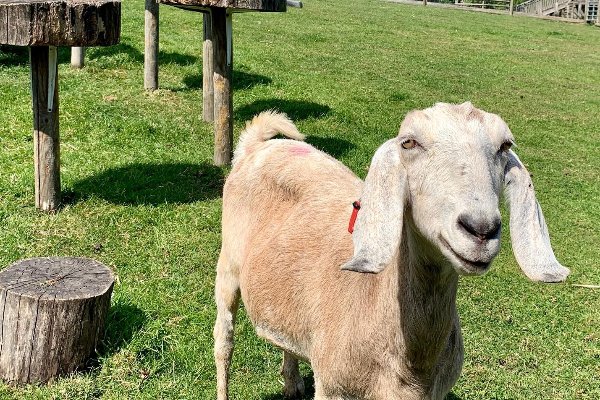
Keith the Apocalypse Bringer is a three-year-old Anglo-Nubian goat in a field in Devon.
Keith should not be underestimated.
Keith has been systematically dismantling the ecosystem since approximately 7am, when he ate a bramble. This is significant because bramble is an invasive scrub species that outcompetes wildflowers, reduces biodiversity, and creates dense monoculture thicket that nothing else can use.
Keith ate it. Keith does this every day. Keith does not charge for this service.
8:15am - Keith ate a thistle. Thistles are also considered invasive scrub in managed pasture. Goldfinches eat thistle seeds, but Keith's grazing will ensure the pasture remains open enough for the ground-nesting birds that can't use dense scrub. Keith has not attended a conservation workshop. Keith arrived at this conclusion by being a goat.
9:00am - Keith dismantled a section of hedge. This was less helpful. Keith does not have a perfect record.
10:30am - Keith escaped the field. He was in the road for eleven minutes. He ate a neighbour's rose. This is not being counted in Keith's environmental impact assessment.
11:00am - Keith was returned to the field. Keith regarded the farmer with the specific expression of an animal that does not recognise the concept of property.
12:00pm - Keith ate more bramble. His digestive system: four stomachs, a rumen full of specialised microorganisms, the ability to extract nutrition from lignified plant matter that would defeat any other animal on this field, is converting scrub vegetation into milk with a fat content of approximately 4.5%. The milk will become cheese. The cheese will be sold at the farm shop. The farm shop is four miles away. The cheese food miles are: four.
3:00pm - Keith produced manure. The manure will grow the grass. The grass will grow the bramble. The bramble will be eaten by Keith.
This system has no inputs.
It has been running since goats were domesticated approximately ten thousand years ago.
Keith is not aware he is saving the planet.
Keith is thinking about whether the fence on the north side has a weak point.
It does. Keith found it at 4:45pm.
Keith got out again.
@JChimirie66677 I still don't understand why Starmer wanted to get rid of Chagos in the first place. What did he give as his reasoning? Why was he also planning to annually pay out for doing this?
I don't understand the basic facts at all.
🤔
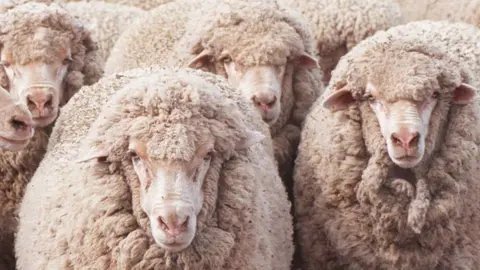
British sheep produce 70,000 tonnes of wool annually. Used for carpets, insulation, textiles, and traditional products.
The environmental alternative is petroleum-based synthetic fiber. Which is plastic. Made from oil. Non-biodegradable. Sheds microplastics in washing. Ends up in oceans.
But sheep are unsustainable and we should use more plastic instead.
The mental gymnastics required to call wool environmentally harmful while promoting polyester is Olympic-level.
Wool is renewable. Grows annually. Biodegradable. Carbon-neutral. Traditional craft. Insulates better than synthetics. Flame-resistant naturally. Lasts decades if cared for properly.
Polyester is fossil fuel. Requires industrial processing. Never biodegrades. Sheds microplastics. Inferior insulation. Needs chemical flame retardants. Lasts but damages environment entire time.
Yet environmental groups campaign against wool while wearing fleece jackets made from oil.
The sheep are not the problem. The people campaigning against them are.
Britain crosses these lines brazenly now. No debate. No shame. A government decree, a police order, and suddenly the people who feed the country – the most rooted, law-abiding citizens we have – are the ones being marched away in handcuffs. Not for rioting. Not for violence. For turning up to protest a tax raid that threatens the survival of family farms. This is what decay looks like when it turns into something darker: the state deciding who may speak and who must be silenced.
The images from Westminster should chill anyone with a sense of Britain's old freedoms. Dozens of tractors draped in Union flags. Farmers who spend their lives in mud, dawn light and hard graft, standing in the capital because Rachel Reeves has reached for the most brutal tool in the Treasury drawer – inheritance tax – and pointed it straight at the land itself. One death in the family and the farm breaks into pieces, sold off to pay the bill. That is the reality behind the Budget's polite language. These men aren't in London for show. They are there because their futures have been put on the block.
And what did the state do? The Met, which can't find the strength to stand up to eco-fanatics or pro-Hamas mobs, suddenly discovered iron in its spine the moment it faced peaceful rural protest. Section 14 orders. Sudden bans. Farmers singled out and cuffed like criminals. Officers who were helping them park an hour earlier switched roles and started clearing them out. This is not policing. This is obedience enforcement – selective, political, and aimed squarely at the demographic this government thinks it can steamroller without consequence.
The excuse was "disruption." As if tractors circling Trafalgar Square for a morning threaten the life of the nation, while city-blocking marches and flag-waving fanatics do not. It's the same double standard we've seen for years: indulgence for the activist Left; force for the ordinary citizen who dares to object. A country that treats its farmers as a nuisance is already half-lost. A country that arrests them for standing in public is well on the way to something worse.
This isn't happening by accident. It's the logical end of a government drunk on its own authority. They raid family farms for cash; then they send the police to muzzle the people affected. They ban tractors for "serious disruption" while gutting the mechanisms that once protected the public from the state. Speech tightened. Protest restricted. Juries stripped from trials. Now this. One brick at a time, the wall between the government and unchecked power is being pulled down.
Farmers don't protest unless they have been pushed to breaking point. A ruling class that still understood the country it governs would know that. This one doesn't care. It sees them as an obstacle, not a backbone. And that is why the images from Westminster matter: they reveal a state no longer restrained by shame or tradition. A state that believes it can handcuff the hands that feed it and get away with it.
The truth is simple: a government that fears peaceful farmers fears the country itself. And a government that turns the police on them is not preserving order; it is testing how far it can go. Britain isn't at the end of this road yet. But the direction of travel is plain to anyone with eyes open.
"Farmers singled out and cuffed like criminals. Officers who were helping them park an hour earlier switched roles and started clearing them out."