Assoc. Prof UCLA | Neuroscientist who studies glia (non-neuronal brain cells) and how glia shape brain health throughout the lifespan | Opinions my own.
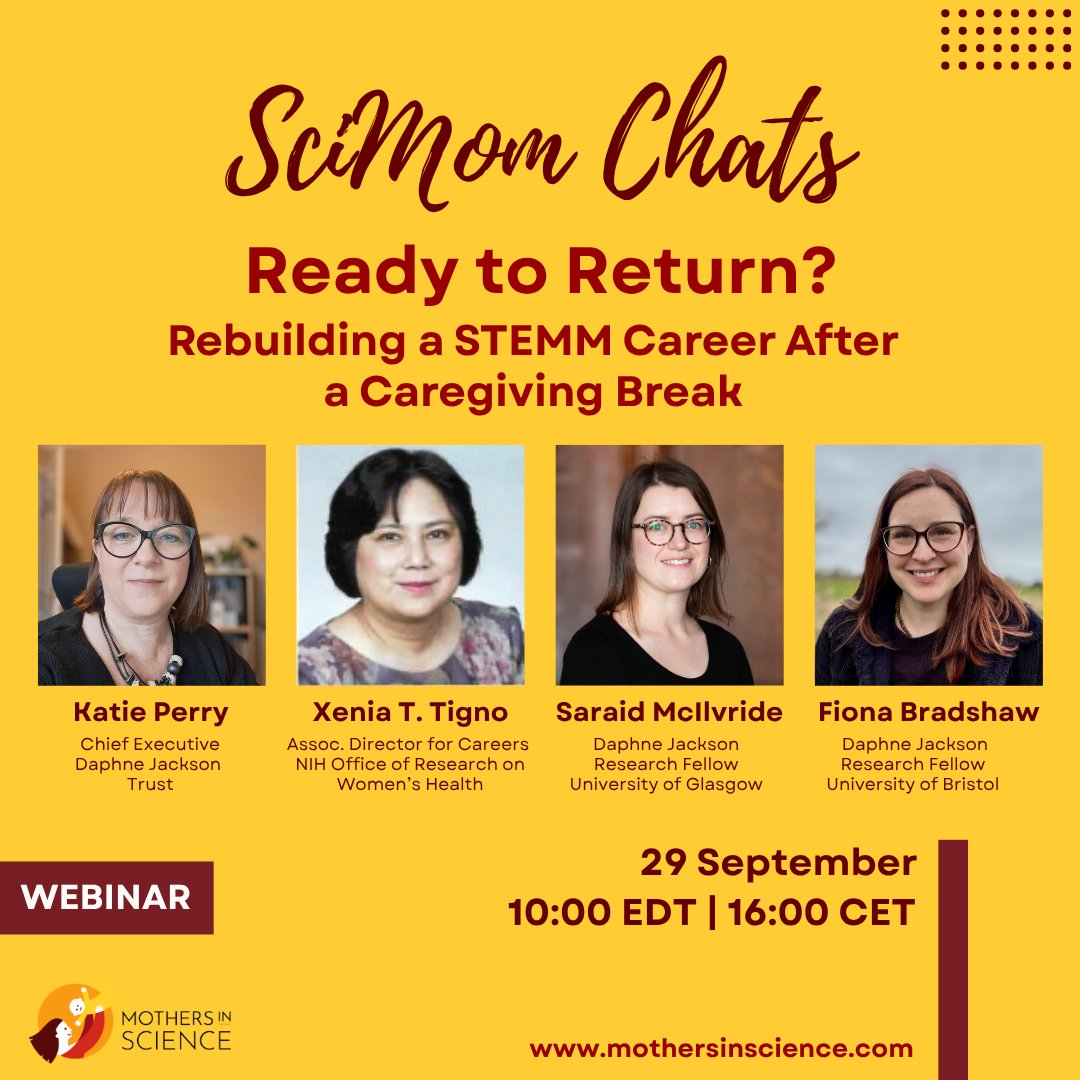
📣 It's tomorrow! Just one day until our next SciMomChats event, where we'll discuss career re-entry in STEMM & academia after a caregiving break. This is a free online event. Learn more & register here: https://t.co/TcSa15itfY
📅 Tuesday 29th September 2026
⏰ 10AM ET | 4PM CET
Treatments for fragile X, the leading single-gene cause of autism & intellectual disability, have been frustratingly hard to come by. Great to see Carlos Portera-Cailliau's team at UCLA identify EPAC2 as a new target. The need is urgent. https://t.co/kvwAbaUr9V
Super important work🔥 One of the first studies that actually has the power (n=250+ brains) to ask what changes during 'normal' brain aging (no Alzheimer's)
Surprising: Many discoveries we have made 3y ago on aging in brains of mice seem to happen in humans, too. Such as...👇
1) It's not the neurons that seem to be most affected by age! Instead, glia and microglia (the brain's support system) change the most.
2) Microglia launch ~2-3 main expression programs during normal aging: Up-regulation of known microglia aging genes (TSPO, CD22), antigen presentation genes (HLA), signs of an interferon response (IFI44L), induction of 'disease associated' program (GPNMB, SPP1, etc)
One infusion. One year later. Still working.
CRISPR Therapeutics just published the 1-year follow-up on CTX310 — a single-shot gene-editing drug that permanently dials down a cholesterol-driving gene.
No repeat dosing. No daily pill. Just one infusion, over a year ago.
Here's what happened to their LDL.
We're expanding our volunteering team! If you're passionate about creating an equitable system for caregivers in STEMM, can commit 2h p/w & have experience in writing or social media content creation, we'd love to hear from you! Apply now 👇https://t.co/Er8uCKcnew
@dgsomucla researchers are part of the @IntlBrainLab which built massive, open neuro datasets w/ brain-wide Neuropixels recordings from hundreds of mice making perceptual decisions. A new paper adds novel angle to that dataset: recordings from aged mice. The team recorded >18K neurons across 16 brain regions & found that aging brains (equivalent to ~60 humans yrs) have higher firing rates, somewhat more variable neural responses & less stimulus driven quenching of noise. https://t.co/0nMohonqou
Check out our new preprint, Beatty et al!
#Neutrophil remodeling is associated with human meibomian gland dysfunction and enables IFN-γ- and PAD4-dependent gland obstruction in mice https://t.co/1OuLdKe9Lx
@UCLANeuroTheme Wonderful review article from my colleague Laura DeNardo and her student Abigail Yu that also discusses how memory formation differs in early development compared to adulthood.
Exciting work from my @dgsomucla colleague @BhaduriLab. Understanding how the brain develops is turning out to be key to understanding how brain tumors hijack those same programs. The boundaries between neuroscience & cancer biology are dissolving in the most productive way. 🧠
@DrCatharineY@_pwep Agree it wouldn’t be surprising.
So the next step for all of us is to call / email our congressional reps and tell them to intervene - this massive bolus of comments shows that the people who elect them don’t want this!
Who should be infuriated? You!
Love the visual from Cheryl Murray’s LinkedIn post.
Proposed changes to how federal grants are reviewed will affect TONS of people who aren’t scientists. https://t.co/EVKPxYZL1J
This is what integrated science looks like at @dgsomucla. BEAM, a student-led club, connects undergrads passionate about brain health all the way to the clinician-scientists at the Easton Center for Alzheimer's Research and Care, and out into the community at local senior living homes. From world-class research to caring human connection, it's all one ecosystem. Proud of these students. 🧠 https://t.co/7dodR7M8tM
The proposed rule raises significant concerns about the introduction of broad political and ideological considerations into federal funding decisions.
Read SfN’s full statement on proposed OMB rule: https://t.co/4rgkJJyRIO
#NeuroTwitter#SciTwitter#MedTwitter#AcademicTwitter
Pharma CEO silence is complicity in the destruction of U.S. science.
Office of Management and Budget Director Russell Vought has poured gas on the foundations of science. Pharma CEOs should demand that President Donald Trump take away the matches.
For more than a year, the Trump administration has been weakening the institutions that made the United States the global leader in biomedical innovation. This week, Vought revealed that the objective is not merely to shrink the federal research enterprise, but to make it subservient to political and ideological objectives.
Vought’s proposed rule would require senior political appointees to review and approve every discretionary federal grant before it is awarded, explicitly barring them from deferring to peer reviewers, and would mandate that all grant programs align with the president’s policy priorities, rather than scientific need or expert consensus. It seeks to introduce ideological tests on applicants and institutions that receive grants, bar most international scientific collaboration, and allow political appointees to cancel grants at any time without providing an explanation. The proposal also would allow agencies to make grants that haven’t been publicly announced, opening the process to corruption and favoritism.
If implemented, the proposal would represent the most serious assault on U.S. science since World War II. Even those who agree with the Trump administration’s views on social and political issues should be alarmed. Future administrations with very different views may not abandon the temptation to wield control over scientific funding to advance ideological agendas.
More at https://t.co/TA0gCF82gR (no paywall).
Scientists have concentrated on funding issues, for obvious reasons. But the long-term game of this government is to take away independence from scientists and fully take over decision making. Untrained politicians will be making these decisions for non scientific reasons....
Was glad to hear NPR covering how science is not “back to normal.” Damage that has already happened will take decades to repair. In some cases repair isn’t possible. NIH may have a “normal” budget - but it’s not behaving in a predictable/ reliable way. https://t.co/85bE3V3xCj
A reminder that the science behind Ozempic traces back to research on the saliva of the venomous Gila monster.
The kind of strange, foundational research that would almost certainly have been cut under today’s standards.