@gjcats@KNMI@meteofrance Uit dit artikel “met het nieuwe gemiddelde lijkt het alsof de aarde juist minder opwarmt. “. “Dat noem ik volksverlakkerij. Aardig dat de meteorologen nu 'gemiddeld' zeggen in plaats van 'normaal', maar daar los je niet alles mee op." Dat is wat ik bedoel.
@gjcats@KNMI@meteofrance Het hitteplan zegt wanneer de aandacht omhoog moet. Op welke grond gaat hij weer omlaag? Nu is dat impliciet: als het weer omslaat. Maar de fysiologie van herstel loopt trager dan de weersverwachting, en niemand meet of weet waar groepen dan staan? . @knmi@rivm
Het hitteplan zegt wanneer de aandacht omhoog moet. Op welke grond gaat hij weer omlaag? Nu is dat impliciet: als het weer omslaat. Maar de fysiologie van herstel loopt trager dan de weersverwachting, en niemand meet of weet waar groepen dan staan? . @knmi@rivm
*2026 El Niño Ahead by a Mile*
It’s remarkable for us scientists to witness El Niño’s evolution. If you had asked us if something like this was possible a year ago, it would have probably been a definitive no. But here we are… already more than 1C (and 3 months) ahead of the next strongest episode in 1997.
This week we breached +2.5°C sea surface temperature anomaly in the East-Central Tropical Pacific. That alone qualifies this as an elite event. But we still have 4 months of temperature rise to go. So we are headed into outer space.
For folks just getting acquainted with El Niño, it’s a warming of the Eastern Tropical Pacific waters. It’s a natural cycle, but it appears this one is boosted by excess heat now being stored in the oceans. El Niño events essentially act as the exhaust of the Ocean, a way to cool itself, at the expense of the atmosphere. So the end result is we see lots of heat injected into the climate system causing all kinds of climate chaos like record #heatwaves, record #wildfires, record #typhoons in the Pacific, and possibly record quiet #hurricanes in the Atlantic (fingers crossed). Come winter it’s gonna be as active as it gets in the US South, so unfortunately we pay the price for a quiet hurricane season.
For perspective here’s where the other recent Super El Nino’s were by now:
* 1982: +0.80°C
* 1997: +1.50°C
* 2015: +1.44°C
* 2023: +1.04°C
* 2026: +2.55°C
#elniño #elnino
To be more clear, this this is the energy equivalent of a 26 W/m² incandescent light bulb shing on every square meter of the Netherlands. Averaged day and night, 365-days a year.
Or equivalent to 186 kW for every football ("soccer") field area.
It's hard to grasp.
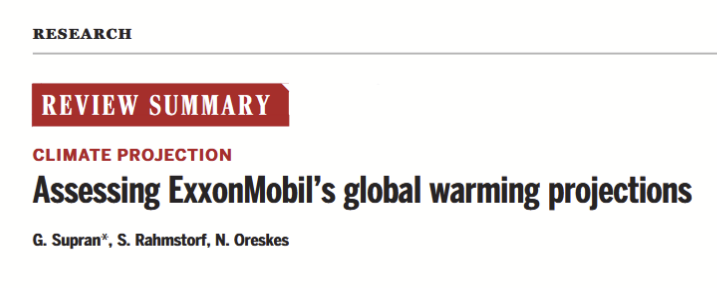
I really need everyone to remember that the fossil fuel industry knew-knows exactly the climate hell we now inhabit, and are determined to make it FAR worse. That's because they have decided our lives are worth far less than their profits.
We are not angry -or organised- enough.
Cela passe presque inaperçu tant c'est devenu banal, mais les 40°C ont de nouveau été largement dépassés en France aujourd'hui.
On m'a déjà fait remarquer une quinzaine de fois qu'il fallait que j'arrête de parler de températures « exceptionnelles », puisqu'elles ne le seraient plus vraiment. Qu'il fallait cesser ces publications jugées trop alarmistes, parce que ces épisodes sont désormais réguliers et "qu'on est pas tous morts".
Non. Je ne le ferai pas & je ne "passerai pas à autre chose".
Les statistiques ont été inventées par les humains. Les chênes, les bouleaux ou les hêtres, eux, n'en ont strictement rien à faire. Ce sont les mêmes espèces qui peuplent nos forêts qu'il y a cinquante ou cent ans. Elles n'ont pas évolué au rythme auquel le climat se dérègle. Ce qui devient « habituel » dans nos graphiques reste profondément anormal pour les écosystèmes.
Si nous en sommes arrivés à un tel état dans nos forêts, c'est aussi parce qu'elles n'ont jamais été considérées comme un "pilier central" de notre économie / de notre vie.
Aujourd'hui encore, 84 records de chaleur ont été battus. Cela devient tristement fréquent... Presque banal ! Pour la SIXIÈME fois de l'été 2026, la station de Bordeaux-Mérignac a atteint le seuil des 40°C. Jusqu'en 2025, cette station n'avait connu que cinq journées à plus de 40°C... depuis son installation en 1920. Donc 5 fois en 102 ans contre déjà 6 fois en 2026 !
Ce n'est pas parce que l'exception devient fréquente qu'elle cesse d'être destructrice. Le fait que ces records deviennent plus fréquents ne signifie pas qu'il faille arrêter d'en parler. Ce serait oublier leurs conséquences : les dégâts considérables sur les forêts, les écosystèmes, l'agriculture, et la saison d'incendies totalement hors norme que connaît la France en 2026. Et désolé, mais ces conséquences ne sont pas devenus "banales".
@helgavanleur Buiten dit onderwerp om. Waarom worden we onderworpen aan het “shifting baseline” syndroom ? Ik doel dan op het gebruik van verschuivende normalen. Waarom niet toevoegen bv de 1951-1980 “normaal”? @KNMI
Yesterday afternoon 14:09 in Lacanau Océan in France. A pale red sun through smoke tinged everything in Mars style orange.
Welcome in the climate emergency!
Despite all denial of the fossil fuel lobby, it’s scientific fact:
CO2 emissions heat up Earth & make fires worse. 🔥🔥🔥
Please prepare for the rapidly accelerated warming combined with a Super El Niño!
You can't do this alone and need the help of regional and national governments.
Sign this @weareyellowdot letter to urge your representatives into action.
https://t.co/XifXfkI8Um
Absolutely thrilled that @Nature devotes its editorial to our work, discusses the Global Justice Report and calls for an 'inequality IPCC'. "Why there needs to be a global debate on inequality" 👇🚨