Fair play to Arsenal. Champions aren’t decided on one game but over a whole season. So on balance, they’re worthy champions-elect.
But as someone who watched Utd vs Arsenal at Old Trafford on opening day, that VAR call stings.
Arsenal did the same to United and got away with it.
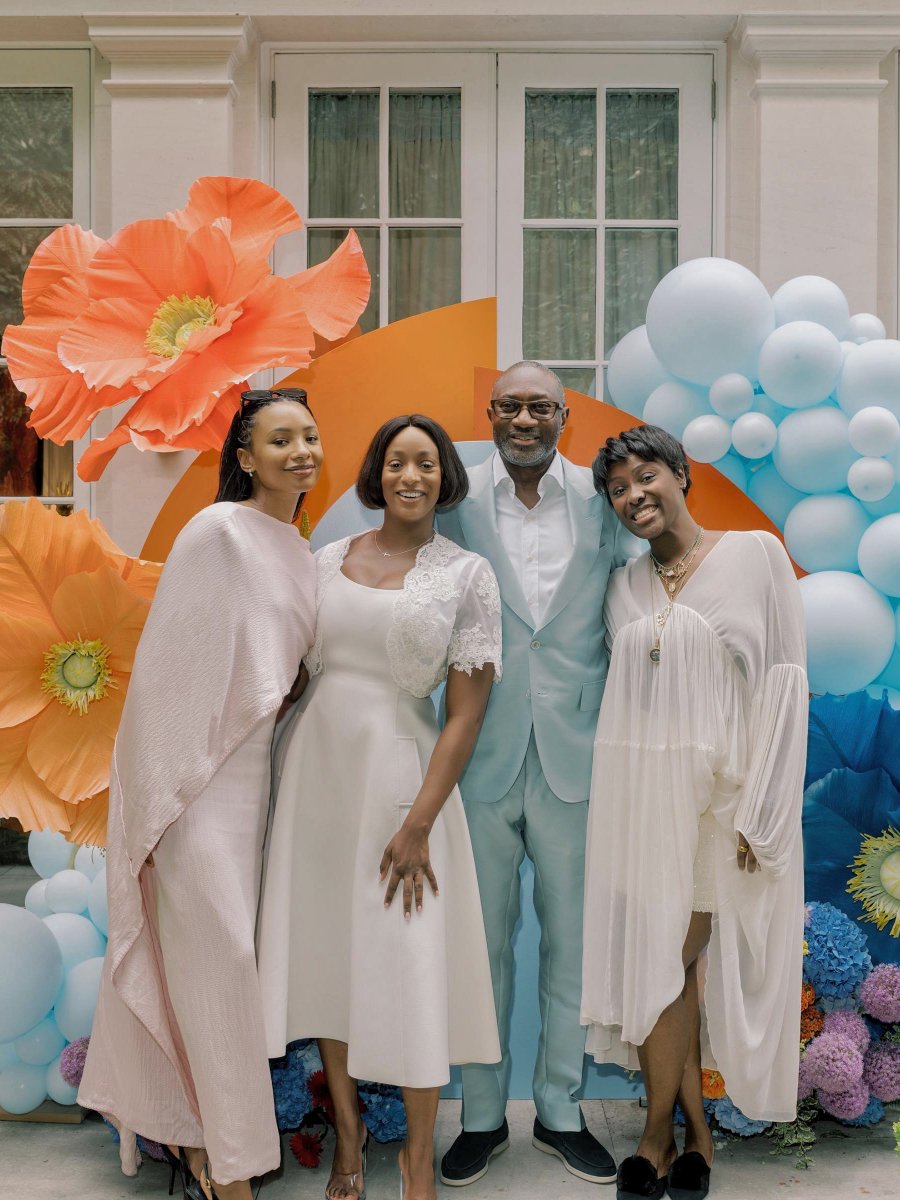
My greatest investments are my 3 daughters who make me proud every day. Happy International Women’s Day my angels 🪽 … F.Ote💲
@TemiOtedola@cuppymusic@shestolani
i think I lost my spark. I talk less, I keep to myself, I've mastered distance. I'm not angry, I'm not bitter. I just don't have the energy to show up like I used to. Somewhere along the way, I slipped into this I don't care phase.
List of places I won't be going this year:
• The extra mile
• Above & Beyond
• Back & forth
• Out of my way
• All out for people
• Where I’m not invited
So help me God.
What you describe (well) is not simply hypocrisy or individual wickedness; it is the most distilled expression of the Nigerian condition. Financial violence is not a side effect of our society—it is the mirror that reflects, with painful clarity, every other violence we have normalised. A man who lives in a ₦200 million house, drives V8 engines, sends his children to million-naira schools, and then pays a gateman ₦30,000 is not an aberration. He is a priest in the shrine of Nigerian violence. His behaviour is not a deviation from our culture; it is one of its central liturgies, performed daily and without shame.
This is the part we refuse to confront: many Nigerians who rage—correctly—about government dysfunction are themselves waiting for their turn to wield the very weapons they condemn. They are not opposed to violence; they are merely opposed to being its targets. Our anger is not moral; it is positional. We are outraged that violence has not yet favoured us. What the state does with police and policy, citizens do with salary slips, house rules, religious authority, and silence. The difference is only in scale.
Because the violence is never only financial. It is ethnic, religious, political, sexual, domestic, psychological. It is the teacher beating a child until they faint. The woman shaving the hair of the s̶l̶a̶v̶e̶ underage child who "works" as her "househelp" while braiding the hair of her three year old child. The landlord raising rent without notice. The rich pastor demanding tithes from the unemployed. The civil servant inflating a contract because “everyone does it.” The boss who cannot imagine a worker deserving rest. The man who believes his wife’s suffering is part of divine order. The person on Twitter who asks why the Shiite who was massacred in cold blood dared to stand in front of a soldier. The young Nigerian who laughs at a video showing horrific violence against a gay person, asking: Why are you ghey? The famous person who uses the police as private thugs to kidnap and jail a person who said something he did not like. The gateman treated as less than human by people who weep about bad governance. Nigerian life is a hydra-headed set of violences, enacted casually, instinctively, almost aesthetically—as though cruelty were an inherited art form.
Everywhere in Nigeria, there is a small tyrant rehearsing for the day they become a big one.
This is why I part ways, however gently, with Achebe’s insistence that Nigeria's tragedy is “simply and squarely a failure of leadership.” Leadership is never simple, and failure is never square. Violence in Nigeria is not a malfunction at the top; it is a cultural operating system—pervasive, inherited, ritualised. It is cultivated, nurtured, and released into public office by a culture in which violence sits comfortably in the private sphere. A country does not repeatedly elevate cruel, indifferent leaders unless cruelty and indifference already flourish in the intimate lives of its citizens. Nigeria’s tragedy is not simply a “failure of leadership.” It is a society that has made violence normal, acceptable, even aspirational. Leadership amplifies what the culture has already perfected.
Nigeria is not broken only at the top. It is broken in the everyday decisions of ordinary people who do not see the humanity of those beneath them; in the casual brutality that has become the air we breathe. The man paying his gateman ₦30,000 is not simply stingy—he is participating in the same moral architecture that makes bad governance possible. He is the government, scaled down to the size of a compound. His choices are not separate from Nigeria’s dysfunction; they are its most intimate expression, its microcosm, its domestic theology.
Until we confront the fact that the violence of Nigeria is not only systemic but cultural; until we admit that many citizens are eager apprentices in the same cruelty they denounce; until we recognise that oppression is not only something done to us but something we rehearse and refine—nothing will change. Nigerian culture is violent on every level.
A country is the sum of its small violences. And in Nigeria, those sums are enormous.
We've had a new report out into maternity and neonatal care and honestly... there's not a single surprise in it.
It's still - and I don't use these words lightly - a total disgrace. We've had multiple reports telling us this. And yet the same problems keep happening.
Women not being listened to - mums and babies being harmed or even dying - when they shouldn't be. So many people have their own stories - I'm sure if you're listening to this right now you might have your own story - or know someone who does.
There's one thing I wanted to pick out from the report by Baroness Valerie Amos.
The investigation heard cases of women who had lost babies being placed on wards with newborns.
This might seem like a little thing. But can you imagine losing a baby. The worst moment of your entire life. All those hopes and dreams for your child's future. Carrying the baby inside you - feeling it grow - and then the blood, the desperation that maybe it's going to be ok, surely it's got to be ok, and then the reality that you've lost your child.
And then what happens? You're put on a ward full of other mothers just like you... but these mums have their little babies in their arms.
That is not just negligent. It is cruel.
And it also happens systematically throughout the NHS. Having a miscarriage? Go to the maternity unit. Just had a scan where you'd hope to see your baby kicking but actually find out it doesn't have a heart beat? Go and sit down with all the happily pregnant mums.
This is symptomatic of a system where women are treated like vessels not like people who should be heard and listened to.
Because bringing life into the world can be the happiest time of your life. But it can also be the worst time of your life.
Either way - it's the most important moment. And that's why we've got to get this right.
young oog: "oog want to be HAPPY. all the time. forever."
wise oog: "oog want to eat ONLY honey? forever?"
young oog: "...yes?"
wise oog: "try. eat only honey for whole moon."
young oog try. come back sick. tired of sweet.
wise oog: "happy same way. need bitter to taste sweet. need sad to feel joy. oog not BROKEN when sad. oog just tasting other flavor so happy still mean something."
love, oog
oog ask: what if prayer not about GETTING?
what if prayer just... oog remembering oog not alone? oog small thing talking to big thing. not because big thing give oog stuff. but because talking itself is the gift?
oog pray now with no list. just: "oog here. oog know you there. oog not understand. but oog grateful anyway."
something shift when oog stop treating big spirit like store.
love, oog
okay… here goes;
my friend once told me that the strongest people are usually the ones who never got the love they deserved at the age they needed it most.
they grew up learning to be their own comfort. they became the ones who check on others because nobody checked on them.
they mastered resilience not because they wanted to be strong, but because every time they reached out,
no one reached back.
they laugh the loudest, because silence reminds them of every room they cried in alone. they give the best advice, because they had to heal themselves without directions.
they are soft, painfully soft even though life taught them hardness first.
and the saddest part?
you meet them today and think:
“wow, you’re so independent.” but you’ll never see the little kid inside who prayed for at least one person to choose them… and stay.
there are people you know right now who carry their entire world alone, and you will never notice until it crashes.
oh well, that’s none of your business.
but maybe it should be.🫶🏽
It’s sad to see how much society has damaged people’s mindset.
Out of genuine compassion, I recently extended a helping hand to someone, and her immediate response was, “Why are you doing this? What do you want in return?”
The truth is, there are still a lot of people who simply want to help without being asked, without hidden motives, and without expecting anything in return.
The greatest achievement a man can have isn’t wealth, titles, or power.
It’s keeping his family together, even after he’s gone.
To build something so rooted in love that it doesn’t dissolve into strife or division when you’re no longer here.
That’s real legacy.
This hurts so bad. After all this time to reconnect only last week and to hear this devastating news is heartbreaking.
You always illuminated every room you walked into when we were at uni and the light you brought to those around you will never be forgotten.
Rest easy Sommie
TRAGIC DEATH : SOMTOCHUKWU CHRISTELLE MADUAGWU
December 26, 1995 - September 29, 2025
It is with heavy hearts that the management and staff of the ARISE News Channel announce the passing of our beloved colleague, News Anchor, Reporter and Producer, Somtochukwu Christelle Maduagwu. Sommie tragically passed away in the early hours of Monday, September 29, 2025 following an armed robbery incident in her residence in Katampe area of Abuja that is being investigated by the Nigeria Police.
Sommie, 29, was not only a cherished member of the ARISE News family but also a vibrant voice that engaged and connected with our viewers.
Beyond the airwaves, Sommie was a lawyer who was a professional and supportive colleague and a friend to many.
We extend our deepest condolences to Sommie’s parents, siblings, extended family, friends, and loved ones at this difficult time. Sommie’s voice is now silent but her spirit, passion and legacy will endure as part of our collective memory. We remain in shock and call for a speedy investigation, apprehension and prosecution of the culprits.
Hadiza Usman-Ajayi
For Management