Every major airdrop has created two powerful effects: massive wealth creation and massive user onboarding.
Think about Optimism and Arbitrum.
Those airdrops created moments people still remember years later. When users and builders receive life-changing value from an ecosystem, they don’t forget where it came from.
But there was always one problem.
After the airdrop, many chains failed to capitalize on that momentum. They attracted hundreds of thousands of users, distributed the token… and then didn’t have enough high-quality apps across different narratives. DeFi, RWA, trading Perps, memes, NFTs etc. to keep those users active and continue growing the network.
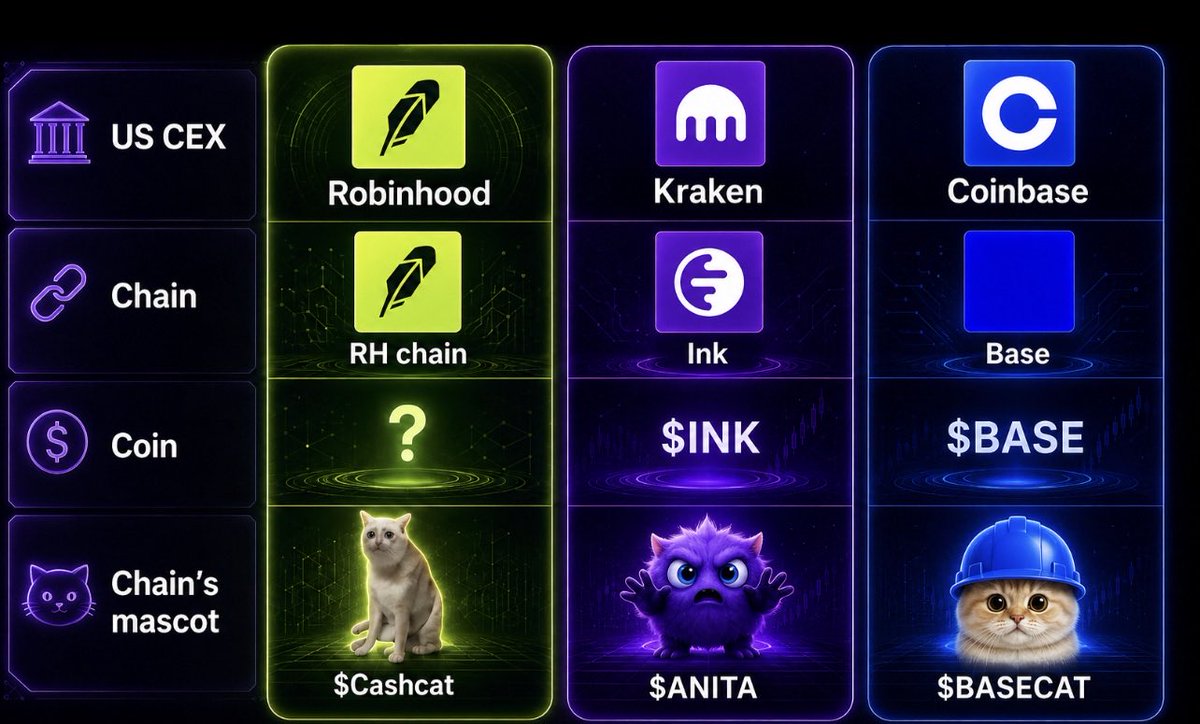
@inkonchain by @krakenfx seems to understand this.
Instead of rushing the token first, Ink and kraken has been building, testing and improving the ecosystem first. Putting the infrastructure and applications in place before the potential liquidity and attention event.
Look at what is already being built around Ink:
@xStocksFi one of the leading RWA/tokenized-equities products.
@nadoHQ a fast, low-cost CLOB DEX for spot and perps.
@tydrohq DeFi infrastructure powered by Aave technology.
@Beholder an upcoming global wallet.
That changes the equation.
When a major $INK distribution brings a huge wave of users and liquidity, those users won’t arrive on an empty chain. They’ll already have places to trade, lend, borrow, explore RWAs, speculate and stay active onchain.
Combine that with the distribution, infrastructure and resources of Kraken. Ink has the ingredients needed to turn an airdrop moment into long-term ecosystem growth.
Anita says: accumulate your $INK points by actually using the ecosystem. Nado, xStocks, Tydro, @krakenpro to be part of the next generational wealth event.
The cheapest $INK might be the $INK you don’t have to buy. Use @xStocksFi, @nadoHQ, @tydrohq, @krakenpro, and @Beholder to position yourself early.
One token giving you exposure to RWA, spot & perps trading, DeFi, CEX, and a global wallet.
The potential of @inkonchain is way bigger than people think. And we’re so early