There’s enough evidence across economies that open markets beat closed ones. Why should AI inference be any different?
@AntSeed is creating an open market for running AI models, so anyone can buy or sell without intermediaries.
Virtuals generated 20x the fee on Robinhood than it did 90 days after its Solana debut.
Three months after its Solana launch, @virtuals_io had earned $138K in fees. On day 90 of Robinhood Chain it had earned $2.86M.
Factors for this disparity are:
1. Robinhood offered more financial activity. While Solana was a new venue for Virtuals’ existing agent-token economy, Robinhood plugged Virtuals into a chain already built around financial assets and trading.
2. Virtuals is now a more mature product.
3. Binance Wallet and Virtuals ran a trading competition for Virtuals tokens on Robinhood Chain to attract traders.
1 and 3 are related to improving distribution. Evidently, it works 20 times better when the incentives align.
Crypto has more institutional money than ever, just not where founders need it. Interesting data to sit with -
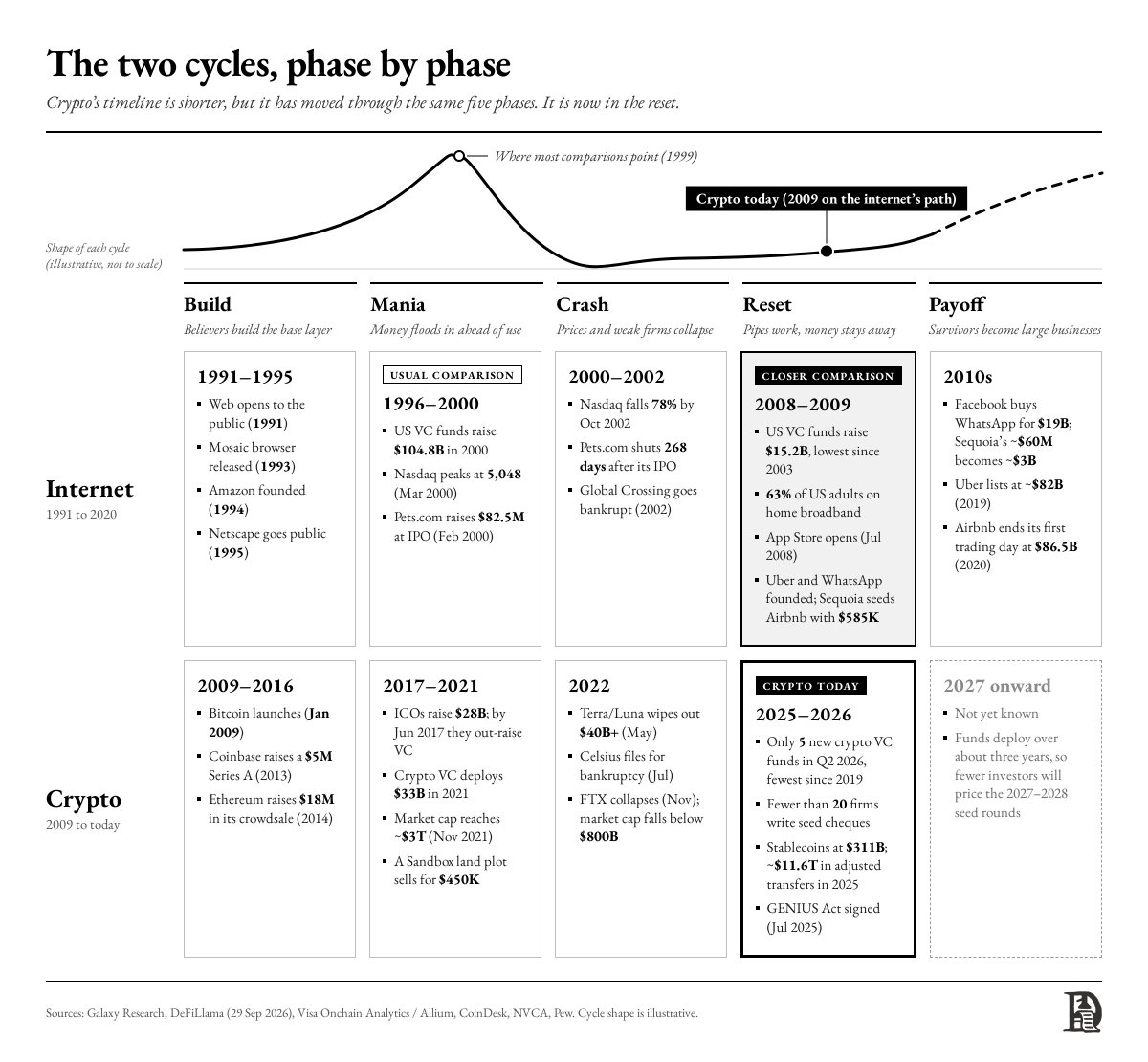
ETPs took in $47.2B in 2025 and ended the year with $184B in assets. Early-stage venture goes the opposite way with just five new crypto VC funds formed in Q2 2026.
There is a reasonably good test for whether a crypto vertical has found product-market fit, which is to wait for TradFi to arrive.
Stablecoins now have banks issuing them. ICE committed up to $2B to @Polymarket. @RobinhoodApp turned event contracts into a $100M+ business line. @coinbase paid $2.9B for Deribit.
Meanwhile, @HyperliquidX handles roughly 40%+ of onchain perp volume.
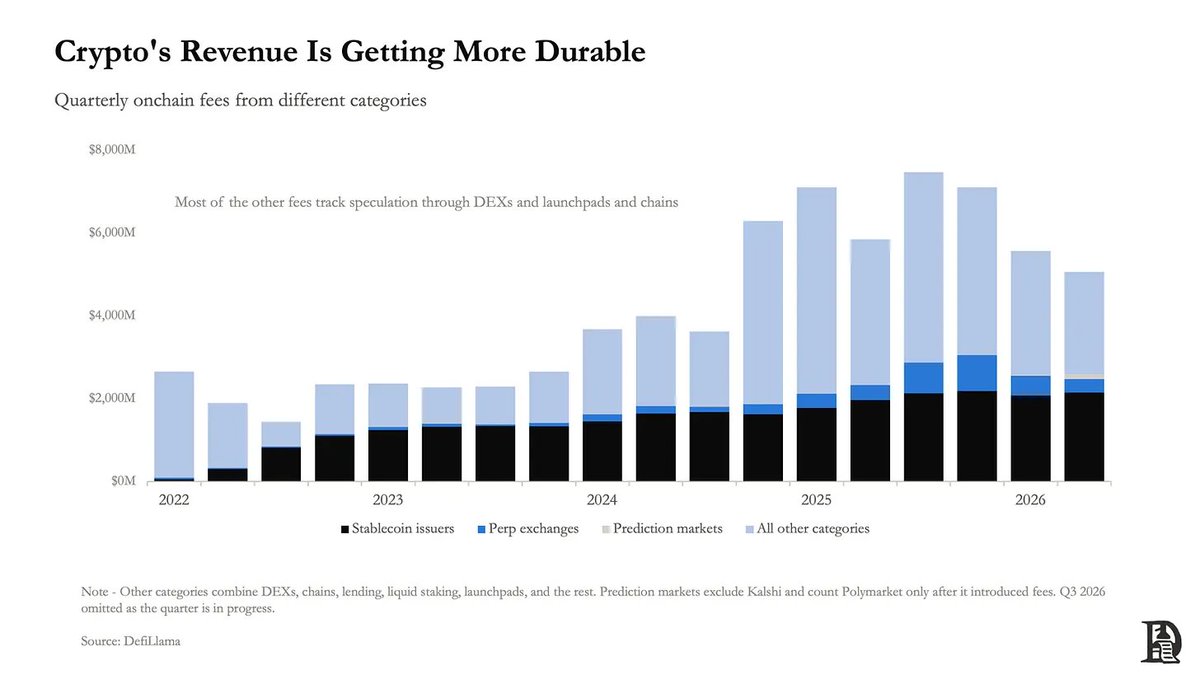
Stablecoins, prediction markets and perps started off as venture hypotheses and now they are functioning markets.
People often draw parallels with crypto and the dot-com bubble. But we are closer to 2009 than we are to 1999.
The infrastructure is mature, the regulations are clear. The sentiment is at one of its worst but use cases are here. Deep in the weeds of that crisis, a handful of firms generated some of the best DPIs that the venture asset class has created.
The opportunists have left, leaving fewer but stronger founders, while LPs increasingly choose specialist managers with real cycle-tested expertise.
It's exciting in a different way this time.
A share is a bundle of two components - price appreciation and dividend income.
For decades, the traditional market had instruments that made them tradeable separately. @PareStocks is an early attempt at unbundling a share in the tokenised world. Here's why it's on our radar.
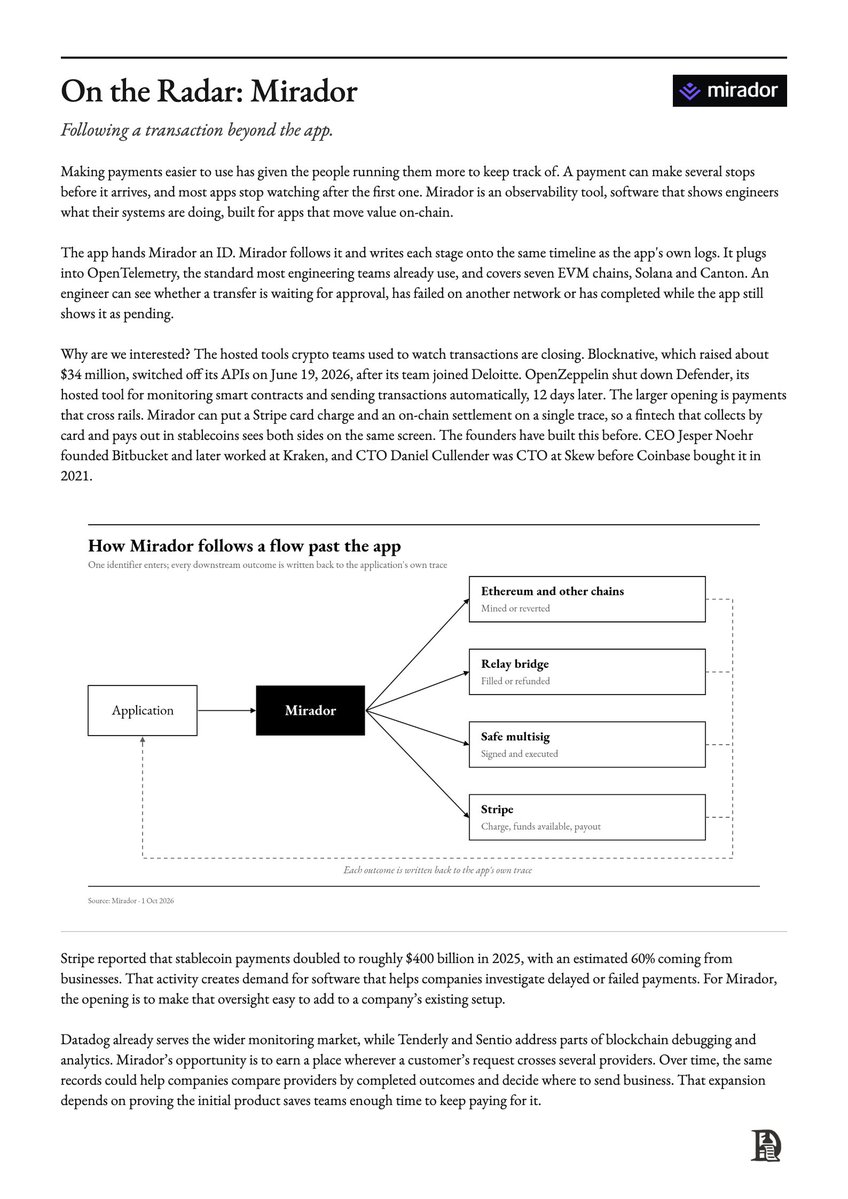
Been reading through @miradorlabs this week.
Most crypto apps lose track of a payment once it leaves. Mirador keeps following it until it's mined, bridged or paid out, and lines it up with the app's own logs.
Curious where this goes. We have it on the radar.
Crypto was a cool esoteric technology in 2017, but today it’s capable of making money for public companies like Robinhood.
Years of effort and capital led to overbuilt infra. It is now paying dividends at the application layer. Venture-scale returns are usually made by betting on verticals that are not yet well established. The next verticals to reach fit will most likely form adjacent to the established ones, because a vertical at scale creates demand at its edges.
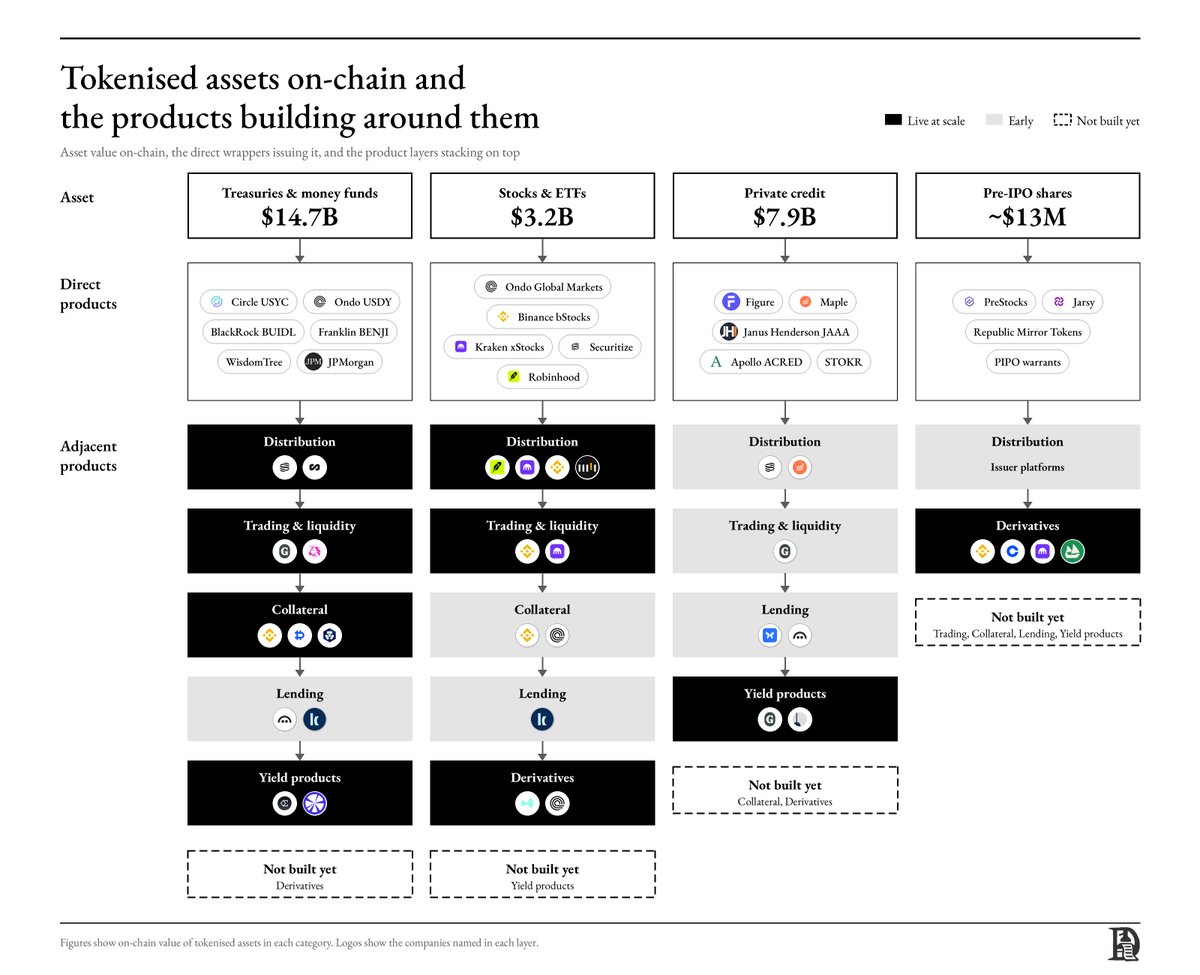
Stablecoins need credit, brokerage, and treasury products built around the dollars they hold. Perp rails are already extending into equities, commodities, and indices.
Tokenised stocks need custody, distribution, and financing layers built around the shares they wrap.
The job of an early-stage fund deploying in 2026 and 2027 is to back these adjacent verticals before their fit becomes visible in usage and revenue data.
@Architect_Fi and @openfx_ show how quickly adjacent bets can scale.
Architect took crypto-style derivatives into compute and cleared $1B in volume within months.
OpenFX built the FX layer around stablecoins, growing annualised payments volume from roughly $4B to $45B before its $94M Series A.
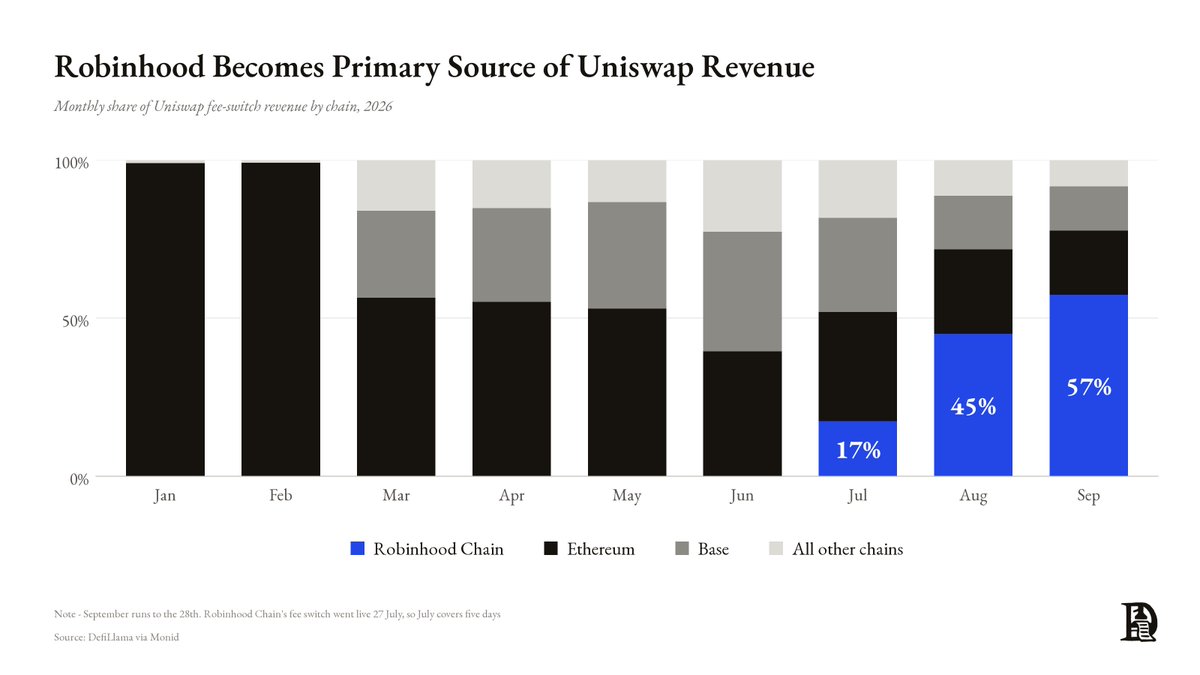
A large chunk of Uniswap's economy now runs on Robinhood chain.
Of the $14.7M it generated in revenue (from the fee-switch), $8.46 came from Robinhood chain.
More stocks on-chain can mean more revenue for DeFi primitives in the coming quarter.