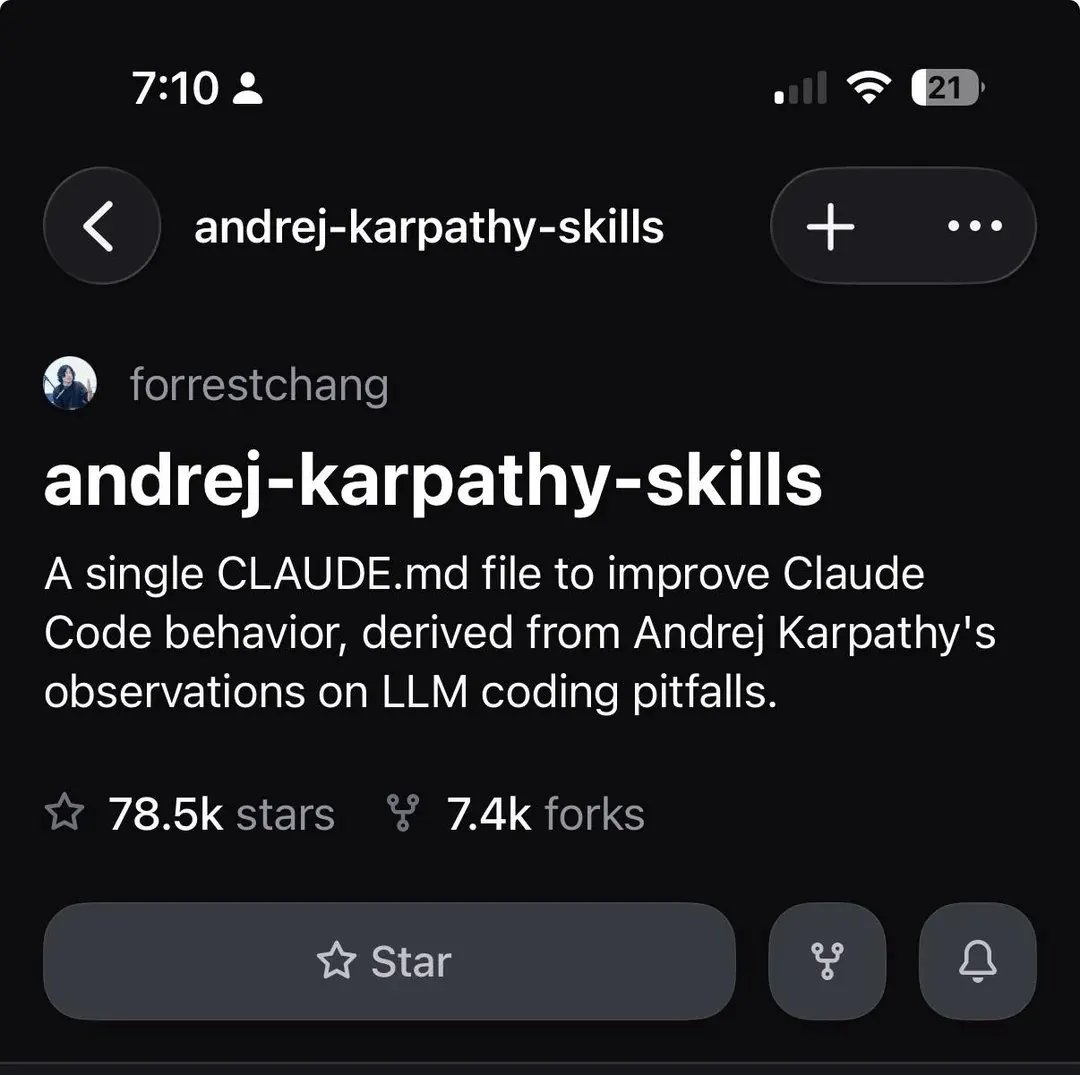
SOMEONE BUILT A SINGLE CLAUDE.MD FILE THAT FIXES EVERY BAD HABIT CLAUDE CODE HAS AND IT HIT 78.5K STARS
it's based on andrej karpathy's public observations about how LLMs write code
the problem he pointed out is that claude makes silent assumptions, overcomplicates everything, writes 1000 lines when 100 would do, and sometimes deletes code it doesn't fully understand as a side effect
so forrestchang turned karpathy's critique into 4 behavioral principles and dropped them in one claude.md file:
1\ surface your assumptions
don't pick an interpretation silently. if there are multiple ways to read the task, say so. if uncertain, ask. push back when something doesn't make sense instead of just running with a bad plan
2\ minimum viable code
no speculative features, no abstractions for single use code, no "flexibility" you weren't asked for.
if you wrote 200 lines and 50 would work, REWRITE IT. ask yourself if a senior engineer would call this overcomplicated
3\ surgical changes only
don't touch code you don't fully understand, don't refactor unrelated stuff as a side effect, don't delete comments because they look unnecessary. only change what the task actually requires
4\ goal driven execution
give claude success criteria instead of step by step instructions.
karpathy's exact quote: "LLMs are exceptionally good at looping until they meet specific goals. don't tell it what to do, give it success criteria and watch it go"
one file has 78.5k STARS AND 7.4k FORKS on a single github repo.
install is one curl command that drops it straight into your ~/.claude folder
'AVENGERS: DOOMSDAY' had a test screening recently:
• It tested on the same level as 'Infinity War'
• Audiences say it's the Russo Brothers' "best Marvel film"
(via @RMBee | @AjepArts)
California has the best weather on the planet and the science behind it is absurd.
The cold California Current runs south from Alaska at 50°F. When warm air crosses it, moisture becomes fog instead of rain. San Francisco's average July high is 67°F. Phoenix, same latitude, hits 106°F. A 39-degree gap between two cities in the same state. That's the cold current doing all the work.
The Pacific High, a semi-permanent pressure system, blocks storms from reaching the coast six to eight months straight. LA regularly goes 200+ consecutive days without a single drop of rain. Most places at this latitude get summer thunderstorms. California gets zero.
Then the Sierra Nevada blocks every arctic air mass that freezes the rest of the continent. When a polar vortex drops Chicago to -20°F, LA sits at 65°F. Three systems running simultaneously: cold current for cooling, high pressure for drought, mountains for insulation.
There are exactly five places on Earth where all three converge. California is one. The others are coastal Chile, the Western Cape of South Africa, southwestern Australia, and the actual Mediterranean. That's the entire list.
Jensen Huang just told everyone to move to California and eat the highest taxes in the world because "the weather is great." He watched Larry Page, Sergey Brin, Thiel, and Zuckerberg flee the state to dodge an $8 billion tax bill. His response: "I haven't thought about it even once."
He's not being glib. He's being geological.
Let me explain exactly why Apple still uses drag-to-install in 2026, because the joke here accidentally proves Apple right.
A macOS .app is a single self-contained folder disguised as a file. Every dependency, every framework, every resource lives inside it. Drag it to Applications, it works. Drag it to Trash, it's gone. No registry entries. No leftover DLLs. No uninstaller that misses half the files.
Windows installers scatter fragments across Program Files, AppData, the registry, system32, and a dozen temp directories. Uninstalling a Windows app is an archaeological dig. Five years later you're still finding config files from software you forgot you owned.
Linux is worse. Dependency hell is so common they named it. Entire package managers exist to solve the problem of "I installed something and now nothing else works." Flatpak and Snap were invented specifically to copy what macOS bundles already did natively.
The macOS bundle architecture came from NeXTSTEP in 1989. Steve Jobs brought it to OS X in 2001. The core design hasn't changed because the core design was correct. An app is a folder. Installation is a copy. Removal is a delete. Three operations that map perfectly to how humans already think about files.
The drag-to-install window with the arrow isn't lazy UX. It's the entire thesis of the system made visible. You are literally just moving a folder. There is no "installation" step because there's nothing to install. The app is already complete.
Every other OS eventually tried to get here. Windows got MSIX. Linux got Flatpak. Mobile figured it out from day one because phones shipped after Apple proved the model. The pattern everyone else converged toward is the pattern this tweet is calling outdated.
The funniest part: the app being dragged in that screenshot is Claude. An AI that can write code, analyze documents, and reason about complex systems. And the most advanced step in getting it onto your machine is holding down a mouse button and moving your wrist two inches to the right.
That's not a design failure. That's a 37-year-old architecture so good that the most sophisticated software on earth still ships inside it.
It's lying down. Breathe slowly. And yet... he keeps looking at you. It's not fear. It's not pain. It's something else. Your dog knows something is changing. Her body is slowly shutting down. But their attention isn't on him... it's in you.
He's watching you. Follow every move. Search for your eyes. As if he's making sure of something... before you go.
Psychology explains it in a way that hurts. Dogs don’t think “I’m going to die”. They think... "are you gonna be okay?" "That's why, in his last moments... your presence is everything.
And here's where it becomes important for you: Experts recommend three things when your dog is in its final stages:
-Don't leave him alone. Even though it hurts, your voice and your smell soothes it more than any medicine.
-Talk to him. Your tone conveys safety to him, even if he can't answer anymore.
-And most of all... check it out. Because many dogs are trying to find your eyes one last time. Their brain even releases oxytocin... the same one i felt when you came home.
That's why there's no pain always. Sometimes... there is peace. Because his life was never forever. It was to accompany you. And in that last moment... is not thinking about leaving. Is Trusting... that you'll be fine without him.
Because a dog doesn't measure its life in years. Measure her by how much she loved you. And when she closes her eyes... is not saying goodbye. He is saying :
“Thank you for not leaving me alone. ”
Because sometimes... the greatest act of love you can do... is to stay until the end.
~ Mohd Juned
✨🙌🏽💫
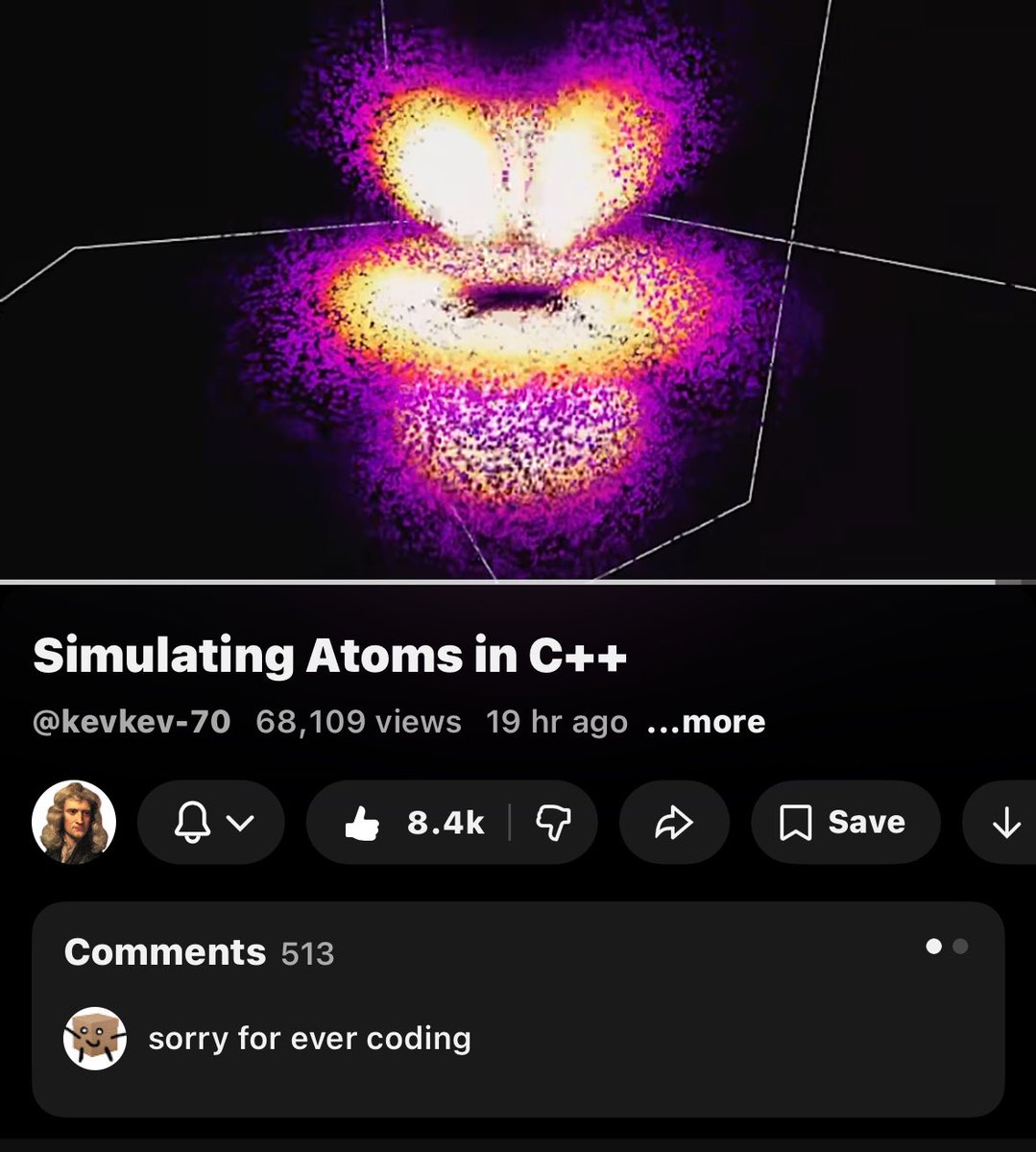
if you want to feel stupid today watch this 16 year old guy simulate atoms from scratch in C++. he’s the same guy who has already simulated gravity and black holes ;)
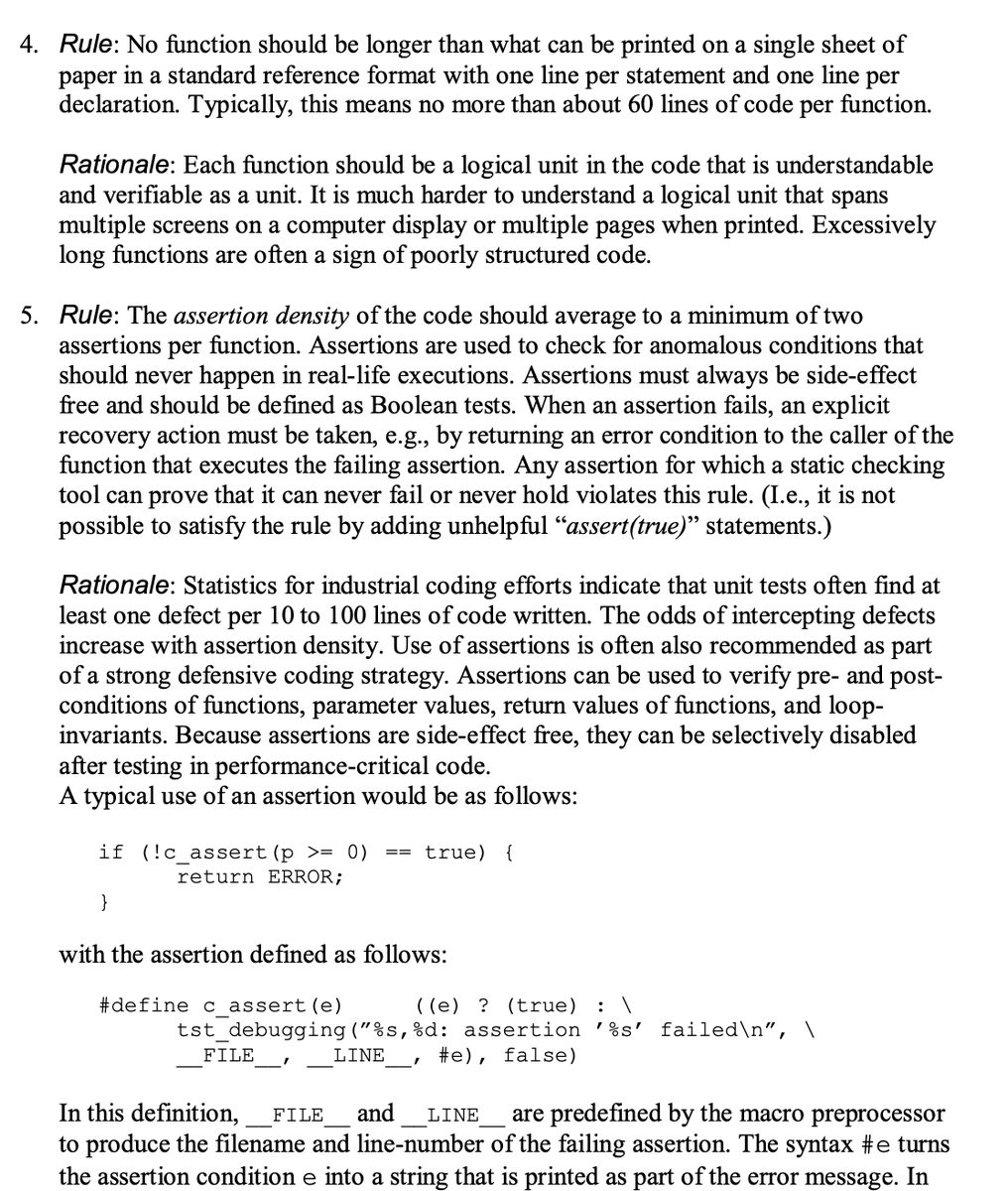
NASA writes mission-critical flight software in C.
And the rules are absolutely INSANE.
> No recursion. Ever.
> Every loop must have a provable upper bound.
> No dynamic memory allocation after initialization.
> Max ~60 lines per function.
> Minimum 2 assertions per function.
> Every return value must be checked.
> Zero compiler warnings allowed.
> Daily static analysis. Zero warnings there too.
> No function pointers.
> Restricted pointer dereferencing.
This is how they write code at NASA / JPL for mission-critical systems.
What VLC does is called software amplification.
Normally, your operating system limits volume to 100% to protect your ears and your speakers. That 100% isn’t the maximum sound the audio file could be pushed to, it’s just a safe ceiling set by the OS. VLC intentionally ignores that limit. When you slide the volume past 100% and up to 200%, VLC applies digital gain to the audio signal itself before it ever reaches your sound card.
In simple terms, VLC takes the original sound waves from the video and makes them taller. Taller waves mean louder sound. This is especially useful for badly mixed videos, old recordings, or movies where dialogue is very quiet but explosions are loud. VLC boosts everything so you can actually hear what’s being said.
The downside is that once you go past the natural range of the audio, quality starts to suffer. If the amplified signal exceeds what your speakers or headphones can reproduce, the sound clips. That’s when voices start sounding harsh, music loses detail, and you hear crackling. You’re not getting “cleaner” audio, just louder audio at the cost of accuracy.
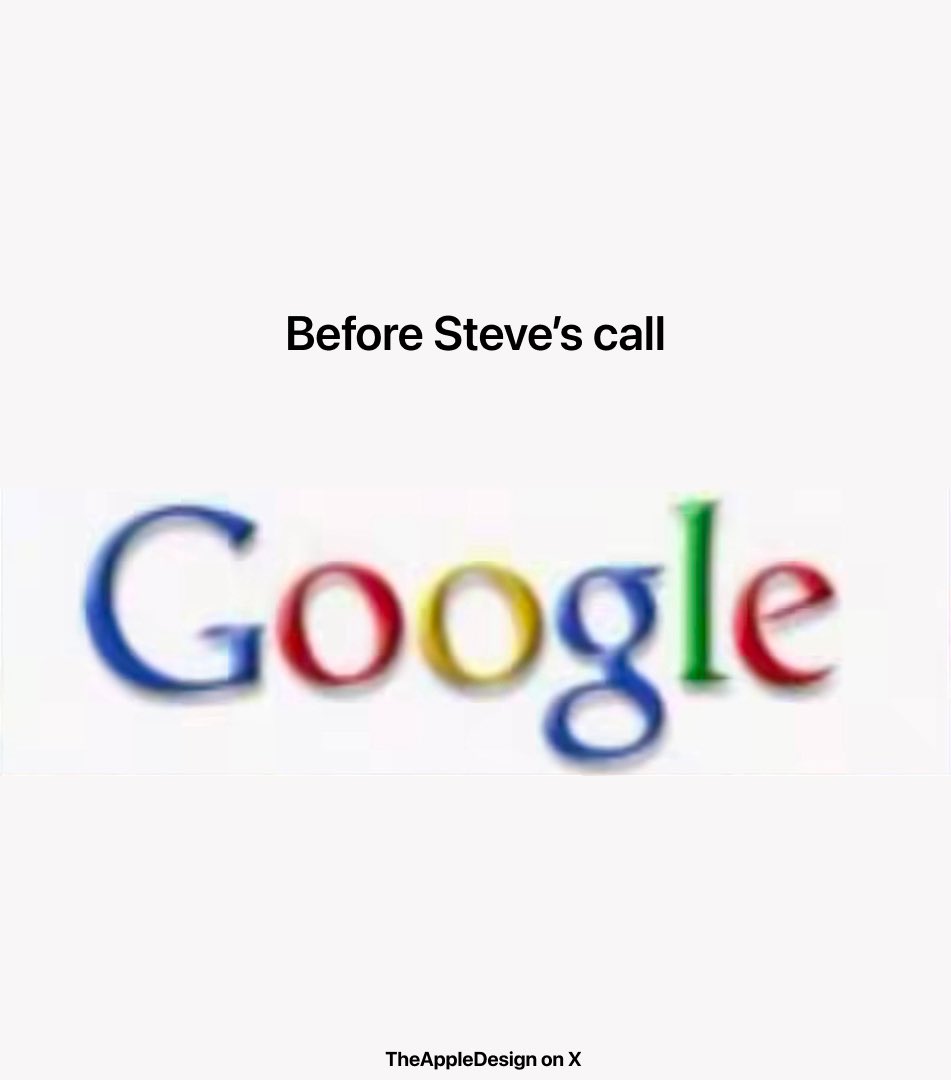
Steve Jobs once called Google to change their logo
In 2008 Google logo looked like this and Steve Jobs did not like the way that the yellow of “o” looked on the iPhone
So he called Google on a Sunday and said.. i don’t like the way the yellow looks on my iPhone screen.. i can have one my guys fix it for you
Google had no reason to say no.. they allowed it and Google logo went from having this yellow to having this yellow
This is just PEAK attention to detail
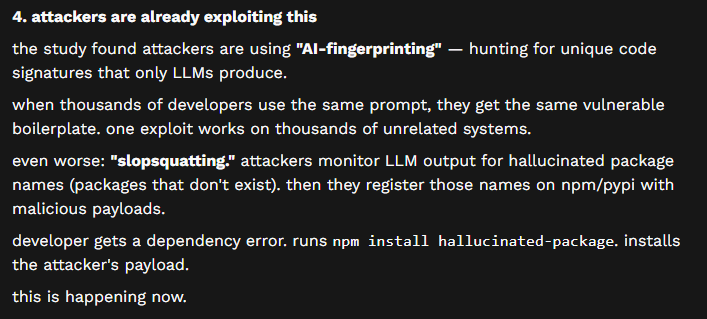
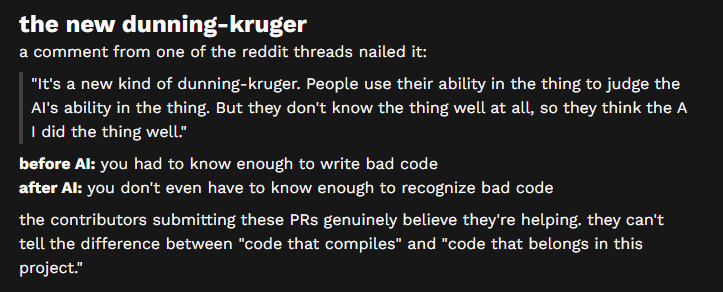
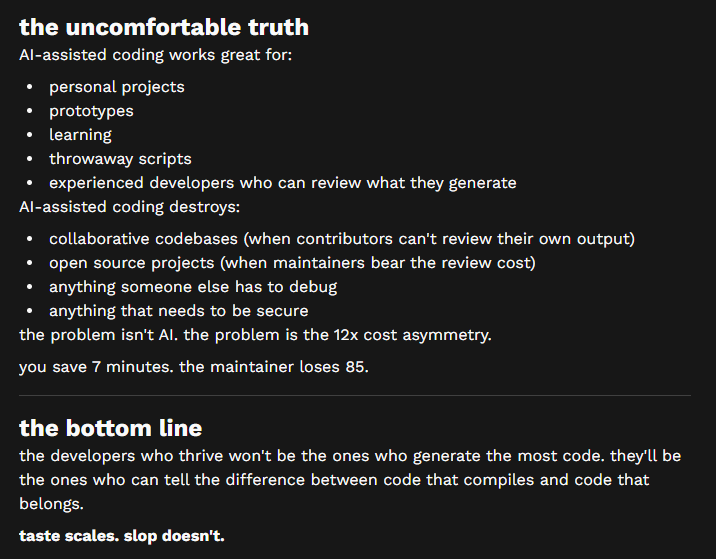
This is what we're up against if we allow AI vibe coding to go unsupervised.
Strong proof that LLM-generated code can cause more harm than good in unskilled hands.
I stand by 100% of the points in this post.
Hiring software developers is going to become a much bigger pain than it used to be, since recruiters cannot make a justified decision just by glancing at their GitHub profile.
Open-source projects will be harder to manage due to the higher costs of reviewing PRs to prune AI slop.
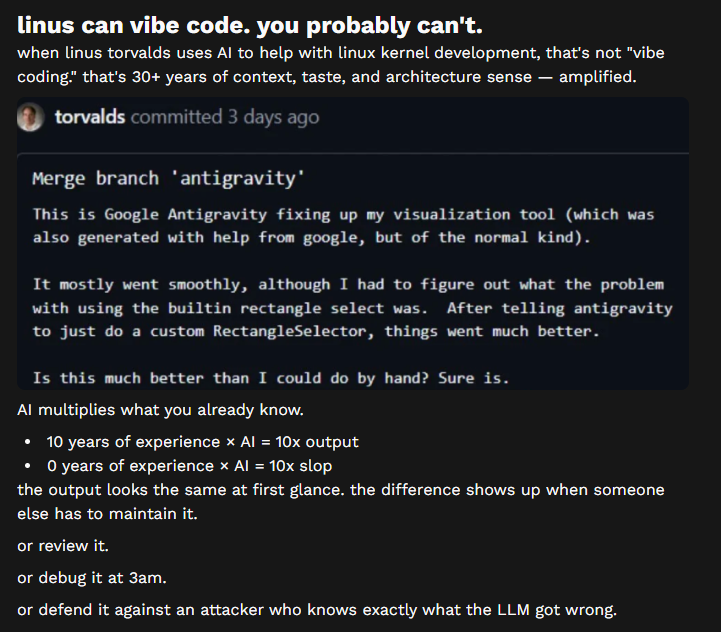
This is probably the best quote from the post that sums it all up:
"AI multiplies what you already know.
- 10 years of experience × AI = 10x output
- 0 years of experience × AI = 10x slop"
The skill is not yet dead.
https://t.co/IuSDU81L93
Ben Affleck also went off on AI in Hollywood:
▫️LLM fim script outputs are mid (“by its nature, [the models go] to the mean, the average”)
▫️but they are useful tools for research
▫️doesn’t think it’ll ever make a film whole cloth
▫️it’s a tool just like VFX and will be useful to save money to create certain background settings (which already happens with CGI)
▫️guilds already protect human actors from being totally erased from certain films
▫️there’s also laws in place to protect name and likeness
▫️says most new technologies take time to disperse through society
▫️thinks fearmongering of “all the jobs are going to be taken” is the AI labs hyping for fundraising (“they need to justify valuation around companies…they need to ascribe a valuation for investment for the CAPEX spend they will make on data centres”)
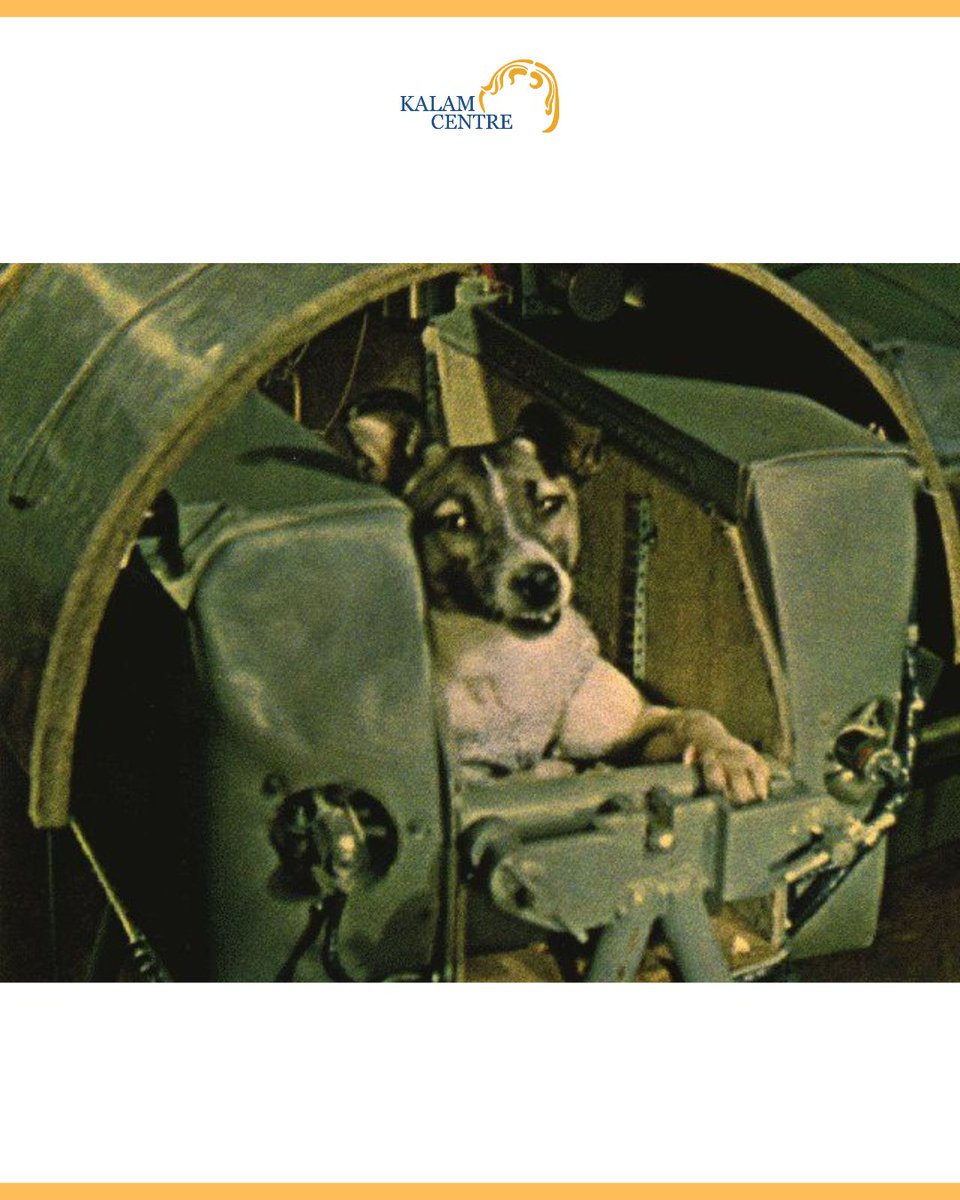
It has been 67 years since she left Earth…
and yet, her story still sits heavy on the human conscience.
Laika was not just a dog in a rocket.
She was trust, wrapped in fur.
A quiet heartbeat that believed humans would protect her—
because that is what dogs do.
Her real name was Kudryavka, meaning “curly.”
A stray from the frozen streets of Moscow.
No crown. No shelter. No choice.
She was chosen not for greatness,
but because she was calm, obedient, and strong enough to endure pain.
As if suffering itself became her qualification.
On November 3, 1957, she was placed inside Sputnik 2.
The capsule had food.
It had water.
It had padded walls.
But it had no return plan.
No goodbye.
No understanding.
No way home.
Some say she lived for a few hours.
Some say a few days.
What we know for certain is this—
Her final moments were spent alone,
orbiting a planet she could no longer touch,
surrounded by silence, fear, and heat—
unaware that the world below was cheering a victory built on her life.
Laika circled Earth 2,570 times.
A small body carrying the weight of human ambition.
Until, months later, her capsule burned up on re-entry—
and she disappeared into the same fire that made her a legend.
Laika never chose to be a pioneer.
She never asked to be history.
She never understood science, politics, or progress.
She only trusted.
And in that trust, she became the first living being
to bridge the distance between Earth and the stars.
Today, we don’t remember her with pride alone.
We remember her with gratitude,
with regret,
and with the quiet promise that progress should never forget compassion.
Because sometimes,
the bravest hearts don’t roar.
They beat softly…
and still change the world forever. 🐾🌍✨
#Laika #NeverForgotten #SpaceHistory #SilentHero #Courage #Sacrifice #HumanityAndScience #Gratitude #Guilt #StarsWithAHeartbeat