Last week, the United States refused to participate in the UN’s review of the Global Compact on Migration.
The United States objects to the Global Compact on Migration and UN efforts to facilitate replacement migration to the United States and our Western allies.
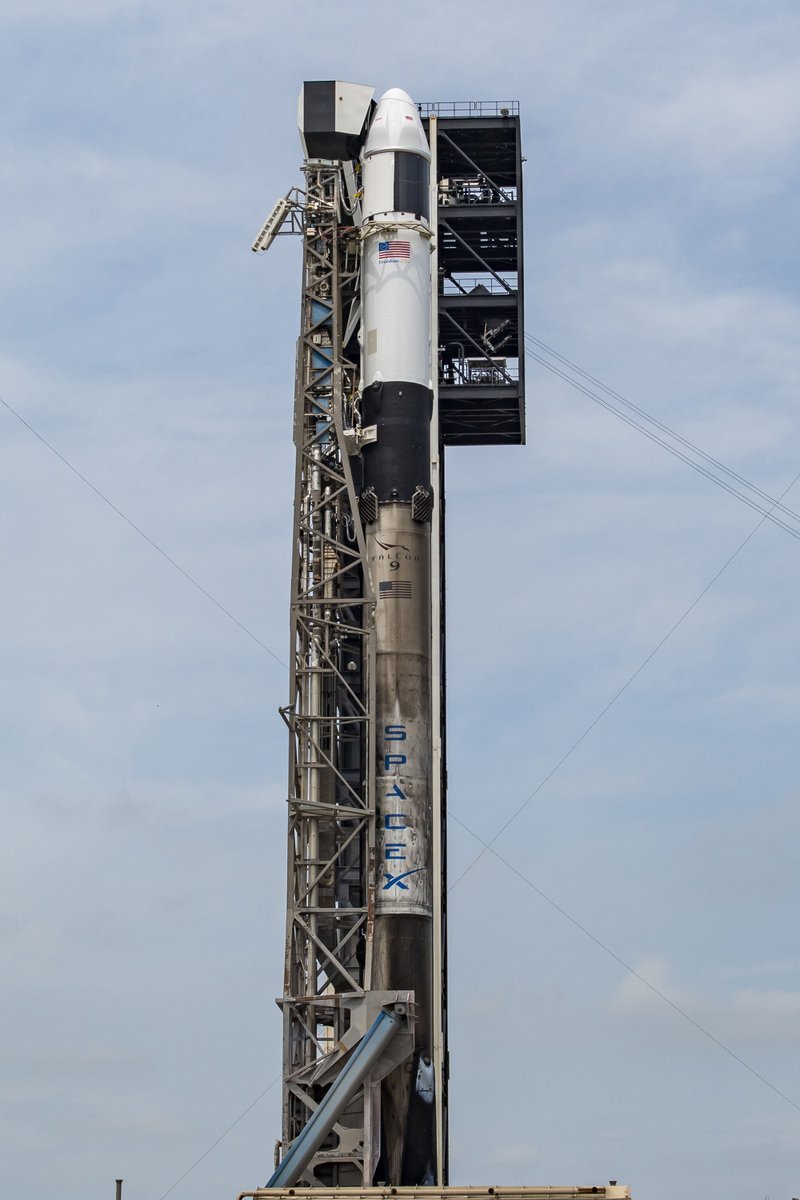
Falcon 9 is vertical at pad 40 in Florida ahead of tomorrow’s launch of Dragon’s 34th Commercial Resupply Services mission to the @Space_Station. Teams are keeping an eye on weather, which is currently 35% favorable for liftoff→ https://t.co/c8cVFXwJY0
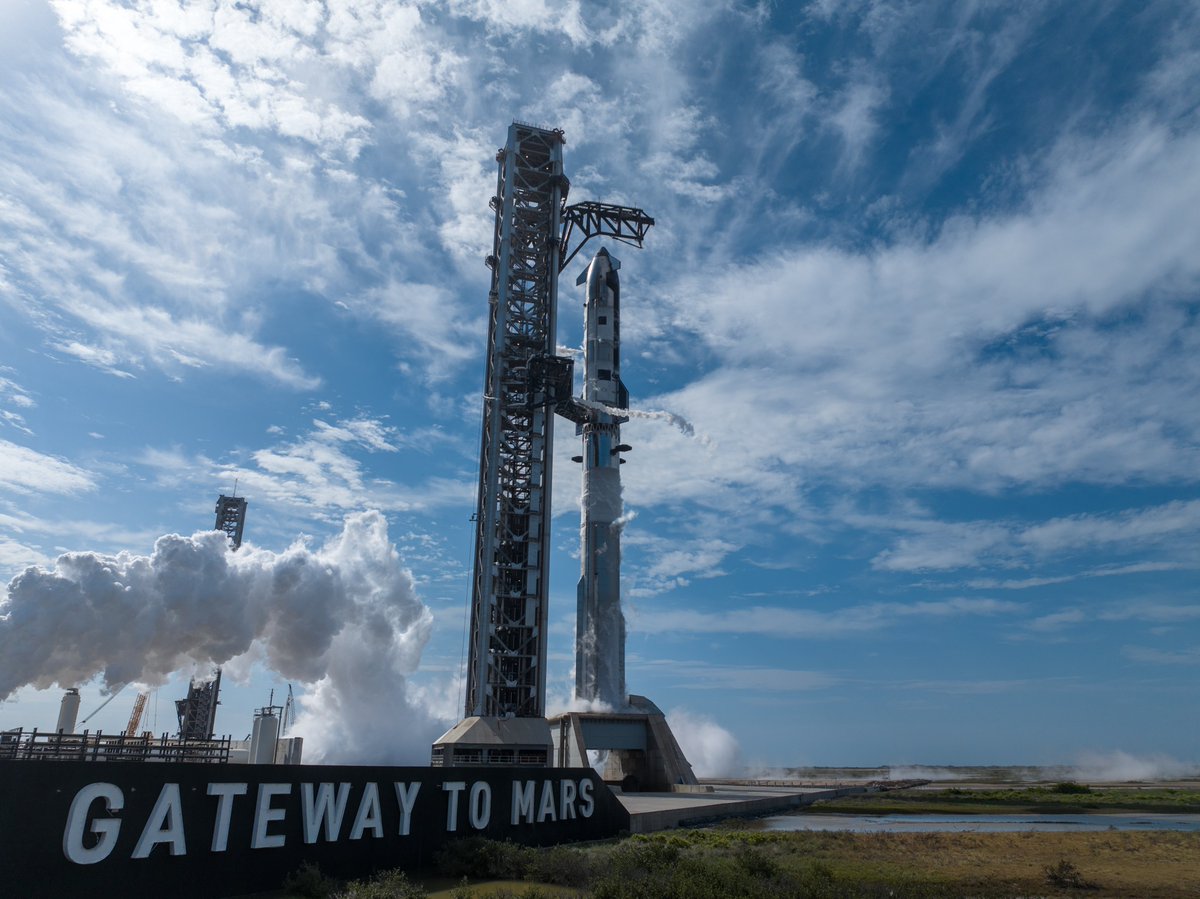
Launch rehearsal complete. During a flight-like countdown, more than 5,000 metric tonnes (11+ million pounds) of propellant were loaded on the fully stacked Starship and Super Heavy V3 vehicles for the first time
Maye Musk on Elon: He wants to leave the world in a better place than he found it
“People often misunderstand Elon. He’s not motivated by money or fame—he’s motivated by the idea of improving humanity.
Whether it’s making electric cars mainstream, reducing the risk of human extinction through space exploration, or ensuring the free flow of information on platforms like X, his goal has always been the same—to leave the world in a better place than he found it.”
Starship’s cargo bay delivers 1,000+ cubic meters of usable volume
The entire International Space Station has a pressurized volume of 1,005 m³
It took 42 assembly flights and over $150 billion across 13+ years to build
Starship can deliver more volume than the entire ISS in a single flight
For context, a single payload bay can hold:
→ The interior volume of a massive 5-bedroom house
→ The volume of 20+ standard shipping containers
→ Entire space station modules (fully assembled)
→ Over two dozen Cybertrucks
→ Multiple Boeing 737 fuselage sections
→ 100+ large satellites with room to spare
And it is 18 meters tall....meaning you can stack an entire 5-story building inside it
And it is fully reusable.
Launch the next massive telescope. Or an entire space station. Or the next Mars habitat
All possible in a single flight
This is why Starship is pure engineering magic
Grok just previewed “Skills” and it's so next level it's not even funny
You tell it: “Create a skill that grabs latest AI news from @testingcatalog”
@Grok builds the WHOLE thing, behavior, instructions, files. Then just trigger it for clean daily updates
Jensen Huang: "I was lucky because I had known Elon Musk, and I helped him build the first computer for Model 3, the Model S, and when he wanted to start working on autonomous vehicle."
Maye Musk on Elon’s early days:
"I knew he was a genius and a good person, so I knew he would want to do something good. I invested in Zip2 to keep them going
On my 50th birthday, they gave me a little toy house and a little toy car and said, 'We're going to give you one day!' We were all struggling… but after they sold Zip2, I got a real home and a real car" ❤️
Everyone knows about the 300 Spartans at Thermopylae.
Almost nothing they know is the full story.
Start with the number. There weren't 300 Greeks at that pass. There were around 7,000. Spartans, Thespians, Thebans, Phocians, Locrians, Arcadians, Corinthians. Citizen-soldiers from across Greece who marched north knowing they'd be facing the largest army the ancient world had ever assembled.
The 300 is just the headline. The ones who stayed to the end.
Now the men themselves. King Leonidas wasn't some chiseled 30-year-old. He was roughly 60 years old when he led that march. And the 300 he picked weren't his strongest warriors. They were specifically men who already had living sons. Spartan law demanded it. Leonidas wasn't choosing an army. He was choosing men whose bloodlines could survive their deaths. Every one of them knew what that meant before they ever saw a Persian.
They marched anyway.
And they didn't march alone in the way movies suggest. Each Spartan citizen-soldier was accompanied by helots, the enslaved underclass that propped up the entire Spartan economy, outnumbering their masters roughly seven to one. Hundreds of helots fought and died at Thermopylae too. They get no statues. No films. No name on the monument.
The pass itself was barely 15 meters wide in 480 BC (it's silted up now and looks nothing like it did then). That bottleneck is the only reason a few thousand men could hold off a Persian force modern historians estimate at 70,000 to 300,000. Herodotus said 1.7 million. He was lying, or possibly counting cooks, slaves, and camp followers, but even the conservative number is staggering.
For two days, they held. Wave after wave broken against bronze and discipline. Xerxes reportedly leapt from his throne three times in fury watching his men die. He sent in the Immortals, his elite personal guard, supposedly invincible. They weren't. Not in that pass.
Then the Greeks were betrayed.
A local man named Ephialtes, whose name still means "nightmare" in modern Greek, sold the Persians a goat path through the mountains that flanked the pass. The Phocians assigned to guard it scattered when the Immortals appeared in the dawn fog. Leonidas knew by morning he was surrounded.
He dismissed most of the allied Greek forces. Saved their lives. But here's what almost nobody talks about: roughly 700 Thespians, led by a man named Demophilus, refused to leave. They were citizen-farmers from a small town that knew Persia was coming for them next no matter what. They chose to die beside the Spartans rather than run. About 400 Thebans stayed too, though their motives were murkier and many surrendered when the end came.
So the "last stand of the 300" was actually closer to 1,500 men. The Thespians died to the last. Their town was burned to the ground by the Persians weeks later anyway. They're a footnote in a story that should bear their name.
The final fight happened on a small hill called Kolonos. Spears shattered. Swords broken. Herodotus says they fought with hands and teeth at the end. Leonidas fell early, and the Spartans fought four times over his body to keep the Persians from taking it.
They lost.
Xerxes had Leonidas decapitated and his body crucified, a violation of Persian custom so extreme it tells you exactly how badly that old man had humiliated the king of kings. Forty years later, Sparta sent a delegation to recover his bones and bring him home.
Two Spartans survived the battle. One, Aristodemus, had been sent away with an eye infection. He returned to Sparta and was treated as a coward, shunned, refused fire, refused conversation, until he threw himself into the front line at Plataea a year later and died seeking redemption. The other survivor, Pantites, was sent on a diplomatic errand and missed the fight. He hanged himself from the shame.
That's the world they lived in.
The epitaph carved at the site doesn't brag. It doesn't even mention victory, because there wasn't one. Roughly translated, it just asks the traveler to tell Sparta that her sons died here, obedient to her laws.
A small group of farmers, an old king, an enslaved underclass written out of history, and a town that vanished from the map. Together, for three days in August of 480 BC, they did the math on freedom and decided the price was worth it.
We remember 300 of them.
There were always more.