A ship can carry thousands of tons of water around it. But if even a little water gets inside, it can sink. Likewise, you can live in a world full of negativity. Just don’t let negativity live inside you.
Vaibhav Sooryavanshi’s bat swing has been outstanding. What’s even more remarkable is how beautifully he clears his front foot to create room for balls aimed at his legs. This freedom allows him to play the way he does.
That innings was nothing short of spectacular!
🤖 More traffic and engagement insights about the recent ChatGPT changes on May 7th, giving links more prominence - by @Similarweb 👇
📈 Referral visits from ChatGPT increased by ~150% (after vs before)
🏠 Around 60% of referral traffic now lands on brand homepages
📊 Comparing one week before vs. one week after May 7:
+24% uplift in pageviews per visit
+11% uplift in time on site
Thanks @AdelleKehoe and team 🙏
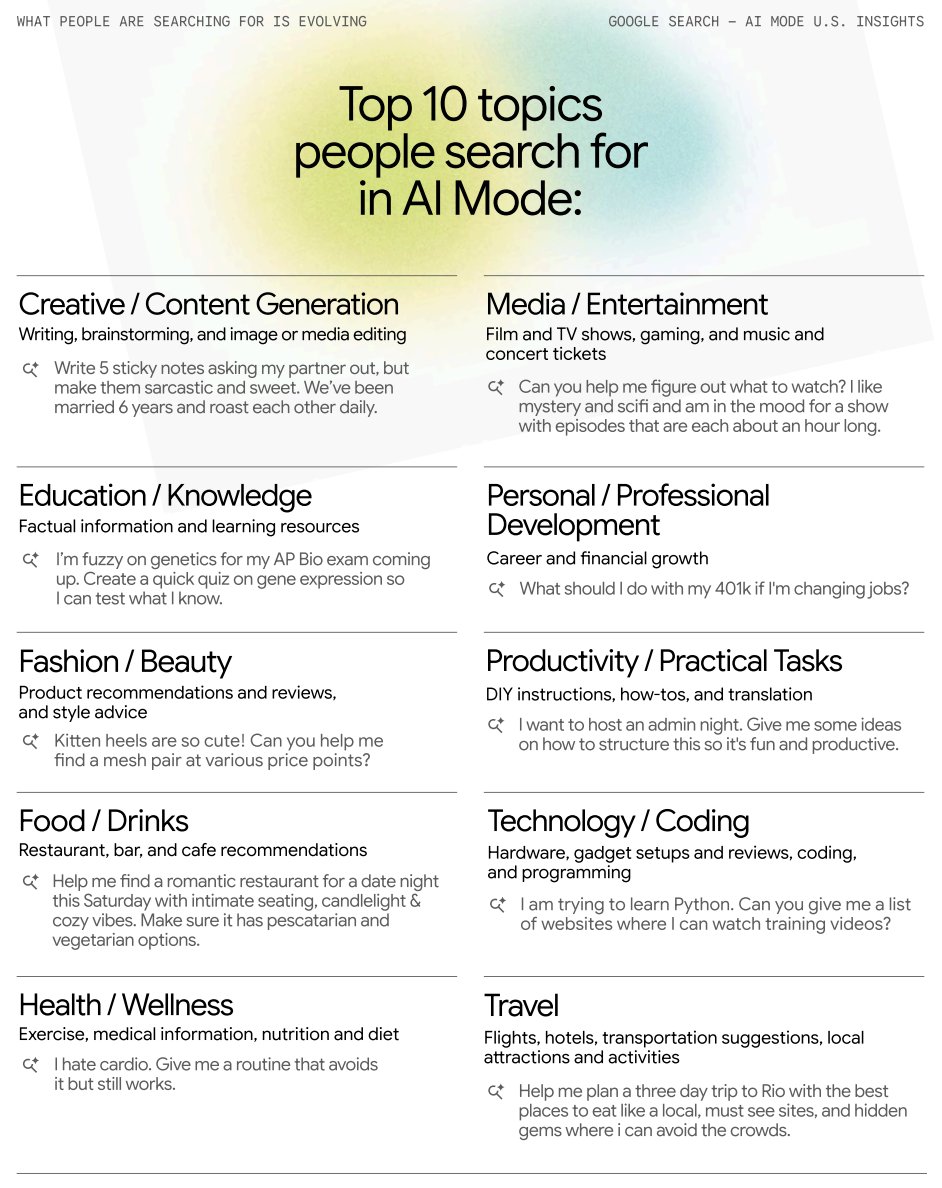
📊 Google just shared a new report on how people are using AI Mode in the US. 👇
Useful directional insights, yes. Complete market picture, no: The keyword data comes from sampled Google Trends data for AI Mode.
With that in mind, a few patterns worth paying attention to:
🔎 Searches are longer and more conversational.
The average AI Mode query is 3x the length of a traditional Search query. Keyword research now needs to be complemented with prompt, task, constraint and scenario research.
💬 Follow-up behavior matters.
Follow-up queries grew 40%+ on average per month. Brand visibility can't be analyzed only at the first prompt anymore: a brand might be mentioned, dropped, compared, misrepresented or never cited across the journey.
This means the unit of analysis is the journey, not the query.
🛍️ AI Mode is being used to decide, not only to discover.
* Which" queries grew 40% faster than AI Mode queries overall in the past six months.
* The top retail attributes people look for: price, location, color, brand, availability, size, material, style, type, quality.
This means Ecommerce AI Search optimization shouldn't be only about "more product content": it's accurate, complete, fresh and consistent product data across pages, structured data, feeds, variants, reviews and attributes.
📍 Local and availability intent is very visible.
Follow-up store queries include "near me", "in stock", "replacement parts", "car dealerships with financing".
AI systems need to understand location, inventory, services and constraints to satisfy these.
🧭 AI Mode is becoming a task layer, not only an answer layer.
Planning queries grew 80% faster than AI Mode queries overall. The opportunity is to be included in plans, shortlists, comparisons and workflows, not only ranked for individual queries.
👀 My takeaway:
Don't confuse Google's usage narrative with independent performance data. There's a behavioral shift and Google has every incentive to frame it favorably for its own ecosystem.
For SEOs and marketers, the practical next step isn't to replace SEO fundamentals. It's to expand how we research, optimize and measure:
✅ From keywords to prompts, tasks and constraints
✅ From rankings to presence, citations and representation accuracy
✅ From single queries to follow-up journeys
✅ From content-only optimization to entity, product, local and feed-level readiness
✅ From observed traffic to a more nuanced view of visibility and influence
AI Mode makes it increasingly risky to measure search visibility only through traditional rankings and clicks.
Read the full report in: https://t.co/JeBmLePG7Q
The 8 Levels of Ecommerce SEO (hint: you're probably missing 5+):
Most eCommerce brands do 1 or 2 levels of SEO.
Then wonder why they can't rank.
Here are the 8 levels of eCommerce SEO — and what it actually takes to win:
Level 1: Know Your ICP
Who are you selling to?
- Define your ideal customer in detail
- Know their pain points, search behavior, and buying triggers
- Everything else builds on this
Level 2: Keyword Research
No keywords = no strategy.
- Find keywords for your collection pages, product pages, and blog
- Separate by intent: collection pages = category intent, product pages = transactional intent
- Build a list of 50-100+ keywords before you touch a single page
Level 3: On-Page Optimization
This is where Shopify stores leave money on the table.
- Optimize every collection page with a target keyword, H1, and unique description
- Write product page copy that sells and ranks — meta titles, descriptions, and headers matter
- Don't let Shopify's default templates dictate your SEO structure
Level 4: Content Writing
Blog content fills the gaps your product and collection pages can't.
- Target TOFU and MOFU keywords with educational blog posts
- Use blogs to internally link back to your collection and product pages
- Write for humans first, Google second — depth wins over word count
Level 5: Link Building
Authority is earned, not assumed.
- Aim for DR 30+ backlinks with real traffic
- Use partnerships, guest posts, and digital PR
- Build 10+ quality links per month over time
Level 6: Website Performance
Google ranks experiences, not just content.
- Fast load speeds on desktop and mobile
- Clean UX with clear CTAs
- Fix crawl errors, redirects, and broken links regularly
Level 7: CRO
Traffic means nothing if it doesn't convert.
- Optimize collection and product pages for conversions
- Test headlines, CTAs, and page layouts
- Turn organic visitors into buyers
Level 8: Analytics
This is what separates good SEO from great SEO.
- Track clicks, rankings, traffic, and revenue monthly
- Use GSC, GA4, and Ahrefs together
- Make decisions based on data — not gut feeling
Most Shopify brands stall at Level 2 or 3.
The ones that reach Level 8 — and stay consistent — are the ones dominating Google.
---
Which level are you currently at?
♻️ Repost if this gave you clarity on where to focus your eCommerce SEO.
P.S. At TrioSEO, we run all 8 levels for eCommerce brands ready to grow with SEO. Book a call: https://t.co/uIexj9oU9h
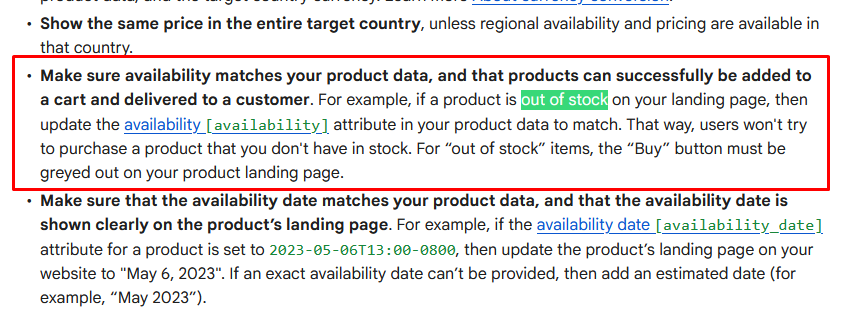
Focus on ecommerce? -> Any inconsistency between the page and the feed can lead to disapprovals: Google tightens rules on out-of-stock product pages
"Google now requires that out-of-stock products must still display a buy button, but it can no longer be active or hidden. Instead, the button must be visibly disabled and appear grayed out. In other words, users should be able to see the button, but not click it. This marks a clear shift from common practices where retailers either left the “Add to Cart” button clickable or removed it entirely. Both approaches are now non-compliant."
"In practical terms, the requirement is simple. The buy button must remain on the page, but its functionality needs to be turned off. Typically, this is done by applying a disabled state so the button becomes unclickable and visually subdued." https://t.co/htZFU6LUyX via @TheMarketingAnu
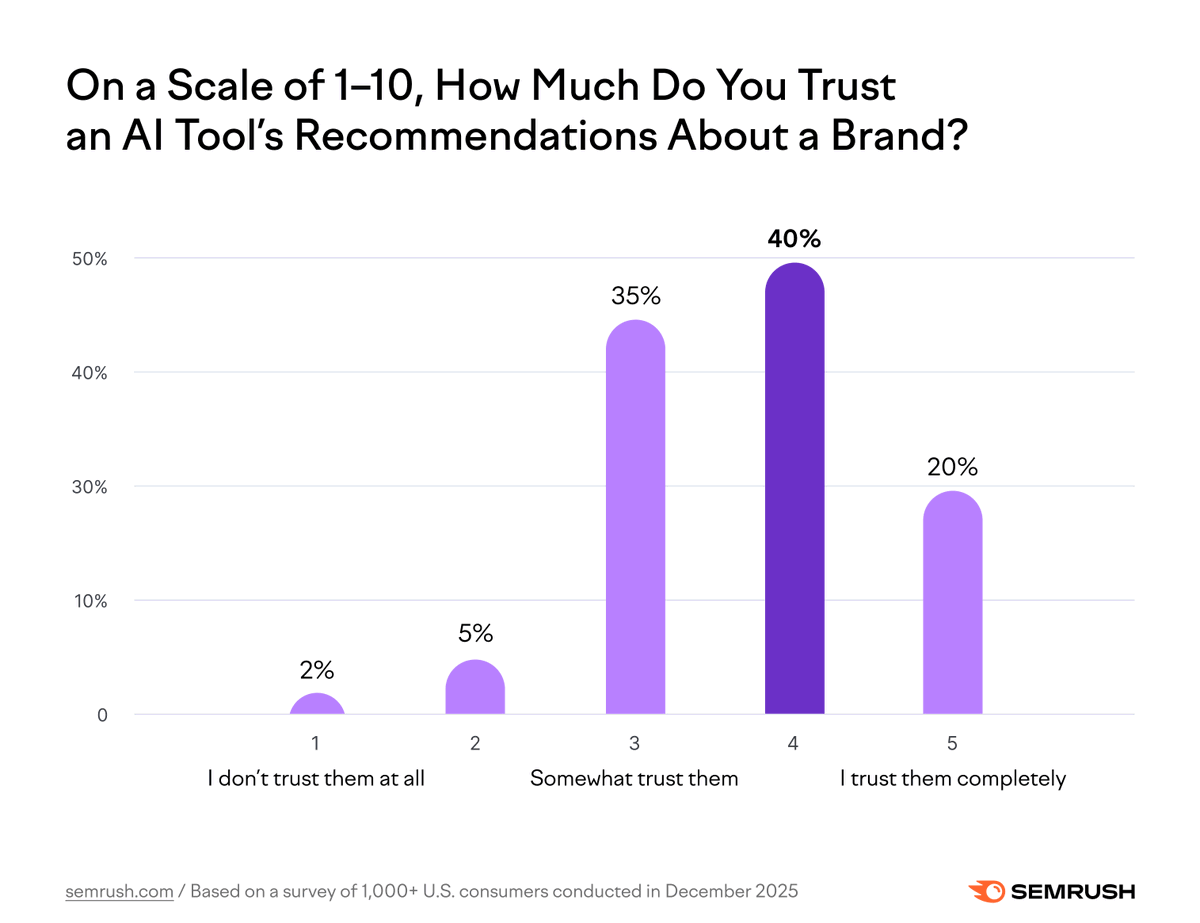
AI recommendations are becoming a trusted part of the buyer journey.
In our latest consumer study, 75% of U.S. consumers rated their trust in AI brand recommendations at 3–4 out of 5, and 20% said they trust them completely.
But shoppers don’t rely on AI alone. Most still verify recommendations through search, brand websites, and reviews before making a purchase.
AI may start discovery. Your overall search presence is what helps close the loop.
See what else we learned about AI and the modern buyer journey 👇
https://t.co/VkpnTKLVU7.
We’re at a turning point in SEO.
For decades, the playbook was simple: create great content, optimize for search, and watch the traffic roll in. A lot of successful businesses were built on that playbook. Semrush is a living example of this.
But generative AI has changed SEO forever. Here's what we’re noticing across the industry:
• Google is sending less traffic to websites as more queries are answered directly in AI Overviews
• AI chatbots like ChatGPT & Claudelargely cite big brands, making it harder for smaller sites to gain visibility
• With fewer clicks, SEO doesn’t deliver the same predictable ROI it once did
So, how do you build a successful online business when traffic sources are drying up?
Here's our analysis: https://t.co/wBoKmxG9iO.
One thing you can do to make AI create SEO content that doesn't suck:
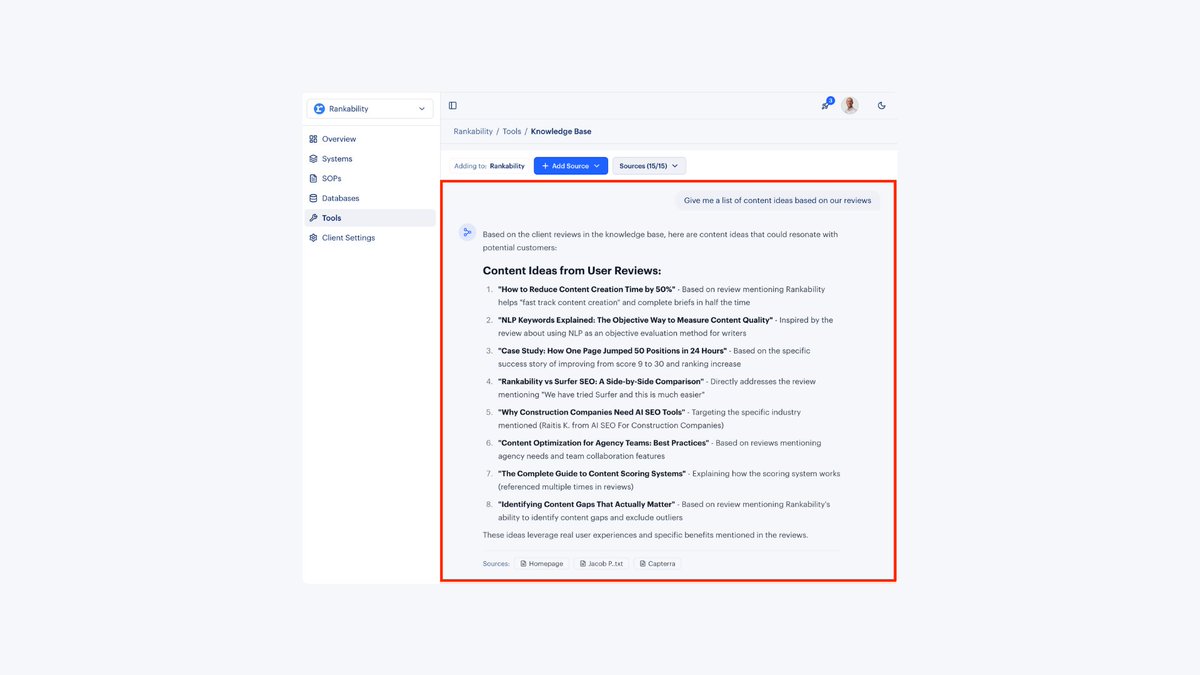
✨ Create a client knowledge base
Step #1: Collect
Gather sales/product/service pages, pricing page, reviews, testimonials, sales call transcripts, etc.
Step #2: Feed the AI
There are three ways to do it:
ChatGPT projects
Create a project and add documents about your client.
Search OS
Use the Knowledge Base Builder to crawl your web pages, paste text, or upload files.
You can then ask Advisor to give you content ideas, create content briefs/outlines, etc.
Then just feed these on-brand content briefs into
@getrankability and you'll get killer content.
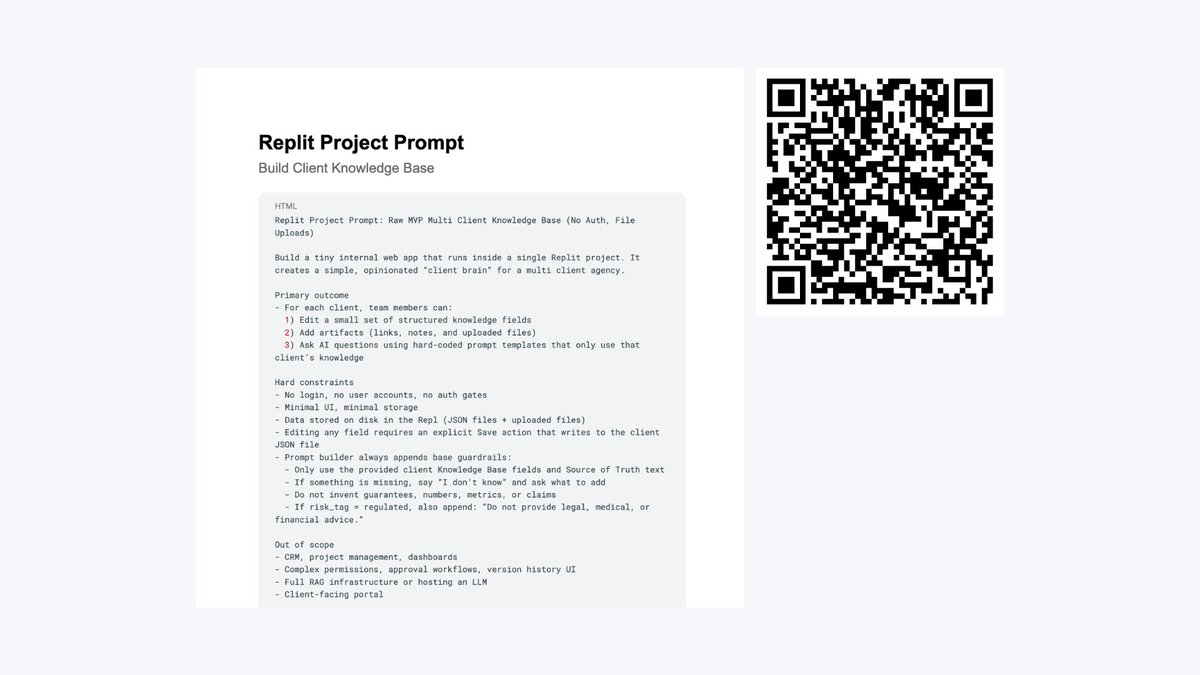
Vibe code
Use the prompt below in Replit and it'll get you 80% of the way there:
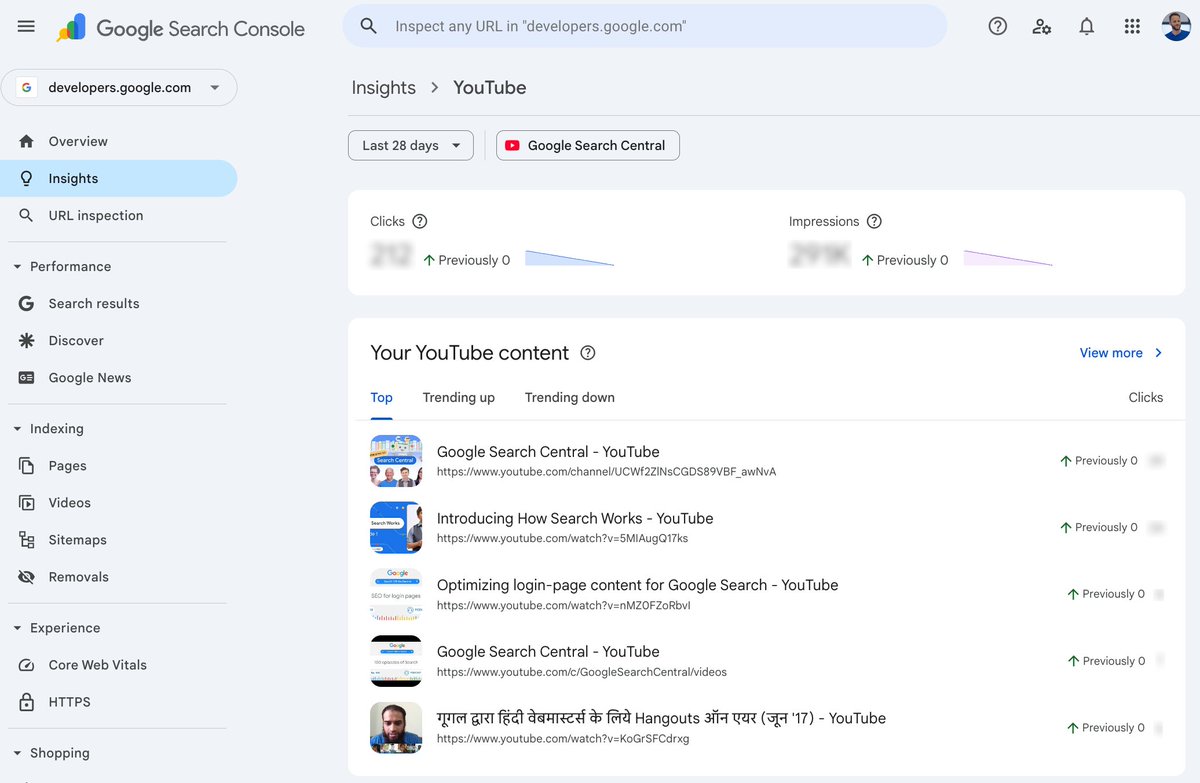
Today, we are excited to announce a new experiment in Search Console that offers site owners a unified view of their Google Search performance across their websites and social channels. https://t.co/UfAqOHhAAh