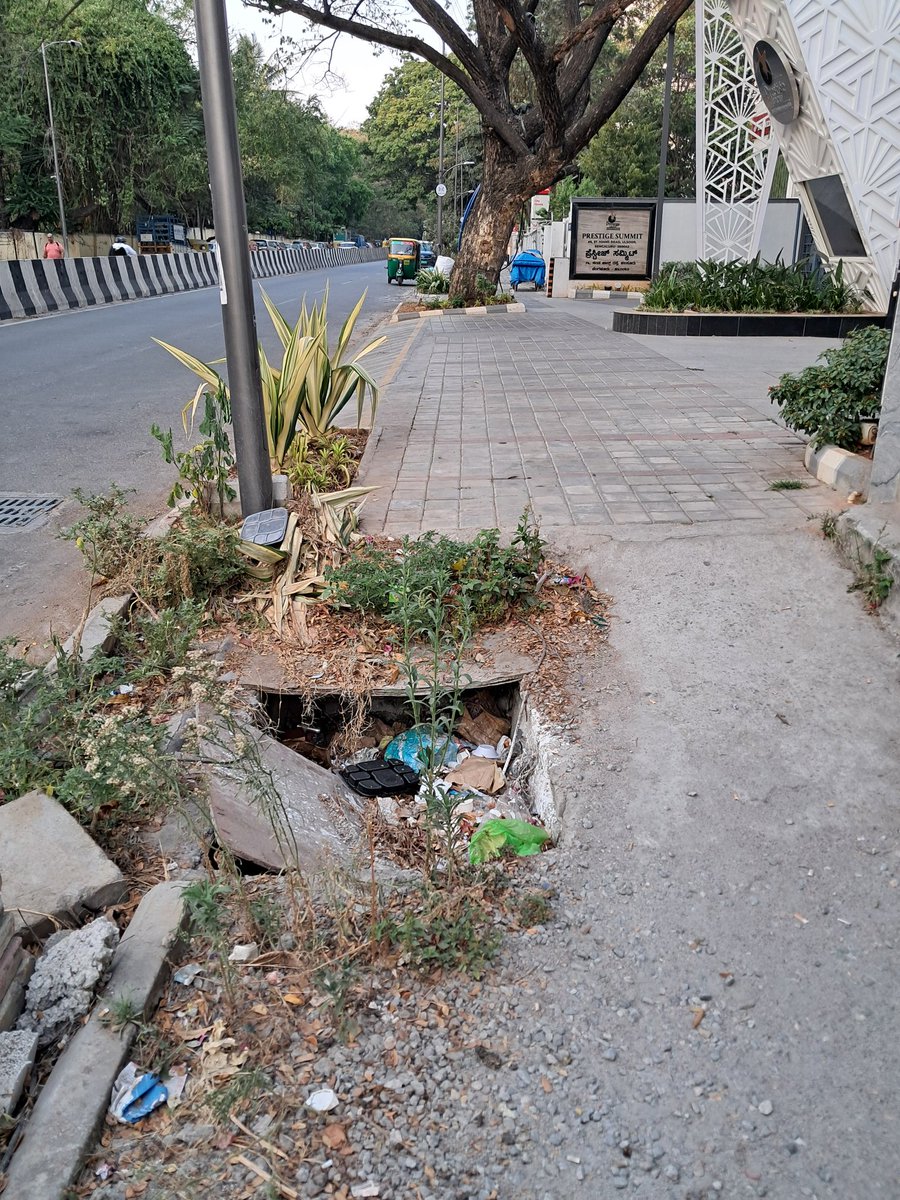
@BBMPCOMM @BBMPAdmn @BBMPofficial Namaste there is a big hole in footpath St Johns road. This is smart city funded but no one is closing hole. Dangerous. Pls help
I warned you about this dump.
Silver is now following the path I outlined:
$96 → $60 → $89 → $61 → $71 → $50 → $40
Next stops:
→ $50 within days
→ $40 by July
2011 Is Repeating.
Remember, I've predicted every major move for 12 years. I was the only one publicly calling the exact Bitcoin bottom at ($16K) three years ago and the top at ($126K) in October.
If you missed those calls, don’t worry. I’ll call the next one too.
Pay attention to what I post in the next few days/weeks. Notifications on.
🚨The Tables Have Turned: Russia Is Set to Buy Petrol in Large Scale from India on a Large Scale. Here's Why.
For the past four years, Russia has been one of India's largest suppliers of crude oil, helping fuel the country's booming economy with discounted energy exports. But the roles are now beginning to reverse.
Russia is preparing to import refined petroleum products, particularly petrol (gasoline), from India on a large scale—a dramatic shift for a nation long regarded as an energy superpower.
The reason lies in the mounting damage to Russia's refining infrastructure. Over the past year, Ukrainian drone strikes have repeatedly targeted Russian oil refineries, fuel depots, export terminals, and pipeline networks. The latest attack on the Moscow Oil Refinery is believed to have caused severe damage, with reports suggesting the facility could remain partially or fully offline for months.
While Russia continues to produce vast quantities of crude oil, converting that crude into usable fuels has become an increasing challenge. The repeated strikes have reportedly reduced Russia's gasoline production by nearly 25%, creating a significant domestic fuel shortage and forcing Moscow to rethink its energy strategy.
To bridge the gap, Russia is introducing tax amendments and import subsidies to make large-scale gasoline imports economically viable. India has emerged as the natural choice.
Over the years, India has built one of the world's largest and most sophisticated refining industries. Indian refiners can efficiently process heavy and light crude from multiple sources—including Russian crude—and produce high-quality petroleum products at scale.
The result is an extraordinary reversal in the energy trade. Russia will continue exporting crude oil to India, Indian refineries will process that crude into petrol and other fuels, and a portion of those refined products could then be shipped back to Russia to meet its domestic demand.
It is a striking example of how modern warfare can reshape global trade. A country that once supplied energy to much of the world is now turning to one of its biggest customers for refined fuel, highlighting the growing strategic importance of India's refining capabilities in the global energy market.
Yesterday, I visited a very successful jeweller.
His office was pure luxury. But one thing caught my attention.
Behind his desk was a firm, upright executive chair.
For visitors? A soft, fluffy sofa.
At first, I thought: Nice. He cares about his guests’ comfort.
Then I sat down. Big mistake. I sank into the sofa. My posture collapsed, My back wasn’t straight & I felt relaxed, almost passive.
Meanwhile, he was sitting upright, alert and in control.
That’s when I realized the furniture was designed for negotiation not for comfort.
The person sitting comfortably often becomes less attentive, less assertive and less confident.
The person sitting upright controls the room.
Sometimes the negotiation starts long before the first word is spoken.
Everything is psychology.
🚨India Hits Pause on Starlink as Jio Prepares a $15 Billion Challenge to Elon Musk's Satellite Empire
Today, Starlink is no longer seen merely as an internet provider. It is increasingly viewed as strategic infrastructure, an asset with implications that extend far beyond civilian communications.
And that realization appears to be shaping India's approach.
According to reports, Starlink's commercial rollout in India has encountered fresh scrutiny as security agencies continue to examine concerns related to data sovereignty, regulatory compliance, and the strategic implications of allowing a foreign-controlled satellite communications network to operate at scale inside the country.
The concerns have intensified following the growing use of satellite internet systems in modern conflicts.
From Ukraine to the Middle East, satellite-based communications have emerged as a critical component of next-generation warfare. Drones, battlefield communications, intelligence sharing, and real-time command systems increasingly depend on resilient satellite networks capable of operating even when conventional infrastructure is disrupted.
That reality has transformed satellite internet from a commercial product into a strategic capability.
For India, the question is therefore not simply whether satellite internet should be available.
The question is who controls it.
Security planners are particularly focused on issues of data routing, network control, lawful interception, and the ability of Indian authorities to enforce domestic regulations on communications infrastructure operating within the country's borders.
India appears determined to build its own alternative.
Reliance Jio is reportedly preparing one of the most ambitious private space infrastructure projects in Indian history. The proposed venture could involve an investment of up to $15 billion and a constellation of more than 1,500 low-earth-orbit satellites designed to provide broadband connectivity across India.
If approved, the project would represent far more than a commercial challenge to Starlink.
It would be a strategic statement.
India has already achieved self-reliance in critical sectors ranging from digital payments and telecommunications to missile technology and defense manufacturing. Satellite communications could become the next frontier.