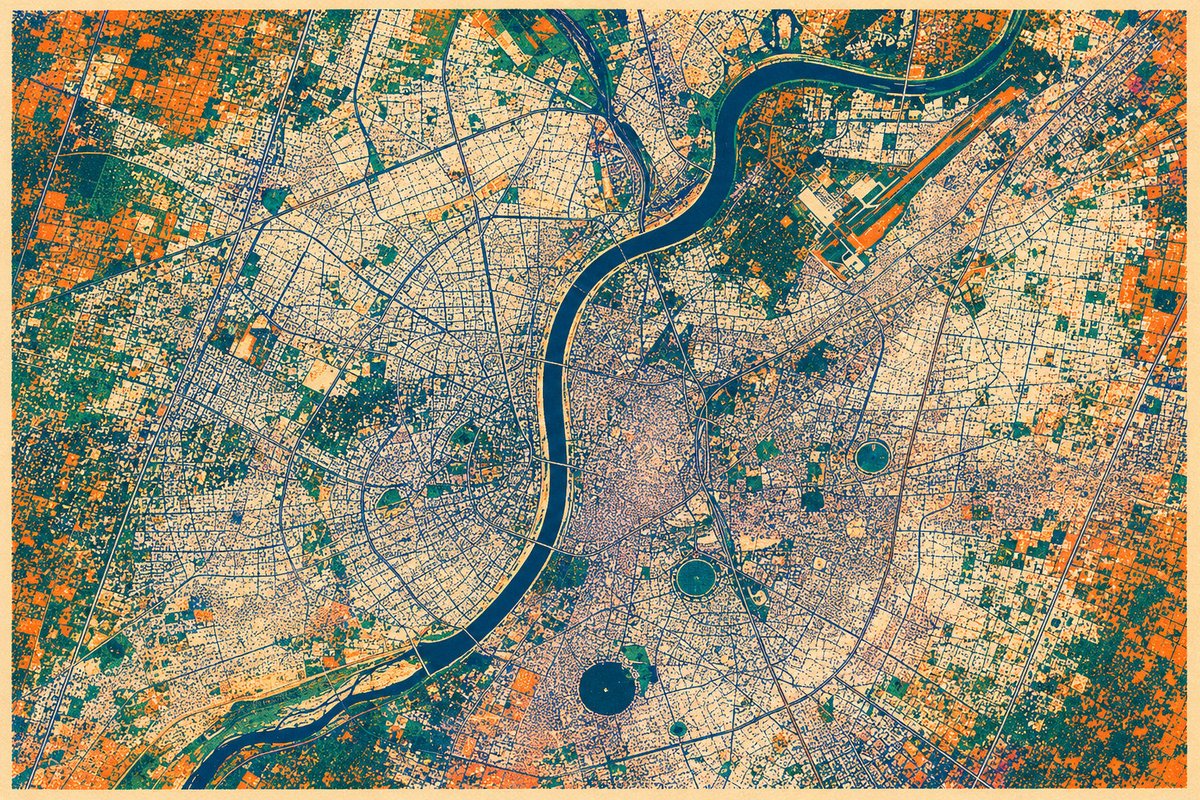
Indian cities often grow first and plan later. Ahemdabad did something different, it used planning as a habit, not as a slogan.
My latest essay/piece on how the city quietly disciplined its growth.
Link👇🏼
Of all the large Indian cities, one has done what urban planning is supposed to do over the last 25 years.
Slums have been limited to about a quarter, against Mumbai's half. India's first working bus rapid transit. A working metro. A reclaimed river.
Here's the story of Amdavad.🧵
India will never have good urban spaces until these virtue-signalling sycophants who can never think beyond dilapidated buildings, obfuscated roads as the “soul” of a space are schooled. Such notions shouldn’t have any place in urban planning.
One of the defining legacies of the
#NarendraModi era in #Gujarat . How #Amdavad was essentially planned & rebuilt into amodern metropolis between 1999-2014 the 15 years of Modi as CM .
https://t.co/CsaYwuvb4A
Amdavad "is not the capital of anything important; Gandhinagar is. It is not glamorous, the way Mumbai is. It is not political, the way Delhi is. It is not techy, the way Bengaluru is"
What makes it work? Great in depth essay by Deepesh Gulgulia
https://t.co/CuZwbtSBBy
Of all the large Indian cities, one has done what urban planning is supposed to do over the last 25 years.
Slums have been limited to about a quarter, against Mumbai's half. India's first working bus rapid transit. A working metro. A reclaimed river.
Here's the story of Amdavad.🧵
How does TPS work?
The city drew a new layout with roads, parks, and schools over a patch of farmland.
- Each farmer got back 60% of his land, now serviced with road access and clear title.
- Other 40% became the public infrastructure, and a slice was auctioned to fund it.
The lesson is duller than people want. Ahmedabad didn't have a great idea. It had one medium-sized idea — that the state should help organise land instead of taking it, and used it steadily for 25 years.
Read @deepeshgulgulia's essay on 'Amdavad's Quiet Discipline' in @SwarajyaMag.
https://t.co/xp6po6Svsx
Indian cities often grow first and plan later. Ahemdabad did something different, it used planning as a habit, not as a slogan.
My latest essay/piece on how the city quietly disciplined its growth.
Link👇🏼
Of all the large Indian cities, one has done what urban planning is supposed to do over the last 25 years.
Slums have been limited to about a quarter, against Mumbai's half. India's first working bus rapid transit. A working metro. A reclaimed river.
Here's the story of Amdavad.🧵
In this essay, @JhalaZalimSingh explores how enduring political movements build institutions, cultivate counter-elites, and preserve influence beyond electoral cycles. Through the experience of the American conservative movement, it examines the relationship between political success, institutional power, and long-term survival.
Read: https://t.co/rwB3GyU20X
"Patriarchal technocapitalism"?!?!
This is the garbage influencers will come up with if every one of them will be offered a book deal by a mainstream publisher for having 1 lakh+ non-dehati audience.