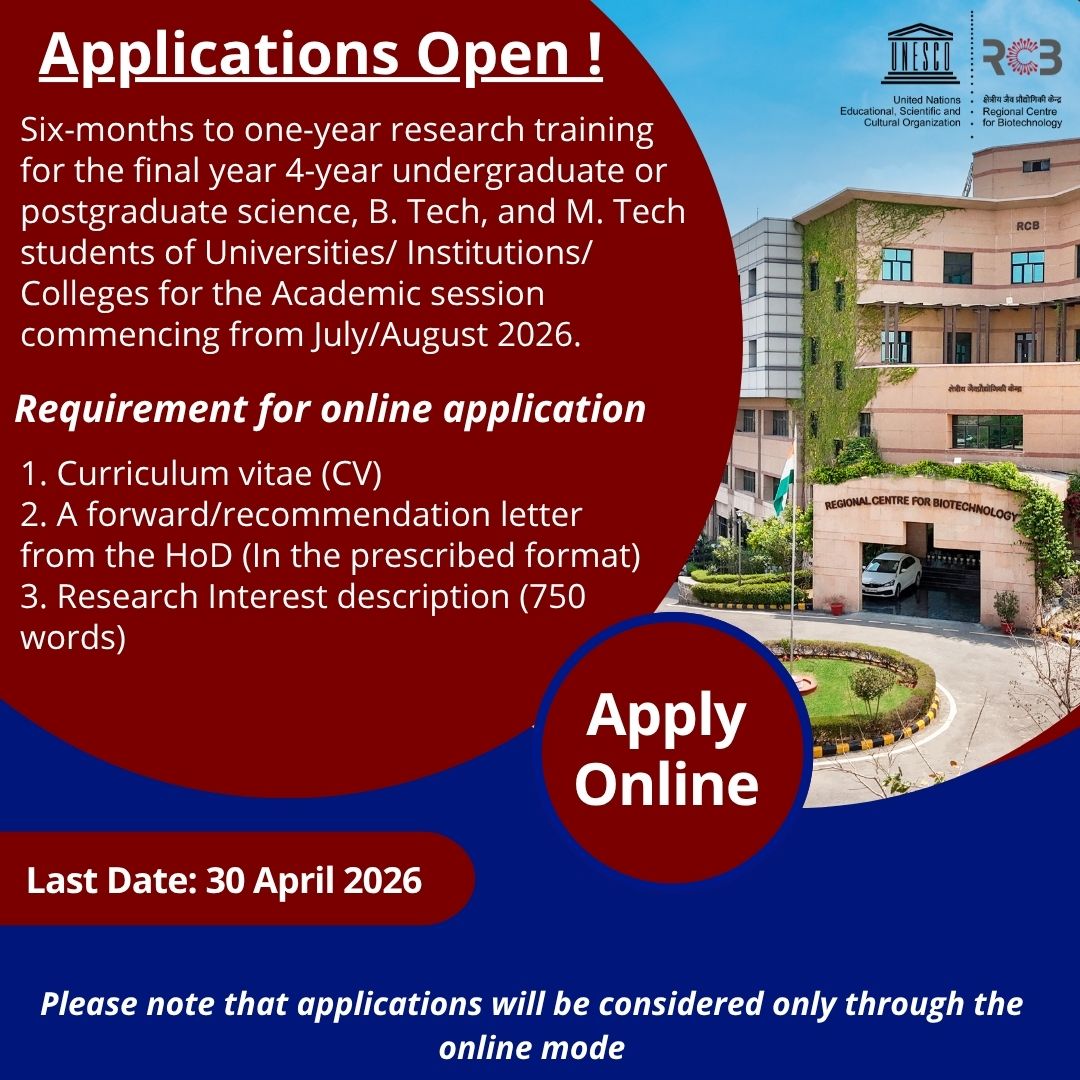
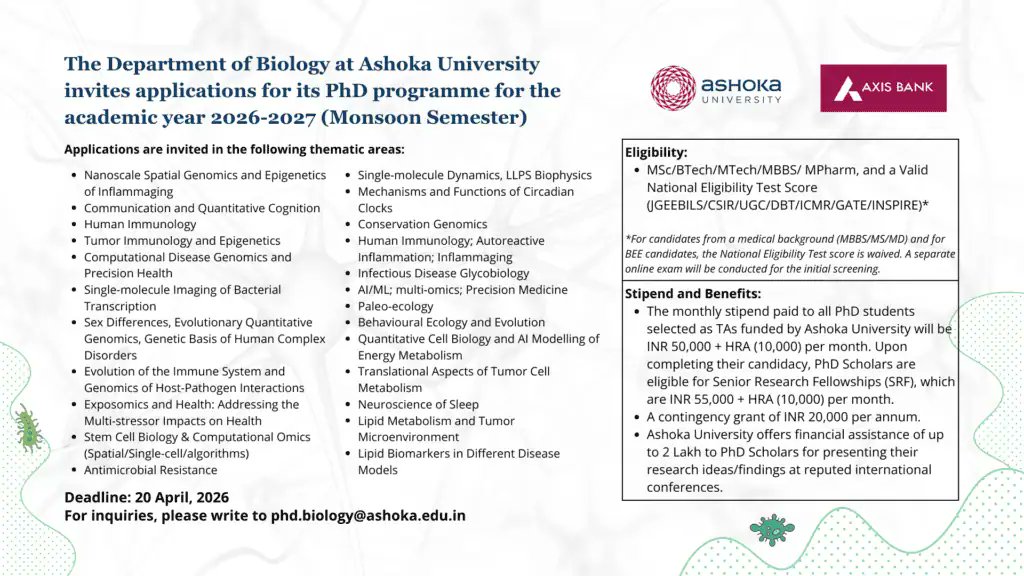
We have recently posted for three Project Research Scientist Positions (I, II and III). Kindly help us circulate the advertisement for finding suitable candidates.
Details here
https://t.co/lzpqt6pUbo
Application details - https://t.co/m4y67J50Sj
Deadline - 4th June 2026
3 new faculty positions have been advertised on ACTREC website under the jobs tab in the areas of cancer biology & translational cancer research. Pls spread the word & share the info with anyone interested!
@biopatrika@VoicesofIndAcad
Introducing AF-Pipeline, open-source Python package for extracting confident structures, interfaces from AlphaFold predictions https://t.co/tsxVTfXSaA
Github: https://t.co/CSytAkEdEZ. Designed and developed by @Omkar_Golatkar_ , initialized by @KartikMajila , tested by @muskaanjl
Pulitzer-winning writer featuring our flagellar motor work and animation on @QuantaMagazine cover reminds me why open access and outreach matter in science. When we share our work, research reaches millions.
Article: https://t.co/2drTYmA8rW
Paper: https://t.co/m98Df1DuOr
Bacteria move around using a molecular machine called the flagellar motor that rotates faster than the flywheel of a race car engine and switches directions in an instant. After 50 yrs, scientists have finally figured out how it works. “My lifelong quest is now fulfilled.” Link⤵️
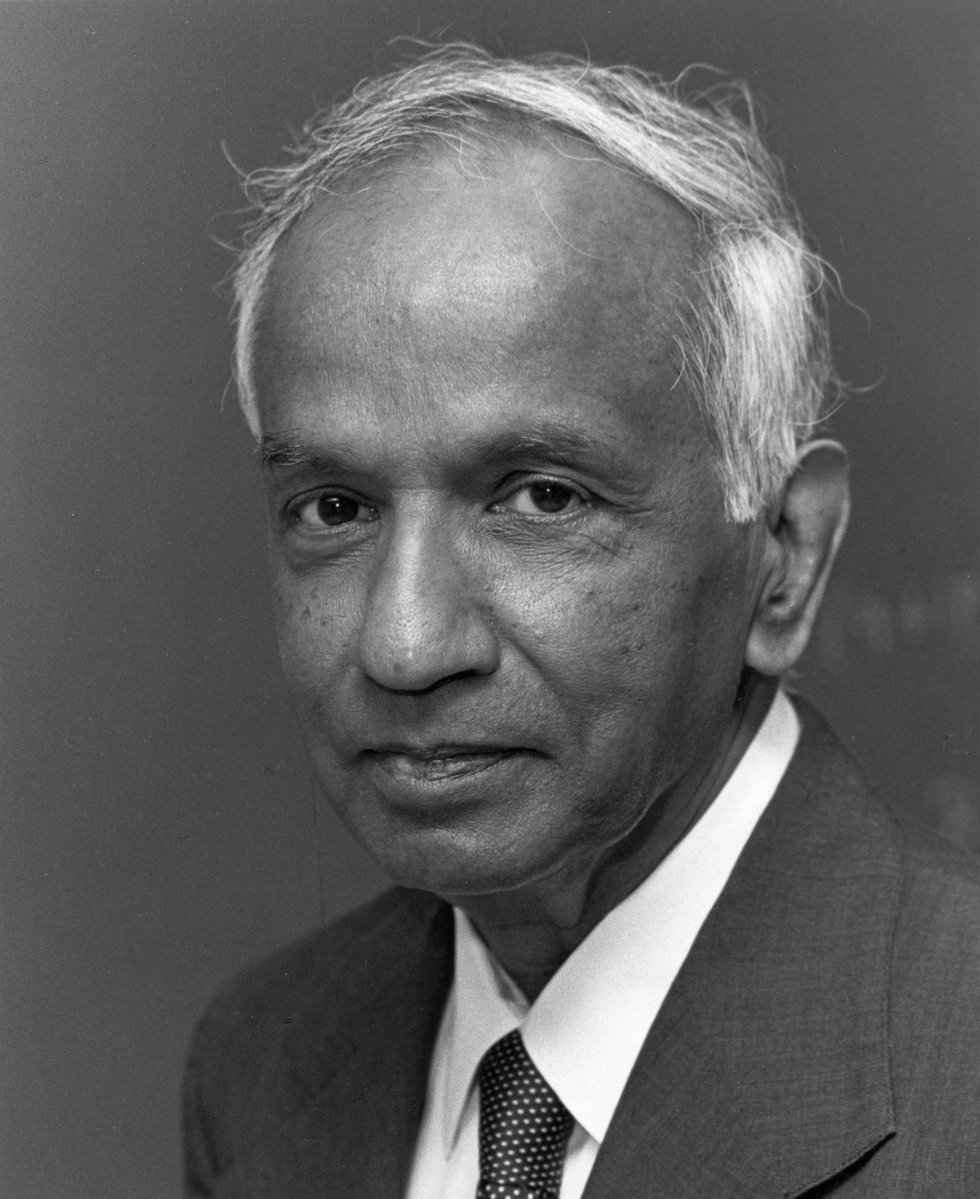
His name was Subrahmanyan Chandrasekhar.
In 1930, he was 19 years old. A boy from Madras is boarding a ship to England on a scholarship to Cambridge.
During that sea voyage, he opened his notebook and started calculating.
By the time the ship docked in Southampton, he had worked out something no one in the history of science had understood before.
Stars do not simply fade and die. Stars above a certain mass collapse into themselves with such force that nothing can stop them. Not light. Not time. Not physics as anyone understood it.
What he had discovered on that ship would eventually be called black holes.
He arrived at Cambridge. He spent four years refining his calculations. He showed them to Arthur Eddington. The most famous astronomer in the world at that time. The man who had proven Einstein right.
Eddington watched his progress. Encouraged him. Asked him to present his findings at the Royal Astronomical Society in January 1935.
Then Eddington gave his own presentation immediately after.
He publicly ridiculed Chandrasekhar in front of the entire scientific establishment. He said the theory had no physical meaning. He called it absurd. He used his enormous reputation to crush a 24-year-old Indian student in front of everyone who mattered.
Chandrasekhar left that conference devastated.
He appealed to the president of the International Astronomical Union. He was told not to respond to Eddington publicly.
He left England.
He went to America. To the University of Chicago. He drove 150 miles every week to teach a class of just two students. Those two students were Tsung-Dao Lee and Chen-Ning Yang.
Both of them won the Nobel Prize before he did.
He spent 50 years working quietly. He never stopped.
In 1983, the Nobel Committee called.
53 years after he worked out the existence of black holes on a ship as a teenager, the Nobel Prize in Physics was his.
NASA later named its most powerful X-ray telescope after him.
The Chandra X-Ray Observatory.
The universe he described is real. Eddington was wrong. The boy on the boat was right.
Most Indians have never heard his name.
They should say it every day.
Follow for real stories about Indians who changed the world.
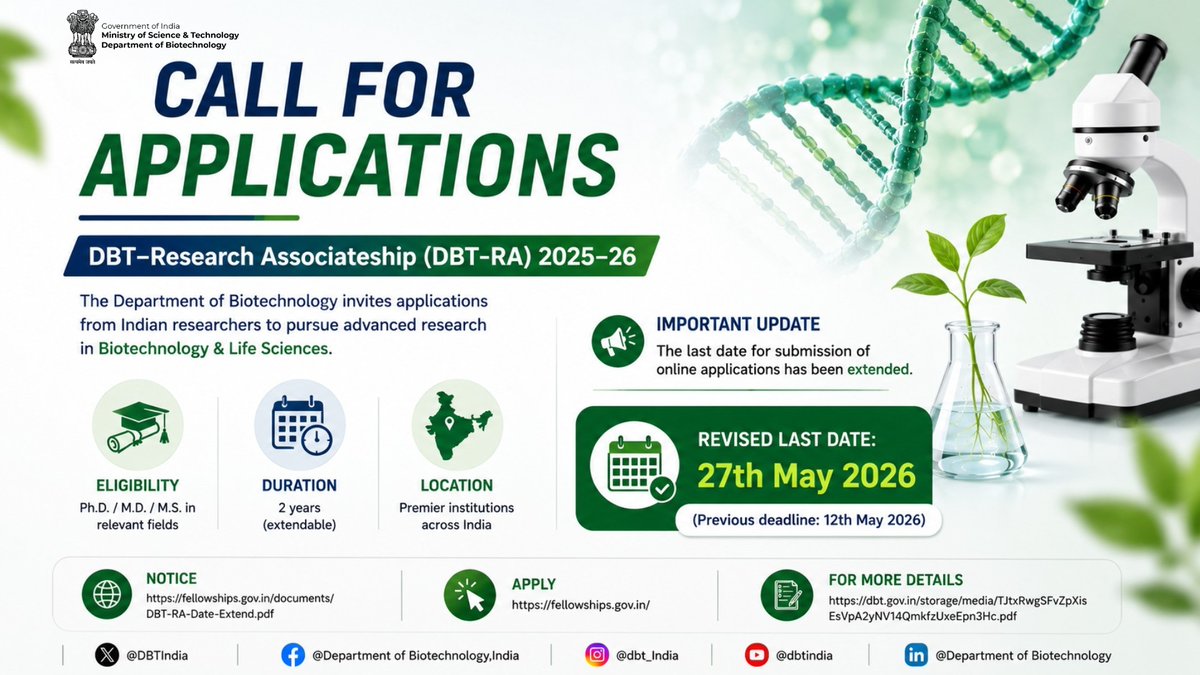
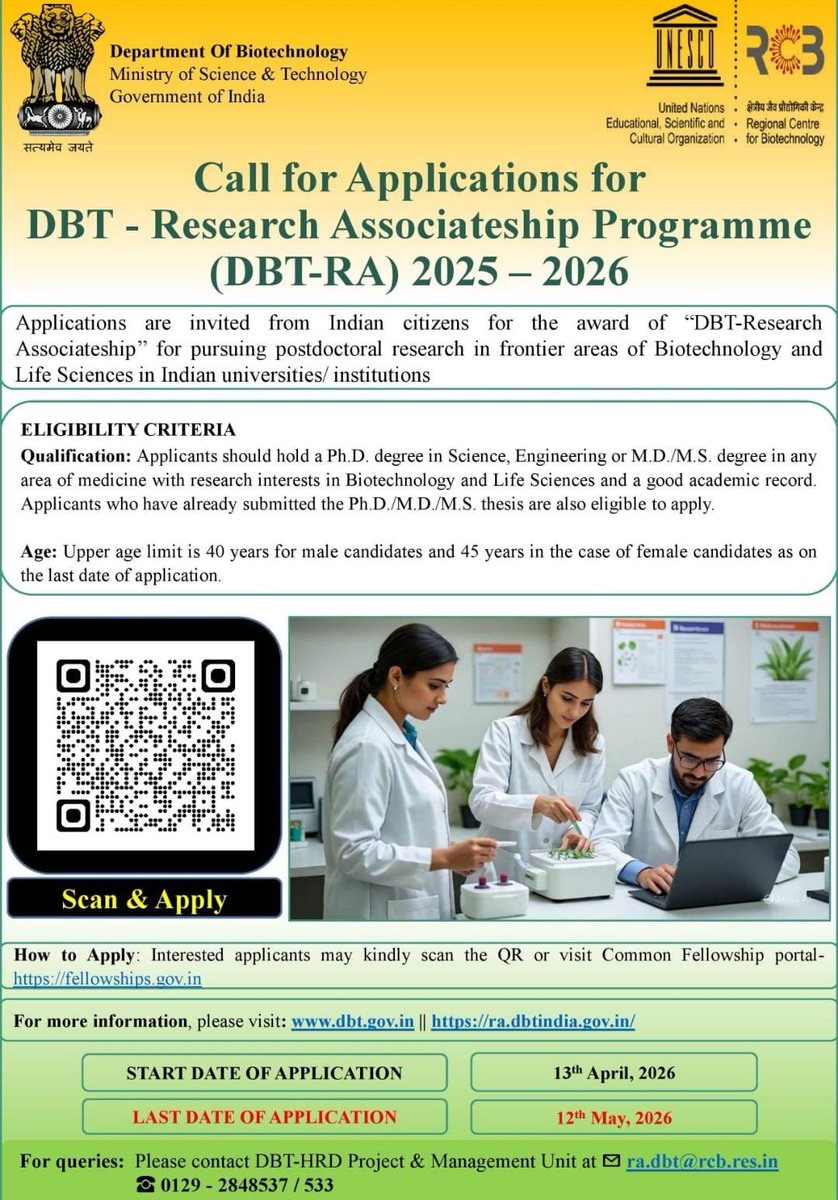
Looking for post Doctoral opportunities in Life Sciences, Biotechnology.
@DBTIndia invites applications for Research Associateship from those holding PhD in Science or Engineering or Master in Medicine/Surgery.
Age limit 40 years for male and 45 years for female applicants.
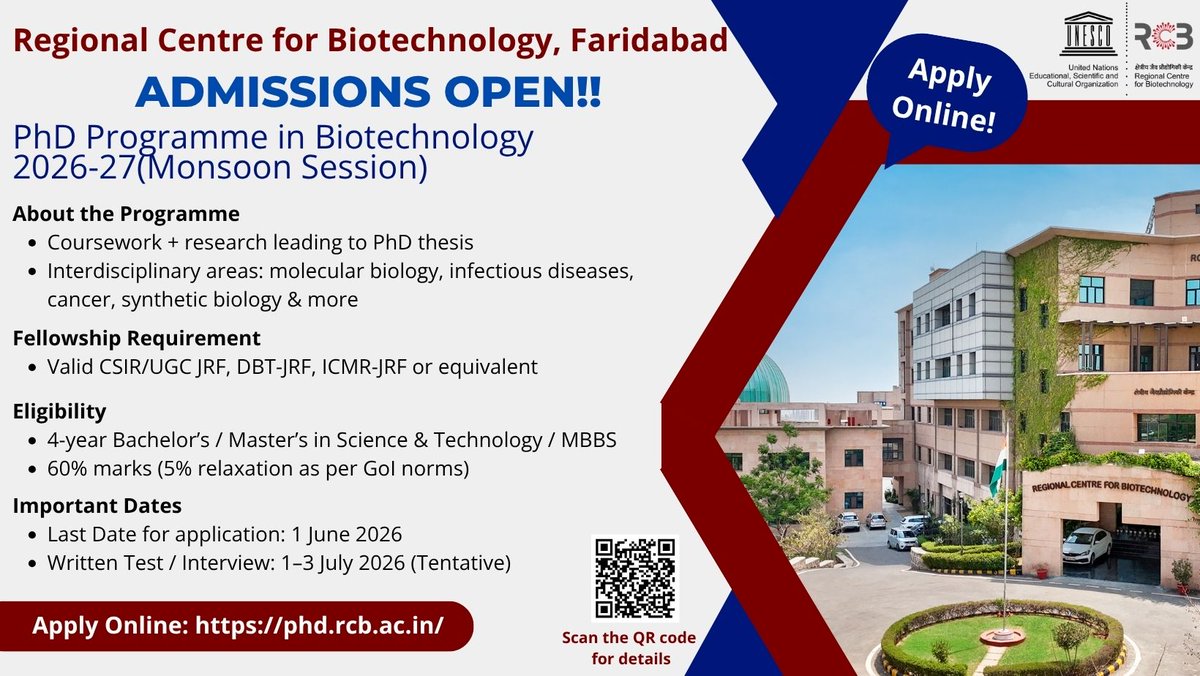
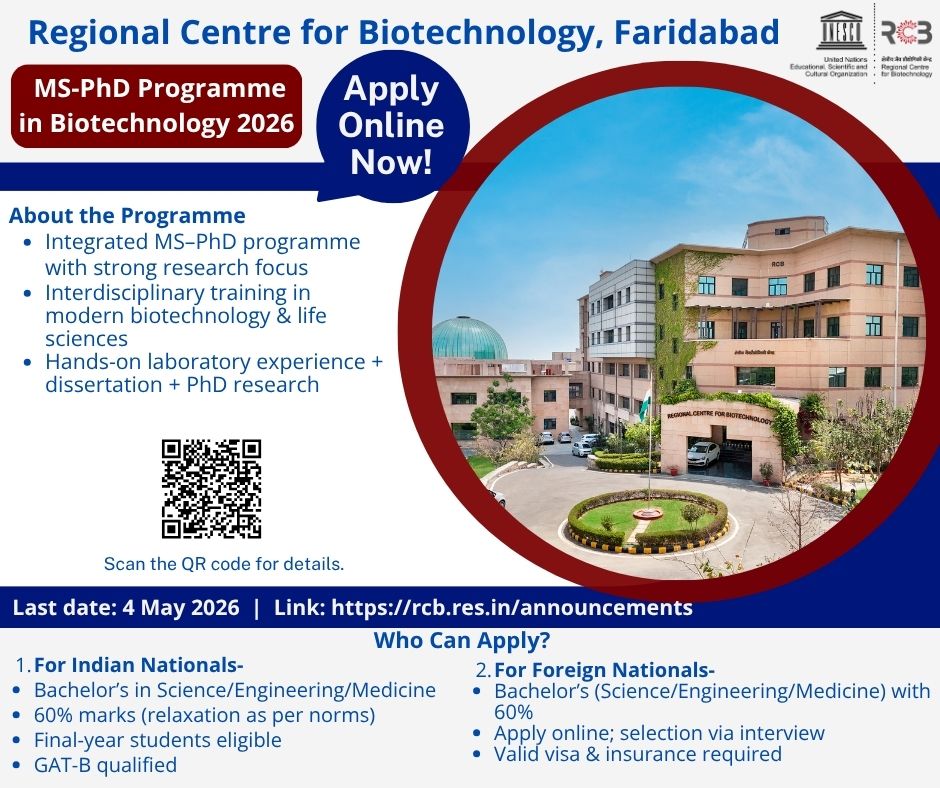
PhD positions | Single-molecule biology
I will be taking on two PhD students to study bacterial transcription at the single-molecule level, using live-cell tracking and smFRET to probe the real-time dynamics of transcription complexes.
Please apply here: https://t.co/mEIzEUkdjd