Knowledge work has moved from the 80/20 rule to the 99/1 rule: AI hands you something 99% finished in a minute.
Doing 1% of the work sounds restful. Instead, a March HBR/BCG study coined “AI brain fry”: workers pushed into heavy AI oversight report 33% more decision fatigue and 39% more major errors, with strain surging past 3 concurrent AI tools.
Why? Because the old 80% slog (formatting decks, tidying models) was disguised recovery where your brain worked out the argument.
Delete the cruise, and the whole day is take-offs and landings.
Everyone seems to have forgotten that code is a liability, not an asset.
That means that producing thousands of lines of code you didn’t read isn’t something to celebrate. It’s something to worry about!
Every line of code needs to be tested, secured, and maintained. Even the ones that create no value for customers and therefore no value to the business.
That’s why every line of code is a liability. And producing more liabilities isn’t good engineering or good business.
Good engineering isn't about producing more code. It's about solving problems with the least amount of code.
The asset is the solution, not the code.
I think I'm starting to degrade as an engineer
1. I stopped keeping up with programming languages, libraries, new patterns, systems, and all of that a long time ago. I couldn't care less about what's new in React, what got added to PyTorch, or what's in the latest ES spec. I can't even make myself spend 5 minutes skimming the docs
2. The amount of task context and information I hold in my head has shrunk to a minimum. When I used to research a topic through Google, I'd pick up a ton of interesting things along the way and broaden my horizons. Now an agent sends me something, and without even looking I say: ok, use it
3. My attention span has gotten worse. All I do is wait. On one hand, I think that's better than faking hyperproductivity, burning millions of tokens and degrading the work. I'm a firm believer in the linear approach. On the other hand, a 5-minute wait can stretch into 30. I switch to something else and find it hard to get back to the task
4. My anxiety has gone up. A lot of people call this cyberpsychosis. I wake up thinking about agents. I eat thinking about agents. I go for a walk thinking about agents. I talk to people thinking about agents. Even when I'm not working with agents, I'm thinking about what cool things I could do with them and planning my next session with them
5. I've become hyper-lazy. If something can't be solved with agents, I try not to do it at all
6. My creativity has faded. I may not be the strongest engineer, but I consider myself creative. That was always my strength. I could always come up with something interesting, an interesting solution. But that happened while I was working on something. Running into problems. Taking in new information. My brain was in a continuous flow. Now I've become dull and one-dimensional. I can no longer look at a problem from a different angle
I'm sure everyone who works with AI has these problems at least to some degree, even if few admit it. I worry that humanity will stop developing. AI is not the solution to every problem or a cure for every disease. It's a tool pretending to be an agent in its own right. In its current architectural forms, it will never be able to go beyond its own limits. A human can. But once people slip into the state I'm in, progress may slow down and get locked inside the bubble of what AI is capable of
In any responsible country, this area would be barricaded, with giant warning signs declaring its toxic water and foam unsafe for human contact.
In Delhi, children are playing in it while families gather for Chhath Puja.
This is not just pollution. It is a catastrophic failure of public safety.
On This Day | 14 November 1976
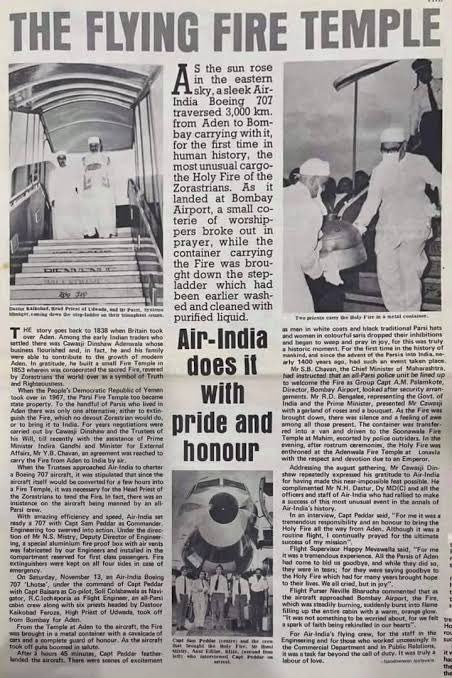
A Boeing 707 of Air India landed at Mumbai’s Santa Cruz Airport carrying one of the most unusual passengers in aviation history: a sacred Parsi fire from Aden, Yemen.
The operation was extraordinary.
The fire, which had been consecrated at the Aden Agiary in 1883, had to be brought to India as the Parsi community prepared to leave Aden amid difficult circumstances.
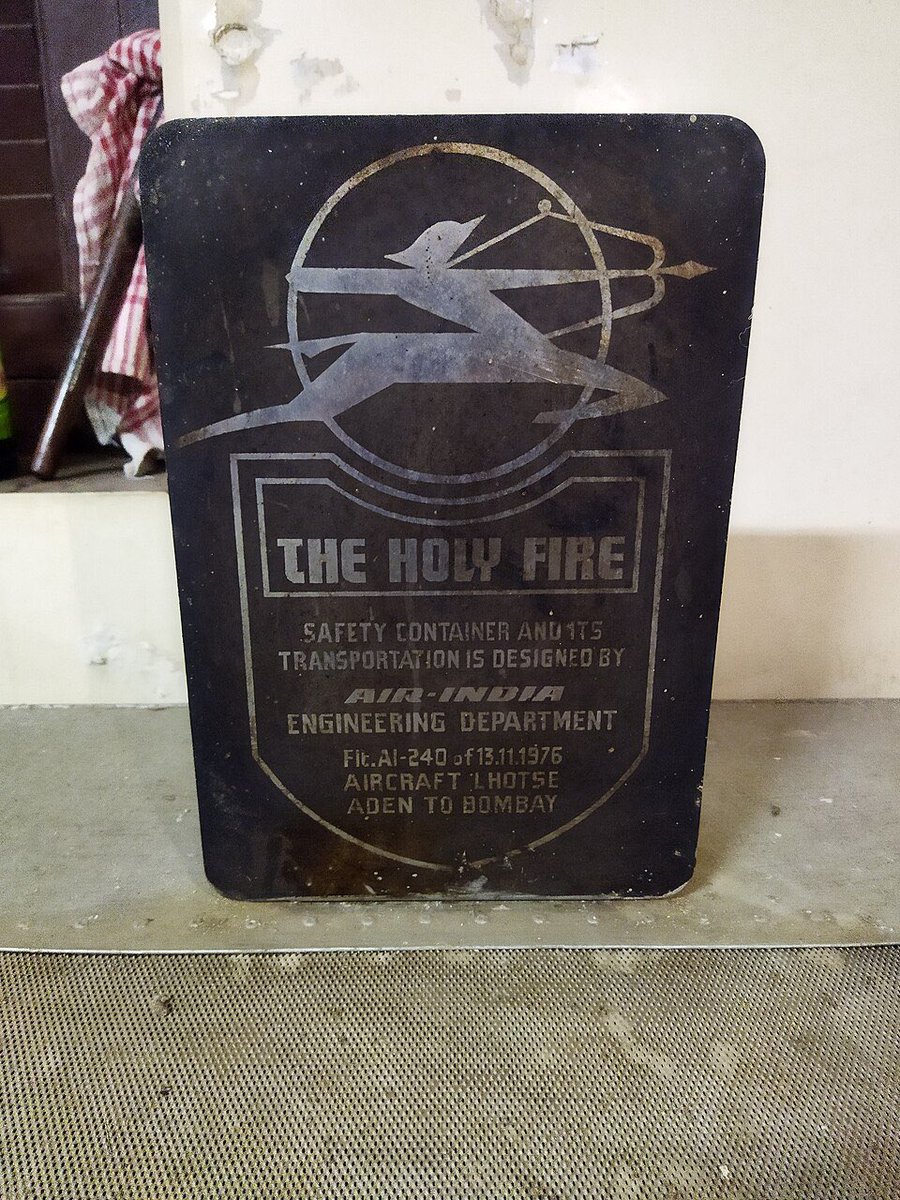
Air India specially chartered its Boeing 707, Lhotse, for the mission. The aircraft had an all-Parsi crew, led by Captain Sam Pedder. Its first-class section was modified to accommodate a specially designed metal container for the sacred fire.
The container was designed by N.S. Mistry, Air India’s Deputy Director of Engineering. Special precautions were taken to ensure that the fire remained burning throughout the journey.
As the aircraft took off from Aden, Yemeni officials reportedly gave it a 21-gun salute.
At approximately 7 am on 14 November 1976, the aircraft touched down at Santa Cruz Airport. A gathering of Parsi worshippers had assembled to receive the sacred fire.
It was first taken to the Soonawalla Agiary at Mahim and subsequently transported to the Adenwalla Agiary at Lonavala, where it was ceremoniously enthroned.
A living sacred fire had travelled nearly 3,000 kilometres by air.
An extraordinary chapter in the history of Air India, Mumbai and the Parsi community.
This week’s Founding Word looks at youth, and JRD Tata’s belief that a country’s progress depends on how early it lets its youth take on the biggest ideas.
Most breakthroughs begin when someone with a fresh perspective is given the room to try, experiment and get things wrong. JRD Tata saw this clearly, which is why he recommended placing real responsibility in the hands of the youth while their appetite for risk is at its highest.
The Tata Trusts continue to support the nation’s youth through education, skilling and opportunities that open doors early, so that more of them get the chance to further the country’s development.
Source & Quote Credits: From notings for speech on Twenty-five Years as Chairman, July 26, 1963. Good Thoughts, Good Words, Good Deeds – A book of Tata quotes
Compiled by: Tata Central Archives
#FoundingWord #JRDTata #TataTrusts
#ExpressSpecial | An Anti-Corruption Branch chargesheet has alleged irregularities in Delhi government medical procurement, raising questions over how tenders were awarded and purchases made.
🔗 https://t.co/3FPLNhYzi7
Written by: Nirbhay Thakur
Instagram removes the reel posted on LiveLaw's official page about the ECI's affidavit in the #SupremeCourt.
The reel, which was only an explanation of the ECI's version, was removed by Instagram saying, "We received a legal request to restrict this content".
There is no explanation how the reel (https://t.co/oGCKxwPz5J) violated any law.
@instagram@Meta
The same video is available on YouTube - https://t.co/C3HjoeEyAn
when did a ton of ppl want to effectively be interviewers (podcasters) instead of being interesting enough to be interviewed?
the latter is a much more ambitious endeavor than the former. if anything you should become an interviewer after you’ve done something interesting.
same thing applies to being an investor (i.e. you’ll be much more respected as an investor if you’ve been a founder). before someone comes at me, there are very obvious exceptions to this rule.
Can't serve notices.
Can't hold virtual hearings.
Can't give a voter a copy of the order deleting them.
And: "Once the appeal is disposed of... it cannot be restored on the portal if the restoration is needed on account of direction of the judicial order or otherwise."
That's not a complaint from an election official on the ground. It's the minutes of a meeting of retired High Court judges, appointed on the Supreme Court's orders to hear 38 lakh SIR appeals in West Bengal, on the portal the Election Commission's IT division (headed by Seema Khanna) built for them.
Minutes dated August 11, sent to the EC and the Chief Justice of Calcutta High Court.
Cracker of a story by @DaminiNath & @mitra_atri
https://t.co/rPUlXlI6HM via @IndianExpress
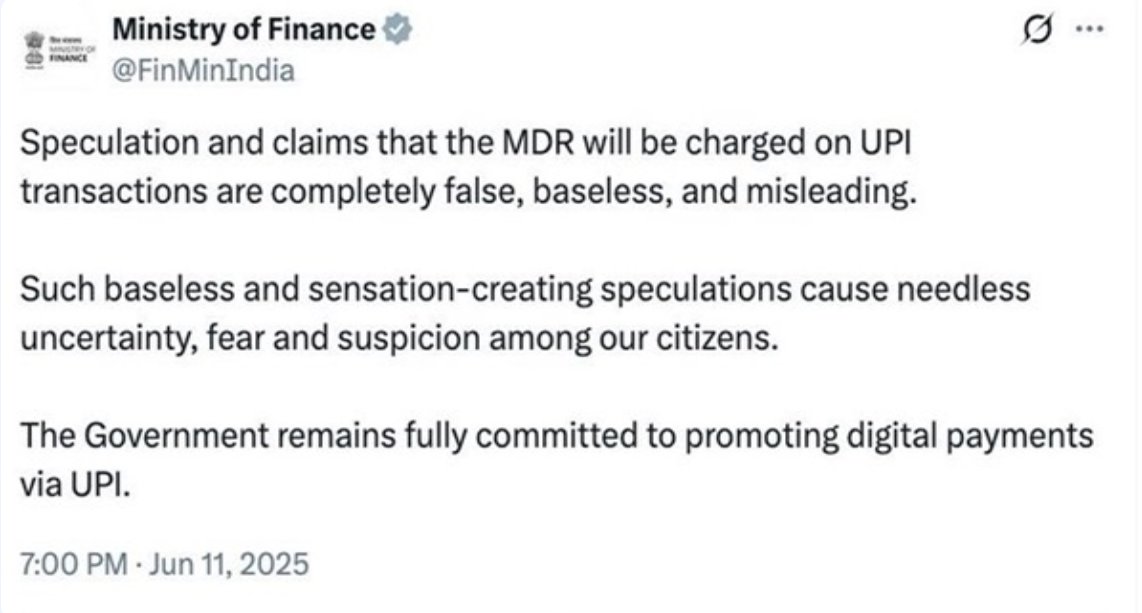
I was searching for something related to UPI and MDR (to check what @deepakshenoy has said in the past about MDR) and found this on a govt website.
https://t.co/wA40mbRBXy
lol more proof that when the govt says something, usually the opposite it true. Took about a year...
What a shame that the voice of a six-year-old child is enough to threaten the Bihar Police.
A six-year-old should be heard, protected and taken seriously not silenced or intimidated. Shameful.
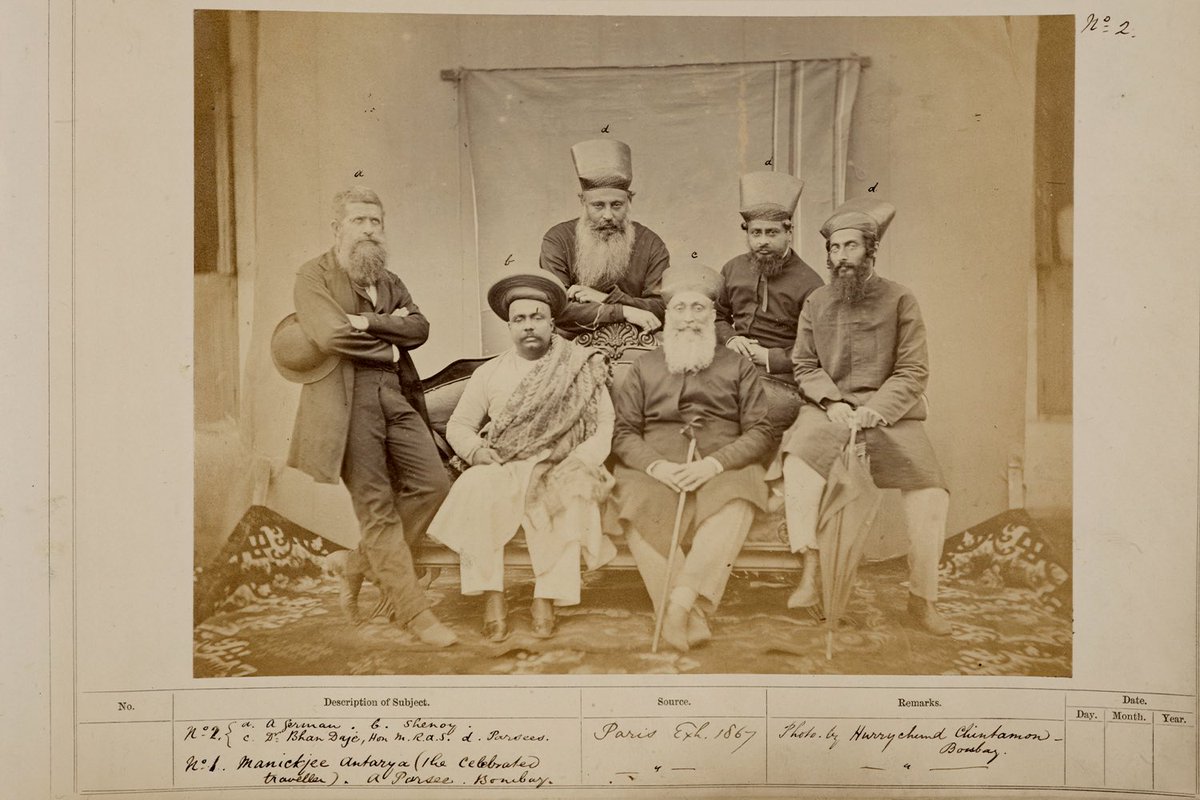
Before Mumbai had Instagram, it had a photography society.
On World Photography Day, here’s a little-known Mumbai fact:
The Photographic Society of Bombay was founded in 1854, just 15 years after photography was introduced to the world.
By 1856, it had around 200 members.
Mumbai was already photographing its streets, buildings and people while photography itself was still in its infancy.
#WorldPhotographyDay #OldMumbai