A remarkable video:
Putin, an obscure 1991 Leningrad bureaucrat, warning against the return of totalitarian rule to Russia—paired with his reaction to those words as President in 2002. The irony writes itself.
Brussels says the quiet part out loud, that we have a massive problem whenever China invades Taiwan.
"[n]early 100 percent of chips for data centers are manufactured in Taiwan" ... "Europe still relies heavily on Asian, especially Taiwanese, suppliers."
Out of chip plan docs
"Des salariés de Renault ont tout de même exprimé des réticences à l’idée de fabriquer des drones. Il a donc été décidé de ne faire appel qu’à des volontaires. Les candidats furent plus nombreux que les postes." https://t.co/1AZ9Wl6hno
The interim score is this:
1. Iran blinked first.
2. Israel checked the Iranian attempt to restrict Israeli freedom of action against Hezbollah. This, despite reported discrepancies between the US and Israel. Very important as we move forward.
3. Iran failed to hit Israeli targets, and suffered a few hits on military targets, as it remains exposed and vulnerable to @IAFsite.
4. Iran gained valuable strategic currency and insight, since it is quite apparent that the US is desperate for a deal. Even a VERY BAD and humiliating one.
5. The @IDF does not yet have a tactical solution for optic FPV drones, and Hezbollah will likely aspire to continue to exploit that, which will fuel more fighting and Israeli strikes all over Lebanon. See #2.
6. The US still hasn’t come to the conclusion that it’s strategically vital to free the Hormuz Strait, and the Iranian regime is banking on that misjudgment to continue.
7. Israel continues to bleed diplomatic currency while it gains military achievements.
Moving forward, I believe Israel will make a point of striking Hezbollah military targets in Beirut if Hezbollah continues to attack northern Israel. Not good news for Hezbollah or Iran, but good for the Lebanese state and Israel.
This episode seems to have been concluded, but all sides are learning, evaluating and assessing.
@mev_lev@AmbDanFried Russia is the economy the size of Italy. Not sure it can afford prolonged confrontation with Europe. But it can hope for luck in key elections.
Êtes vous sûr que la France seule peut faire l’avion de la prochaine génération? Qu’elle en a les moyens financiers? En tout cas, il y a quelques années, chez Dassault, on me disait que le Rafale était le dernier avion que notre pays pouvait faire seul.
The interim score is this:
1. Iran blinked first.
2. Israel checked the Iranian attempt to restrict Israeli freedom of action against Hezbollah. This, despite reported discrepancies between the US and Israel. Very important as we move forward.
3. Iran failed to hit Israeli targets, and suffered a few hits on military targets, as it remains exposed and vulnerable to @IAFsite.
4. Iran gained valuable strategic currency and insight, since it is quite apparent that the US is desperate for a deal. Even a VERY BAD and humiliating one.
5. The @IDF does not yet have a tactical solution for optic FPV drones, and Hezbollah will likely aspire to continue to exploit that, which will fuel more fighting and Israeli strikes all over Lebanon. See #2.
6. The US still hasn’t come to the conclusion that it’s strategically vital to free the Hormuz Strait, and the Iranian regime is banking on that misjudgment to continue.
7. Israel continues to bleed diplomatic currency while it gains military achievements.
Moving forward, I believe Israel will make a point of striking Hezbollah military targets in Beirut if Hezbollah continues to attack northern Israel. Not good news for Hezbollah or Iran, but good for the Lebanese state and Israel.
This episode seems to have been concluded, but all sides are learning, evaluating and assessing.
The interim score is this:
1. Iran blinked first.
2. Israel checked the Iranian attempt to restrict Israeli freedom of action against Hezbollah. This, despite reported discrepancies between the US and Israel. Very important as we move forward.
3. Iran failed to hit Israeli targets, and suffered a few hits on military targets, as it remains exposed and vulnerable to @IAFsite.
4. Iran gained valuable strategic currency and insight, since it is quite apparent that the US is desperate for a deal. Even a VERY BAD and humiliating one.
5. The @IDF does not yet have a tactical solution for optic FPV drones, and Hezbollah will likely aspire to continue to exploit that, which will fuel more fighting and Israeli strikes all over Lebanon. See #2.
6. The US still hasn’t come to the conclusion that it’s strategically vital to free the Hormuz Strait, and the Iranian regime is banking on that misjudgment to continue.
7. Israel continues to bleed diplomatic currency while it gains military achievements.
Moving forward, I believe Israel will make a point of striking Hezbollah military targets in Beirut if Hezbollah continues to attack northern Israel. Not good news for Hezbollah or Iran, but good for the Lebanese state and Israel.
This episode seems to have been concluded, but all sides are learning, evaluating and assessing.
Thanks for the engagement. I believe your argument is essentially the same as mine. The question is not “whether” both explanations apply, but rather “when” they do.
My point was China built this as a geopolitical tool over the last nearly twenty years. What began as an industrial policy effort for capacity in this sector in the 1960s later became a drive to consolidate it *for geopolitical purposes* beginning at least 16 years ago if not even earlier. There are plenty of state texts indicating this, too. The decisions to drop international prices, consolidate the sector, eliminate most private sector participants, and halt smuggling were partly to ensure absurdly high market share even at a loss to China’s own economy.
The argument I responded to — that China’s current position is a product of independent market actors inadvertently creating excess capacity that later happened to be weaponized —is in my view false based on authoritative texts, market data, and the best explanation for China’s puzzling behavior. This sector has not been treated the same as green tech or other sectors. So applying explanations from those sectors to this one is erroneous and cannot properly account for the last nearly twenty years of state behavior.
The idea smuggling existed does not disprove this analysis. The real question is how the state felt about it.
And in that sense, it actually confirms the geopolitical explanation. The state waged a campaign against smuggling in the 2010s after smuggling revealed the challenge of using the tool against Japan without full state control of supply.
We appear to have a new type of Chinese nuclear powered submarine on out hands. The most remarkable aspect about it is its construction at Jiangnan in Shanghai, in a dedicated new facility.
A few additional remarks in a quick thread.
https://t.co/aNAxlHb79r
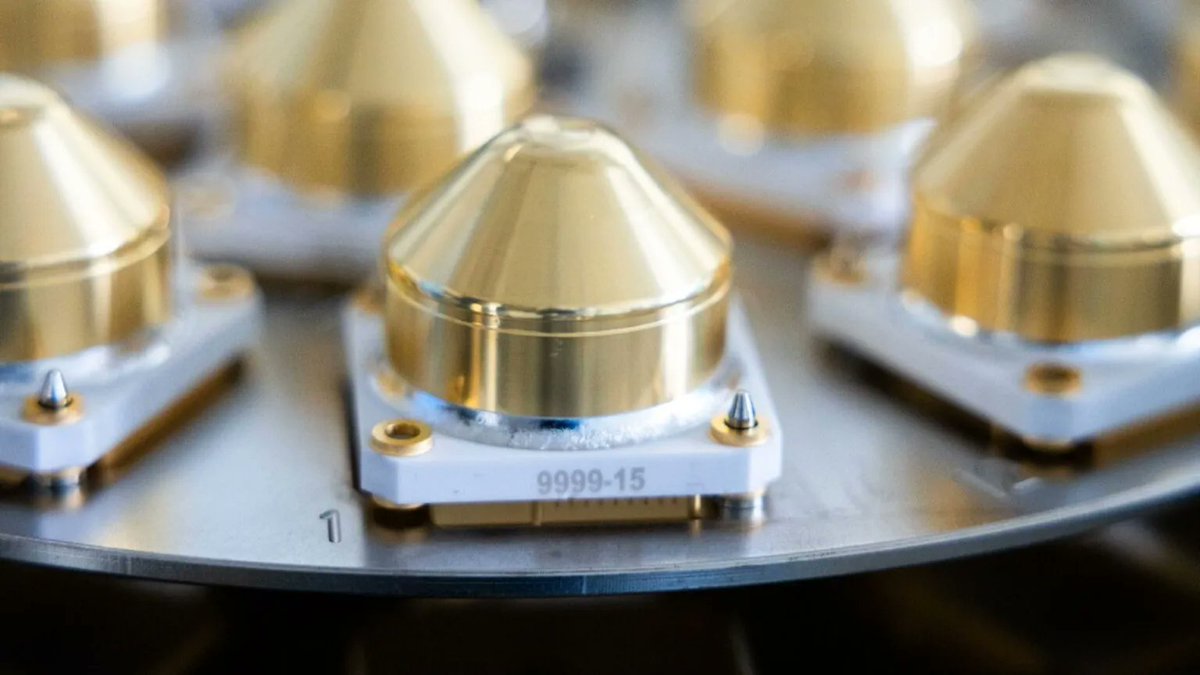
🛰️🇫🇷 𝗟𝗮 𝗙𝗿𝗮𝗻𝗰𝗲 𝗲𝘀𝘁 𝗹𝗮 𝗻𝗮𝘁𝗶𝗼𝗻 𝗾𝘂���� 𝗺𝗮𝗶̂𝘁𝗿𝗶𝘀𝗲 𝗹𝗲 𝗺𝗶𝗲𝘂𝘅 𝗮𝘂 𝗺𝗼𝗻𝗱𝗲 𝗰𝗲𝘁𝘁𝗲 𝘁𝗲𝗰𝗵𝗻𝗼𝗹𝗼𝗴𝗶𝗲 𝗾𝘂𝗶 𝗶𝗻𝘁𝗲́𝗿𝗲𝘀𝘀𝗲 𝘁𝗼𝘂𝘁𝗲𝘀 𝗹𝗲𝘀 𝗮𝗿𝗺𝗲́𝗲𝘀 𝗱𝘂 𝗺𝗼𝗻𝗱𝗲 : 𝗹𝗲 𝗴𝘆𝗿𝗼𝘀𝗰𝗼𝗽𝗲 𝗿𝗲́𝘀𝗼𝗻𝗻𝗮𝗻𝘁 𝗵𝗲́𝗺𝗶𝘀𝗽𝗵𝗲́𝗿𝗶𝗾𝘂𝗲
Un GPS capable de continuer à vous guider pendant des semaines… sans recevoir le moindre signal satellite.
C’est exactement ce que permet le HRG, ou gyroscope résonnant hémisphérique, une technologie encore relativement peu connue et pourtant devenue indispensable à l’heure où le brouillage GPS se généralise sur les théâtres d'opérations et même dans l’aviation civile.
Dans ce domaine très particulier, la France possède aujourd’hui une avance industrielle considérable grâce son champion Safran qui vient d’ailleurs d’annoncer un investissement de 120 millions d’euros à Montluçon afin de tripler sa production de ces capteurs stratégiques déjà utilisés dans des missiles, des sous-marins, des hélicoptères de combat ou encore les fusées Ariane 6.
Dans notre article, on vous explique comment fonctionne cette technologie héritée du célèbre pendule de Foucault, pourquoi les armées cherchent à s'affranchir du GPS face au brouillage électronique, comment Safran a réussi là où les Américains étaient restés sur des productions de niche, et pourquoi cette petite pièce de quelques centimètres est devenue l’un des composants les plus stratégiques de la guerre moderne.
Notre article complet :
👉 https://t.co/lYjda4zwNA
#france #Défense #Innovation #Safran #Technologie
FCAS is dead.
Merz and Macron “have come to the shared conclusion that the companies are unable to come together to build a joint fighter jet. They acknowledge this reality”, a German official said.
There’ll still be a joint drone and cloud system. Still, a big failure.





![pieter_haeck's tweet photo. Brussels says the quiet part out loud, that we have a massive problem whenever China invades Taiwan.
"[n]early 100 percent of chips for data centers are manufactured in Taiwan" ... "Europe still relies heavily on Asian, especially Taiwanese, suppliers."
Out of chip plan docs https://t.co/6OlJGnhtLm](https://pbs.twimg.com/media/HKXOmy4WwAAMgaH.png)