@Rylan I am really trying to inderstand why a little blue bird now controls our moods,thoughts,politics, beliefs even our society. How did it become the voice of the planet!
Peter & Alan.
Many of us LGB have been warning you for YEARS that this was happening.
We told you there are huge problems ahead, as gender ideology is in direct contradiction to being same-sex attracted.
We told you to stop involving other people’s children.
We told you SO MANY LGB people are sick & tired of being tethered to ideological cheerleaders for Queer Theory.
We told you the homophobia was coming from within the house.
We told you the blatant misogyny would have repercussions.
You all turned a blind eye.
You didn’t listen.
You said “No Debate.”
You branded us ‘bigots’.
Why are you NOW feigning surprise that there is a renewed backlash?
You CAUSED this.
2015. What changed??
Think hard.
My thoughts on the @EHRC guidance laid yesterday; this is not about non-existent "rights". It is about the safety of women - mothers, sisters, wives, daughters. We men need to hear their voices. Virginia Woolf : "Though we see the same world, we see it through different eyes".
My intro on @TimesRadio yesterday:
Where I live there are two different routes to and from the tube station. One, let’s call it Acacia Avenue, is quiet and residential. The other, London Road, is a busy major route with lots of traffic. At all times of the day, I automatically head for Acacia Road. It’s just much nicer.
The women in my family, on the other hand, will never willingly make that walk after dark. They live with an anxiety that most men find it hard to imagine, and frankly, rarely think about unprompted.
Last year 739,000 women were sexually assaulted in Britain. Virtually all such assaults - nine out of ten - are perpetrated by men. One in four women have been attacked at some time in their lives. Acacia Avenue is exactly the sort of place in which most women fear that they become vulnerable, and they are right.
As the author Virginia Woolf once wrote " Though we see the same world, we see it through different eyes".
I think this is the right context in which to understand the furore over the guidance being laid today by the government, over the meaning of the words man and woman when it comes to providing services and facilities in workplaces.
Many men think this is about a rather arcane dispute about who gets to use what loo. For their mothers, sisters, wives and daughters, it isn’t.
In a previous life, as Chair of the Equality and Human Rights Commission, I had a hand in writing this country’s equality laws, in particular the 2010 Equality Act. It never occurred to any of us that there could be any confusion or dispute over the meaning of the words man and woman. But it has taken a decade of campaigning, a Supreme Court judgement and now hundreds of pages of guidance to settle the issue.
This is not about so called trans rights, which are completely unaffected by this guidance, since no-one has ever had the right to walk into a changing room reserved for teenage girls.
What it does mean is that women and girls are guaranteed the protection they deserve, and that their safety, which we spent half a decade drafting law to ensure, is protected.
But the whole business illuminates some serious issues in our politics.
First that many of our institutions, in spite of the fact that they always knew what the right thing to do was, decided to ignore the fears of their women customers and employees, under pressure from noisy pressure groups. Instead, the people who were supposed to be the grown ups behaved as though the law said what campaigners wanted it to say, rather than what it actually said. They settled for what they hoped would be a quiet life.
In a democracy, there’s little point in Parliament deciding anything if the law is then made an ass by activists intimidating bosses in companies, schools, universities and the media into doing something different.
Second, at the heart of the campaign to undermine the Equality Act is an idea that we specifically rejected in 2010, so called self-identification. That is to say, that it should be up to the individual to decide whether they have what’s called a protected characteristic - are you male or female, are you black or white. The problem is that self-ID would destroy the operation of any law against discrimination.
Look, it would almost certainly have been to my advantage as a young man to self-identify as a handsome, white public schoolboy. None of those things is true of me. And at various points I am pretty sure it’s been to my disadvantage. It is certainly statistically likely to have been to my disadvantage.
But according to the logic of those who say that self-ID should be the rule and that anyone should be able to decide for themselves whether they are male or female, black or white or Asian, were I to complain about racial discrimination, it would be difficult for anyone prove that I’d been discriminated against because of my race since anybody to whom I’d lost out could just tell the courts that they too were black.
I know that sounds like Alice in Wonderland but you can google the case where a chap, both of whose parents are white, insisted he should get money from the Arts Council because he so identified with the black struggle that he considered himself black, and everyone should accept his point of view. In the United States and Brazil exactly such outlandish claims have been made and people rewarded to the disadvantage of people actually born into minority families.
I have even been told about firms who, when reporting their gender pay gaps have put men who just happen to like wearing dresses at weekends - nothing wrong with that, let me be clear - into the female column and told their women employees that they really haven’t got anything to moan about because statistically they are paid equally, and they should get back in their box.
So today’s guidance isn’t just another tiresome chapter in culture wars. It is , I hope, a halt to the efforts to undermine one of the most important pieces of legislation on the statute book, by people who, for their own reasons, would prefer us to be living in the 1950s world of Mad Men.
@Mcbeath_on_sea I dont understand why you all think that @jk_rowling and others have this power. I would imagine that the protected beliefs are nothing to do with gender beliefs and all to do with religion.
@owenjonesjourno Why are the main political fights in this country Islamaphobia AntiSemitism and supporting Palestine or Israel. These wars have been going on forever. Why now do we the people of a Christian country have to chose a side when we never did before.
The Systematic Slaughter of Christians. And the Silence That Surrounds It.
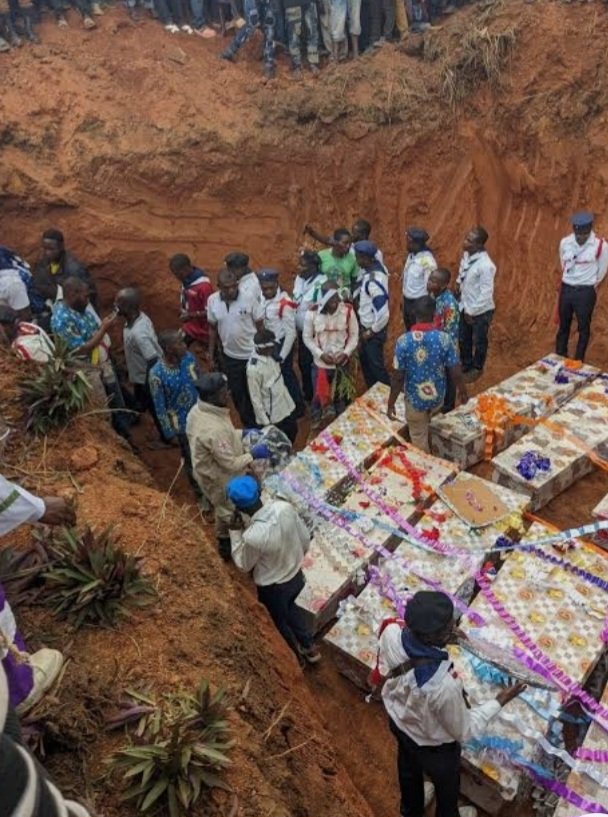
They had come to mourn. The fighters from the Islamic State-linked Allied Democratic Forces had disguised themselves as civilians to move among the mourners at a wake in the village of Ntoyo, eastern Democratic Republic of Congo. When they struck, they used axes, machetes and firearms. One witness saw his sister killed with an axe. Another found her parents' bodies in the morning, her father shot, her mother beaten to death with a hammer. A third described how fighters broke into her house and took her four daughters. At least 60 people died at that single attack in September 2025. "I'd never seen so many bodies," one survivor told Amnesty International researchers.
This was not an isolated atrocity. It was one episode in a sustained, doctrinal campaign of killing. The ADF's own statements and claims of responsibility make explicit reference to Christians as targets. Its leadership has formally sanctioned their killing. In February 2025, ADF fighters rounded up 70 Christians and beheaded them inside a Protestant church in Kasanga, North Kivu. In July, they killed at least 40 worshippers gathered for a night prayer vigil in Ituri province. On Maundy Thursday this year, they attacked a village in Mambasa Territory and killed dozens more. The victims are not incidental. They are chosen.
Amnesty International's new report describes these attacks as war crimes and crimes against humanity. It also identifies why they receive so little attention: international focus has fixed on the Rwanda-backed M23 movement operating in the same region, and the ADF kills in its shadow. The mechanism of invisibility is as deliberate as the violence itself. Overstretched Congolese forces, a security vacuum, and a crowded news agenda combine to ensure the dead are buried without consequence.
Eastern DRC is not an outlier. It is one theatre in a continental emergency.
The Open Doors World Watch List for 2026, audited by the International Institute for Religious Freedom, recorded 4,849 Christians killed for their faith in the year to September 2025. Of those, 3,490 died in Nigeria; more than in every other country on earth combined. In June 2025, Fulani militants attacked the Christian community of Yelwata in Benue State over four hours, killing 258 people, most of them women and children. Eyewitnesses reported the attackers shouting that they would destroy all Christians. On Palm Sunday that same year, 43 people were burned alive in Bassa. From 2011 to 2025, more than 44,000 Christians have been killed in Nigeria for their faith.
In Syria, an ISIS suicide bomber struck the Greek Orthodox Church of St. Elias in Damascus in June 2025, killing 22 and wounding more than 60. Syria's constitutional declaration of March 2025 made Islamic jurisprudence the primary source of legislation. Roughly 300,000 Christians remain in the country, hundreds of thousands fewer than before the emergence of Islamic State in 2013. Many conceal their faith. Many do not attend church. In Mozambique, Islamic State's local franchise is burning Christian villages in the north. In one attack on Napala in October 2025, militants killed 20 Christians and displaced 2,000 more. A pastor described four elderly women tied up and burned to death inside a house.
Over 150,000 people have been killed by Islamist militants in Africa over the past decade. The trajectory is upward. Analysts expect the violence to intensify across the Sahel, the Lake Chad Basin, Somalia and eastern DRC through 2026. The victims are Black. They are Christian. They are being killed by jihadists operating under the banner of Islamic State and its affiliates. South Africa's Chief Rabbi put it with the clarity that Western editors have conspicuously avoided: "It seems as if black lives do not matter if they are murdered by Islamists in Africa."
That is not a provocation. It is an audit of our attention.
"Do you believe that Palestine is... 'on the ballot'?"
@bbcnickrobinson presses Green Party leader Zack Polanski on the issues his party has focused on during the local election campaign.
@owenjonesjourno@LewisCarter5 So you dont acknowledge that those officers with no knowledge of whether this madman had a bomb strapped to him put their own lives in danger to stop him causing further damage.
It genuinely feels like we now live in two different countries.
In one Britain, people drag themselves to work, pay eye‑watering taxes, National Insurance, council tax, energy bills, travel costs – and still stare at their bank balance wondering how they’re going to afford new shoes for the kids.
In the other Britain, a growing army are parked on benefits with rising sickness and disability claims, pulling in combined payments that can beat a full‑time wage and then stacking extra perks, from cut‑price bills to leisure and lifestyle discounts, on top.
The same government that says it is “cash‑strapped” and “tough choices” for services somehow finds endless billions for a welfare system its own Prime Minister now calls “unsustainable, indefensible and unfair” – but the only people expected to swallow it are the workers footing the bill.
We pay. They benefit.
That’s the deal. And it is ripping any sense of basic solidarity to shreds.